The short answer
Feed a Cavalier a complete small-breed food from an established brand, keep it lean, and respect the food obsession. A Cavalier is a heart-prone breed, and keeping it lean in the early years reduces the load on a heart that will likely develop mitral valve disease. Measure meals, keep treats under 10 percent of calories, and do not free-feed. Cardiac and low-sodium diets are vet-prescribed tools for later stages, never DIY. Given the heart vulnerability, favour a nutritionist-backed brand over boutique grain-free, and let your vet guide diet at every stage.
The food-obsession paradox
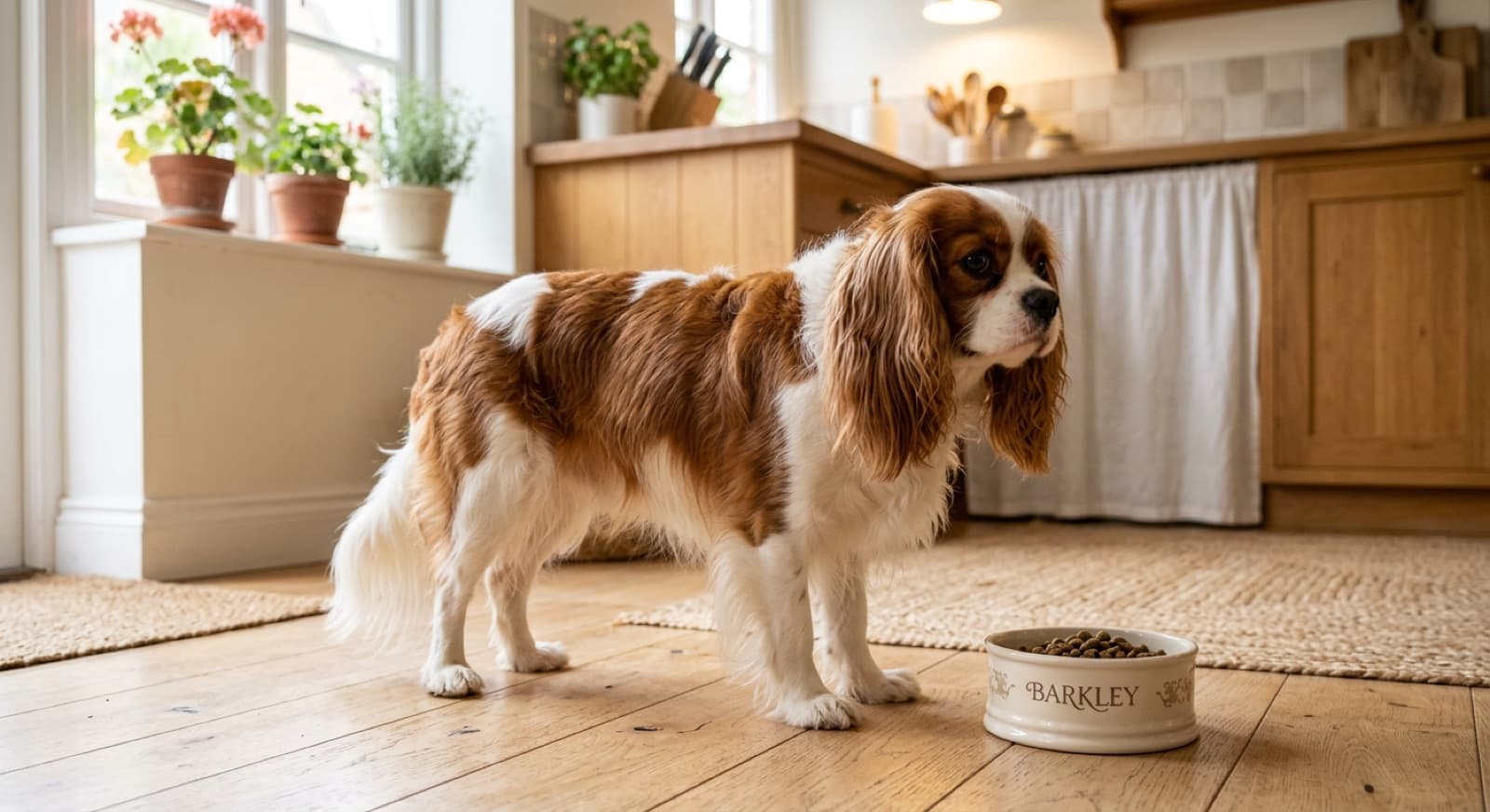
Start here, because it shapes everything else. The Cavalier is a small dog, 13 to 18 pounds, with a small daily calorie budget, and it is also relentlessly food-motivated. Breed-community veterans describe Cavaliers that will, given the chance, eat themselves into furry blimps, and that are very good at training their humans into one more treat. Owners report dogs creeping from 19 to 22 pounds on unmeasured portions, and the occasional Cavalier reaching double its proper weight.
The math is unforgiving on a dog this size: a few extra biscuits is a large slice of the day. So the single habit that matters most is measuring, both meals and treats, and the single mindset is to stop reading those begging eyes as genuine hunger. The breed is predisposed to obesity, and as you will see, on a Cavalier extra weight is not just a waistline problem, it is a heart problem.
Mitral valve disease: what diet can and cannot do
Cardiac and low-sodium diets are vet-prescribed, stage-specific tools. Never restrict sodium or add heart supplements on your own. Severe salt restriction in an early-stage Cavalier can be harmful.
Mitral valve disease (MVD) is the defining health issue of the breed. The Merck Veterinary Manual describes it as an inherited, degenerative valve condition in Cavaliers, and most of the breed develops a heart murmur with age. The crucial point for feeding: diet does not cause MVD and no diet cures it. What diet does is support the heart, and how it does that changes with the stage of disease.
In the early and preclinical stages, lean is the goal. As Tufts cardiologists put it, carrying extra weight burdens the heart, so keeping a Cavalier lean reduces the work it has to do. This is the main reason the obsession-driven obesity above matters so much.
In advanced heart failure, the priorities flip. Once a dog is in congestive heart failure, muscle wasting becomes the bigger threat, and the goal shifts to maintaining weight, muscle, and appetite. This is also the stage where a vet may prescribe a sodium-restricted cardiac diet. As VCA states plainly, severely salt-restricted diets should never be used in symptom-free dogs and are reserved for heart failure. That is why this is strictly a vet-led decision: the right move at one stage is the wrong move at another, and the diets involved are therapeutic prescription foods, not home recipes.
Treat discipline and a lean body
Because lean weight is heart protection in this breed, the treat rule is not cosmetic. The AKC guideline is to keep treats under 10 percent of daily calories, and the part owners miss is that this means calories from everything, counted inside the daily total rather than added on top.
For a dog that always acts hungry, the practical tools are low-calorie fillers like frozen green beans, carrots, or a little pumpkin, training with part of the measured kibble ration, and scheduled meals instead of free-feeding. Judge success by body condition, not the scale alone: against the WSAVA body condition score, aim for a lean 4 to 5 out of 9, with ribs easily felt, a waist, and a tuck. A kitchen scale beats a measuring cup for a small dog where a little is a lot.
Grain-free, DCM, and a heart-vulnerable breed
This is worth getting exactly right, because it is easy to confuse two different heart diseases. The Cavalier's genetic condition is mitral valve disease. The grain-free controversy is about dilated cardiomyopathy (DCM), a disease of the heart muscle, mostly in larger breeds. They are not the same thing.
The FDA has been investigating a possible association between grain-free, legume-heavy diets and DCM, but it has not established a causal link and paused its public updates at the end of 2022. So the accurate statement is that the link is unresolved, neither proven nor cleared. For a Cavalier, the sensible conclusion is not panic but caution: a breed already carrying a serious inherited heart condition has every reason to feed a well-established diet rather than gamble on an unproven risk. The WSAVA guidelines give the questions to ask: does the brand employ a qualified nutritionist, and does it run feeding trials?
Which Cavalier health issues are about diet?
Cavaliers carry several breed conditions, and owners often hope to address them with food. Here is what diet actually touches.
- Obesity and heart load (diet): the central diet lever, and the reason lean weight matters so much for this breed.
- Mitral valve disease (diet manages, does not cause): covered above. Lean early, vet-guided cardiac diet later.
- Patellar luxation and hip issues (weight-related): the cause is anatomical, but keeping the dog lean is core to managing them and sparing the joints.
- Syringomyelia and Chiari-like malformation (not diet): an inherited skull-and-spine malformation. Diet neither causes nor treats it, and you should be wary of any claim that food helps. The only diet-adjacent note is mechanical: a raised bowl can make eating more comfortable for a dog in neck pain.
- Episodic falling syndrome (not diet): an inherited neurological condition triggered by stress or exercise, not food.
Small-breed teeth
Like other toy breeds, Cavaliers are prone to periodontal disease, and the Merck Veterinary Manual notes that the common belief that dry kibble cleans teeth does not reliably hold true. Ordinary kibble does little at the gum line.
What works is daily brushing with a dog toothpaste, which is the gold standard, plus dental products carrying the VOHC seal and regular professional cleanings. Feed a small-bite food because it suits the mouth, then brush regardless. For a breed you want to keep healthy into the years when its heart needs every advantage, dental care is part of the picture, not a separate chore.
Foods to avoid
These are dangerous to any dog, and the harmful dose is smaller for one this size, so be strict:
- Xylitol (in sugar-free gum, some peanut butters, and baking), which is rapidly fatal to dogs
- Chocolate (darker is worse)
- Grapes and raisins (can cause kidney failure, even a few)
- Onions, garlic, leeks, and chives
- Macadamia nuts
- Alcohol and caffeine
- Cooked bones (they splinter)
A Cavalier will beg convincingly for anything you are eating, so be firm about table scraps. If your dog eats something on this list, call your vet, the nearest emergency clinic, or a pet poison helpline right away.
Looking to adopt a Cavalier King Charles Spaniel?
Set up the measure-and-count habits that protect a Cavalier's heart before day one. Browse Cavaliers and Cavalier mixes available now from the rescues we track across Canada.
See Available Cavaliers →Where to buy Cavalier food
Every brand worth feeding a Cavalier is easy to find:
- Pet specialty chains (Pet Planet, Tail Blazers, Tisol). Carry the small-bite, nutritionist-backed formulas and VOHC dental products.
- Pet Valu and PetSmart. Stock the major small-breed puppy and adult formulas.
- Your vet clinic. The essential source for weight-management diets and any prescription cardiac diet if heart disease advances.
An ordinary small-breed formula from an established brand is right for a healthy Cavalier, plus VOHC dental products for the teeth. Both are easy to set on a recurring delivery.
Frequently Asked Questions
How much should I feed a Cavalier King Charles Spaniel?
A small amount, because a Cavalier is only 13 to 18 pounds with a modest calorie budget, and the breed is relentlessly food-motivated, so it is very easy to overfeed. There is no single correct cup number; start from the feeding guide on your food for the dog's ideal weight, then adjust to keep a lean body condition. Feed adults twice a day, measure with a scale or cup rather than eyeballing, and count treats inside the daily total. Because small errors show fast on a small dog, check the ribs by hand regularly and let your vet set a target.
Does diet cause or cure mitral valve disease in Cavaliers?
No. Mitral valve disease, the heart condition most Cavaliers eventually develop, is genetic and degenerative, not caused by food, and no diet cures it. What diet can do is support the heart indirectly. Keeping the dog lean in the early and preclinical stages reduces the workload on the heart. In advanced congestive heart failure the priorities change, and a vet may prescribe a specific cardiac diet. So diet is a management tool guided by your vet at each stage, never a cause or a cure.
Should I feed my Cavalier a low-sodium heart diet?
Only if your vet prescribes one, and only at the right stage. Severely salt-restricted diets should never be used in a Cavalier with early or symptom-free heart disease, because restricting sodium too early can actually be harmful. Low-sodium cardiac diets are a tool for dogs in heart failure, and they are veterinary prescription diets, not a do-it-yourself low-salt home recipe. Never set sodium or supplement levels yourself. The timing and the specific diet are decisions for your vet, ideally with input from a cardiologist.
Is grain-free food dangerous for a Cavalier?
The honest answer is unresolved, and caution makes sense for this breed. The FDA has been investigating a possible link between grain-free diets built on peas, lentils, and potatoes and dilated cardiomyopathy, a different heart disease from the Cavalier's mitral valve disease. No causal link has been proven and the FDA paused its updates in 2022, so it is neither proven nor cleared. But because a Cavalier is already a heart-vulnerable breed, most vets see no reason to gamble on a boutique grain-free diet. Favour an established brand that employs a veterinary nutritionist and runs feeding trials.
How do I keep a Cavalier from getting fat?
Treat the food obsession as the design problem it is. Cavaliers are predisposed to obesity and will happily eat far past their needs, so measure every meal, keep treats under about 10 percent of daily calories, and count them inside the daily total rather than on top. Use low-calorie fillers like green beans or carrots for a dog that always wants more, and feed scheduled meals rather than free-feeding. Because the goal is to protect the heart and joints, aim for a lean body condition of 4 to 5 on the 9-point scale, checked by feeling the ribs.
Does changing food fix my Cavalier's itchy ears or skin?
Usually not. Cavalier ear problems are mostly about anatomy: long, pendulous ears and narrow canals that trap moisture, plus a breed tendency toward a distinct middle-ear condition. True food allergy is uncommon, found in only a small percentage of dogs, and environmental allergy is a more common cause of itch. If a food allergy is genuinely suspected, the reliable test is a vet-supervised elimination diet over eight to twelve weeks, not an over-the-counter food swap or a blood test. Work recurring ear or skin trouble up with your vet rather than assuming it is the food.
What and how often should I feed a Cavalier puppy?
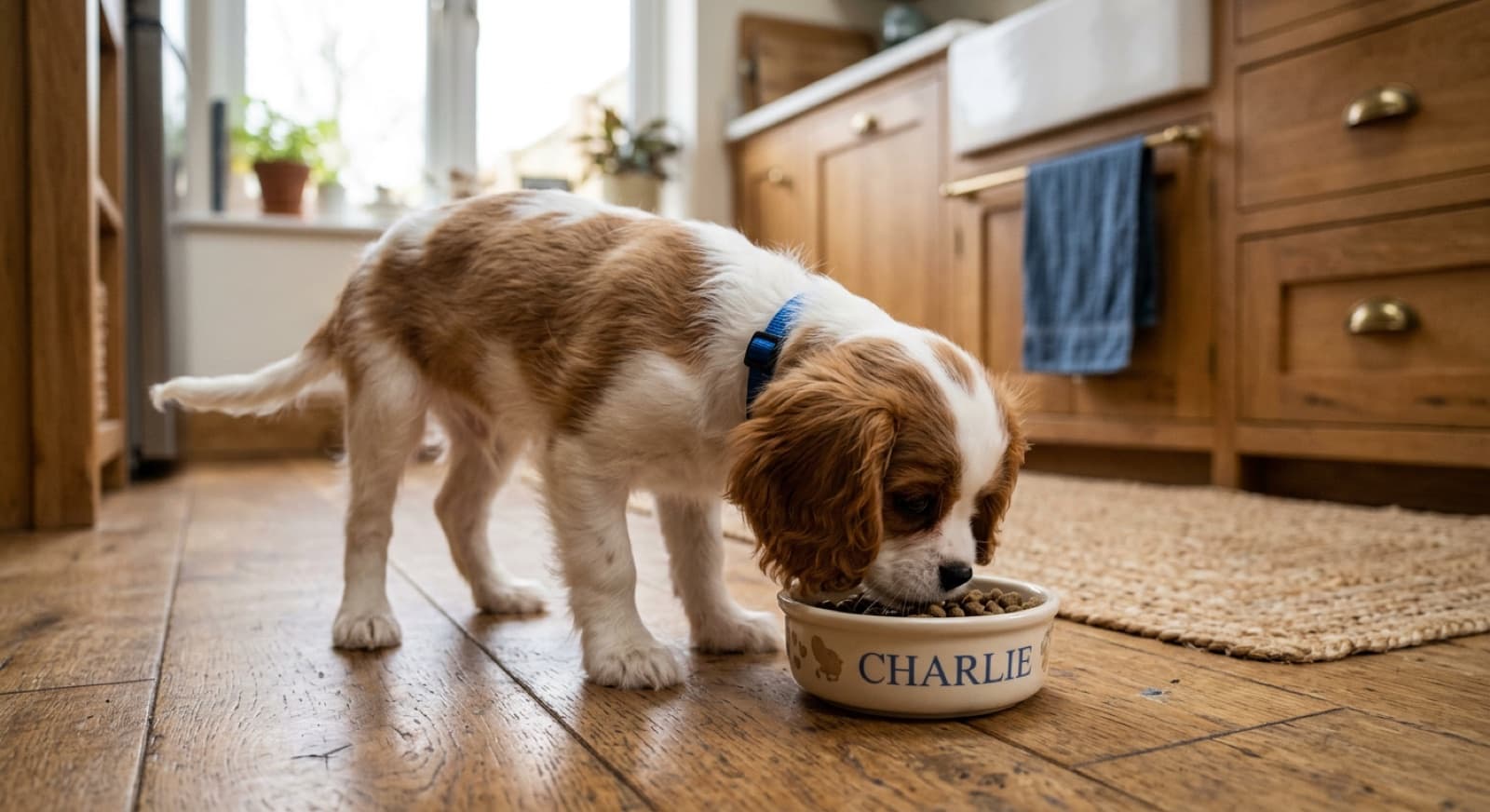
A Cavalier is a small breed, so feed a complete small-breed or all-life-stages puppy food, starting with around four small meals a day when very young and tapering to three, then two as it grows. Small breeds mature quickly, so most Cavaliers move to adult food somewhere around seven to nine months. The youngest, smallest puppies can be a little prone to low blood sugar, so do not let a tiny puppy go long without food. Build measuring-and-counting habits now, because a food-driven breed needs that discipline for life.
What to Feed a Cocker Spaniel
The same spaniel ear-and-weight rules for a slightly larger cousin.
What to Feed a Maltese
Tiny-toy portion precision and dental care for another small companion.
What to Feed a Shih Tzu
Weight and dental management for another food-loving toy breed.
Cavaliers for Adoption
Live listings of Cavaliers and Cavalier mixes from the rescues we track.