The brutal math
A Chihuahua weighs 3 to 6 lbs and carries only 5 to 10% body fat. The surface-area-to-volume ratio of a 4 lb dog is huge, which means heat leaves the body almost as fast as it is generated. In Calgary winter, this is a real safety constraint, not a comfort issue. Average January temperatures sit between -10C and -15C, and cold snaps with windchill regularly reach -30C to -40C. At those temperatures, frostbite on ear tips, tail tips, and paw pads can develop in under 5 minutes on a small short-coat dog. The protocol below is built around that reality. The default winter mode for a Calgary Chihuahua is indoor potty, brief outdoor trips with a coat and booties, and most walks happening above -10C or skipped entirely.
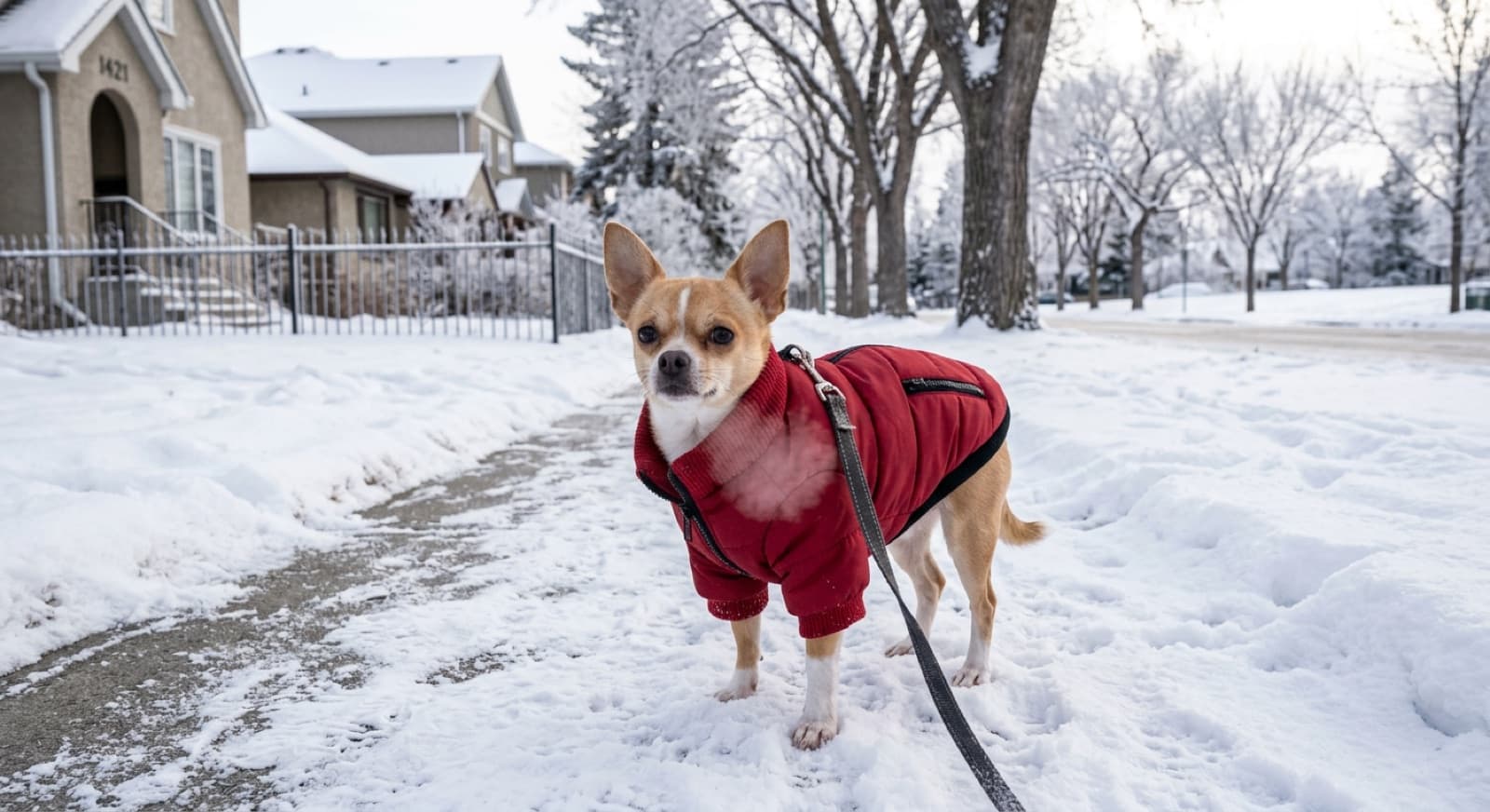
Temperature-by-Temperature Walk Guidelines
Use these as starting points. Watch your dog. A Chihuahua lifting one paw at a time, shivering, or trying to turn home is finished, regardless of the clock.
Above +5C: Most Chihuahuas are fine
Standard walks of 15 to 30 minutes work for most healthy adult Chihuahuas. A short-coat dog may still prefer a light sweater below +10C, especially in wind. Long-coat Chihuahuas are usually fine in their natural coat. This is the comfortable zone where you can do normal park visits and longer outings.
0C to +5C: Sweater recommended, 15 to 20 minutes
A fleece sweater is enough for most short-coats at this range. Long-coats may not need a layer, but check that the belly stays warm. Walks should stay under 20 minutes. Wet snow at this temperature soaks the coat fast and chills the dog, so a water-resistant outer layer helps on slushy days.
-5C to 0C: Insulated coat required, 10 to 15 minutes
Every Chihuahua needs an insulated coat in this range, covering chest, belly, and neck. Walks should stay 10 to 15 minutes. Paw balm before going out helps protect from salt and ice. If your dog is shivering at the door even with the coat on, layer a fleece underneath.
-10C to -5C: Coat plus booties, 5 to 10 minutes
Booties become non-negotiable, both for salt protection and to slow paw freezing. Walk times shrink to 5 to 10 minutes. Many Calgary owners switch to two or three brief potty trips per day instead of one longer walk. Watch for paw lifting, the clearest signal that the dog is in pain and ready to go home.
-20C to -10C: Very brief outdoor, 2 to 5 minutes
At this range, indoor potty is the better option for most Chihuahuas. If your dog will only go outside, keep trips to 2 to 5 minutes with full coat and booties. Carry the dog to a quick patch of grass or snow at the edge of the yard, wait, and bring them straight back in. No walks, no parks, no errands together.
Below -20C: Indoor potty only
Frostbite can develop in under 5 minutes on ears, tail tips, and paw pads. Outdoor trips are a real injury risk. Use the indoor pad. If you absolutely must go out (vet visit, emergency), carry the dog wrapped in a blanket, hold them against your body, and limit total exposure to under 2 minutes. Calgary hits this range multiple times every winter, and the indoor option is genuinely the standard, not a workaround.
Frostbite and Hypothermia: What to Watch For
These are real medical emergencies in a 4 lb dog. Recognizing them early is the difference between a quick warm-up and a vet visit.
Frostbite signs
- Pale, white, or blue-grey skin on ear tips, tail tips, paw pads
- Skin feels cold and stiff to the touch
- Pain or yelping when the area is touched as it warms
- Skin may turn red or dark grey as it thaws
- Severe cases: skin blackens and tissue dies
Hypothermia signs (progressive)
- Intense uncontrollable shivering (early stage)
- Shivering stops suddenly (danger sign, not improvement)
- Lethargy, stumbling, weakness
- Slow shallow breathing, slow heart rate
- Unresponsiveness, collapse (emergency)
If you see these signs
- Get the dog inside immediately and wrap in warm dry blankets.
- Hold the dog against your own body. Body heat is the safest gradual warming method.
- Never use direct heat. No hot water, no heating pads on direct contact, no hair dryers on hot. Sudden warming damages tissue.
- Offer small amounts of warm (not hot) water if the dog is alert.
- Call an emergency vet. Calgary 24-hour options include McKnight 24 Hour Veterinary Hospital and the Western Veterinary Specialist and Emergency Centre.
Coat Selection: What Actually Works
Fit before fabric
A coat that does not cover the chest and belly is decorative, not functional. Look for coats that wrap under the belly, cover the chest, and include a high collar that protects the back of the neck. Snug fit, not loose. A loose coat lets cold air in and lets warm air out. Most Chihuahua-sized coats run XXS or XS. Measure neck, chest, and back length before ordering.
Indoor: fleece sweater
For indoor wear or mild days at 0 to 5C, a simple fleece sweater is enough. Useful if your home runs cool, especially overnight. Many Calgary Chihuahuas wear an indoor sweater October through April. Wash regularly because oils and dander build up fast on close-fitting fabric.
Outdoor: insulated or down
For below 0C, you need an insulated coat with synthetic down or quilted insulation. Water-resistant outer layer is important because Calgary snow is often wet at the start of storms. Check that the coat does not restrict shoulder movement or rub the armpits. Brands that fit small Chihuahuas well include Hurtta, Canada Pooch, and RC Pets. Budget $40 to $90 for a quality coat that lasts multiple winters.
Layer for deep cold
Below -15C, a fleece sweater underneath an insulated coat adds meaningful warmth without much bulk. Some owners use a snood (tube of fabric covering the neck and ears) under the coat collar for extra ear protection. Ears are the most frostbite-prone area on a Chihuahua because they have very little fat or fur.
Booties and Paw Protection
Paws are the second biggest exposure point after ears. Calgary winter throws three problems at them at once: cold, ice, and chemical salt.
Why booties matter on a Chihuahua specifically
A 4 lb dog has tiny paw pads with very little protective tissue. Calgary de-icing salt (calcium chloride, magnesium chloride) burns on contact and is acutely toxic if the dog licks it off. A Chihuahua-sized dose can cause serious GI distress or kidney injury. Booties solve all of this. They also block direct snow contact, which slows frostbite on the pads.
Practice indoors first
Almost every dog walks weird the first time wearing boots. Put them on inside, feed treats, let the dog walk around for 5 minutes, take them off, repeat over a few days. Build up to wearing them outside for short trips. Most Chihuahuas adjust within a week. Some never love them but tolerate them, which is fine.
Sizing for tiny paws
Measure the widest part of the paw with toes spread. XXS and XS are the most common Chihuahua sizes. Look for grippy rubber soles, elastic ankle bands, and reflective stitching. Brands that fit small dogs well include Pawz (disposable rubber balloons, very Chihuahua-friendly), Muttluks Original, and Ruffwear Polar Trex (small size). Budget $25 to $50 for a quality pair.
Paw balm as backup
Mushers Secret is the standard. Petroleum jelly works in a pinch. Apply a thin layer to each paw pad before going out. It is not as effective as booties at preventing salt contact, but it adds a barrier and reduces ice ball formation between the toes. If your Chihuahua refuses boots entirely, balm plus an immediate warm-water paw wash on return is the workable alternative.
Wash paws after every winter walk
Even with booties, residue gets on the legs and belly. Wipe with a warm damp cloth or do a quick paw dip in lukewarm water at the door. This prevents the dog from licking salt off later. Make this a non-negotiable winter routine.
Indoor Potty Setup: The Calgary Winter Standard
Most Calgary Chihuahua owners use an indoor potty option from November through March. This is not a compromise, it is a real solution that keeps the dog safe during deep cold. Set it up before the first hard freeze so the dog learns it in milder weather.
Pee pad in a designated corner
Choose a low-traffic area that is NOT the bathroom (dogs do not generalize toilet-to-pad well). A corner of a laundry room, hallway, or sunroom works. Use a tray with a raised edge under the pad to catch drips. Replace daily. Calgary Petsmart, PetValu, and Bosleys all carry pads in pull-pack quantities.
Real-grass turf pad
Services like Fresh Patch deliver real-grass squares on a weekly or biweekly subscription. The dog uses real grass indoors, the pad gets composted at the end of the week, a fresh one arrives. Most Chihuahuas transition to these faster than synthetic pads because the texture and smell read as a real outdoor surface. Roughly $30 to $50 per delivery.
Potty patch (enclosed box with washable turf)
A plastic tray with a removable synthetic-grass top and a drainage layer. One-time purchase ($30 to $60). The turf rinses in the sink, the tray empties into a toilet. Less waste than disposable pads, less subscription cost than real grass. The middle option most Calgary owners settle on long term.
How to introduce it
Take the dog to the pad after meals, naps, and play sessions. Reward immediately when they use it. Many Chihuahuas already pad-trained from puppyhood pick it back up in a day. Adult rescues with no pad history take 1 to 2 weeks. Do not punish accidents. Confine to a small area near the pad until the habit is set.
Carrying Your Chihuahua in Deep Cold
For unavoidable outdoor trips below -20C, carrying is safer than walking. The technique matters.
- Wrap the dog in a blanket before leaving the door. Coat alone is not enough for in-arms transport.
- Hold the dog against your chest under your own jacket. Your body heat keeps them warm. Use one hand to support the rear, one to keep the blanket secured.
- Cover the head and ears. A snood, a hat, or a fold of the blanket over the head protects ears, which are the first to frostbite.
- Keep total outdoor exposure under 2 minutes for vet trips, walks to the car, transferring to a heated vehicle.
- Pre-warm the car for 5 minutes before putting the dog inside. A cold car interior is almost as bad as the outdoors.
Indoor Heating: Keep Them Warm at Home
A Chihuahua loses heat in a cool house, not just outside. Calgary homes that run below 18C overnight, or have drafty windows, are a real concern.
Heated dog bed
A low-watt heated bed (Snuggle Safe pad-style or a low-temp electric mat under a regular bed) gives the dog a warm place to retreat. Look for chew-resistant cords and auto-shutoff. Budget $30 to $80. Many Calgary Chihuahuas burrow into one for hours during the coldest weeks.
Layered blankets
Chihuahuas love to burrow under blankets. Keep a fleece throw on the couch and in the bed area. Two layers (one to rest on, one to crawl under) is the standard small-dog setup. Cheap, low-tech, very effective.
Away from drafty windows
Older Calgary homes (Bridgeland, Inglewood, Sunnyside, Bowness) often have single-pane or poorly sealed windows. A bed against an exterior wall under a window can be 5 to 8C colder than the rest of the room. Move the dog bed away from outside walls and windows in winter. Check airflow at floor level with your hand.
Indoor sweater when home is cool
If you keep your thermostat below 18C to save energy, your Chihuahua needs a sweater indoors, especially overnight. Watch for shivering, refusing to leave the warm bed, or curling tightly with the back arched. All three signal the dog is cold in your house.
Apartment vs house
Apartments and condos are usually warmer than detached houses because shared walls hold heat and there is less exposed exterior. A Chihuahua in a downtown Calgary apartment often has an easier winter than the same dog in a Beltline or older Inglewood house. If you are choosing housing with a Chihuahua, this is a real factor.
De-Icing Salt: Use Pet-Safe at Home
You cannot control what the City of Calgary or your neighbours use on sidewalks, but you can control your own property and your post-walk routine.
- Use pet-safe ice melt at home. Safe Paw is the most common brand sold at Calgary Petsmart, PetValu, Canadian Tire, and Home Depot. Effective to about -20C, will not burn paws, non-toxic if licked.
- Avoid rock salt (sodium chloride) and the calcium chloride blends that most commercial buildings use. They cause acute paw burns on a Chihuahua.
- Wipe paws after every winter walk. Warm damp cloth or a quick lukewarm-water rinse at the door. Get between the toes where salt collects.
- If you see your Chihuahua licking paws after a walk, wash immediately. Do not let them ingest residue.
- Watch for excessive drinking, vomiting, lethargy, or wobbly walking after a winter walk. These can signal salt ingestion and warrant a vet call.
Chinook Wind Adjustment
Calgary Chinooks bring rapid temperature swings of 20 to 30 degrees in a few hours, often in midwinter. Small dogs feel them harder than big dogs, and some Chihuahuas behave noticeably off during a Chinook.
- Adjust gradually. Keep the indoor sweater on for the first hour or two of warming. The dog acclimated to a cold house does not instantly thrive in a warm one.
- Time walks for the stable side of the swing. Mid-afternoon, once temperatures have steadied, is better than walking during the rapid rise.
- Offer extra water. Chinook days dehydrate dogs because of low humidity and rapid evaporation. Keep the bowl full.
- Expect some weird behaviour. Lethargy, restlessness, irritability, and reduced appetite during a Chinook are normal in small dogs. Some owners report headache-like symptoms (squinting, pressing the head against soft surfaces). If severe or persistent, call your vet.
- Do not assume Chinook = walk weather. A +5C Chinook afternoon is fine, but the wind can be 50+ km/h, which makes the felt temperature meaningfully colder. Check windchill, not just temperature.
Looking for a Chihuahua in Calgary?
Live listings from 15+ Calgary rescues, refreshed regularly. Chihuahuas and Chihuahua mixes appear regularly, often as adults with full health and behavioural history from foster homes. Foster notes usually include cold tolerance, coat type, and any winter-specific needs.
See Available Chihuahuas →Frequently Asked Questions
How cold is too cold for a Chihuahua in Calgary?
Below -10C is meaningfully unsafe without a coat and short walks. Below -20C is dangerous within minutes, with frostbite risk on ears, tail tips, and paw pads in under 5 minutes. Below -30C with windchill, which Calgary hits several times per winter, outdoor potty trips should be skipped in favour of an indoor pad. A Chihuahua has very low body fat, a huge surface-area-to-volume ratio, and limited ability to generate heat. Big dogs lose heat slowly, Chihuahuas lose it almost immediately.
What temperature does my Chihuahua need a coat?
Most short-coat Chihuahuas need a sweater starting at +5C and an insulated coat below 0C. Long-coats can often handle 0 to 5C without layers but need an insulated coat below -5C. Below -10C every Chihuahua needs an insulated coat covering chest, belly, and neck. Below -20C, layer a fleece under the insulated coat. Indoors, a Chihuahua may need a sweater if your home runs below 18C, especially overnight.
My Chihuahua refuses to pee in the snow. What do I do?
Normal, not a training failure. A 4 lb dog standing in cold snow is in real pain within seconds. The solution is an indoor potty setup. Options: pee pads in a designated corner (not the bathroom), real-grass turf squares delivered weekly, or an enclosed plastic potty patch with washable turf. Set up the indoor pad in November before the deep cold. Most Calgary Chihuahua owners use indoor potty as the default from November through March.
What are the signs of frostbite and hypothermia?
Frostbite: pale, white, or blue-grey skin on ears, tail tips, paw pads. Hypothermia progresses from intense shivering, to shivering that suddenly stops (a danger sign), to weakness, slow breathing, and unresponsiveness. Get the dog inside immediately, wrap in warm dry blankets, and call an emergency vet. Never use direct heat. Warm gradually with body contact and blankets only.
Are booties really necessary?
Yes below -10C and on any salted sidewalk. Calgary sidewalk salt and de-icer burn paw pads on contact and are toxic if licked off. Booties prevent salt burns, ice cuts, and frostbite on the pads. Practice indoors first. Look for boots sized for tiny paws (XXS to XS) with grippy soles and elastic ankle bands. If your Chihuahua refuses boots entirely, use Mushers Secret paw balm before going out and wash all four paws with warm water immediately when you get home.
How long can my Chihuahua walk in winter?
Scales with temperature. Above 5C, 15 to 30 minutes. At 0 to 5C with a sweater, 15 to 20 minutes. At -5 to 0C with an insulated coat, 10 to 15 minutes. At -10 to -5C with coat and booties, 5 to 10 minutes. At -20 to -10C, 2 to 5 minutes max, indoor potty preferred. Below -20C, indoor potty only. Watch the dog. Paw lifting, shivering, or trying to turn home means it is done.
Is Calgary de-icing salt dangerous?
Yes, acutely. Calgary uses calcium chloride and magnesium chloride blends. These cause chemical burns and are toxic if licked, especially in a 4 to 6 lb dog. Symptoms of ingestion: drooling, vomiting, lethargy, possible kidney damage. Use pet-safe ice melt (Safe Paw and similar) at your own home. Wipe all four paws with a warm damp cloth after every winter walk. Booties eliminate the issue.
How do Calgary Chinooks affect a Chihuahua?
Chinooks cause 20 to 30 degree swings in hours, and small dogs feel them hard. A morning at -25C followed by an afternoon Chinook at +5C can leave a Chihuahua lethargic or stressed. Adjust gradually. Keep the indoor sweater on for the first hour of warming. Walk in mid-afternoon once temperatures stabilize. Offer extra water. If your Chihuahua seems off during a Chinook, that is real, not your imagination.
More Chihuahua guides
Chihuahua Adoption Calgary →
Where to find a rescue Chihuahua in Calgary, real costs, what to expect from foster reports, and the breed's adoption profile.
Is a Chihuahua Right for You? →
Honest self-assessment for prospective Chihuahua owners in Calgary. Temperament, fragility, cold-weather constraint, and lifetime cost.
Chihuahua Behaviour & Temperament →
What Chihuahua temperament actually looks like. Bonding style, wariness with strangers, barking, and what is normal versus a problem.
Chihuahua Health Issues →
Dental disease, luxating patella, hydrocephalus, hypoglycemia, and the breed-specific health profile every Calgary adopter should know.
Chihuahua Potty Training →
How to housetrain a Chihuahua in Calgary, indoor pad transition for winter, and why small dogs are slower to fully potty train.
Senior Chihuahua Adoption →
Why adopting a senior Chihuahua is one of the easiest matches in Calgary rescue, with reduced exercise needs and known personality.
New dog? Start with these care guides
Everything a new adopter needs to set up a safe, happy home.