The short answer
Chihuahuas have a distinctive health profile shaped by their tiny size. Patellar luxation (kneecap dislocation) affects about 25% of the breed and is graded 1 to 4, with surgical correction $3,000 to $5,000 per knee at Calgary specialists. Dental disease is nearly universal because their tiny mouths overcrowd a full set of teeth. Plan for cleanings every 12 to 18 months at $800 to $2,000 each. Mitral valve disease shows up in seniors and is managed with pimobendan and diuretics. Hypoglycemia is an emergency in puppies and adults under 3 lbs. Keep Karo syrup on hand. Hydrocephalus is a risk in apple-headed Chihuahuas with an open molera. Tracheal collapse is common and the single biggest prevention step is using a harness, not a collar. Calgary winters bring frostbite and hypothermia risk because of the short coat and high surface-to-volume ratio. Pet insurance enrolled before the first vet visit is critical because every documented condition becomes pre-existing afterward.
The Chihuahua harness rule
Never use a neck collar for leash walks on a Chihuahua. Use a harness. The tracheal cartilage rings are weak in this breed, and collar pressure on the throat can trigger or worsen tracheal collapse. A back-clip or front-clip harness distributes pressure across the chest and shoulders. Keep the collar for ID tags only. This single change prevents one of the most common chronic respiratory issues in the breed.
What is patellar luxation in Chihuahuas?
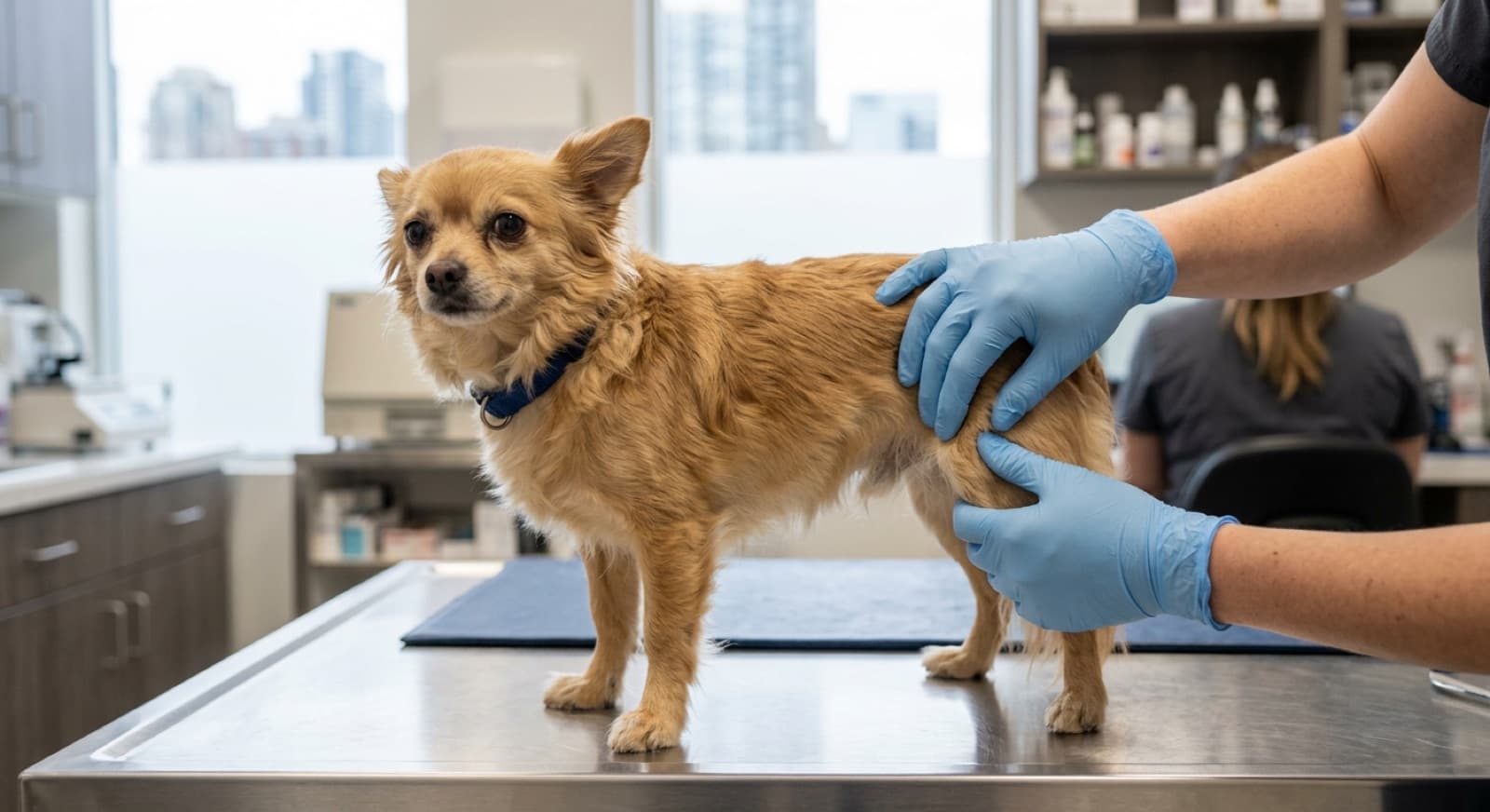
The breed-defining orthopedic issue. About 25% of Chihuahuas develop patellar luxation at some point in life. The kneecap (patella) slips out of its groove on the thigh bone.
Grading system (1 to 4):
- Grade 1. Kneecap can be pushed out manually but slides back on its own. Often asymptomatic.
- Grade 2. Slips out during normal activity, returns on its own. Visible skipping or hopping gait.
- Grade 3. Sits out of place most of the time but can be returned manually. Persistent lameness.
- Grade 4. Permanent dislocation. Surgery is required.
Signs to watch for: skipping or hopping gait, holding a back leg up briefly while walking, sudden yelping after a jump, and stiffness after rest.
Calgary diagnosis: palpation exam plus X-rays at a GP vet, about $200 to $400. Grading should be documented in the chart at every annual visit.
Treatment: Grade 1 and many Grade 2 cases are managed conservatively with weight control, joint supplements (glucosamine, omega-3), and avoiding stairs and jumps. Grade 3 and 4 require surgical correction. Calgary cost: $3,000 to $5,000 per knee at Western Veterinary Specialist & Emergency Centre.
About 20 to 30% of affected Chihuahuas develop luxation in the second knee within a few years. Pet insurance enrolled before any vet exam documents a knee issue is essential. Once graded in the chart, it becomes pre-existing.
Why do Chihuahuas have such bad teeth?
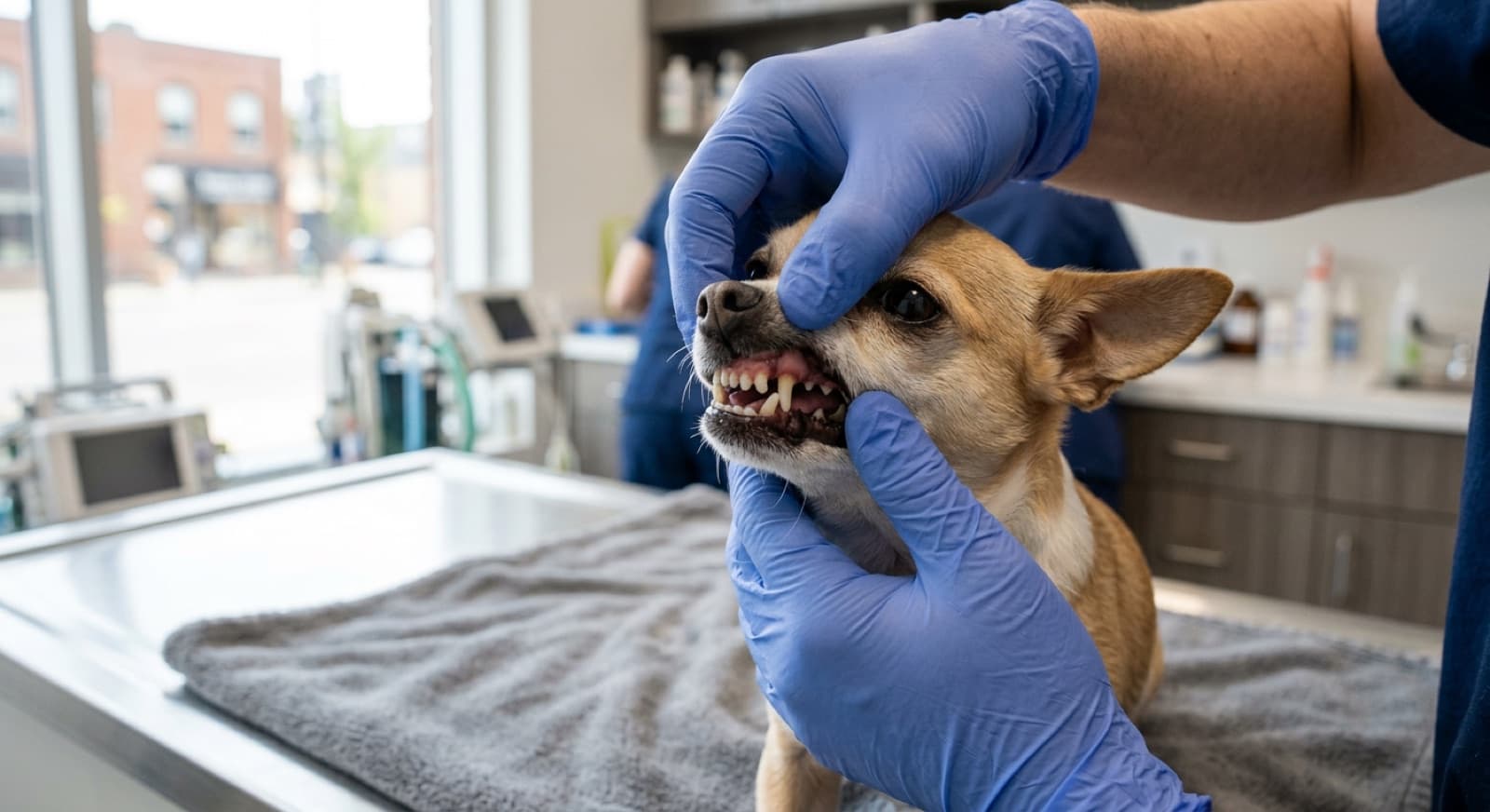
Tiny mouths plus a full set of dog teeth equals overcrowding, retained baby teeth, abnormal bite, and rapid plaque buildup. Dental disease is nearly universal in Chihuahuas by age 5 to 8. About 80 to 90% need extractions during their lifetime. Many lose most of their teeth by age 10.
Calgary dental cleaning cost: $800 to $2,000 depending on how many extractions are needed. Most Chihuahuas need cleanings every 12 to 18 months. Cottonwood Animal Hospital and Country Hills Pet Hospital both offer dedicated dental services with digital dental X-rays, which catch root and bone disease invisible to the naked eye.
Symptoms: bad breath, drooling, dropping food, reluctance to chew, swollen or bleeding gums, and visible tartar.
Prevention is non-negotiable: daily brushing with dog-safe enzymatic toothpaste from puppyhood, VOHC-approved dental chews, and an annual oral exam at every vet visit. Most Calgary Chihuahua owners underestimate this. Lifetime dental costs frequently run $8,000 to $15,000+.
The heart connection. Untreated dental disease causes systemic inflammation that worsens heart disease, which matters more than usual because mitral valve disease is also common in senior Chihuahuas.
Anesthesia note. Dental cleanings require anesthesia, so any Chihuahua over 7 needs pre-anesthesia bloodwork and a cardiac exam first.
Do Chihuahuas get heart disease?
Yes. Mitral valve disease (MVD) is common in older Chihuahuas, similar in pattern to Cavaliers though less universal. About 40 to 50% of Chihuahuas over age 10 develop a heart murmur from MVD.
The mitral valve degenerates and starts to leak. Early stages are silent and only detected at an annual vet exam by a stethoscope. Later stages bring coughing (especially at night), exercise intolerance, rapid breathing, fainting, and abdominal distension.
Calgary diagnosis: GP heart murmur grading plus a specialty cardiology echocardiogram at Western Veterinary Specialist & Emergency Centre. Echo cost: $400 to $700.
Treatment follows the ACVIM staging system:
- Stage B1 (murmur, no enlargement). Annual monitoring.
- Stage B2 (murmur with heart enlargement). Start pimobendan (Vetmedin), which delays heart failure.
- Stage C (symptoms present). Pimobendan plus ACE inhibitors (benazepril, enalapril) plus diuretics (furosemide).
- Stage D (refractory). Intensive medication management.
Monthly medication costs run $40 to $150 at Calgary pharmacies. Most Chihuahuas with MVD live many years with proper management. Annual cardiac auscultation by your GP vet is part of the senior screening protocol.
Heart murmurs in young Chihuahuas may be congenital (pulmonic stenosis, patent ductus arteriosus) rather than MVD. These need an echo for definitive diagnosis.
What is hypoglycemia in Chihuahua puppies?
A true emergency in Chihuahua puppies and adults under 3 lbs. Tiny dogs have minimal glycogen reserves. A few hours without food, plus stress, cold, or excitement, can drop blood sugar to dangerous levels fast.
Symptoms come on fast: sudden lethargy, wobbliness, weakness, glassy stare, cold to the touch, drooling, vomiting, seizures, and finally collapse and unconsciousness. This can kill a small puppy in hours.
Emergency response:
- Rub Karo syrup, pancake syrup, or honey on the gums. A small amount, repeated every 5 minutes.
- Wrap the puppy in a warm towel because they cannot regulate temperature in this state.
- Drive to a Calgary 24-hour emergency vet immediately. Mission Veterinary Emergency Hospital and Western Veterinary Specialist & Emergency Centre both handle small-breed emergencies.
ER stabilization cost: $500 to $2,000 depending on severity.
Prevention: feed Chihuahua puppies and very small adults every 3 to 4 hours, never let them go more than 6 hours between meals, keep them warm, minimize stress during long days, and always keep a tube of high-sugar syrup at home.
Most adult Chihuahuas over 4 lbs outgrow the risk, but the under-3-lb teacup-sized Chihuahuas remain vulnerable for life.
What is hydrocephalus in Chihuahuas?
Fluid buildup on the brain. Apple-headed Chihuahuas with a molera (an open soft spot on the skull that never fully closes) are at elevated risk.
The molera is more common in apple-head Chihuahuas than deer-heads and is considered breed-standard, but it allows for less protection of the brain and can be associated with hydrocephalus when severe.
Symptoms typically appear in puppies and young dogs: a domed or larger-than-normal head, the eyes appearing to point outward and downward (“sunset gaze”), circling, walking in tight circles compulsively, seizures, blindness, slow learning, difficulty with house training, and developmental delays.
Diagnosis: clinical signs plus an MRI of the brain, $2,500 to $3,500 at Calgary specialty neurology (Western Veterinary Specialist & Emergency Centre, VCA Canada West).
Treatment: mild cases use corticosteroids and diuretics to reduce fluid pressure. Severe cases may need surgical placement of a ventriculoperitoneal shunt, $4,000 to $8,000, with mixed outcomes. Many mildly affected dogs live reasonably normal lives with medication. Severely affected puppies often have a poor long-term prognosis.
For adopters: gently examining a puppy for an open molera at the top of the skull is reasonable. A small molera is breed-typical and usually harmless. A large open area combined with neurological signs is a red flag. Reputable breeders avoid pairing two dogs with prominent moleras.
What is tracheal collapse in Chihuahuas?
A common problem in small breeds, including Chihuahuas. The cartilage rings that hold the windpipe open weaken and start to flatten, especially during inhalation. The signature symptom is a distinctive honking or goose-like cough, often triggered by excitement, exercise, drinking water, or pressure on the throat.
Other signs: exercise intolerance, gagging, retching, bluish gum colour in severe episodes, and worsening cough at night.
Calgary diagnosis: chest X-ray (sometimes fluoroscopy for collapsing trachea) at a GP vet, $300 to $600. Severity is graded 1 to 4 by how much the trachea collapses.
The single most important prevention step: use a harness, not a collar. A collar pulling on a Chihuahua neck can trigger or worsen tracheal collapse. A back-clip harness distributes pressure across the chest and shoulders. Front-clip harnesses are also fine.
Treatment of mild cases: cough suppressants (hydrocodone, butorphanol), bronchodilators, and weight management. Severe cases (Grade 3 to 4 with constant coughing) may need surgical tracheal stenting at Calgary specialty surgery, $3,000 to $7,000 with significant ongoing risks.
Avoid: smoke, dusty environments, hot dry air, and stressful events. Calgary winter dry indoor air can worsen symptoms. A humidifier helps. Tracheal collapse is progressive but most dogs are well-managed for years with conservative care.
What eye problems do Chihuahuas have?
The large, prominent Chihuahua eye is beautiful and structurally vulnerable. Common conditions:
- Corneal ulcers. Scratches from grass, dust, or rough play. The prominent eye position means more exposure. Calgary treatment runs $200 to $600 per ulcer.
- Dry eye (KCS). Insufficient tear production. Lifetime cyclosporine drops, about $30/month.
- Cataracts. Common in senior Chihuahuas. Calgary cataract surgery runs $3,000 to $5,000 per eye.
- Progressive retinal atrophy (PRA). Gradual blindness, DNA testable at Embark Vet ($150 to $200).
- Distichiasis. Extra eyelashes scratching the cornea. Surgical correction in severe cases.
- Glaucoma. Painful pressure buildup in the eye. Emergency.
Daily eye care: wipe corners with a damp soft cloth or sterile saline pad, and book annual eye exams. Any sudden squinting, cloudiness, or excessive tearing is a same-week vet visit. Calgary specialty veterinary ophthalmology: VCA Canada West, Western Veterinary Specialist & Emergency Centre.
How do Calgary winters affect Chihuahuas?
Chihuahuas are one of the most cold-vulnerable breeds for Calgary winters. Short coat, low body fat, and a high surface-area-to-volume ratio (small body loses heat fast) mean frostbite and hypothermia are real risks.
General rule: at minus 10 Celsius, limit outdoor time to 5 to 10 minutes. At minus 20 Celsius or colder, only the briefest bathroom breaks, and only with insulation.
Winter kit:
- A well-fitted winter coat is non-negotiable.
- Booties protect paws from frostbite, road salt, and ice cuts. Most Chihuahuas adapt to booties in 1 to 2 weeks of consistent use.
- Pad balm helps if booties are refused.
- Indoor potty pads are reasonable for the coldest weeks.
Cold stress signs: shivering, lifting paws off the snow, whining, slowing down, or curling up to refuse to walk. Get them inside immediately.
Frostbite typically hits ear tips, tail tip, and paws. Signs include pale or grey skin that later turns red or black, swelling, and pain. Take any suspected frostbite to a Calgary vet within hours.
The hypoglycemia link. Cold weather worsens hypoglycemia risk because the dog burns calories to stay warm. Feed slightly more in winter, and keep your emergency Karo syrup handy.
Heat is the other extreme. Chihuahuas overheat fast in summer because of their small size and poor thermoregulation. Avoid pavement walks above 25 Celsius. See our Chihuahua winter survival guide for the full Calgary protocol.
What about hypothyroidism and other senior issues?
Hypothyroidism is common in senior Chihuahuas. The thyroid gland produces less hormone, slowing metabolism and affecting skin, coat, weight, and energy.
Symptoms: unexplained weight gain on a normal diet, lethargy, hair thinning or symmetric hair loss, dry flaky skin, recurrent skin infections, cold intolerance (worse than the baseline Chihuahua cold sensitivity), and slowed heart rate.
Diagnosis: a thyroid panel (T4, free T4, TSH) at a GP vet, $150 to $300 in Calgary. Annual senior bloodwork starting at age 7 should include thyroid values.
Treatment: daily levothyroxine pills, lifelong. Cost runs $20 to $40/month at Calgary pharmacies. Recheck thyroid levels at 6 weeks, then annually. Most dogs respond well within 4 to 8 weeks.
Other senior screening priorities:
- Annual cardiac auscultation. Refer to specialty cardiology if a murmur develops.
- Senior bloodwork (CBC, chemistry) to catch kidney and liver changes early.
- Blood pressure check. Hypertension is under-diagnosed in small breeds.
- Quarterly weigh-ins. A 0.5 lb gain on a 5 lb Chihuahua is 10% of body weight.
What annual screening should my Calgary Chihuahua get?
A Chihuahua-specific annual screening protocol catches the breed-typical issues early.
- Annual full dental exam at every vet visit, with professional cleaning every 12 to 18 months once tartar is visible.
- Patella palpation at every vet visit. Grading should be documented in the chart so year-over-year changes are clear.
- Annual cardiac auscultation by your GP vet, starting from age 5. If a murmur is detected at any age, refer to Calgary specialty cardiology for an echo within 1 to 2 months.
- Annual eye exam, including a check for cataracts in seniors, dry eye, and corneal ulcers.
- Senior bloodwork (CBC, chemistry, thyroid) starting at age 7.
- Monthly home weigh-ins. Even a 0.5 lb gain on a 5 lb Chihuahua is 10% of body weight and significantly worsens patellar luxation, MVD, and tracheal collapse.
- Annual chest X-ray once a heart murmur or chronic cough develops.
Calgary cost for the full annual workup: $300 to $600 at a GP vet (not counting dental cleanings or specialty echo). Senior packages at Calgary clinics often bundle the screening tests at a discount. Document everything, and ask for a copy of all reports. This pays off for pet insurance, for specialty referrals, and for tracking changes over time.
Calgary specialist directory
Save these contacts before you need them. Calgary specialty referral generally requires a regular vet referral, but knowing the destination shortens the timeline in an emergency.
- Western Veterinary Specialist & Emergency Centre. Cardiology (MVD echo, Stage B2+ management), orthopedic surgery (patellar luxation correction), neurology (hydrocephalus MRI, syringomyelia workup), and 24-hour emergency.
- Mission Veterinary Emergency Hospital. 24-hour emergency, hypoglycemia stabilization, small-breed-friendly intake.
- VCA Canada West. Cardiology, ophthalmology, neurology referral.
- Cottonwood Animal Hospital. Dental services with digital dental X-rays.
- Country Hills Pet Hospital. Dental services and small-breed-focused care.
Pet Poison Helpline: 1-855-764-7661. Charges a per-call fee but is fast and trustworthy.
When should I enroll my Chihuahua in pet insurance?
Before the first vet visit, ideally on adoption day. Every condition documented in the medical record afterward becomes pre-existing and is excluded.
Chihuahua-specific lifetime risks (patellar luxation, dental, MVD, tracheal collapse, hydrocephalus) can easily total $20,000 to $40,000+ over a 14 to 18 year lifespan. Pet insurance is one of the highest-ROI decisions for this breed.
What to verify when shopping:
- No exclusions for hereditary or congenital conditions. Some Canadian insurers exclude these by default. Read the fine print.
- Annual or lifetime limit of $15,000+ to cover potential ortho surgery plus ongoing cardiac care.
- 80% to 90% reimbursement after the deductible.
- Deductible of $300 to $500 (lower premiums for higher deductibles).
- Specialty and emergency coverage included.
Calgary premiums for a young healthy Chihuahua: $35 to $70/month with a $300 deductible and 80% coinsurance.
Top providers for Chihuahuas: Trupanion (no per-condition limits), Pets Plus Us, Petsecure. Avoid: any policy with per-condition limits under $5,000 or annual limits under $10,000.
The enrollment timing reality. Insurance bought on adoption day, before any vet visit, gives full coverage for everything the breed develops later. Insurance bought after the first GP exam (which will document any existing patellar laxity, heart murmur, or dental issue) gives you a policy with those conditions permanently excluded. The gap is enormous over a 15-year lifetime.
Frequently Asked Questions
Patellar luxation?
About 25% of Chihuahuas develop it. Graded 1 to 4. Grade 1 and many Grade 2 are managed with weight control and supplements. Grade 3 to 4 need surgery at $3,000 to $5,000 per knee at Calgary orthopedic specialists. About 20 to 30% develop it in the second knee within a few years.
Dental disease?
Nearly universal by age 5 to 8. Tiny mouths overcrowd a full set of teeth. About 80 to 90% need extractions in their lifetime. Calgary cleanings cost $800 to $2,000 every 12 to 18 months. Daily brushing from puppyhood is the single most effective prevention step.
Mitral valve disease?
Common in seniors. About 40 to 50% of Chihuahuas over age 10 have a heart murmur from MVD. Calgary echo costs $400 to $700. Treatment follows ACVIM staging with pimobendan in Stage B2 and adding ACE inhibitors plus diuretics in Stage C. Most dogs live many years with proper management.
Hypoglycemia?
A true emergency in puppies and adults under 3 lbs. Symptoms: sudden lethargy, wobbliness, seizures. Rub Karo syrup on the gums and drive to Mission Veterinary Emergency Hospital or Western Veterinary Specialist & Emergency Centre. Prevent by feeding small dogs every 3 to 4 hours and keeping syrup at home.
Hydrocephalus?
A risk in apple-headed Chihuahuas with an open molera (soft spot on the skull). Signs: domed head, circling, seizures, sunset gaze. Diagnosis is MRI at $2,500 to $3,500. Mild cases manage on corticosteroids. Severe cases may need a shunt with mixed outcomes.
Tracheal collapse?
Common in small breeds. Signature honking cough. Use a harness, not a collar, for every leash walk. Mild cases manage on cough suppressants and weight control. Severe cases may need surgical stenting at $3,000 to $7,000. Keep indoor air humidified in Calgary winter.
Eye conditions?
Large prominent eyes are vulnerable. Common: corneal ulcers, dry eye (KCS), cataracts in seniors, PRA, distichiasis, glaucoma. Annual eye exams catch most issues early. Sudden squinting or cloudiness is a same-week vet visit.
Annual screening?
Dental exam every visit. Patella palpation every visit. Cardiac auscultation annual from age 5. Eye exam annual. Senior bloodwork including thyroid from age 7. Monthly home weigh-ins. Annual chest X-ray once a cough or murmur develops. Total cost: $300 to $600 a year at a GP vet.
Chihuahua Adoption Calgary
Where to find them, costs, apple-head vs deer-head, coat types, rescue options.
Is a Chihuahua Right for You?
The Calgary fit check: lifestyle, kids, climate, fragility, lifespan reality.
Chihuahua Winter Survival
Calgary cold protocol: coats, booties, time limits, frostbite signs, indoor pads.
Senior Chihuahua Adoption
Adopting older Chihuahuas in Calgary. Cardiac, dental, and mobility considerations.
New dog? Start with these care guides
Everything a new adopter needs to set up a safe, happy home.