The short answer
Grooming a Cocker is really two jobs: managing the ears as a health issue, and keeping the feathering from matting. Brush the feathering to the skin every 2 to 3 days, keep the ear-canal hair trimmed for airflow, and dry the ears fully after every bath or swim. Know that the plucking question and the clip-versus-strip decision are both genuinely contested, and that clipping a silky coat can change its texture. For most pet homes, a puppy cut and a solid ear routine is the honest, comfortable setup.
Start with the ears: grooming as prevention
A Cocker's ears are the headline. Long, heavy, low-set, and hairy, with a canal that runs warm, humid, and waxy, they are the breed's single biggest recurring medical problem, and good grooming is genuine prevention.
Most Cocker grooming advice buries the ears under a line about cleaning them weekly. That is backwards, because the ear is the whole reason grooming this breed is more than cosmetic. The Cocker ear is long, heavy, and low-set, it grows hair inside the canal, and the breed tends to over-produce ear wax, so the canal stays warm, humid, and waxy. That is an ideal environment for the yeast and bacteria behind the ear infections Cockers are famous for. The breed is also prone to allergies and skin conditions that feed the same cycle.
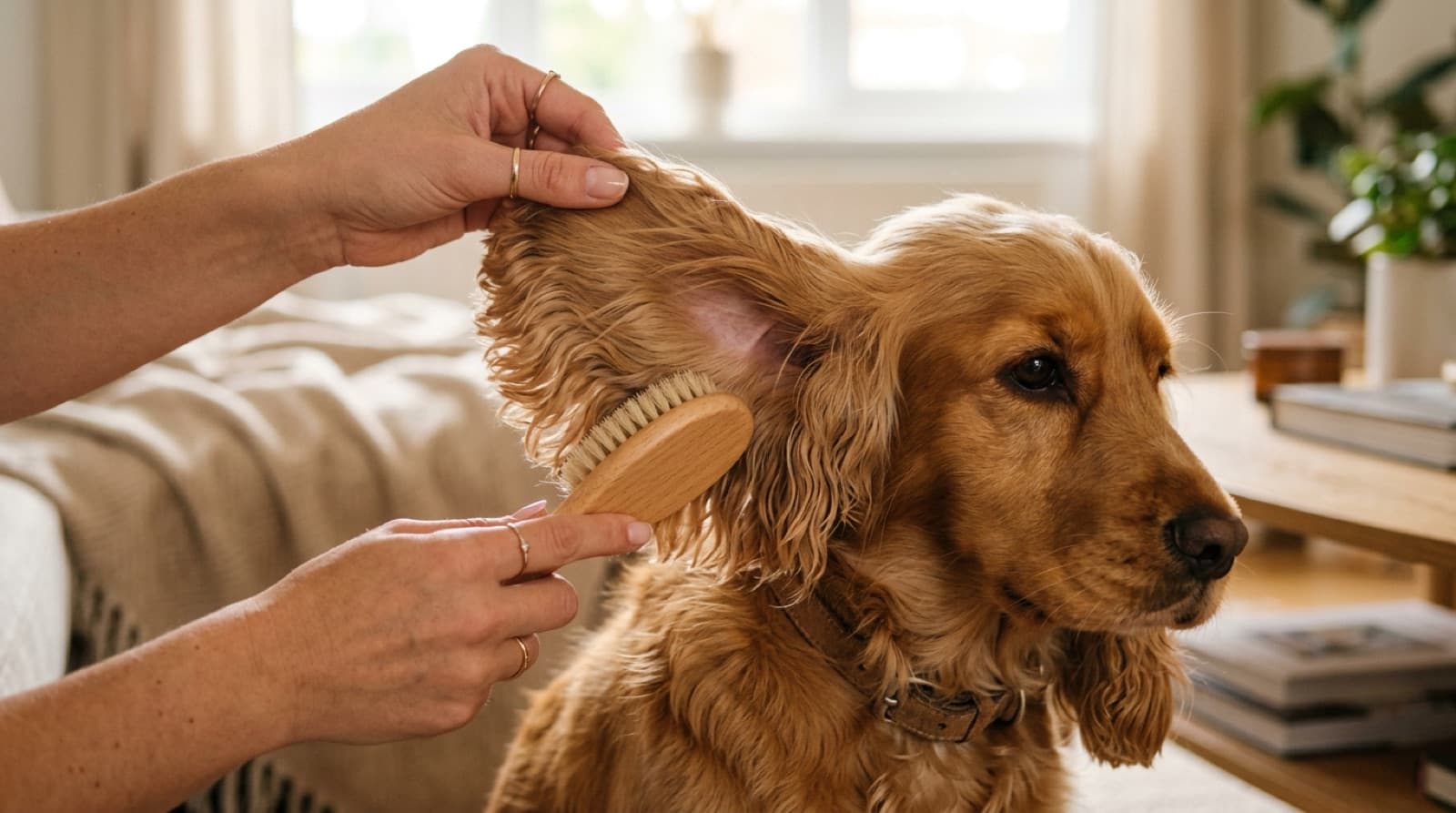
The grooming that helps is specific. Keep the hair around the canal opening trimmed so air can move, dry the ears thoroughly after every bath and every swim, and keep the ear feathering out of the food and water bowls, since damp, dirty feathering wicks moisture straight to the ear. Clean with a vet-approved ear solution rather than home vinegar or alcohol recipes, and wipe with gauze rather than cotton balls, which can leave fibres. One honest nuance many articles miss: if your Cocker has no history of ear trouble, do not over-flush a healthy ear, because aggressive cleaning can itself irritate. Watch for head-shaking, odour, redness, or scratching, and treat those as the veterinary signs they are. The American Kennel Club has a good overview of ear-infection signs and prevention.
Feathering: the real matting workload
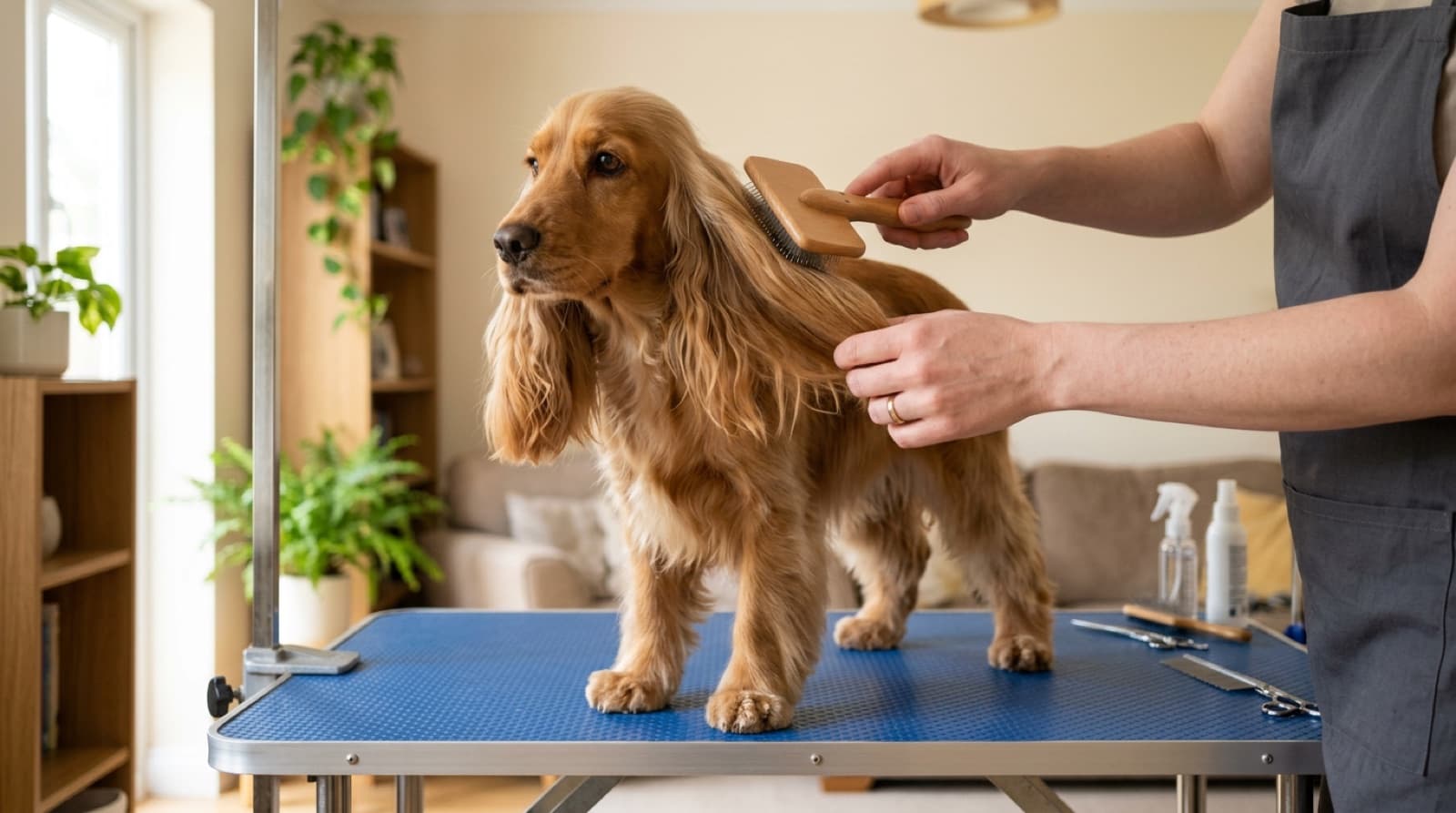
A Cocker has two coat zones: a shorter body coat and the long, silky feathering on the ears, chest, belly, and backs of the legs. The feathering is the entire grooming story, because it mats far faster than the body coat and it is where nearly all the trouble concentrates. Owners who brush the top of the coat and think they are done keep finding mats, because the mats form at the skin under that feathering where the brush never reached.
The fix is line brushing down to the skin. Part the feathering, brush each section from the skin outward with a slicker brush, then confirm with a metal comb, using the fine-toothed end on the delicate ear and leg feathering. If the comb snags, there is a mat the slicker missed. A little detangling spray eases the comb through and reduces breakage. For tidying the feathering and blending a home trim without shave lines, a pair of thinning shears is the tool that keeps the look while cutting the mat risk.
Some of the product links in this section are Amazon affiliate links — we may earn a small commission at no extra cost to you. It never changes which products we recommend.
The matting hotspots to check daily are behind the ears, the armpits and behind the elbows, the belly, the tail base, and around the paws. Never bathe a matted Cocker, since water only tightens the tangles, and if a coat is pelted to the skin the humane answer is a shave-down rather than hours of painful de-matting. Stretching groomer visits too far is what forces that shave-down.
Clip or hand-strip, and why your Cocker's coat type decides
Here is a fork most guides skip, and it changes the whole plan. Not all Cockers have the same coat. Working or field-line Cockers tend to have a coarser, shorter, harsher topcoat that mats less and responds to hand-stripping. Show-line Cockers, and the silky American lines in particular, carry a longer, plusher, more profuse coat with heavy feathering and a much higher matting burden. A single grooming routine cannot be right for both.
Hand-stripping pulls the dead harsh topcoat out by hand or with a stripping knife. It preserves the weatherproof texture, the breed outline, and reduces matting and shedding, but it only works on dogs with the right harsh coat, and it is slow, skilled work. Clipping is what most pet owners do, and it is perfectly fine, with one honest warning: clipping cuts the guard hairs, and the regrowth often comes in softer, denser, and woollier, sometimes duller in colour, and it can take 6 to 12 months to settle, occasionally never fully returning in a silky coat. Nobody who bought a glossy show coat expects that, so decide with your eyes open. If you want the low-maintenance route, a puppy cut clipped every several weeks is the standard pet answer.
Bathing, drying, and the sanitary basics
Bathe a Cocker roughly every 4 to 6 weeks, more for active dogs, always after a full brush-out. A gentle dog shampoo suits most dogs, though a Cocker prone to skin issues may need a specific product on the vet's advice, since the breed can run to seborrhea and allergy-related skin. Rinse fully.
Drying matters more than owners expect, and for the usual reason plus a Cocker-specific one. Damp feathering re-mats as it dries, and a damp ear is an infection waiting to happen. Dry the coat in the direction of hair growth with a force dryer or a low-heat dryer while brushing, and pay special attention to getting the ears and the feathering fully dry. Keep nails short with a nail grinder or clipper, trim the hair between the paw pads, and tidy the sanitary area. A niche but genuinely useful item is a snood, worn at mealtimes to keep the ear feathering out of the bowl.
The honest cost: groomer versus doing it yourself
A Cocker costs more to groom than a same-size short-coated dog, and it is worth pricing in. In Canada, expect roughly $60 to $100 or more per professional groom in most cities, higher in Toronto and Vancouver, with hand-stripping and heavy de-matting priced above a standard puppy cut. Canadian grooming cost surveys like Dogster's give a sense of the ranges, though prices vary a lot with coat condition on arrival. At a groom every 4 to 6 weeks, that is a real several hundred dollars a year.
The extra cost comes from concrete labour: the feathering takes time to brush out, detangle, and scissor or blend; the ear cleaning and ear-hair work adds time; and a matted coat draws a de-matting surcharge or a shave-down. Grooming at home cuts the bill, and a starter kit, a quality slicker, a metal comb, detangler, blunt scissors, and a vet-approved ear cleaner, is modest. Adding clippers, guide combs, and a force dryer raises it but pays back fast against several hundred dollars a year, with the honest caveat that doing a Cocker well, especially the ears and feathering, takes some real skill and practice.
Thinking about adopting a Cocker Spaniel?
Commit to the ear routine and the feathering upkeep and you will have a happy, healthy dog. Browse Cocker Spaniels and Cocker mixes available now from the rescues we track across Canada.
See Available Cocker Spaniels →Frequently Asked Questions
How often should a Cocker Spaniel be groomed?
Professionally every 4 to 8 weeks, with at-home brushing every 2 to 3 days and daily during heavy-coat or shedding periods. The feathering, the long silky hair on the ears, chest, belly, and backs of the legs, is what sets the pace, because it mats far faster than the shorter body coat. A puppy cut lowers the frequency; a full coat raises it toward daily.
Why does my Cocker Spaniel get so many ear infections?
The ear is a grooming and anatomy problem, not bad luck. Cocker ears are long, heavy, and low-set, they have hair growing in the canal, and the breed tends to over-produce ear wax, so the canal stays warm, humid, and waxy, which is an ideal environment for yeast and bacteria. Trimming the hair around the canal opening for airflow, drying the ears fully after baths and swims, keeping the ear feathering out of the food and water bowl, and vet-guided cleaning all lower the risk. Recurrent infections are a veterinary issue, so loop in your vet.
Should I pluck the hair inside my Cocker's ears?
It is genuinely debated, so do not do it on autopilot. Traditional groomers pluck ear-canal hair for airflow, but many veterinarians now prefer gently trimming it with blunt-tipped scissors, because plucking can inflame the canal and sometimes triggers an infection rather than preventing one. And if your Cocker has no history of ear problems, over-cleaning a healthy ear can itself be irritating. Ask your vet what is right for your individual dog, based on its ear history.
Will clipping change my Cocker Spaniel's coat?
It can. Clipping cuts the guard hairs, and the regrowth often comes in softer, denser, and woollier, with a duller texture, and it can take 6 to 12 months to normalize, sometimes never fully returning in the silky American lines. Hand-stripping preserves the original weatherproof texture and reduces matting, but it only works on dogs with the right harsh coat and is time-consuming. Most pet owners clip and accept the texture change; owners of harsh-coated working lines often strip.
Puppy cut or full coat, which is easier?
A puppy cut is far lower maintenance and mats much less, at the cost of the breed's flowing show look. It takes the feathering down to a manageable length so the daily brushing is quicker and the matting hotspots are smaller. The full coat needs near-daily line brushing of all that feathering to stay mat-free. For most pet homes, a puppy cut is the honest, comfortable choice.
Where do Cocker Spaniels mat the most?
Anywhere the feathering meets friction or moisture: behind the ears, in the armpits and behind the elbows, on the belly, at the base of the tail, and around and between the paw pads. The ear feathering itself mats readily and drags in food and water. These are the spots to check every day and to brush down to the skin, because a felt mat can hide under a coat that looks fine on top.
How often should I bathe my Cocker Spaniel?
Roughly every 4 to 6 weeks for most pets, and more often for active or working dogs. The two rules that matter are brushing the coat mat-free before the bath, since water tightens existing tangles, and drying the feathering and especially the ears completely afterward, since damp feathering mats and a damp ear canal invites infection. Always brush first, dry fully.
Can I groom my Cocker Spaniel at home?
Yes, and it saves several hundred dollars a year, but doing the feathering, the ear work, and safe de-matting well takes practice and the right tools. Most owners land on a hybrid: regular at-home brushing, ear care, and bathing, plus a professional groom every several weeks for the clip and tidy. Start with brushing and ear maintenance, and add clipping once you are comfortable.
What to Feed a Cocker Spaniel
The other half of Cocker care: portions, the ear-and-skin link to diet, and treats.
How to Groom a Poodle
Another coat that needs a full clip every visit, with the same line-brushing rules.
How to Groom a Bichon Frise
The pre-bath rule and daily brushing that keep a curly coat mat-free.
Cocker Spaniels for Adoption
Live listings of Cocker Spaniels and Cocker mixes from the rescues we track.