The short answer
Tire out both the body and the brain. Physical exercise, a walk, fetch or a flirt-pole chase, matched to your dog's breed and age; plus mental work, which tires a dog faster: a puzzle feeder at mealtime, a snuffle mat, and short training sessions. Never over-exercise a puppy, its growth plates are vulnerable, and lean on brain games through a Canadian winter. Some links here are Amazon affiliate links; we may earn a small commission at no extra cost to you, and it never changes what we recommend.
Most of what owners call misbehaviour, the chewed shoes, the barking, the digging, the bouncing off the walls, is a bored dog enriching itself. As the ASPCA puts it, dogs are built to play, sniff, chew and scavenge, and a dog that is not given outlets for those drives will find its own. The fix is rarely more discipline. It is more of the right kind of tiring out, and that means treating exercise as two jobs, the body and the brain, not one.
The one thing most owners miss
Mental work tires a dog out faster and more deeply than physical exercise alone. The AKC notes that making a dog concentrate for just 10 to 15 minutes is genuinely exhausting, enough that the dog is ready for a nap afterward. A food puzzle or a short training session can wipe out a dog that a long walk barely touches. If you only have twenty minutes, spend some of it on the brain.
Physical exercise: how much, and what kind
How much a dog needs varies enormously, and as the AKC notes, it depends on age, health and breed. As a rough guide, most dogs need somewhere between 30 minutes and 2 hours a day: high-drive working breeds like Border Collies, Australian Shepherds and Vizslas often need well over two hours, while flat-faced or low-energy breeds like Bulldogs and Bassets may do fine on 30 to 45 minutes. So the first move is to check your breed, and our breed exercise guides (for a Border Collie or a Husky, for instance) go deeper.
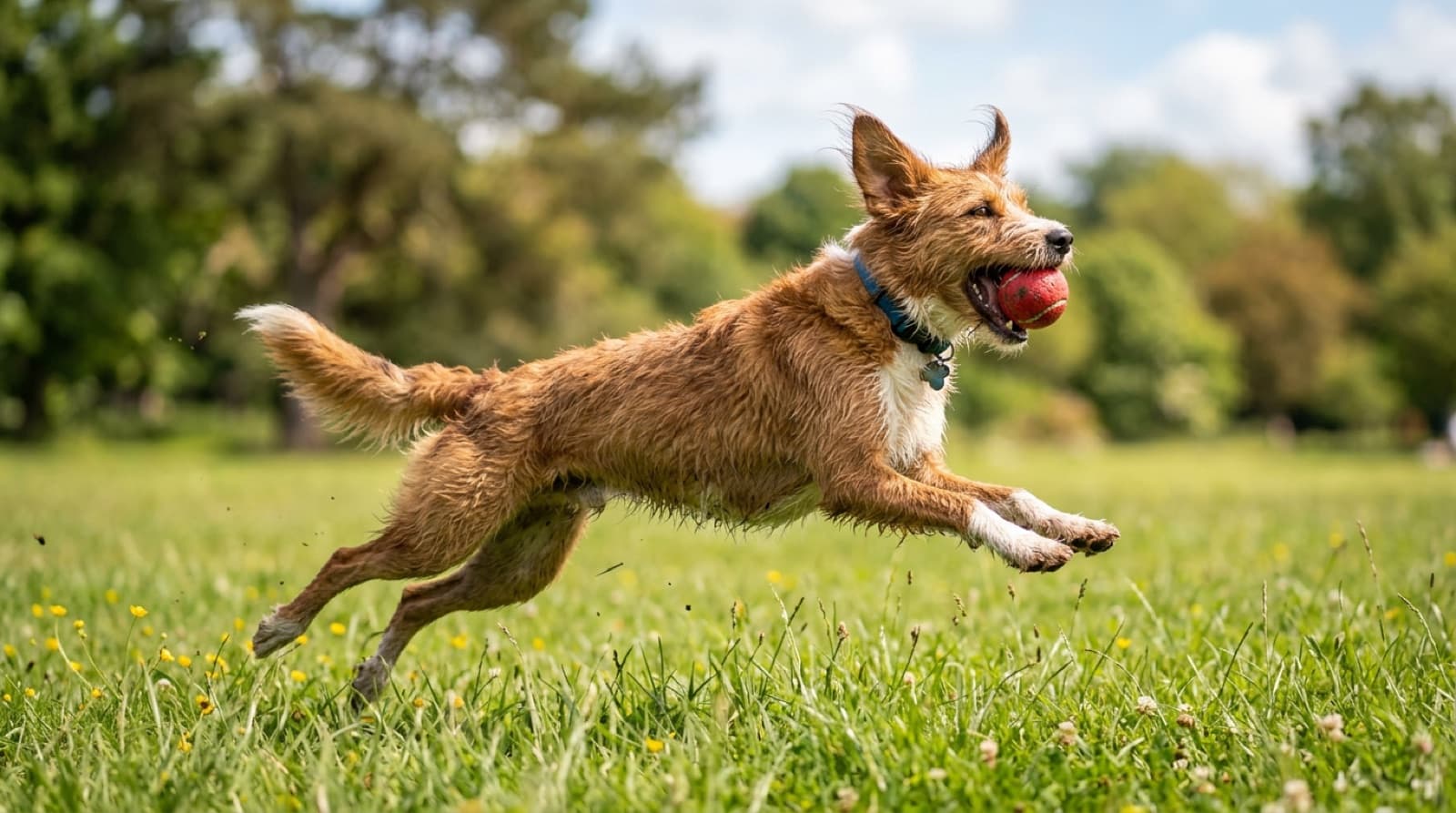
Beyond the daily walk, the best kinds of exercise do double duty. A “sniffari” or decompression walk, where you let the dog lead and sniff at its own pace, is both physical and mental, because sniffing is real brain work. Fetch and tug burn energy fast; swimming is wonderful low-impact exercise, especially for seniors and dogs with joint issues. For safe off-path freedom and recall practice, a long training line lets a dog range and explore without being loose. For fast cardio in a small yard, a ball launcher or a flirt pole gives a high-drive dog a proper chase.
Mental stimulation: the underrated half
This is where the fast wins are. The AKC notes that many destructive behaviours resolve simply by adding daily mental exercise, and dogs actually prefer to work for their food rather than have it handed over. Here is how to give the brain a workout, easiest first:
- Food puzzles and slow feeders. Feed at least one meal a day out of a puzzle feeder or a treat-dispensing toy. It is the single easiest daily enrichment, and it slows down fast eaters too.
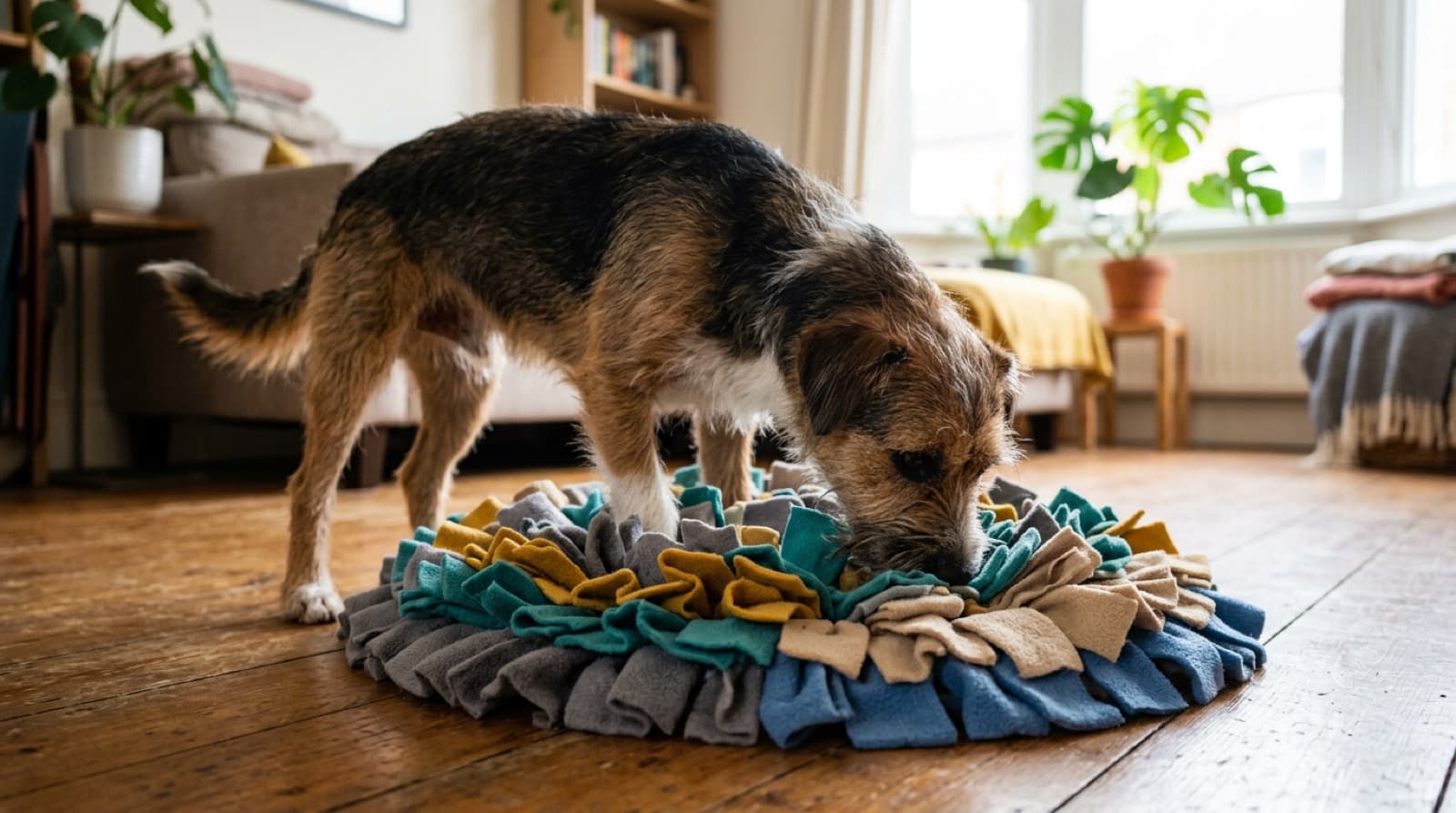
- Snuffle mats and scatter feeding. A dog's nose is its richest sense. Hide kibble in a snuffle mat or scatter it across the lawn or a room and let the dog forage. Low effort for you, hugely satisfying for the dog.
- Stuffable toys and lick mats. Stuff a KONG-style toy or spread food on a lick mat and freeze it for a long-lasting, calming activity, perfect for alone-time or settling in a crate.
- Chews. An appropriate long-lasting chew satisfies a deep natural drive. Keep it size-appropriate, supervise, and avoid anything too hard for the teeth, the same safe-chew rules from our dog-proofing guide.
- Training and trick sessions. Five to ten minutes of teaching, toy names, “find it,” impulse-control games, is mental exercise and bonding at once.
- Toy rotation. Put half the toys away and swap them weekly; an old toy becomes new again after a week in the closet.
Enrichment for when you're out
The passive layer does the work during your work hours. Before you leave, set out a stuffed frozen KONG-style toy, a puzzle feeder, a snuffle mat, and a safe chew, so the dog has legal ways to spend its energy instead of going looking for trouble. One honest caveat: this helps a mildly bored dog, but true separation anxiety, real panic when left alone, is a veterinary and behaviour matter, not a toy problem, so if your dog is genuinely distressed rather than bored, talk to your vet.
Puppies and seniors: the two special cases
You can over-exercise a puppy, and it matters. A young dog's growth plates are soft cartilage, and the VCA warns that forced, repetitive, high-impact exercise can injure them and cause lasting problems. Let a puppy set its own pace and save the jogging for later.
For puppies, the rule from the VCA is to avoid forced, repetitive, high-impact exercise, long jogs, repeated jumping for a frisbee, running on hard pavement, and stairs, until the growth plates close, roughly six months in small breeds and up to about eighteen months in giant breeds. Short walks and free play where the puppy chooses when to rest are fine. This is exactly where mental enrichment shines: it tires out a puppy that cannot be physically over-worked. Seniors are the mirror image, lower-impact and shorter but more frequent, with swimming and gentle sniff-walks ideal, and the mind kept busy even as the body slows.
Bad weather is no excuse (a Canadian note)
Between a deep-freeze winter and a summer heat wave, plenty of Canadian days cap outdoor exercise, and this is where the brain earns its keep. On an icy or minus-thirty day, a round of puzzle feeders, a snuffle-mat forage, a training session, and some indoor tug or flirt-pole chase will burn more energy than you would think. In summer, never exercise a dog hard in the heat, since heatstroke is a real risk and short-nosed breeds are especially vulnerable, so save vigorous outdoor exercise for early morning or evening and let indoor enrichment cover the middle of the day.
Match it to the dog, and watch for changes
Exercise needs are breed-, age- and health-specific, so match the plan to your individual dog rather than a generic number. A sudden drop in exercise tolerance, new reluctance to move, or a dog that tires far faster than usual is a reason to see your vet, since it can signal joint, heart or other problems. Short-nosed breeds and seniors need gentler plans, and everything recommended here is an enrichment aid, not a treatment: for genuine anxiety or a compulsive behaviour, work with your vet or a qualified behaviourist.
Match the dog to your life
Energy level is the number-one thing to get right when adopting. Browse adoptable dogs from rescues across Canada and find one that fits your routine.
Browse Adoptable Dogs →Frequently Asked Questions
How much exercise does my dog need?
Most dogs need roughly 30 minutes to 2 hours of exercise a day, but the AKC stresses it depends on age, health and breed. High-drive working breeds like Border Collies, Australian Shepherds and Vizslas often need well over two hours, while flat-faced or low-energy breeds like Bulldogs and Bassets may do fine on 30 to 45 minutes. Check your specific breed rather than assuming a one-size-fits-all number.
How do I mentally stimulate my dog?
Make your dog use its brain and nose: food puzzles and slow feeders at mealtime, a snuffle mat or scattered kibble for foraging, short training or trick sessions, and hide-and-seek scent games. The ASPCA notes dogs are wired to play, sniff, chew and scavenge, so enrichment simply lets them do those things in acceptable ways, which is exactly what keeps a bored dog out of trouble.
How do I tire out my dog?
Combine body and brain. Physical exercise like a walk, fetch, tug or swim, plus mental work like a puzzle feeder, a training session or nosework, tires a dog far more completely than either alone. The AKC notes even 10 to 15 minutes of concentrated thinking can leave a dog ready for a nap, so the brain is often the faster route to a calm dog.
Why is my dog so destructive or bored?
Destructive chewing, barking, digging and hyperactivity are the classic signs of an under-exercised, under-stimulated dog. The ASPCA notes dogs that do not get enrichment find ways to enrich themselves, and the AKC says many destructive behaviours resolve once daily mental exercise is added. Boredom is usually the root cause, so the fix is more enrichment, not more punishment.
Can you over-exercise a puppy?
Yes. A puppy's growth plates are soft cartilage and can be injured by forced, repetitive, high-impact exercise like long jogs, repeated jumping and hard-surface running, which the VCA warns can cause developmental abnormalities and lifelong pain. Stick to short walks and free play where the puppy sets its own pace until the plates close, roughly six months in small breeds up to about eighteen months in giant breeds, and lean on mental enrichment to burn the extra energy.
How do I exercise my dog indoors?
Use hallway fetch, tug, a flirt pole, stairs and hide-and-seek, plus mental enrichment like puzzle feeders, snuffle mats and short training sessions. Indoor brain games are a genuine lifeline through a Canadian winter or a summer heat wave, when hard outdoor exercise is limited or unsafe, and they tire a dog out surprisingly fast.
Does mental stimulation actually tire dogs out?
Yes, and often more than a walk. The AKC notes that making a dog concentrate for just 10 to 15 minutes is genuinely exhausting, and a food puzzle or training session can wear out a dog that physical exercise barely dents. Mental work is the underrated half of tiring a dog out, and it is the easiest half to do on a bad-weather day.
How do I tire out a dog without a walk?
Lean entirely on the brain and nose: a stuffed frozen KONG-style toy or lick mat, a puzzle feeder at mealtime, a snuffle mat, a ten-minute training session, or a find-it scent game around the house. This is ideal for bad weather, a dog recovering from surgery, or a puppy that should not be physically over-exercised yet.
My dog seems to have no energy suddenly. Is that a problem?
A sudden drop in exercise tolerance, reluctance to move, or tiring far faster than usual is worth a vet visit rather than assuming the dog is just lazy or well-exercised. It can signal joint pain, heart, or other health issues. Match any exercise plan to your dog's breed, age and health, and check with your vet before ramping up a new routine for a senior or a flat-faced breed.
How to Dog-Proof Your Home
Safe chews and toys, and the hazards to remove before day one.
Traveling With a Dog
Car safety and road trips for an active dog on the go.
Best Orthopedic Dog Bed
A hard-working dog needs a good place to recover and rest.
Explore Dog Breeds
Exercise needs vary hugely by breed. See what each one requires.
Best Dog Harness in Canada
rabbitgoo for a puller, Ruffwear for an escape artist, and why collars fail.