The short answer
Never shave a Golden, brush the feathering to the skin regularly (behind the ears is the worst spot), and ask the groomer for a light tidy, never a body clip. The double coat sheds year-round plus two coat blows, so deshed with an undercoat rake and a high-velocity dryer. The body coat is low-effort; the feathering on the ears, legs, belly, and tail is the real matting workload. A Golden is neatened, not clipped: feet, ears, tail, and stray feathering only.
Never shave the double coat
Shaving a Golden does not cool it and does not reduce shedding. It removes the coat's sun and heat protection and often grows back coarse, patchy, and wiry (coat funk). Deshed and tidy, never shave.
Start here, because it is the most common and most damaging mistake. A Golden Retriever has a double coat, a dense water-repellent undercoat under a longer wavy guard coat, and it is functional. The guard coat protects the skin from the sun, insulates against both heat and cold, and repels water, while in summer the undercoat sheds out and the guard hairs let air circulate at the skin. Shaving defeats all of that. The American Kennel Club is clear that shaving a double-coated dog for summer tends to make it hotter and exposes the skin to sunburn.
It also does not reduce shedding, since the dog still sheds the same volume of hair, just shorter. And the coat frequently pays for it: regrowth after a shave is commonly slow, coarse, wiry, and patchy, a state owners call coat funk, and the AKC grooming guidance and breed clubs advise against it for exactly this reason. The only justification for clipping a Golden close is a genuine medical or surgical need on a vet's advice. For heat and for shedding, the answer is deshedding, not shaving.
The feathering is the real matting workload
Here is what most Golden grooming articles miss by treating brushing as one undifferentiated task: the body coat is genuinely easy, and almost all the matting lives in the feathering. The feathering is the longer hair on the ears, the chest and ruff, the back of the legs (the britches), the underbelly, and the tail plume, and it tangles in the high-friction spots where those areas rub.
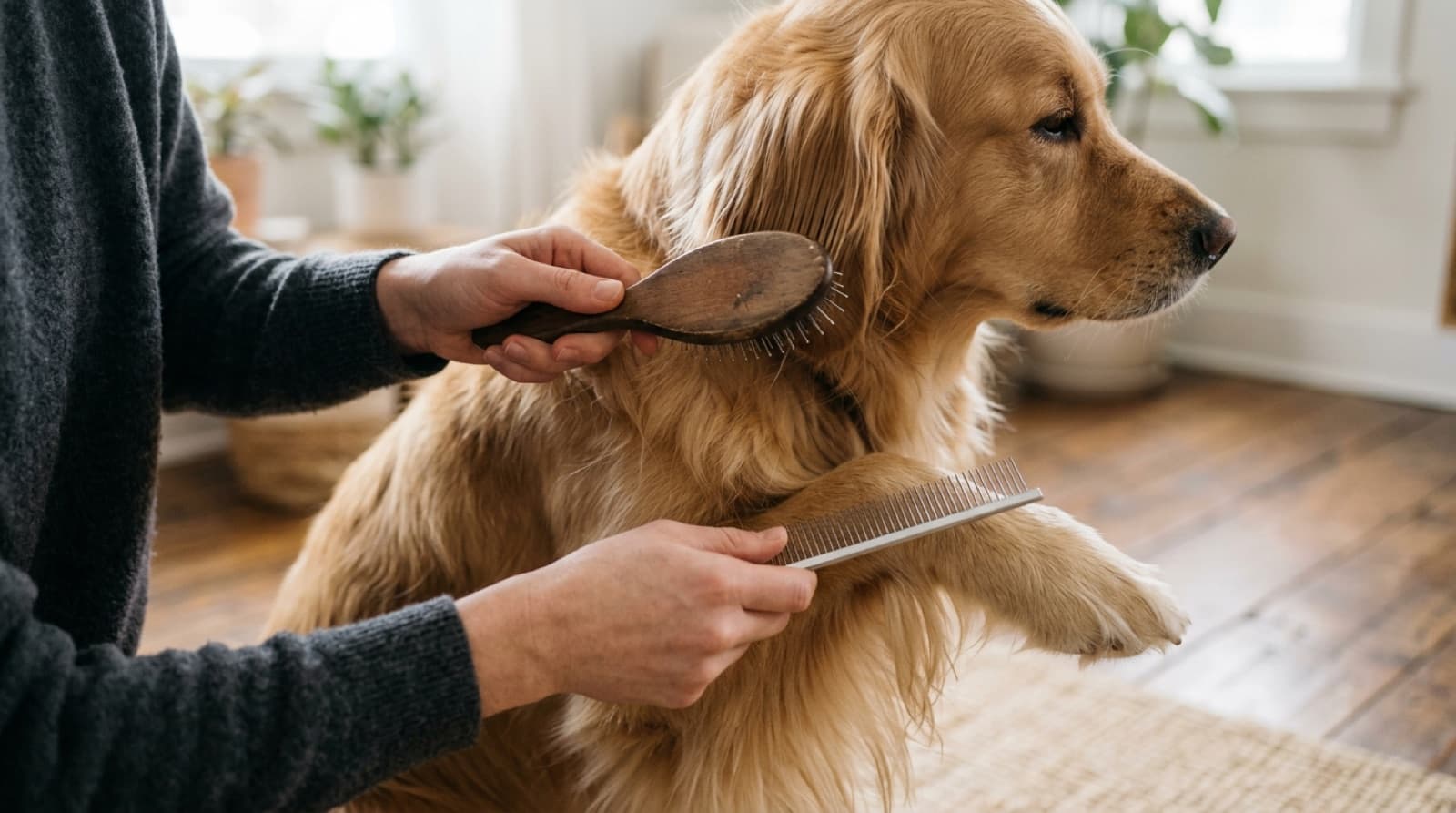
Behind the ears is the number one offender by a wide margin, and it deserves its own habit: brush behind the ears to the skin regularly even on days you do not have time for the whole coat. Work through the feathering with a slicker brush and then check with a metal comb: if it snags, there is a mat the brush missed. One firm safety warning: do not try to cut a mat out from behind the ears with scissors. Groomers see too many bad cuts and stitches from exactly that, because the skin there is thin and the scissors are close to it. If a mat will not brush out, a groomer removes it safely.
Some of the product links in this section are Amazon affiliate links — we may earn a small commission at no extra cost to you. It never changes which products we recommend.
Deshedding the body coat
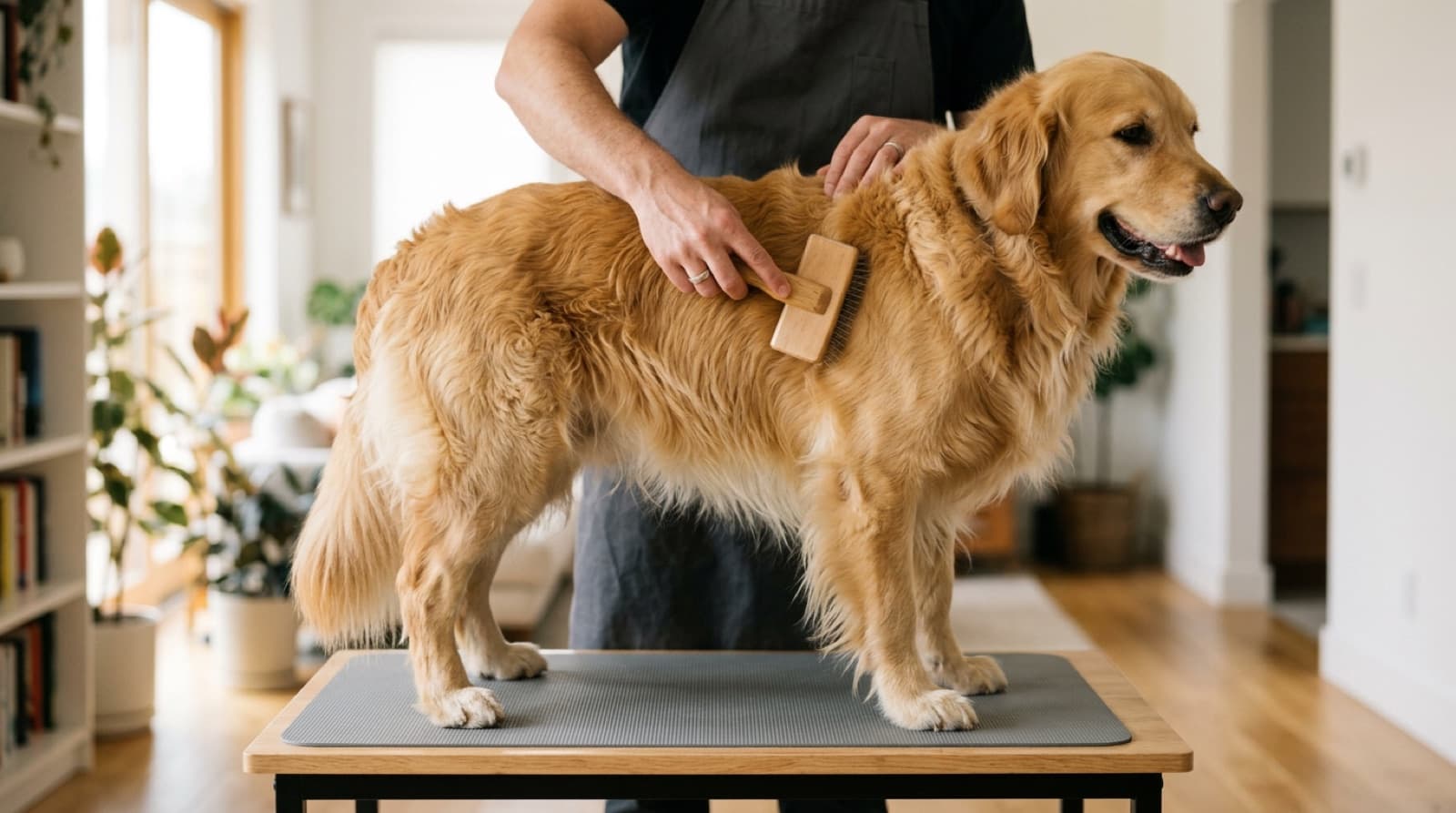
Away from the feathering, the body coat is straightforward, and the whole job there is managing the shed. A Golden sheds moderately all year and then blows its undercoat heavily in spring and fall. The tool that does the real work is an undercoat rake, which lifts the loose undercoat out from under the guard coat, backed by the slicker and a pin brush for routine body brushing.
The biggest single upgrade is a high-velocity dryer, which uses force rather than heat to blast the loose undercoat, dust, and dander out of the coat, doubling as a deshedding step and a dryer after a bath. A Furminator-style deshedding blade works too, but used heavily it can cut the guard coat, so keep it for light, occasional use. Brush the coat when it is lightly damp rather than bone-dry, since a dry coat breaks.
Light tidy yes, body clip no
This is the most misunderstood point in Golden grooming, and getting it right saves both a bad haircut and a lot of confusion. A Golden sits between a Husky and a Poodle. Unlike a Husky, which gets essentially no trim at all, a Golden is genuinely tidied: a groomer neatens the hair between the paw pads and around the feet so the dog does not slip or collect snowballs, tidies the ears and the tail, cleans up the sanitary area, and evens out stray feathering with thinning shears. A small paw trimmer handles the hair between the pads, which most dogs tolerate better than scissors near the feet.
But unlike a Poodle or a doodle, the body coat is never clipped short. The shortest a Golden should ever go is a light tidy. So when you book a groom, the instruction that gets you what you want is simple: a deshedding bath, a force-dry, and a light tidy of the feet, ears, tail, and stray feathering, and please do not clip the body. Owners who do not know this either ask for too much and end up with a shaved dog, or refuse all grooming and end up with matted feathering. The light-tidy middle ground is the right answer.
The honest cost: groomer versus doing it yourself
A Golden groom is a deshedding bath, a force-dry, and a light tidy, priced at large-dog rates by size and coat condition rather than by a clip. Expect large-breed deshedding grooming somewhere in the range of $70 to $150 or more at most Canadian salons, and since Goldens are priced by size and coat, it is worth calling for a quote; Canadian grooming cost surveys like Dogster's give a sense of the ranges. Most owners book every four to eight weeks, or less often if they brush diligently at home.
The at-home tradeoff is favourable if you are willing to put in the brushing. The core kit, an undercoat rake, a slicker, and a metal comb, is modest, and the bigger investments are a high-velocity dryer and a set of thinning shears plus a paw trimmer for the tidy work. A one-time dryer and rake outlay pays for itself against repeat deshed appointments, though many owners keep an occasional professional groom for the feet, ears, and tidy while doing the deshedding at home.
Thinking about adopting a Golden Retriever?
Keep the feathering brushed, skip the clippers, and that beautiful coat stays healthy. Browse Golden Retrievers and Golden mixes available now from the rescues we track across Canada.
See Available Golden Retrievers →Frequently Asked Questions
Should I shave my Golden Retriever in summer?
No. The double coat insulates against heat as well as cold, lets air circulate at the skin once the undercoat sheds out, and blocks the sun, so shaving makes overheating and sunburn more likely, not less. It does not reduce the amount your Golden sheds either. And a shaved Golden coat commonly grows back slowly, coarse, wiry, and patchy, a problem owners call coat funk, with some dogs never regaining the original texture. Deshed and brush instead of reaching for clippers.
Will a shaved Golden Retriever's coat grow back normal?
Often not fully. Regrowth after shaving a double coat is commonly slower, coarser, and patchy, because the undercoat returns faster than the guard coat, and some dogs never recover the original wavy texture. This is why groomers and breed clubs advise against shaving a Golden except for a genuine medical reason. If a shaved area is not regrowing properly, it is worth a veterinary look rather than just waiting.
Where do Golden Retrievers mat the most?
Behind the ears first, and it is the number one hotspot by a wide margin, then in the feathering on the back of the legs (the britches), the belly, and the tail plume. The body coat is easy; the feathering is the real matting workload. The habit that prevents most problems is brushing behind the ears and through the feathering to the skin regularly, even on days you skip the rest of the coat.
How often should I brush a Golden Retriever?
Weekly as a baseline, and daily during the spring and fall coat blow, always line brushing down to the skin rather than just skimming the surface. Pay particular attention to the feathering behind the ears, on the legs, and on the tail, where mats form. Brush the coat when it is lightly damp rather than bone-dry, since a dry coat breaks, and mist it first if needed.
Do Golden Retrievers need haircuts?
They need light tidying, not haircuts. A Golden is neatened at the groomer: the hair between the paw pads and around the feet, the ears, the tail, the sanitary area, and stray or uneven feathering trimmed with thinning shears. But the body coat is never clipped short. This is the distinction owners get wrong: a Golden sits between a Husky, which gets no trim at all, and a Poodle, which is clipped all over. The right instruction to a groomer is a deshedding bath, a force-dry, and a light tidy, and do not clip the body.
What is the best brush for a Golden Retriever?
A combination. An undercoat rake and a slicker brush for deshedding, and a metal comb to find and work the mats in the feathering and behind the ears. Skip bristle brushes, which do not penetrate the coat. A high-velocity dryer is the single biggest at-home upgrade, since it uses air rather than heat to blast out loose undercoat, so it doubles as a deshedding tool and a dryer.
How often should I bathe a Golden Retriever?
Roughly every four to eight weeks, and more only if the dog gets genuinely dirty. The Golden coat is built to get wet and carries protective oils, so over-bathing strips those oils and dries the skin. Brush the coat out before the bath, rinse thoroughly since the dense coat holds shampoo, and dry all the way to the skin, ideally with a dryer while brushing, which also pulls out loose coat.
How do I stop my Golden from shedding so much?
You cannot stop it, since a Golden sheds moderately year-round and heavily during two coat blows a year, but you can control where the hair ends up. Consistent brushing with an undercoat rake plus a bath and a thorough force-dry removes the loose undercoat on your terms, so far less of it lands on your floors and furniture. Shaving is not the answer and makes things worse.
How to Groom a German Shepherd
The same deshedding job, and a long-coat Shepherd shares the feathering challenge.
How to Groom a Husky
The other end of the double-coat scale, a breed that gets no trim at all.
What to Feed a Golden Retriever
The other half of Golden care: large-breed growth, weight control, and portions.
Golden Retrievers for Adoption
Live listings of Golden Retrievers and Golden mixes from the rescues we track.