The short answer
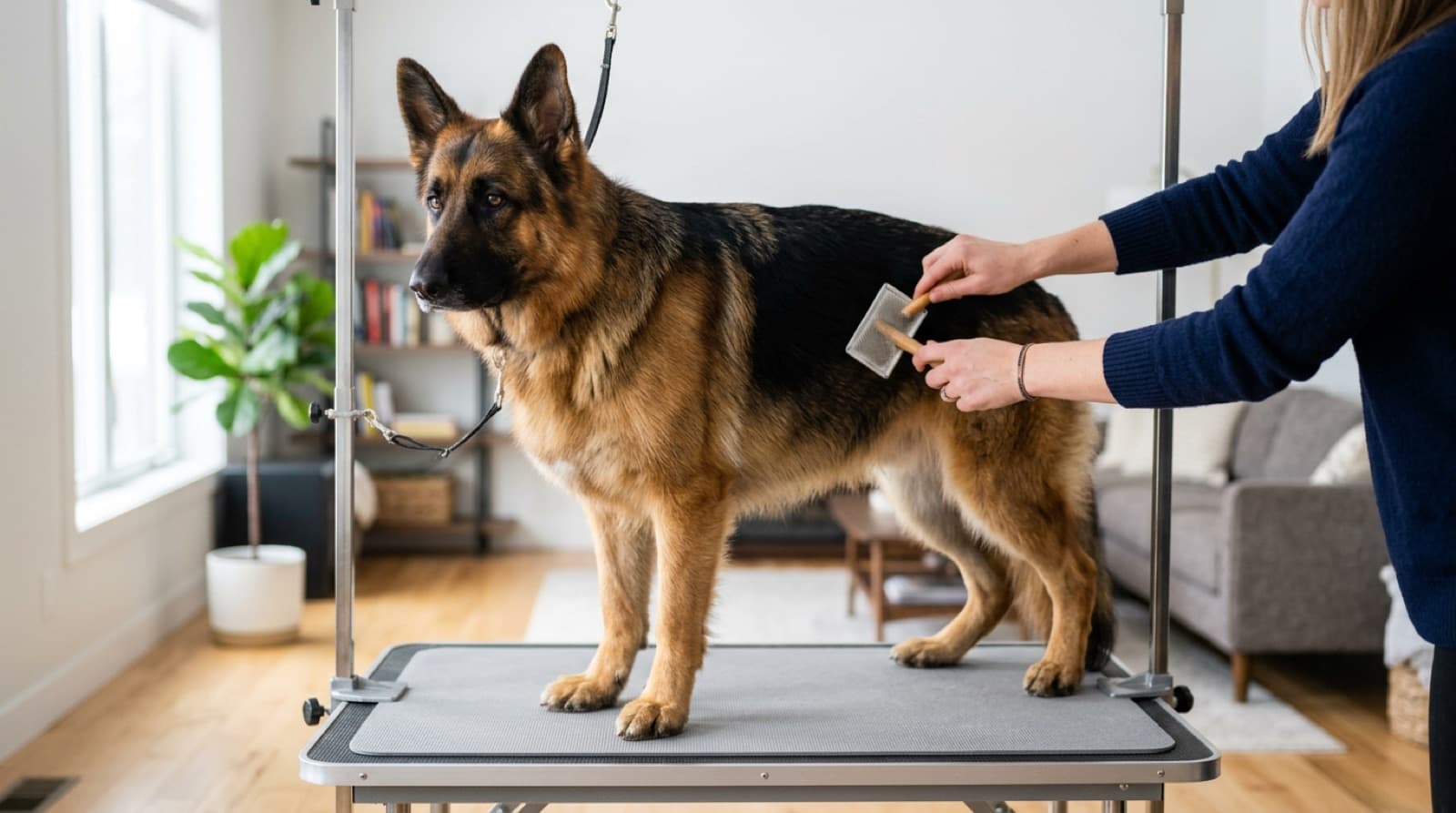
A German Shepherd sheds year-round plus two heavy coat blows, so grooming is constant shed management, not a haircut. And you never shave the double coat. Brush a stock coat several times a week and a long coat daily to the skin, using an undercoat rake and, ideally, a high-velocity dryer, which removes far more loose hair than a brush. Bathe only every few months. Know your coat type: a stock coat is wash-and-brush, a long coat mats in the feathering and needs more work.
The real story: year-round shedding, not just the blow
Most grooming articles frame shedding as a twice-a-year event. For a German Shepherd, that badly undersells it. A Shepherd sheds steadily every single day of the year, and then blows its undercoat heavily twice a year on top of that. That is the honest reality behind the German shedder reputation, and it is the thing to set your expectations around before you adopt one. If you are not prepared for daily fur on your floor, your clothes, and your car, the breed will surprise you.
The upside is that this is manageable, and the management is a routine rather than a panic. The core of it is reaching the dense undercoat with the right tool so the loose hair comes out on your terms rather than all over the house, plus a high-velocity dryer for the heavy lifting. Because the shed is constant, the routine has to be constant too: a Shepherd is not a dog you groom twice a year, it is a dog you brush through the week, every week. Get that rhythm going and the volume becomes background noise instead of a crisis.
Never shave the double coat
Shaving a German Shepherd does not reduce shedding and does not cool the dog. It removes the coat's insulation and sun protection and can trigger post-clipping alopecia, where the coat grows back patchy or never fully returns. Brush it, never shave it.
The single most common shedding mistake is thinking a shave will fix it. It will not, on either count. The German Shepherd double coat, a dense insulating undercoat under a medium harsh guard coat, regulates temperature in both directions and reflects the sun, so shaving it removes the dog's cooling system and exposes the skin to sunburn. As the American Kennel Club explains, a shaved double-coated dog is often hotter, not cooler. And it still sheds the same amount, just in shorter pieces.
The bigger risk is the coat itself. Shaving a double coat can cause post-clipping alopecia, where regrowth stalls for a year or more, the texture changes, the undercoat can return faster and thicker than the guard hairs, and some dogs never fully recover the original coat, as veterinary dermatology sources like the University of Minnesota describe. The only reason to ever clip a Shepherd close is a genuine medical or surgical need, on a vet's recommendation. For shedding, brushing is the answer, not clippers.
The tools that actually manage the shed
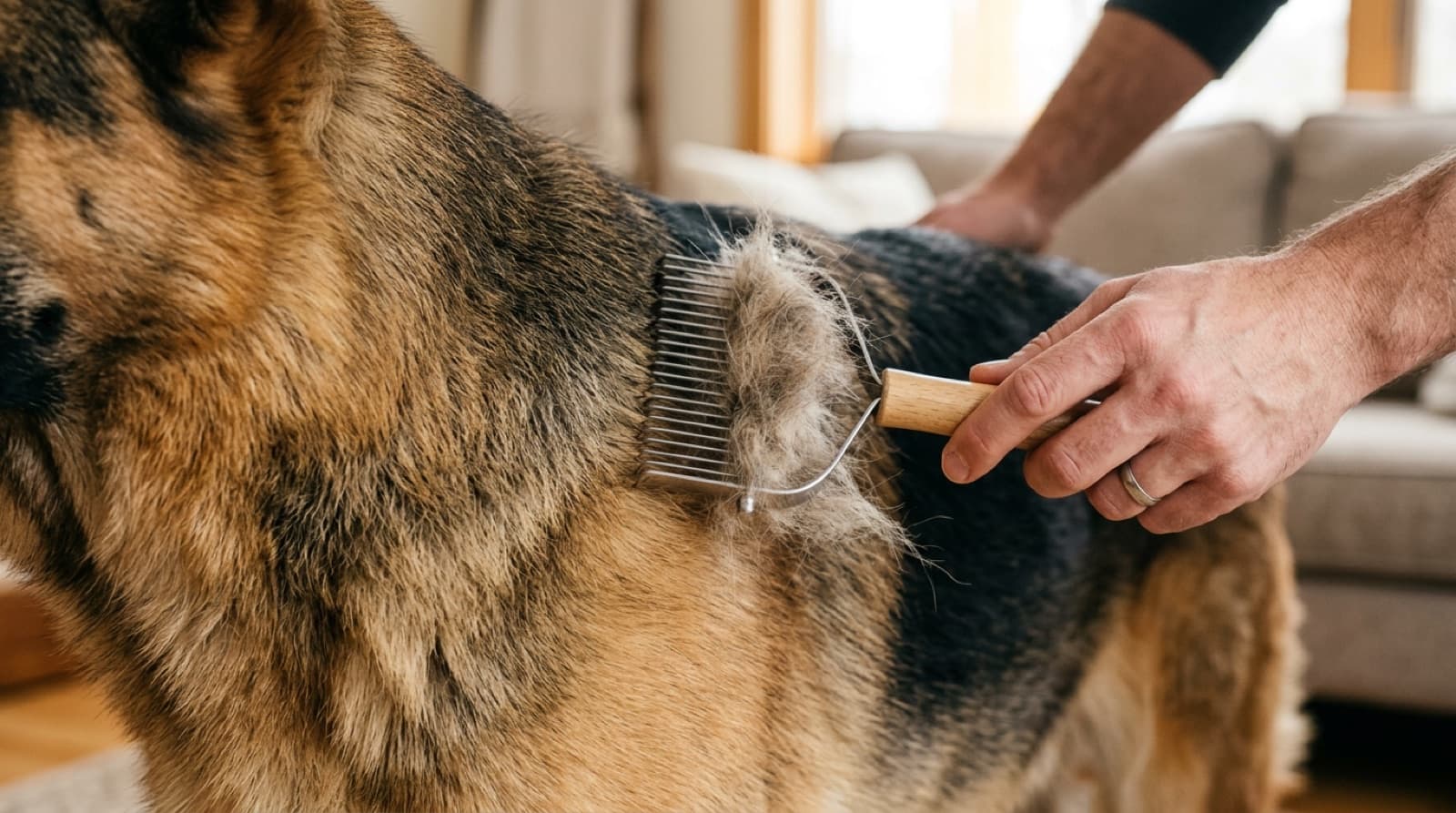
The reason so many owners say they brush constantly and their Shepherd still sheds everywhere is that they are surface brushing, running a brush over the guard coat while the dead undercoat stays packed underneath. The fix is an undercoat rake, which reaches through the guard coat to pull the loose undercoat out. It is the near-universal hero tool for the breed. A rubber curry brush used first helps loosen and lift the undercoat before the rake, and a slicker brush handles finishing and feathering.
The biggest upgrade, though, is a high-velocity dryer. A weekly blow-out can remove the large majority of loose hair in one session and lets you see down to the skin, which is far more efficient than daily vacuuming. For a long coat, add a wide-tooth metal comb to work the feathering and the mats behind the ears down to the skin.
Some of the product links in this section are Amazon affiliate links — we may earn a small commission at no extra cost to you. It never changes which products we recommend.
Stock coat or long coat: know which you have
Here is a distinction generic guides skip that changes the whole routine. Not all German Shepherds have the same coat, and the two main types need genuinely different grooming.
A stock coat is the standard medium-length double coat, and it is essentially wash-and-brush. An undercoat rake and a slicker keep it in good shape, matting is minimal, and the whole job is deshedding. A long coat, sometimes called a plush or long-stock coat, is silkier and carries pronounced feathering on the ears, legs, tail, and britches. That feathering tangles in the high-friction zones, behind the ears, in the armpits, the inner thighs, and the britches, exactly like a Golden's. A long coat needs daily brushing all the way to the skin with a slicker and a metal comb, not just a surface pass over the body. So the first thing to establish is which coat your dog has, because it tells you whether you are signing up for wash-and-brush or for daily feathering maintenance.
Bathing and the honest cost
Bathe a German Shepherd sparingly, roughly every three to four months or a couple of times a year unless the dog gets dirty, since the skin dries out easily and over-bathing strips the protective oils. Always brush the coat out first, and never bathe over a mat. A deshedding shampoo during a coat blow loosens the undercoat so it releases on the rinse, which is the heart of a professional deshed bath.
On cost, the key thing to understand is that a Shepherd groom is a deshedding bath and blow-out, not a haircut, so it is priced by size and coat density rather than by a clip. Canadian large-dog deshedding grooms commonly run somewhere in the range of $70 to $120 or more, higher during a heavy coat blow, and Canadian grooming cost surveys like Dogster's give a sense of the ranges. Many owners do it all at home; the main investment is an inexpensive undercoat rake plus, for the committed, a home high-velocity dryer, which pays for itself against repeat deshed appointments and a lot of vacuuming.
Thinking about adopting a German Shepherd?
Get the brushing routine going, skip the clippers, and the shedding becomes manageable. Browse German Shepherds and Shepherd mixes available now from the rescues we track across Canada.
See Available German Shepherds →Frequently Asked Questions
Do German Shepherds shed all year?
Yes. German Shepherds shed steadily year-round and then blow their undercoat heavily twice a year, in spring and fall, which is why owners half-jokingly say they shed 365 days a year and call the breed the German shedder. This is the defining grooming reality of the breed: it is not a twice-a-year event, it is constant maintenance with two intense peaks. The routine that keeps it under control is regular undercoat-rake brushing plus a high-velocity dryer, not the occasional cleanup.
Should I shave my German Shepherd in summer?
No. The double coat insulates against heat as well as cold and reflects the sun, so shaving can actually make the dog hotter and expose the skin to sunburn, and it does not reduce shedding. Worse, shaving a double coat can trigger post-clipping alopecia, where the coat grows back slowly, patchy, or with a changed texture, and sometimes never fully recovers. The only reason to clip a Shepherd close is a specific medical need on a vet's advice.
How often should I brush a German Shepherd?
Every other day to three or four times a week for a stock coat, moving to daily during a coat blow. A long-coat German Shepherd needs daily brushing to the skin, because the feathering on the ears, legs, tail, and britches mats in the high-friction spots. The key is reaching the dense undercoat with a rake rather than surface-brushing the guard coat, since that is where the loose hair packs.
What is the best brush for a German Shepherd?
An undercoat rake is the core tool, because it reaches the dense undercoat and pulls the loose hair that a surface brush leaves behind. Back it up with a slicker brush and, for a long coat, a wide-tooth metal comb to work the feathering and the mats behind the ears. A high-velocity dryer is the biggest upgrade for managing the shed. Use a Furminator-style deshedding blade only lightly, if at all, since heavy use can cut and damage the guard coat.
Is the Furminator bad for German Shepherds?
It can be if it is overused or pressed hard, because the blade can cut and thin the guard hairs and change the coat texture, and many owners report nearly ruining a coat that way. It also works better on a less dense stock coat than on a very thick one. Most experienced owners prefer a plain undercoat rake as the main tool and keep any deshedding blade for occasional, gentle use.
What is the difference between a stock coat and a long coat German Shepherd for grooming?
A stock coat is the standard medium-length double coat, and it is essentially wash-and-brush: an undercoat rake and a slicker keep it in good shape with minimal matting. A long coat, sometimes called a plush or long-stock coat, is silkier with pronounced feathering on the ears, legs, tail, and britches, and that feathering mats in the high-friction zones. A long coat needs daily brushing all the way to the skin with a slicker and a metal comb, so knowing which coat your dog has tells you how much work to expect.
How often should I bathe a German Shepherd?
Only every few months, roughly every three to four months or a couple of times a year, unless the dog gets genuinely dirty. German Shepherds have skin that dries out easily, and over-bathing strips the natural oils, irritates the skin, and can worsen shedding. Always brush the coat out before a bath, and never bathe over a mat, since water tightens mats into felt.
Do German Shepherds need professional grooming?
There is no haircut, so a Shepherd never needs to be clipped, but a professional deshedding bath with a high-velocity blow-out is a real help during a coat blow. Everything else, the regular brushing, the comb work on a long coat, the nails and ears, can be done at home. Many owners handle it all themselves with an undercoat rake and, for the committed, a home high-velocity dryer.
How to Groom a Husky
Another working double coat with the same never-shave, rake-and-blow rules.
How to Groom a Golden Retriever
The same feathering-and-shedding challenge a long-coat Shepherd shares.
What to Feed a German Shepherd
The other half of Shepherd care: large-breed growth, the sensitive stomach, and portions.
German Shepherds for Adoption
Live listings of German Shepherds and Shepherd mixes from the rescues we track.