The short answer
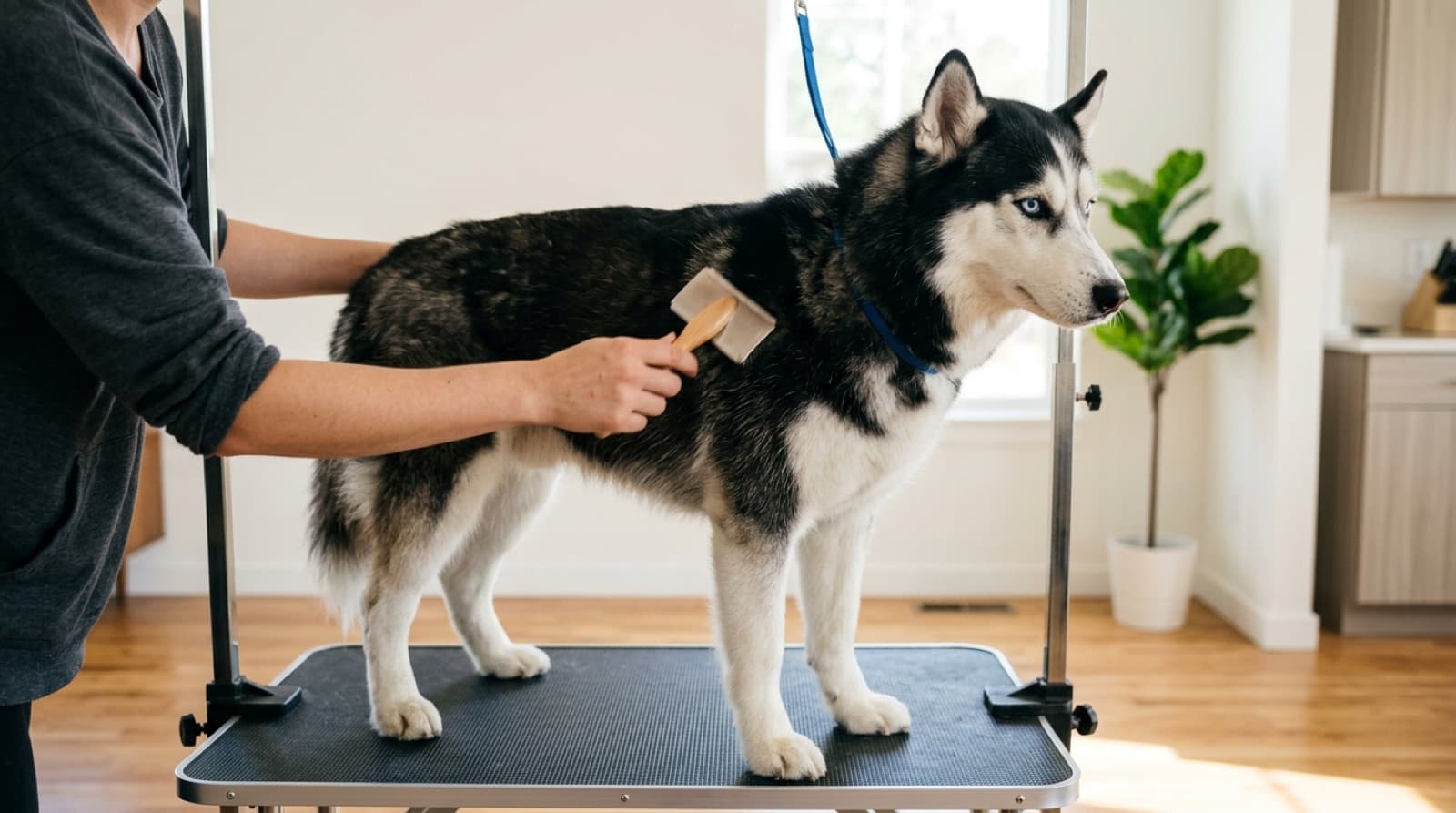
Never shave a Husky, and know that the coat is otherwise easy: no haircut, rare baths, self-cleaning. The double coat cools as well as warms, so shaving makes the dog hotter, does not reduce shedding, and can ruin the coat. Instead, brush two to three times a week with an undercoat rake, and daily through the twice-yearly coat blow, using a high-velocity dryer to blow the loose undercoat out. Bathe only a few times a year. That is the entire routine.
Never shave the double coat
A Husky's double coat is a cooling system, not just insulation. Shaving makes the dog hotter and sunburn-prone, does not reduce shedding, and can leave the coat patchy or permanently changed. Brush it, never shave it.
This is the one rule that matters most, and it is worth understanding rather than just following. A Husky has a working Arctic double coat: a dense, soft undercoat under a harsh, straight guard coat. Those two layers together regulate heat as well as cold. The undercoat traps a layer of insulating air that keeps the dog cooler in summer than bare skin would, and the guard coat reflects heat and shields the skin from the sun and from insects. Breed-rescue and grooming sources such as Snowdog Guru are consistent that shaving is a genuine risk, not just an aesthetic mistake.
So shaving a Husky for summer does the opposite of what people intend. It strips the cooling system and the sun protection, which rescues report is a real contributor to heat stroke, and it exposes pale skin to sunburn. It also does not touch the shedding, because the same volume of hair is still there. On top of that, the coat frequently grows back wrong: the undercoat returns faster than the guard coat, so the regrowth can come in patchy, wiry, or permanently altered, a problem known as post-clipping alopecia. The only reason to ever clip a Husky close is a specific medical or surgical need on a vet's advice. Because a coat that will not regrow can point to a health issue, that situation deserves a veterinary look rather than waiting it out.
The good news: otherwise, Huskies are low-maintenance
Here is the part most grooming articles bury under generic filler, and it is genuinely reassuring. Apart from the shedding, a Husky is one of the easier breeds to keep groomed. There is no haircut at all, because a Husky is never clipped or scissored. The coat is famously self-cleaning and low-odour, so most Huskies smell like very little and only need a bath a few times a year. There is no feathering to speak of, so matting is minor. Compared with a doodle that needs near-daily line brushing and a full groom every six weeks, a Husky is refreshingly simple.
What that means in practice is that the entire grooming job is two things: regular brushing to manage the year-round shed, and a more intensive push during the two coat blows a year. Get those right and everything else takes care of itself. The rest of this guide is really just how to brush well and how to survive the blow.
Brushing: the rake is the hero tool
The mistake owners make is surface brushing, running a brush over the top of the guard coat while the dead undercoat sits packed underneath. It feels like grooming, but the loose undercoat never comes out, and then it ends up on your floor and your clothes. The tool that fixes this is an undercoat rake, which reaches through the guard coat to pull the loose undercoat out without cutting the guard hairs. It is the single most-recommended Husky tool for a reason.
Back it up with a slicker brush for finishing and a wide-tooth metal comb for the mat-prone spots behind the ears and in the britches. Brush with the direction of the coat, two to three times a week normally. One honest caution: a Furminator-style deshedding blade works, but pressed hard or used too often it can cut and thin the guard coat, so use it sparingly and let the rake be your main tool.
Some of the product links in this section are Amazon affiliate links — we may earn a small commission at no extra cost to you. It never changes which products we recommend.
Surviving the coat blow
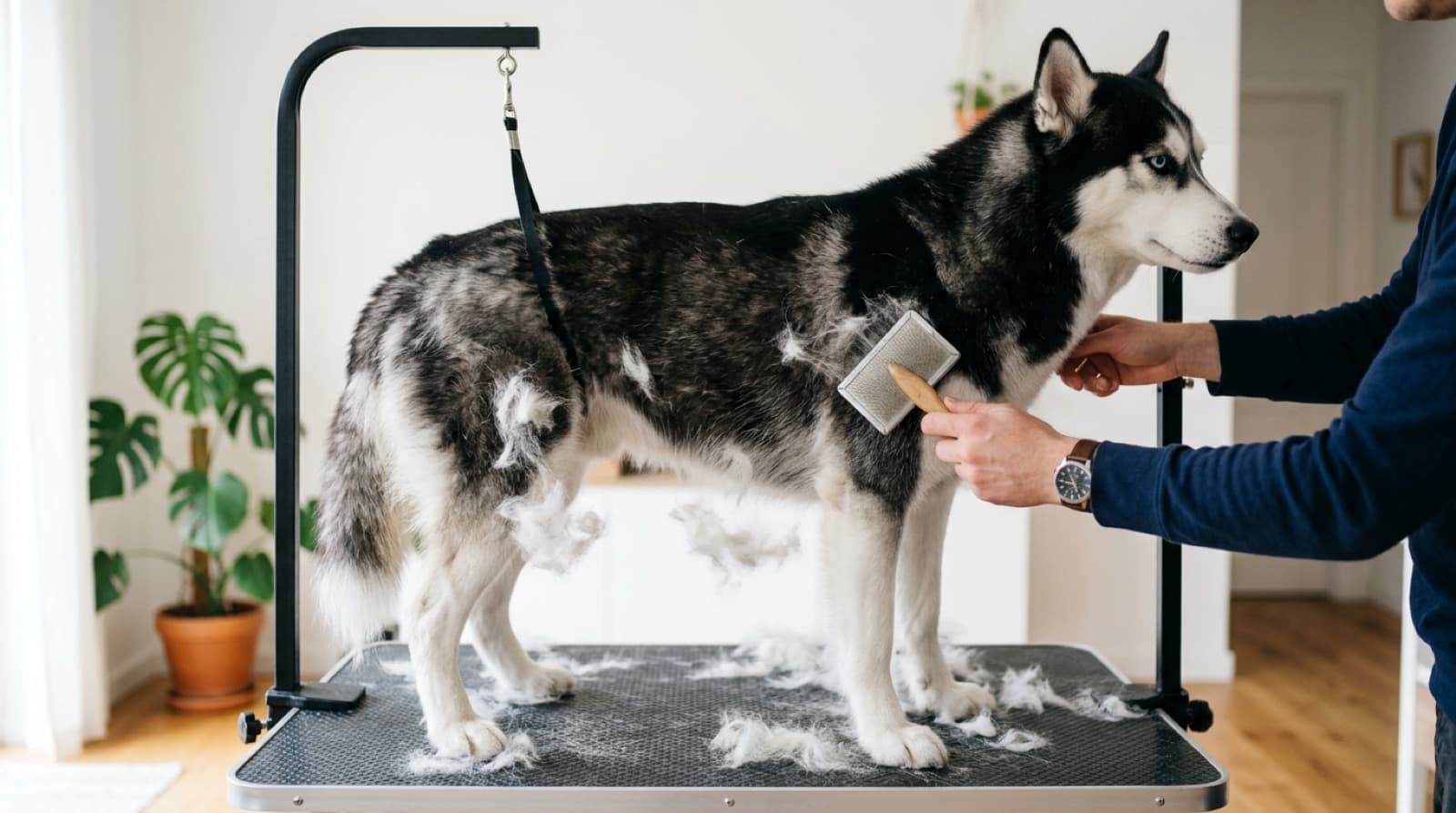
Once or twice a year, a Husky blows its coat, shedding the entire undercoat over a few weeks, sometimes up to six. The volume is genuinely startling the first time, and it is what people mean by the “fluffocalypse.” The temptation to reach for clippers is real. Do not.
The way through it is a high-velocity dryer. Give the dog a warm bath, which helps the dead undercoat release, then use the dryer to blast the loosened undercoat out of the coat, which clears in minutes what would take days of hand brushing. Between blow-outs, move to daily brushing with the rake to keep the loose down from packing into mats. A deshedding shampoo loosens the undercoat before the bath and makes the whole process faster. It is a busy couple of weeks twice a year, and then it passes.
The honest cost: groomer versus doing it yourself
Because there is no haircut, many Husky owners never pay a groomer at all. The only professional service that makes sense is a bath with a force-dry and deshed, which is most useful during a coat blow. Where owners do book it, Canadian large-dog deshedding grooms commonly land somewhere in the range of $70 to $140 or more depending on coat condition and city, and Canadian grooming cost surveys such as Dogster's give a sense of the ranges. Deshedding add-ons are common.
The at-home math is unusually favourable for a Husky. The core kit is just an undercoat rake, which is inexpensive, plus a slicker and a comb. The one bigger-ticket item is a high-velocity dryer, and owners who buy one often stop paying for deshed appointments entirely, since they can do the coat-blow blow-out at home. For a breed with no haircut and rare baths, a modest one-time tool spend covers a lifetime of grooming.
Thinking about adopting a Husky?
Be ready for the shedding, skip the clippers, and the coat mostly takes care of itself. Browse Huskies and Husky mixes available now from the rescues we track across Canada.
See Available Huskies →Frequently Asked Questions
Should I shave my Husky in summer?
No. The Husky double coat cools the dog as well as it warms it: the undercoat traps insulating air that works both ways, and the guard coat shields the skin from sun and insects. Shaving actually raises the risk of heat stroke and sunburn rather than lowering it, and it does not reduce shedding, since the same volume of hair is still there. It can also cause the coat to grow back patchy or permanently altered. Brushing out the dead undercoat, not shaving, is what genuinely keeps a Husky cool.
Will shaving my Husky reduce shedding?
No, and this is the second myth worth busting. A shaved Husky sheds exactly the same amount of hair, just in shorter pieces, and you are left with a damaged coat that may grow back wrong. The only thing that actually reduces what lands on your floor is removing the loose undercoat with a rake and, ideally, a high-velocity dryer. Shaving trades a manageable shedding problem for a permanent coat problem.
How often should I brush a Husky?
Two to three times a week normally, and ideally daily during the twice-yearly coat blow when the undercoat drops heavily. Brush with the direction of the coat, and use an undercoat rake to reach the dense undercoat rather than just skimming the guard coat on top. Between coat blows, a Husky is genuinely low-maintenance to brush.
How often should I bathe a Husky?
Rarely, roughly two to four times a year. The Husky coat is naturally self-cleaning and low-odour, with oils in the undercoat that repel dirt, so most Huskies simply do not need frequent baths. Over-bathing strips those oils, dries the skin, and can paradoxically make the dog smell more as the skin overproduces oil to compensate. A warm bath followed by a good blow-dry during a coat blow does help the dead undercoat release, though.
Do Huskies mat?
Much less than long-coated breeds, but they still felt in specific high-friction spots: behind the ears, in the rear britches, on the belly, and under the tail. Check those areas when you brush and work any tangles out with a comb before they tighten. Because a Husky has no long feathering to speak of, matting is a minor issue compared with a Golden or a doodle.
Do Huskies need professional grooming?
Mostly no, because there is no haircut. A Husky is never clipped or scissored, so the only professional service that makes sense is a bath with a force-dry and deshed, which is most useful during a coat blow. Plenty of Huskies never see a groomer at all, since regular brushing at home covers everything. If you buy a high-velocity dryer, you can do the coat-blow blow-out yourself and skip the appointments.
What is the best brush for a Husky?
An undercoat rake is the core tool, because it reaches through the guard coat to pull the loose undercoat without cutting the guard hairs. Add a slicker brush and a wide-tooth metal comb for finishing and for the mat-prone spots behind the ears and in the britches. A high-velocity dryer is the game-changer during the coat blow. Use a Furminator-style deshedding blade sparingly if at all, since aggressive use can thin and damage the guard coat.
How long does a Husky coat blow last?
Usually a few weeks, and sometimes up to about six, happening once or twice a year as the Husky sheds its entire undercoat. The volume is genuinely startling the first time, enough loose fur to stuff a pillow. The way through it is daily brushing with the rake and, if you have one, a high-velocity dryer to blow the loosened undercoat out, which does in minutes what days of hand brushing cannot.
How to Groom a Samoyed
The same never-shave, brush-and-blow rules on the fluffy white Arctic cousin.
How to Groom a Pomeranian
The same double-coat, never-shave rules on the pocket-sized spitz.
What to Feed a Husky
The other half of Husky care: the breed's light appetite, portions, and treats.
Huskies for Adoption
Live listings of Siberian Huskies and Husky mixes from the rescues we track.