The short answer
Feed a Greyhound a complete, quality food, keep it at its natural lean weight, and take its teeth seriously. A correct Greyhound shows the last few ribs and hip-bone tips, so do not let anyone push you to fatten it; anchor the target to race weight plus two to three pounds. Transition a retired racer off its track diet slowly to avoid stomach upset. The breed's real feeding-adjacent problem is dental disease, which needs brushing and vet cleanings, not a special kibble. Feed two meals from the floor, never raised, and tell any vet your dog is a sighthound.
A Greyhound is supposed to look lean
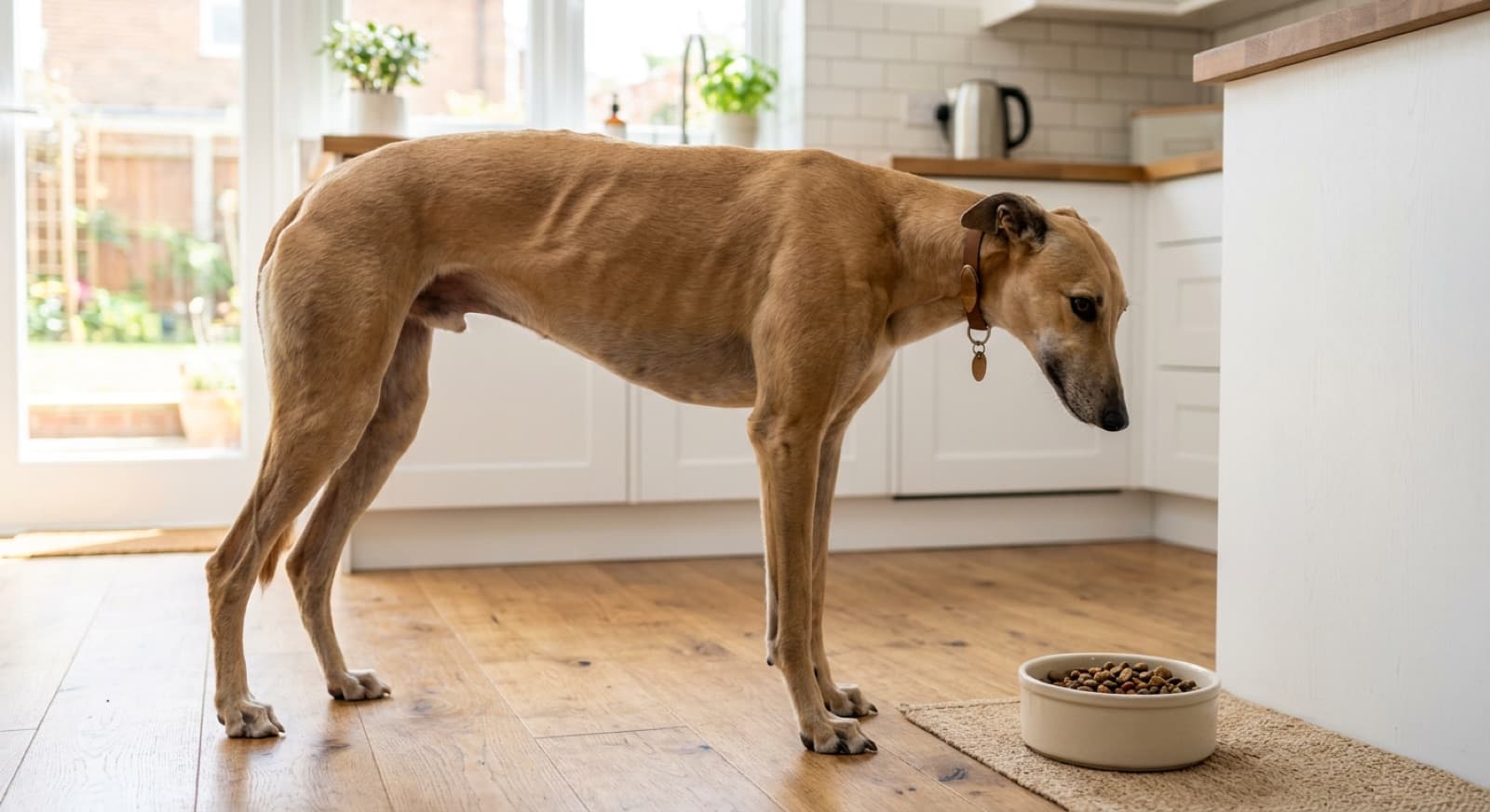
This is the most emotionally charged thing about owning a Greyhound: people will tell you your healthy dog is too skinny. They are wrong. Greyhounds are sighthounds with very little body fat, and a correct one shows the last one to three ribs, the tips of the hip bones, and sometimes the outline of the spine, all easily felt under a thin layer. The AKC specifically carves out sighthounds as naturally leaner, noting the hint of the last rib is not a problem.
Standard body condition charts say ribs should be felt, not seen, but those are written for typical breeds; a Greyhound at an ideal score will look skeletal next to a Labrador at the same score. The practical anchor is race weight: a healthy retired Greyhound usually settles about two to three pounds above its last racing weight. Use that plus a hands-on check, ideally with a Greyhound-savvy vet, rather than a stranger's opinion in the park. Keeping the dog lean is genuinely healthier. The landmark Purina lifespan study found lean dogs lived a median of nearly two years longer than overweight ones. The line that matters: ribs and hips easily felt with a thin fat cover is healthy; sharply prominent, knobbly bones with no fat, plus low energy, is genuinely underweight and worth a vet visit.
Transitioning a retired racer
At the track, a racing Greyhound eats a large ration, traditionally kibble plus raw meat and some cooked vegetables. When you bring one home, the single most important rule is to change the food slowly, over one to two weeks or more, because Greyhounds are prone to loose stools and gas when their diet changes too fast. Expect some digestive upset and a dull, flaky “kennel coat” in the early weeks; both improve over months with good nutrition and a little fish oil, not with frequent baths.
Feed twice a day, and if your dog arrives thin, gain the weight back slowly rather than all at once, anchoring to race weight plus two to three pounds. One myth to set aside: some sources claim retired Greyhounds need very high protein, over 40 percent, but mainstream guidance for a retired pet is a moderate-protein food, around 20 percent, with a named meat as the first ingredient. A retired Greyhound is no longer a track athlete and does not need a racing ration.
The teeth: the breed's biggest health problem
Dental disease is the single most common health problem in Greyhounds, far above other breeds. Food does not fix it. Daily brushing, VOHC products, and professional cleanings do, and many retired racers need dental work soon after adoption.
You will hear that “Greyhounds don't have bad teeth, they just didn't get dental care.” The data says otherwise. A large UK study from the Royal Veterinary College found dental disease was the breed's most common disorder, recorded in about 39 percent of pet Greyhounds, many times the rate of comparable large breeds. The cause is mixed: Greyhounds have fine bone around the teeth, so a little disease does outsized damage, and racing kennels rarely brush teeth. Whatever the cause, the high burden is real, so do not dismiss it.
Food is not the solution. Dry kibble does little below the gum line where periodontal disease starts. A controlled study in racing Greyhounds found that only daily brushing significantly reduced gum inflammation. So the real plan is daily toothbrushing with a dog toothpaste, dental products carrying the VOHC seal, and professional cleanings under anesthesia. Budget for a dental soon after adoption, because many ex-racers arrive needing extractions, and a Greyhound that is off its food is often telling you its mouth hurts.
Picky eaters and hard keepers
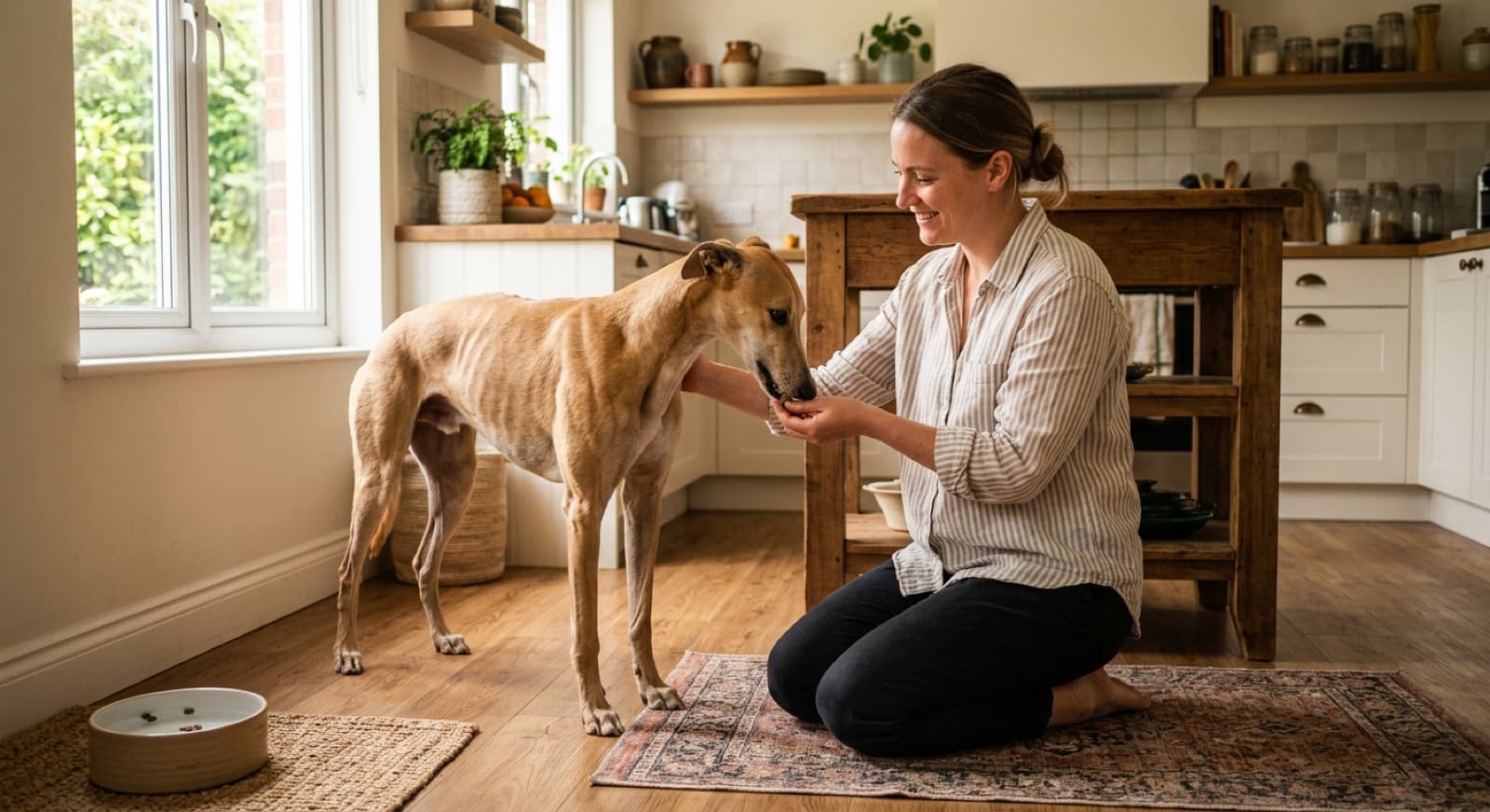
New Greyhound owners are often startled that their dog is not food-driven. Many graze, pick at the bowl, or eat once a day, and almost no one feeds plain kibble; a wet or meat topper is near-universal, and dogs bore of even a great topper within a week. This is normal breed behaviour, not a problem to fix, as long as the dog holds a healthy weight.
For genuine hard keepers, the sound approach is a quality, calorie-dense food, an extra small meal, and healthy fat in moderation. Keep fatty add-ins modest, though: rich extras like oily fish should be occasional, because too much fat can trigger pancreatitis. Skip the folk remedies like maple syrup or honey to stimulate appetite; if a Greyhound genuinely will not eat, the first move is to rule out dental pain, the breed's most common hidden cause, and other medical issues with your vet, who can prescribe a proper appetite stimulant if needed. Judge success by body condition and race weight, not by whether the bowl is licked clean.
The lean body behind it all
Keeping a Greyhound lean is not just cosmetic; it works with a genuinely unusual physiology, and that physiology is worth understanding. Greyhounds carry very little body fat, around 16 to 17 percent compared with about 35 percent in a typical dog. As veterinary anesthesia guidance explains, that low fat plus slower drug metabolism changes how they handle anesthesia, so certain older anesthetics are avoided and modern protocols are used instead. Their normal bloodwork also runs differently, with a higher red cell count, which a vet unfamiliar with the breed can misread.
None of this is a diet problem, but it all flows from the same lean build, and it ties the threads together: tell any vet your dog is a sighthound before a procedure, especially the dental cleaning the previous section makes likely, and resist fattening a Greyhound to look like a sturdier dog. The lean body is the healthy one it is meant to have.
Bloat, and the raised-bowl myth
Raised or elevated bowls do not prevent bloat. Cornell lists them as a factor that increases the risk. Feed a Greyhound from the floor.
Bloat, or gastric dilatation-volvulus, is when the stomach fills with gas and twists, and it is rapidly fatal without emergency surgery. The deep, narrow chest of a Greyhound puts it at elevated risk, so the prevention matters. Cornell lists the risk factors, and the surprising one is that raised feeding bowls increase risk rather than reduce it, reversing old advice.
So feed from the floor, give two or more smaller meals a day rather than one large one, slow a fast eater with a slow-feeder bowl, and avoid hard exercise right around meals. The most reliable protection is a preventive gastropexy, which tacks the stomach so it cannot twist and is often done at the same time as spay or neuter. A swollen, drum-tight belly with unproductive retching is a go-to-the-emergency-vet-now situation.
A word on bone cancer and diet
Greyhounds are among the highest-risk breeds for osteosarcoma, a bone cancer. A large VetCompass study found Greyhounds had roughly twelve times the odds of osteosarcoma compared with crossbred dogs, driven by genetics and the breed's tall, leggy conformation. It is worth saying plainly: this is not caused by diet, and no food or supplement prevents it, so be skeptical of any product that claims to.
Keeping a Greyhound lean supports overall health, but the genuine defence against bone cancer is early detection. Have any persistent limping, lameness, or a swelling on a limb checked by your vet promptly rather than waiting to see if a dietary change helps. With this breed, attention and time matter far more than any supplement.
Foods to avoid
Keep these away from a Greyhound completely:
- Chocolate (darker is worse)
- Grapes and raisins (can cause kidney failure, even a few)
- Xylitol (in sugar-free gum, some peanut butters, and baking), which is rapidly fatal to dogs
- Onions, garlic, leeks, and chives
- Macadamia nuts
- Alcohol and caffeine
- Cooked bones (they splinter), and large amounts of fatty food that can trigger pancreatitis
If your Greyhound eats something on this list, call your vet, the nearest emergency clinic, or a pet poison helpline right away.
Looking to adopt a Greyhound?
Know what a healthy lean Greyhound looks like and plan for that first dental before day one. Browse Greyhounds and Greyhound mixes available now from the rescues we track across Canada.
See Available Greyhounds →Where to buy Greyhound food
Every brand worth feeding a Greyhound is easy to find:
- Pet specialty chains (Pet Planet, Tail Blazers, Tisol). Carry the quality, moderate-protein adult formulas and toppers that suit a picky retired racer.
- Pet Valu and PetSmart. Stock the major adult formulas plus VOHC dental products.
- Your vet clinic. The best source for help with a hard keeper and for the dental work most ex-racers need.
A quality adult formula with a named meat first, plus a set of VOHC dental products and a toothbrush, are the two things to keep stocked for this breed.
Frequently Asked Questions
Is my Greyhound too skinny? People keep telling me it is.
Almost certainly not. Greyhounds are sighthounds, built lean by design, and a healthy one shows the last one to three ribs, the tips of the hip bones, and sometimes the outline of the spine, with everything easily felt under a thin layer of fat. The AKC specifically notes sighthounds are leaner than other breeds and a hint of the last rib is not a concern. Strangers and even vets unfamiliar with the breed routinely call a correct Greyhound underweight. The anchor is race weight: a healthy retired Greyhound usually sits about two to three pounds above its last racing weight.
How do I transition a retired racing Greyhound to pet food?
Slowly, because Greyhounds are prone to loose stools and gas when their food changes. At the track they ate a large ration of kibble plus raw meat, so switch to the new diet over one to two weeks or more, mixing in a little more of the new food each day. Expect some digestive upset and a dull "kennel coat" at first, both of which improve over weeks to months with good nutrition. Feed twice a day, anchor the target weight to race weight plus two to three pounds, and gain any needed weight slowly rather than all at once.
Why do Greyhounds have such bad teeth, and does food fix it?
Greyhounds genuinely have a very high rate of dental disease. A large UK study found dental disease was the breed's single most common health problem, dramatically more than in comparable breeds, partly because they have fine bone around the teeth and partly because racing kennels do not prioritize dental care. Food does not fix it: dry kibble does little below the gum line. The evidence-based answer is daily toothbrushing with a dog toothpaste, dental products carrying the VOHC seal, and professional cleanings under anesthesia. Many retired racers need dental work soon after adoption.
How much should I feed a Greyhound?
Often around two to four cups a day split into two meals for a 60 to 88 pound dog, usually with a tasty topper, but treat that as a starting range, not a rule. The real method is to feed to body condition and to anchor on race weight plus two to three pounds, then adjust. Greyhounds are famously not food-driven and many graze, pick, or eat once a day, which alarms new owners but is normal for the breed. Weigh portions, use a quality calorie-dense food so a picky dog gets more from less, and judge by the dog, not the bowl.
Do raised or elevated bowls prevent bloat in a Greyhound?
No, and this is worth correcting. Cornell lists raised feeding bowls as a factor that increases the risk of bloat, not one that prevents it, so feed a Greyhound from the floor. The deep, narrow chest of a Greyhound does put it at elevated bloat risk. The habits that genuinely help are feeding two or more smaller meals a day, slowing a fast eater with a slow-feeder bowl, and avoiding hard exercise right around meals. A preventive gastropexy, which tacks the stomach so it cannot twist, is the most reliable protection and is often done at spay or neuter.
Why does my vet need to know my Greyhound is a sighthound?
Because Greyhound physiology is genuinely different and affects medical care. They carry very little body fat, around 16 to 17 percent versus about 35 percent in a typical dog, which changes how they handle anesthesia, and they metabolize some drugs more slowly, so certain older anesthetics should be avoided. Their normal bloodwork also runs differently, with a higher red cell count, which a vet unfamiliar with the breed can misread. This is not a diet issue, but it flows from the same lean build, and it is one more reason to keep a Greyhound at its natural lean weight and to use a Greyhound-savvy vet.
Can diet prevent bone cancer in Greyhounds?
No. Greyhounds are among the highest-risk breeds for osteosarcoma, a bone cancer, with one large study finding roughly twelve times the odds compared with crossbred dogs. That risk is driven by genetics and the breed's tall, leggy conformation, not by diet, and no food or supplement prevents it. Be skeptical of any product claiming to. Keeping a Greyhound lean supports overall health, but the real defence is awareness: have any persistent limping, lameness, or limb swelling checked by your vet promptly, because early detection matters far more than any dietary change.
What to Feed a Whippet
The same sighthound lean-is-normal rules in a smaller package.
What to Feed an Italian Greyhound
The toy sighthound, with the same lean body and serious dental angle.
What to Feed a Rhodesian Ridgeback
Another lean, athletic breed where owners overfeed a healthy body.
Greyhounds for Adoption
Live listings of Greyhounds and Greyhound mixes from the rescues we track.