The short answer
The Schnauzer has a wiry double coat, and the core decision is hand-stripping versus clipping. Clipping is easy and painless but gradually softens the coat, fades the colour, and makes it mat more; hand-stripping preserves the hard texture and rich colour but costs more and many groomers do not offer it. Carding is the practical middle path. Either way, the real day-to-day work is brushing the beard and leg furnishings several times a week and keeping the beard clean. Plan on a groom every five to eight weeks.
Hand-stripping versus clipping: the decision nobody explains
This is the choice that defines Schnauzer grooming, and it is the thing owners most often wish they had understood earlier. A Schnauzer has a hard, wiry topcoat over a soft undercoat, a genuinely different coat type from a Poodle's curly coat or a Husky's shedding double coat. How you maintain that wiry topcoat changes it permanently.
Hand-stripping means pulling the dead topcoat hairs out by the root rather than cutting them, which is how show Schnauzers are groomed. It is not painful when done on a ready coat, because the hairs are already loose, and it preserves the wiry texture and the rich, dark colour the breed is known for. As the American Kennel Club explains, stripping keeps a wire coat true to its intended texture, while clippers cut the hair and disrupt that growth cycle.
Clipping is what most pet Schnauzers get, and it is a perfectly reasonable choice, but it comes with a trade-off owners deserve to know up front. Because clippers cut the wiry guard hairs and leave the soft undercoat, the coat gradually softens over successive grooms, turns wavier or curlier, fades in colour (a sharp black drifts toward silver, salt-and-pepper pales), and mats more easily while repelling water and dirt less. None of that is harmful, and most pet owners happily accept it for the convenience. It is simply the honest cost of the easy option.
There is a middle path few owners know about: carding, sometimes called a pet strip. A groomer uses a carding knife to pull out the dead undercoat on an otherwise-clipped dog, which keeps the coat healthier and flatter, holds a little more texture and colour, and reduces matting, without the full commitment of show stripping. If you like the idea of a better coat but do not want to hand-strip, ask your groomer about carding.
The beard and furnishings: the real daily job
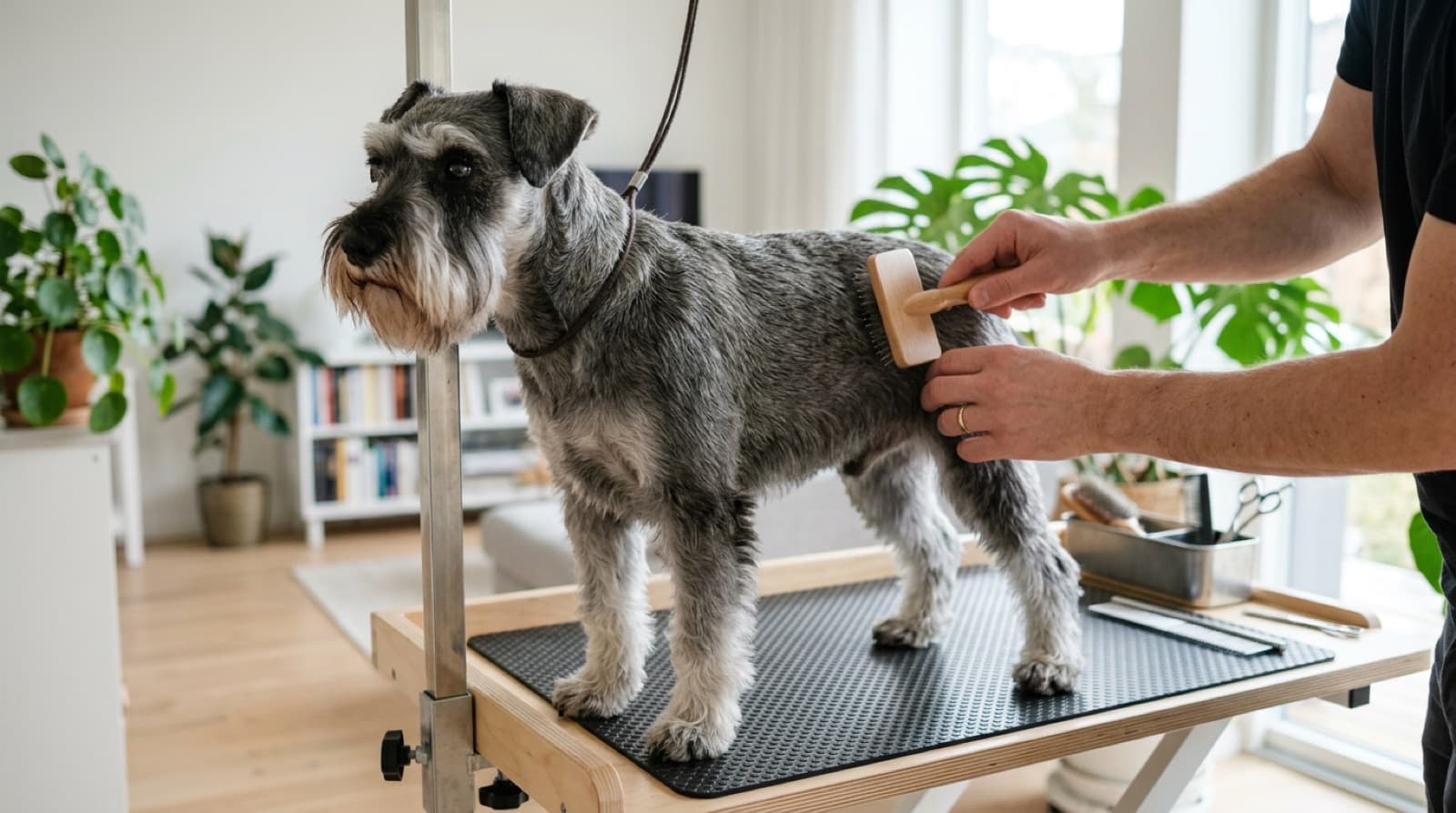
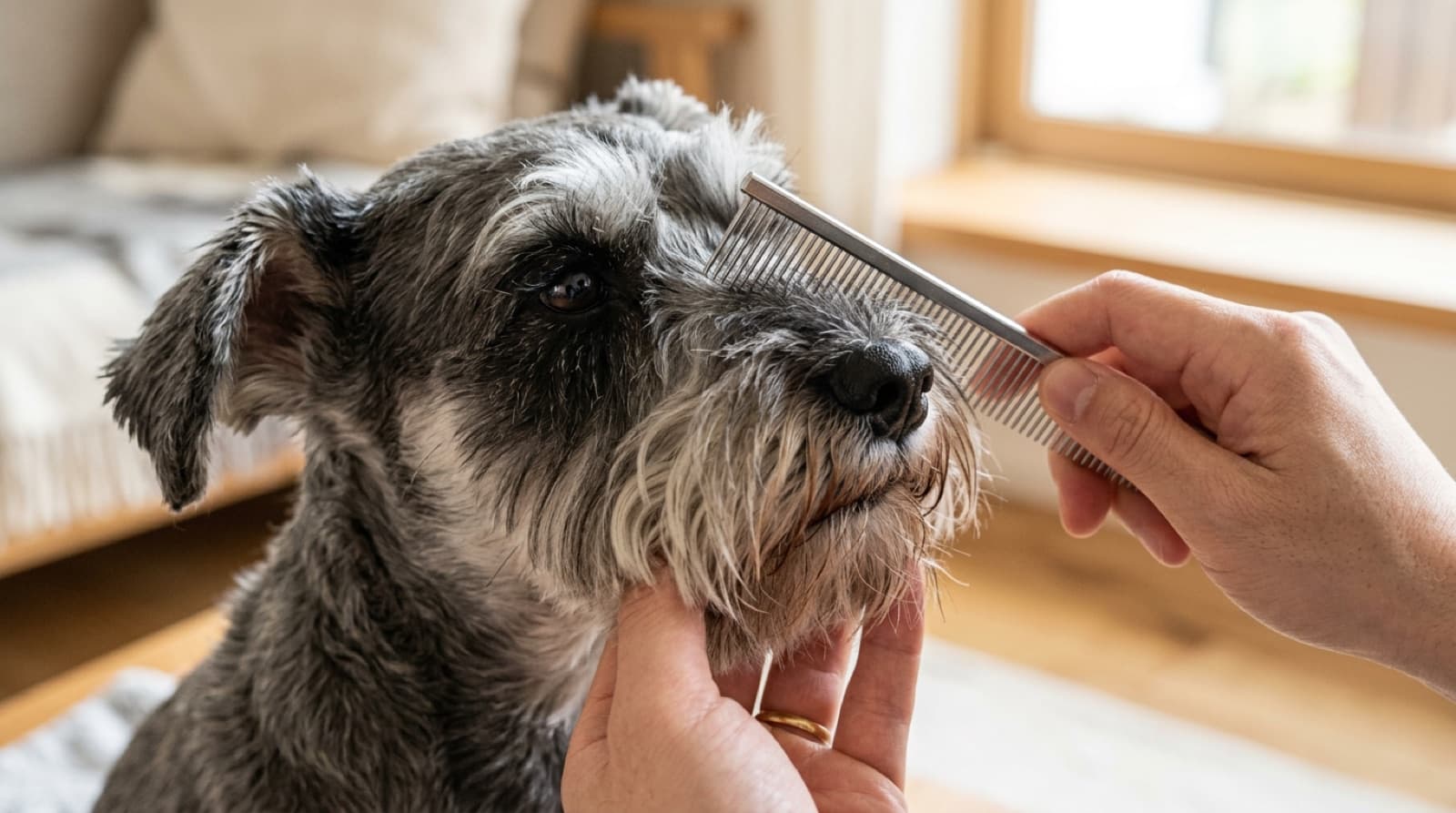
Whatever you decide on the body coat, the maintenance that actually fills your week is the beard and the leg furnishings. These carry softer hair with an undercoat that tangles fast, and generic advice to just brush weekly badly undersells them. Brush the furnishings and beard several times a week with a slicker brush or a pin brush first, then go through with a metal comb to catch the deeper mats the brush skates over. The classic mat spots are behind the ears, in the armpits, where the legs meet the body, under the rump, and between the toes.
The beard is its own project, because it works like a mobile sponge for food, water, saliva, and mud all day. Wipe it with a fragrance-free grooming wipe or a damp cloth daily and dry it after meals and drinks, both to prevent staining and to stop the beard felting. Persistent brown or yellow staining is usually moisture and food rather than tears. One honest caution: a beard that stays wet can harbour bacteria or yeast, so if the skin underneath looks red, smells, or seems irritated, treat that as a vet question rather than something to scrub harder.
Some of the product links in this section are Amazon affiliate links — we may earn a small commission at no extra cost to you. It never changes which products we recommend.
Decoding the schnauzer clip
Knowing what the signature look actually is lets you ask a groomer for the right thing instead of hoping for the best. The schnauzer clip is a short-clipped body and head with longer furnishings left on the legs, a full beard, and shaped eyebrows in an inverted V, which together make the rectangular, bearded silhouette. It is skilled scissoring and pattern work, not an all-over shave, and that is exactly why a proper schnauzer groom costs more than a simple buzz.
The distinction to know at the counter: a true schnauzer clip keeps the body short and the pattern crisp, while a teddy-bear or puppy cut leaves the body longer and rounder and drops the pattern. If you want the classic look, ask for the schnauzer pattern by name. Home groomers who want to try it use clippers with guide combs to keep the legs longer than the body, and thinning shears to blend the body into the furnishings and tidy the beard and eyebrows without hard lines. It has a real learning curve, so start conservatively.
Low-shedding, but not low-grooming
Schnauzers shed very little, which is part of their appeal, but it creates a trap: the shed hair does not fall out, it stays caught in the coat, which is exactly what drives matting if you do not brush and, ideally, card. So low-shedding does not mean low-maintenance here; it means the brushing you skip shows up as mats rather than as fur on the floor.
There is also a skin angle worth knowing. Schnauzers are prone to a coat-and-skin condition sometimes called Schnauzer bumps, small clogged follicles along the back, and keeping the dead undercoat carded out is often part of managing it. This is genuinely a veterinary matter, not something to treat with grooming alone, so if you see recurring bumps, blackheads, or irritated skin along the back, work with your vet on shampoo and care rather than relying on brushing. Keeping the coat clean and carded supports the skin, but it is not a cure.
The honest cost: groomer versus doing it yourself
A Schnauzer is a professional-grooming breed for most owners, and a proper groom costs more than a shave because the pattern, the leg furnishings, the beard, and the eyebrow shaping are skilled scissoring. Expect a Miniature Schnauzer groom in the small-dog range, every five to eight weeks, with Canadian grooming cost surveys such as Dogster's giving a sense of the ranges, and a Standard or Giant costing more for the size and time. Hand-stripping is a premium service, usually billed by the hour because it is slow, skilled work, and many pet groomers do not offer it at all, which is a common owner frustration.
Doing it at home is possible but has a real learning curve. The kit is clippers with a couple of guide combs, a slicker, a metal comb, thinning shears, and optionally a stripping knife for carding, plus a nail grinder, since the furnishings hide long nails. The tools pay for themselves over many grooms, but the pattern is hard to get right at first, so plenty of owners do the beard, brushing, and nails at home while leaving the clip to a groomer.
Thinking about adopting a Schnauzer?
Go in knowing the coat needs regular professional grooming and daily beard care. Browse Schnauzers and Schnauzer mixes available now from the rescues we track across Canada.
See Available Schnauzers →Frequently Asked Questions
Do I have to hand-strip a pet Schnauzer?
No. Most pet Schnauzers are clipped, which is easier, cheaper, and painless, and it is a perfectly reasonable choice. Hand-stripping is mainly for show dogs and for owners who specifically want to preserve the hard, wiry texture and the rich, dark colour. Clipping just means accepting a softer, lighter, more mat-prone coat over time, which most pet owners are happy to live with.
Why did my Schnauzer's coat go soft and curly?
Repeated clipping is the usual reason. Clipping cuts the wiry guard hairs but leaves the soft undercoat, so over several coat cycles the balance shifts and the coat gradually turns softer, wavier or curlier, lighter in colour, and more prone to matting. It is normal for a clipped pet Schnauzer, and it is the main texture trade-off of choosing clipping over stripping. Carding, described below, slows it down.
What is carding or a pet strip?
Carding is using a stripping or carding knife to pull out the dead, soft undercoat on an otherwise-clipped dog, without the full commitment of show hand-stripping. It is the practical middle path most owners have never heard of: it keeps the coat healthier and flatter, helps the topcoat hold a bit more texture and colour, and reduces matting, while still letting you clip the pattern. Many groomers offer it as an add-on if you ask.
How do I stop the beard and leg furnishings from matting?
Brush them several times a week, not just the body. The furnishings on the legs and the beard carry soft hair that tangles fast, so use a slicker or pin brush first and then a metal comb to catch the deeper mats the brush misses. The classic mat spots are behind the ears, in the armpits, where the legs meet the body, under the rump, and between the toes. Wiping and drying the beard daily keeps it from felting with trapped food and water.
How do I keep the beard clean and unstained?
Wipe the beard with a damp cloth or a fragrance-free grooming wipe daily, and dry it after meals and after drinking, since the beard works like a mobile sponge for food, water, saliva, and mud. Persistent brown or yellow staining is usually moisture and food rather than tears. If the skin under the beard looks red, smells, or seems irritated, that is a vet question, not a grooming one, since a constantly wet beard can harbour bacteria or yeast.
What is the schnauzer clip?
It is the breed's signature look: a short-clipped body and head with longer furnishings left on the legs, a full beard, and shaped eyebrows in an inverted V, which together create the rectangular, bearded silhouette. It is skilled work, not a simple all-over shave, which is why a proper schnauzer groom costs more than a plain buzz. If you want that look from a groomer, ask for the schnauzer pattern rather than a teddy-bear or puppy cut, which leave the body longer and rounder.
How often does a Schnauzer need grooming?
A professional groom or a committed home clip about every five to eight weeks, plus brushing the furnishings and beard several times a week in between. Stretching the interval to save money usually backfires, because a longer coat plus skipped brushing means more matting and a higher bill for dematting or a shave-down. Regular brushing between grooms is what keeps the cost and the coat under control.
How often should I bathe a Schnauzer, and does it soften the coat?
Full baths are best kept infrequent, with spot-cleaning of the beard and legs in between, since frequent baths and heavy conditioners soften the harsh coat and can strip the skin's oils. Use a coat-appropriate or hypoallergenic shampoo rather than a heavy softening product. If your dog has skin issues, follow your vet's shampoo guidance instead, since some Schnauzers are prone to skin conditions that need medicated products.
How to Groom a Poodle
Another breed that needs regular professional clipping and a real grooming budget.
How to Groom a Yorkie
Another coat where the texture and the mat-prone furnishings decide the routine.
What to Feed a Miniature Schnauzer
The other half of Schnauzer care: the breed's fat sensitivity, weight, and portions.
Schnauzers for Adoption
Live listings of Miniature Schnauzers and Schnauzer mixes from the rescues we track.