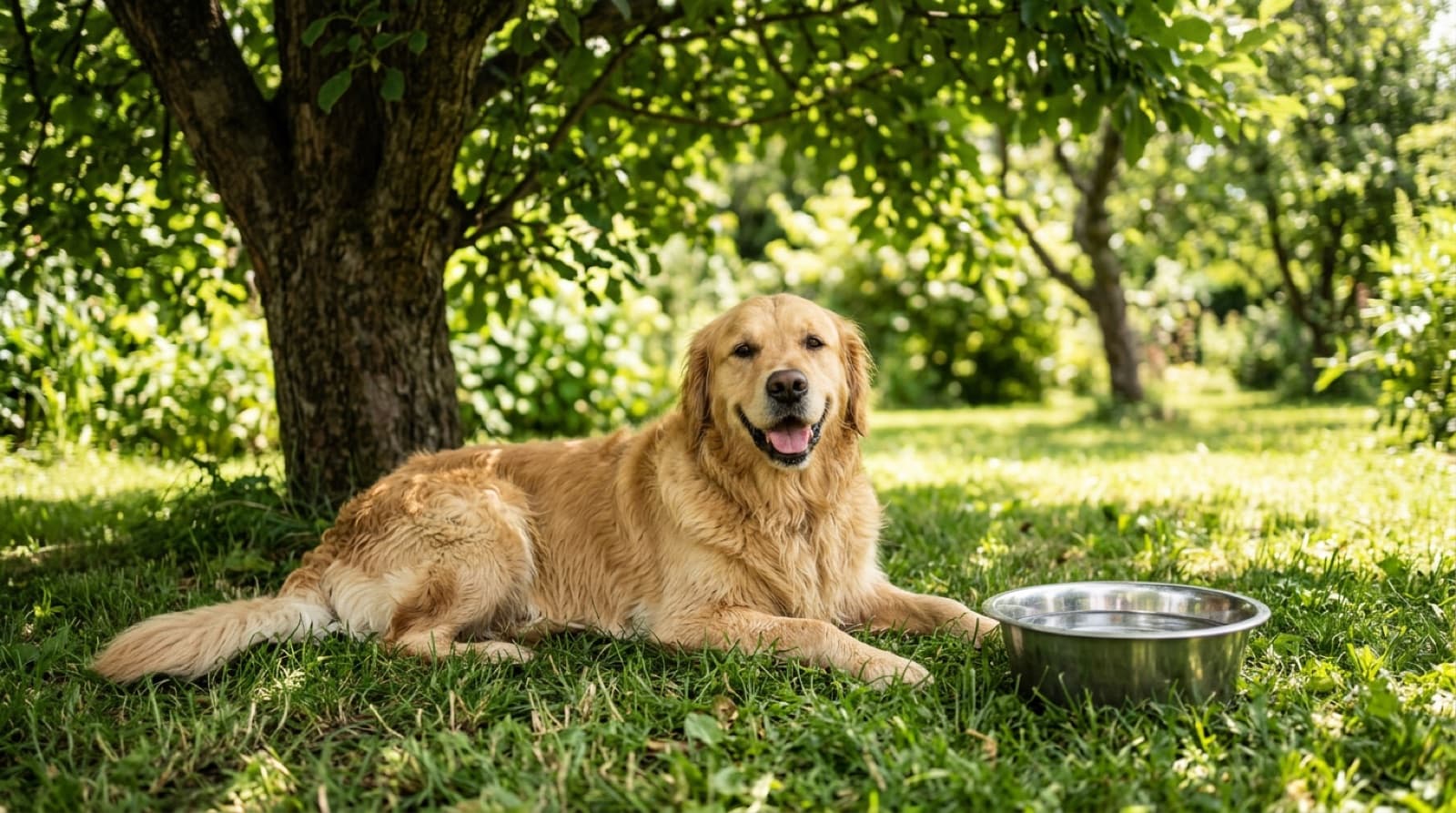
The short answer
Walk early or late and skip the midday heat, do the seven-second pavement hand test before every walk, never leave your dog in a parked car, keep water within reach everywhere (a collapsible bowl lives in the walk bag all season), give them a cool place to land like a cooling mat, and put a life jacket on any dog around boats or open water. Some links here are Amazon affiliate links; we may earn a small commission at no extra cost to you, and it never changes what we recommend.
Heatstroke is a now-emergency
Heavy panting that will not settle, thick drool, red or pale gums, vomiting, wobbliness, collapse. If you see this: shade or AC immediately, wet the body with cool (not ice-cold) water, and go to a vet even if the dog seems to bounce back. Internal damage can surface hours later (AVMA; Cornell Riney Canine Health Center).
Canadian summers are short, and everyone, dogs included, wants to spend them outside. That is exactly why summer is the season dogs get hurt. A dog cools almost entirely by panting, which is a far weaker system than our sweating, so heat that feels pleasant to you can be dangerous to the dog trotting beside you, especially the first hot week of the year before anyone has acclimatised. This guide covers the four big risks in the order they actually send dogs to the emergency vet.
Heat: timing beats gear
The cheapest protection is the clock. Walk before the day heats up or after it cools down, keep midday outings short and shaded, and scale everything down on humid days, since humidity blunts panting exactly when the dog needs it most. Watch the individual dog, not the thermometer: flat-faced breeds (French Bulldogs, Pugs, Boxers), seniors, puppies, overweight dogs, and thick-coated northern breeds overheat first, per the ASPCA.
At home, the plan is shade, moving air, and water in every room the dog uses. A pressure-activated cooling mat gives hot dogs a cool place to sprawl, and for dogs that hike or play sports in the heat, an evaporative cooling vest helps between water breaks. Treat gear as the bonus layer; shade, water, and timing do the real work.
One more summer-specific habit: never leave a dog in a parked car, period. Interiors heat shockingly fast even with windows cracked, even on days that feel mild. Our travel guide covers the road-trip side, but the parked-car rule has no exceptions.
Pavement: the seven-second hand test
Asphalt in full sun gets dramatically hotter than the air, and paw pads burn and blister on it. The test costs nothing: press the back of your hand to the pavement and hold it for seven seconds. If you cannot, your dog cannot either. Burned pads look red, blistered, or ragged, and a dog that suddenly limps or licks its feet after a hot walk needs a vet look.
The fixes are easy: walk on grass, walk in the cool hours, and choose shaded routes. Some owners use paw wax or breathable boots for unavoidable hot surfaces, and both help, but no product makes sun-baked afternoon asphalt a fine place for a long walk. Route and timing first.
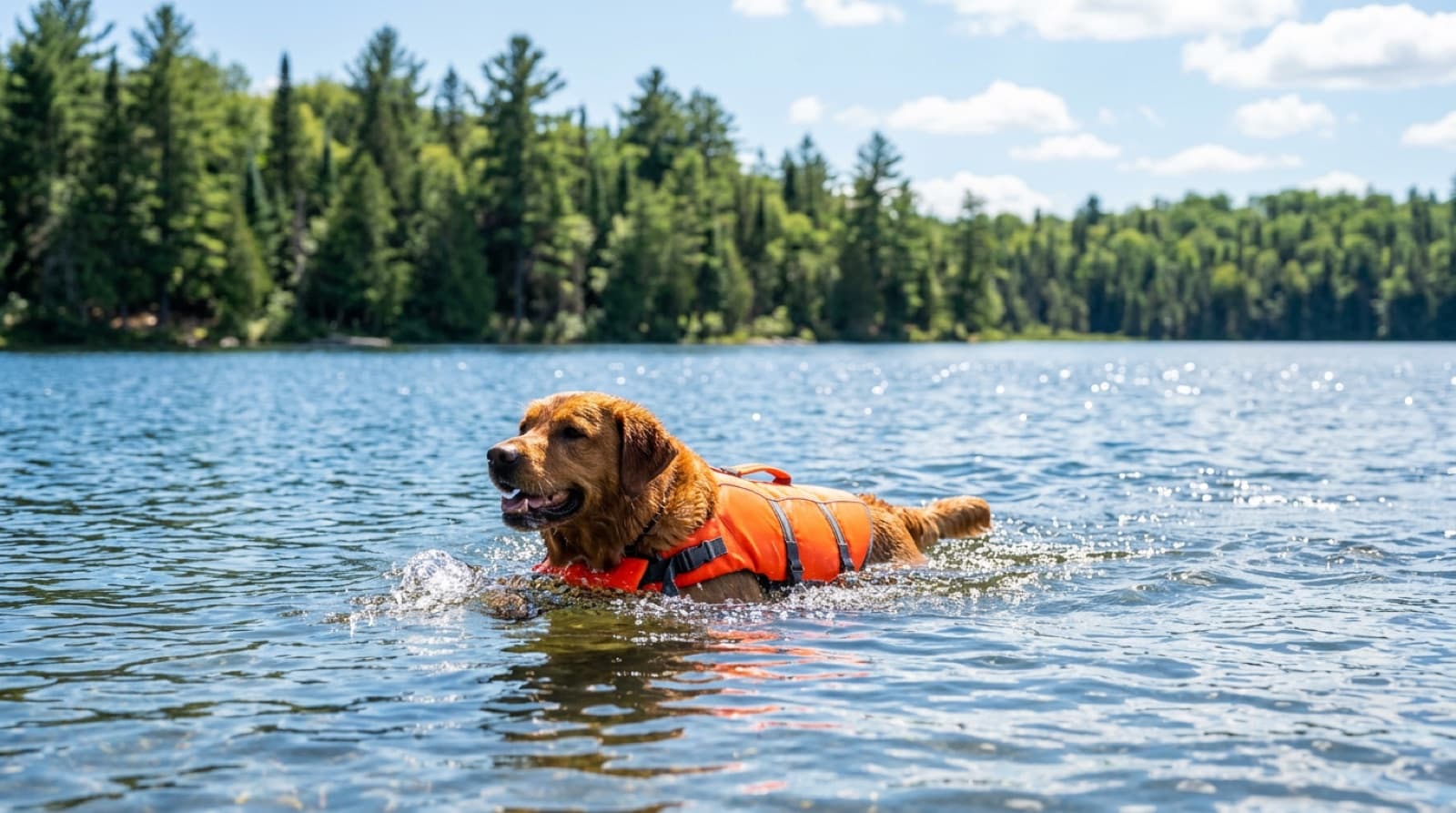
Water: life jackets are not just for bad swimmers
Lakes, rivers, and boats are the best part of a Canadian dog summer, and the part with the least margin for error. Not every dog swims well: heavy-chested and flat-faced breeds can struggle immediately, and even strong swimmers tire in current, chop, or simply farther from shore than they realised. A proper dog life jacket with a back handle solves both problems: flotation for the dog, and a lift-handle for you at the dock or boat ladder.
Two waterside habits worth building: rinse the dog after lake swims (algae and bacteria are a real thing in late-summer water, and if a lake has a posted blue-green algae advisory, keep the dog out entirely), and bring drinking water so the dog is not gulping lake water all afternoon. After swimming, dry floppy ears to head off ear infections, the classic follow-up to a swim-heavy week.
The smaller stuff: sun, shaving, and patios
Dogs sunburn too, mostly noses, ear tips, and bellies on short-coated, thin-coated, or white dogs. Shade and timing cover most of it; ask your vet about pet-safe sunscreen for chronic sun-seekers, and skip human sunscreen, since zinc oxide is toxic if licked. Resist shaving double-coated breeds for summer: the coat insulates against heat as well as cold, and shaving trades that for sunburn risk. A good indoor enrichment session beats a hot afternoon walk on the worst days, and patio season is better with a collapsible bowl clipped to the leash.
Some links on this page are Amazon affiliate links — we may earn a small commission at no extra cost to you. It never changes what we recommend. This article is general information, not veterinary advice.
Summer is a great time to adopt
Long days, patio walks, lake weekends. Browse adoptable dogs from rescues across Canada and start the season with a new best friend.
Browse Adoptable Dogs →Frequently Asked Questions
What are the signs of heatstroke in dogs?
Heavy panting that does not settle, thick drooling, bright red or pale gums, vomiting or diarrhea, wobbliness, and collapse are the classic progression, per the AVMA. Heatstroke is a life-threatening emergency: move the dog to shade or air conditioning, wet the body with cool (not ice-cold) water, offer small amounts of water to drink, and get to a vet immediately even if the dog seems to recover. Organ damage can show up hours later.
How hot is too hot to walk a dog?
Use the pavement, not just the forecast. Press the back of your hand to the asphalt for seven seconds: if you cannot hold it there comfortably, it is too hot for paw pads, which burn and blister on hot pavement. On genuinely hot days, walk early morning or after sunset, stick to grass and shade, and cut the distance. Dogs cool mainly by panting, so humidity makes any temperature more dangerous than it looks.
Can I leave my dog in the car for a few minutes in summer?
No. The inside of a parked car heats far faster than people expect, even with windows cracked and even on mild days, and dogs have died in minutes. The AVMA is unambiguous on this one. If your errand does not welcome dogs, leave yours at home in the cool. If you see a dog in distress in a hot car, call local animal control or the police immediately.
Which dogs are most at risk in the heat?
Flat-faced (brachycephalic) breeds like French Bulldogs, Pugs, and Boxers top the list, because their airways make panting inefficient. Seniors, puppies, overweight dogs, thick double-coated northern breeds, and dogs with heart or breathing conditions are also high-risk. For these dogs, treat warm days conservatively: shade, water, air conditioning, and exercise only in the cool parts of the day.
Do dogs need life jackets?
Any dog that boats, paddleboards, or swims in rivers and lakes should wear one. Not all dogs swim well: heavy-chested and flat-faced breeds can sink alarmingly fast, and even strong swimmers tire in current or chop far from shore. A proper dog life jacket has a grab handle on the back, which also makes it the easiest way to lift a dog back onto a boat or dock.
Do cooling mats and cooling vests actually work?
They help as part of a plan, not as a substitute for shade and water. Pressure-activated cooling mats give a dog a cool surface to lie on indoors or in the shade, and evaporative cooling vests can take the edge off during warm-weather activity. What they cannot do is make a hot afternoon walk safe. Shade, water, timing, and restraint on exercise do the heavy lifting; gear is the bonus.
Can dogs get sunburned?
Yes, especially on the nose, ear tips, and belly of short-coated, thin-coated, or white dogs, and any dog shaved for summer. Provide shade, avoid peak sun, and ask your vet about pet-safe sunscreen for exposed skin. Do not use human sunscreen containing zinc oxide, which is toxic to dogs if licked.
How much water does a dog need in summer?
More than you think, and available everywhere the dog goes. Keep the home bowl topped up, bring a collapsible bowl and water on every walk or hike, and offer water at every break. If a dog is drinking far more than usual for days regardless of heat, that is a vet question rather than a summer one.
Winter Dog Care
The other extreme: cold, ice, salt, and paw protection.
Traveling With a Dog
Car restraint, road trips, and the hot-car rule in detail.
Exercise & Enrichment
How to tire a dog out indoors when it is too hot to walk.
Adoptable Dogs Across Canada
Rescue dogs from shelters and foster networks, in one place.