The short answer
Forget the idea that you need a tiny pet for a small home. The thing that actually matters is energy and temperament, not square footage or body weight. A calm adult dog of almost any size can be very happy in an apartment as long as it gets daily walks and company, while a high-energy dog will be miserable in a mansion without exercise. Cats are the natural apartment pet: they use vertical space, need no yard, and many are content indoors. The keys to apartment life are daily exercise and enrichment, managing noise so you keep the peace with neighbours, and being honest about how much time the animal will spend alone. Adopt for calmness and a routine you can keep, and the space takes care of itself.
It is about energy, not size
The single biggest myth about apartment pets is that small equals suitable. In reality, a small high-energy dog can be a worse apartment fit than a large laid-back one. A calm, adult animal that is happy with a couple of walks and a nap will settle into a one-bedroom beautifully. A bouncy, under-exercised dog will turn any space, big or small, into chaos with barking, pacing, and chewing.
So the question to ask is not how big is it, but how much daily exercise and stimulation does it need, and can I provide that. Apartments lack a yard, which means you are the dog's enrichment and exercise, every day, in all weather. For the right animal that is no problem at all. The goal is to match temperament to your space and routine, and temperament is something a foster home or shelter can tell you about before you commit.
What makes a good apartment dog
Look for traits, not just breeds. The best apartment dogs tend to be calm indoors, not prone to excessive barking, and content with leashed walks rather than needing acres to run. Adults are a huge advantage here because their energy level is already on display, so you are not gambling on what a puppy will become. Many adult dogs, including some surprisingly large ones, are perfectly happy as low-key indoor companions.
Plenty of smaller and medium dogs suit apartment life, but so do mellow big dogs, and even some retired racing greyhounds are famously couch-loving apartment pets. What you want to avoid is choosing on looks alone. A calm temperament, a manageable noise level, and an exercise need you can realistically meet matter far more than the breed on the label. Ask the rescue which of their dogs are settled, quiet, and apartment-tested, and you will get a much better match than picking by size.
Cats: the natural apartment pet
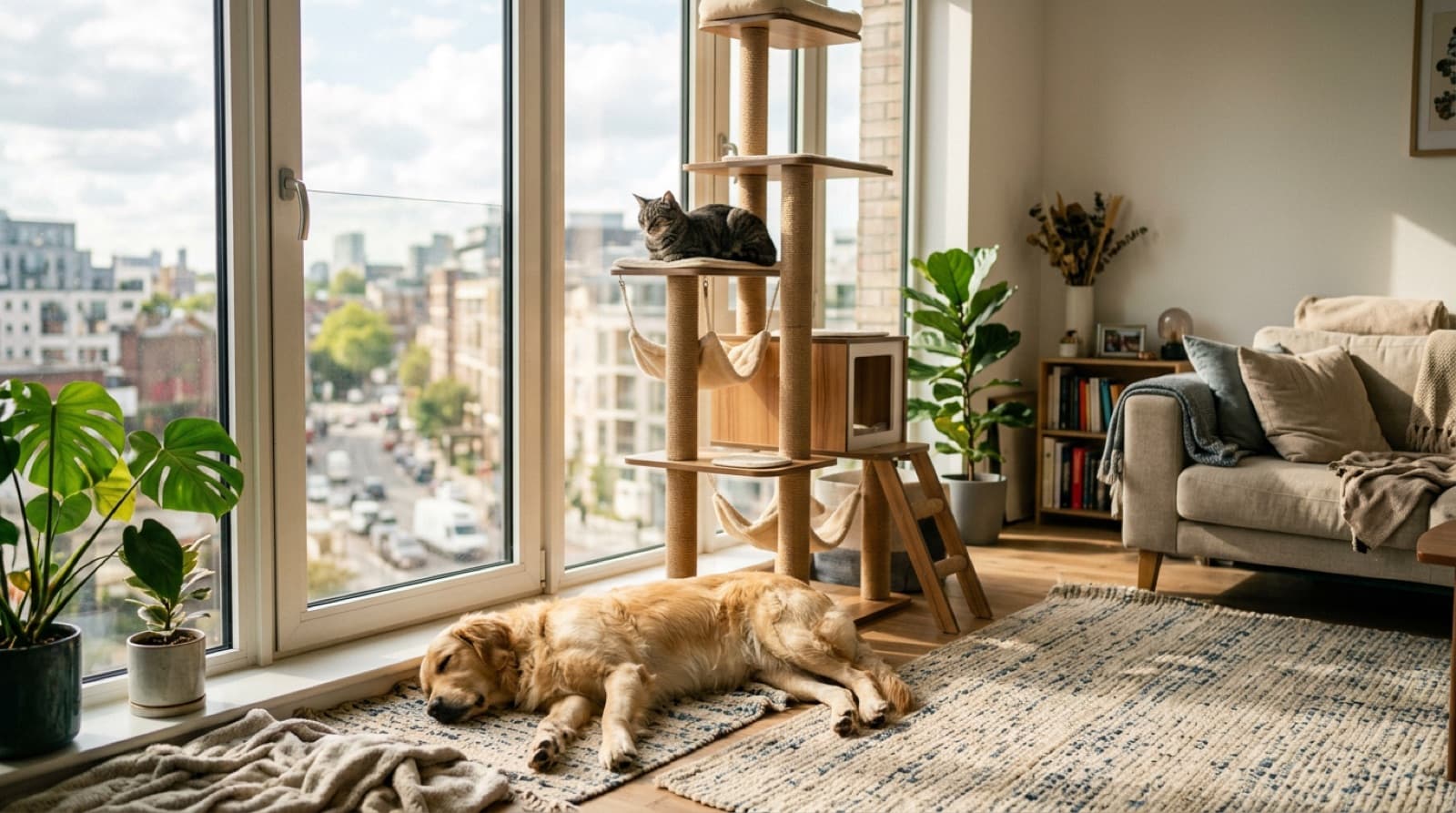
If a small space is your main constraint, a cat is the obvious answer. Cats are built for apartment living. They use vertical space rather than needing a yard, they exercise themselves with play, they do not need to be walked, and most are perfectly content as indoor pets, which is often the safest choice anyway. A cat tree by a window and a few daily play sessions go a long way.
Two cats can be even better than one in an apartment, since they keep each other company while you are out, which matters in a home with no yard to roam. Bonded pairs already in rescue are ideal for this. If you want a low-maintenance companion that fits a small footprint and a busy schedule, an indoor cat, or a pair of them, is hard to beat. They are quiet, self-sufficient, and genuinely happy in the space you have.
What to avoid in a small space
Some animals are a tough fit for apartments, and it is kinder to everyone to be honest about it. High-energy working and sporting dogs bred to run and problem-solve all day, like many herding and hunting types, struggle without serious daily exercise and a job to do. In a small home with a full-time-working owner, that mismatch usually comes out as barking, destruction, and a frustrated dog.
Be cautious too with breeds and individuals known to be very vocal, since barking carries through walls and can quickly sour things with neighbours or a landlord. None of this is absolute. An individual dog from a high-energy breed might be a mellow exception, which is exactly why a foster home's honest read on the specific animal beats any breed stereotype. But as a rule, if an animal needs a lot of space, exercise, or noise to be happy, a small apartment with limited time is not setting it up to succeed.
Noise, neighbours, and your lease
Apartment living puts you close to other people, so noise is a real consideration that house-dwellers rarely think about. Barking is the classic flashpoint. A dog that barks at every footstep in the hallway can strain relationships with neighbours and even put your tenancy at risk, so choosing a naturally quieter animal and addressing barking early matters more here than anywhere.
Before you adopt, confirm the practical stuff. Check that your lease actually allows pets and note any limits on size, species, or number, since some buildings cap these. A few buildings still have breed or weight restrictions, fair or not, so know yours before you fall for a specific dog. Sorting the lease and thinking about noise up front protects both the adoption and your home, and it is far easier to check now than to unravel later.
Making a small space work
A small home can be a great home for the right pet, as long as you replace what the space does not provide. For a dog, that means reliable daily walks and outings, since the walk is not just a bathroom break, it is the mental and physical exercise a yard would otherwise give. Tired dogs are calm dogs, and a well-walked dog rests happily indoors no matter how small the floor plan.
Enrichment fills the rest of the gap. Food puzzles, chew toys, training games, and rotating a few toys keep a pet's brain busy and head off the boredom behaviours that small spaces punish. For cats, go vertical with a cat tree or shelves and build in daily play. And be realistic about alone time: a pet with no yard and an owner gone twelve hours a day needs a plan, whether that is a midday walk, a sitter, or choosing a more independent animal in the first place. Meet the animal's needs and the square footage genuinely stops mattering.
Further reading: the ASPCA on dog care, Humane Canada.
Dog or cat for your space?
Not sure which suits your apartment and routine? The 9-question quiz points you the right way.
Take the dog-or-cat quiz →FAQ
Tap a question to expand