The short answer
The whole method fits in one sentence: supervise closely, keep a steady routine, reward success immediately, and never punish accidents. For a dog, take them to the same outdoor spot after waking, eating, drinking, and playing, reward them the moment they go in the right place, and use a crate or close supervision to prevent mistakes between trips. Expect it to take a few weeks of consistency, longer for some young puppies. For a cat, litter-training is usually close to instinctive: provide a clean, accessible box (one per cat plus a spare), use a litter they like, keep it scooped, and most cats simply use it. Accidents are information, not defiance, so respond by tightening the routine rather than scolding. And remember that a sudden change in bathroom habits, in either species, can signal a medical problem and is worth a vet visit.
The three golden rules
House-training looks complicated but rests on three simple principles. The first is supervision: an animal that is never given the chance to make a mistake learns far faster than one left to wander and get it wrong. The second is routine: predictable timing for meals, water, sleep, and bathroom breaks creates predictable bathroom needs, which you can then get ahead of. The third is reward: praising and treating the animal the instant it goes in the right place teaches it exactly what you want.
Just as important is the rule about what not to do. Never punish accidents. Scolding, rubbing a nose in a mess, or any kind of punishment does not teach a pet where to go. It teaches the animal to fear going in front of you, which often makes things worse by driving them to hide when they eliminate. Reward-based training works at every age and with every species, and a calm, consistent, positive approach is what gets you there quickest.
House-training a dog, step by step
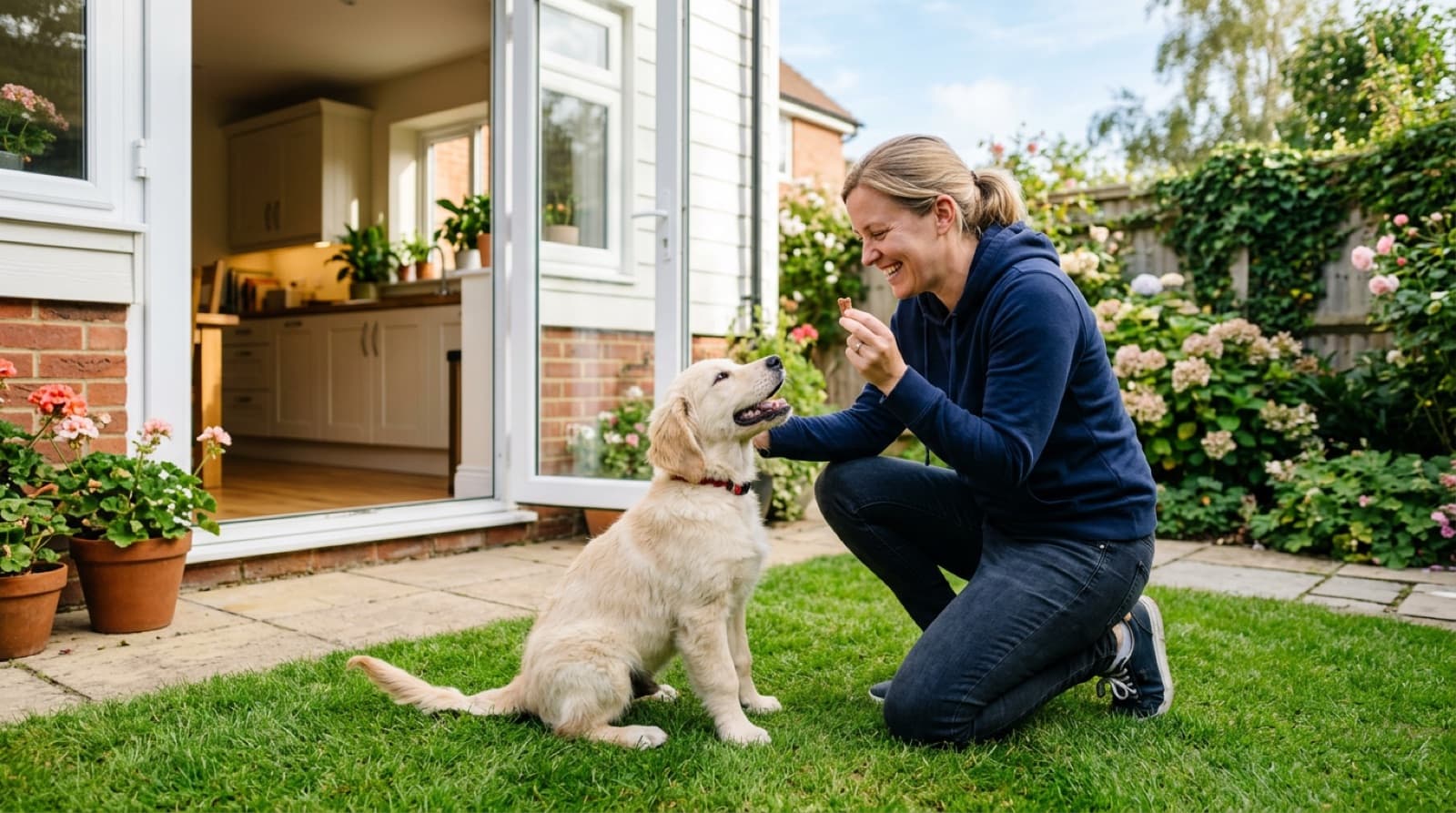
Start with a tight routine and prevention. Take your dog to the same outdoor spot first thing in the morning, after every meal, after drinking, after waking from a nap, after play, and last thing at night. Puppies need to go out very frequently, often every couple of hours, because their bladders are small. The familiar spot and its lingering scent help cue the dog that this is the place to go.
When the dog goes in the right place, reward immediately, right there and then, with warm praise and a small treat, so the dog connects the reward to the act. Between trips outside, prevent mistakes with active supervision or a correctly sized crate, since most dogs will avoid soiling the small space they rest in. If you catch a dog mid-accident indoors, calmly interrupt and take them straight outside to finish, then reward. Clean any indoor accident thoroughly with an enzymatic cleaner so no scent remains to draw the dog back to the same spot.
How long house-training takes
Be patient, because house-training is a process measured in weeks, not days. Many dogs get the hang of it within a few weeks of consistent effort, but young puppies can take several months to become fully reliable, simply because they do not have full bladder control until they are older. An adult rescue dog often learns faster, and many already arrive house-trained from a previous home or foster.
Progress is rarely a straight line, and the occasional slip during the learning period is normal, not a failure. The biggest factor in speed is your consistency: a dog whose routine is rock-solid and whose successes are always rewarded learns much faster than one getting a patchy, on-and-off approach. Stick with it, keep the routine steady even when it feels slow, and reliability builds. Rushing or getting frustrated only slows things down.
Litter-training a cat
Cats make this easy, because using a litter box is close to instinctive for them. Most cats and even young kittens take to a box with almost no training at all, as long as the setup is right. Your main job is providing a good box rather than teaching a skill. Offer one litter box per cat plus one spare, so a single cat is happiest with two, placed in quiet, accessible, low-traffic spots away from food and water.
Get the details right and the rest follows. Use an unscented, fine-grained litter most cats prefer, fill it to a comfortable depth, and keep it clean by scooping at least daily, since cats will avoid a dirty box. For a new kitten, simply place it in the box after meals and naps and it will usually get the idea immediately. If a cat is not using the box, the cause is almost always the setup or a health issue rather than stubbornness, so look at cleanliness, location, and litter type first.
Why accidents happen
When accidents happen, treat them as information rather than defiance, because animals do not eliminate indoors out of spite. In dogs, an accident usually means they were not taken out often enough, were left unsupervised too long, or the routine slipped. In cats, it usually points to something about the litter box: not clean enough, the wrong location, too few boxes, or a litter the cat dislikes. The accident is telling you what to fix.
So the right response is to adjust your setup, not to scold the animal. For a dog, tighten the schedule, increase supervision, and clean the spot thoroughly with an enzymatic cleaner so no lingering scent invites a repeat. For a cat, add a box, move it somewhere quieter, scoop more often, or try a different litter. Reacting with patience and a tweak to the system solves the problem. Reacting with punishment teaches fear and usually makes the accidents worse.
When an accident means see a vet
One crucial exception overrides all the training advice: a sudden change in bathroom habits can be a medical sign, not a behaviour issue, and deserves a vet visit. If a previously house-trained dog or reliably box-using cat suddenly starts having accidents, especially with signs like straining, going very frequently, blood, or obvious discomfort, that warrants a prompt call to your veterinarian rather than a training fix.
Urinary tract infections, bladder issues, digestive upset, and other conditions can all cause sudden accidents, and in cats a urinary blockage can become a genuine emergency, particularly in males. This is true at any age but is worth special attention in senior pets, where new accidents can flag a developing health problem. The simple rule: train for a pet that has never learned, but call the vet for a pet whose habits suddenly change. Ruling out a medical cause first protects the animal and saves you from training a problem that needs treatment instead.
Setbacks, patience, and a new home
Expect some backward steps, especially early on or right after a big change, because they are a normal part of the process. A newly adopted pet is a classic example: an animal that was house-trained in its previous home may have a few accidents in the first days simply from the stress and disorientation of a new place. That is not a training failure, just a pet finding its feet, and it usually resolves quickly as they settle.
Treat the early weeks in a new home as a gentle refresher rather than starting from scratch. Show the dog where to go and reward it, show the cat where the box is, keep the routine calm and consistent, and give it time. Patience is the throughline of all house-training. The animals that get there fastest are the ones whose people stayed steady and positive through the slow parts, prevented mistakes where they could, and celebrated the wins. Keep at it, and reliability comes.
Further reading: the American Kennel Club on house-training, the Canadian Veterinary Medical Association.
Bringing one home soon?
A crate, an enzymatic cleaner, and a litter box are house-training essentials. Get set up first.
See the new pet checklist →FAQ
Tap a question to expand