Get notified when a Norwegian Elkhound is listed
We will email you the moment a Norwegian Elkhound becomes available in Manitoba, from a rescue or an owner rehoming.
Adopting a Norwegian Elkhound in Manitoba
Norwegian Elkhounds are rare in Manitoba rescue. You are more likely to find an Elkhound-type spitz cross than a documented purebred, and even those do not come up often. That is exactly why searching across the whole province pays off. We pull listings from Winnipeg, Brandon, and rescues that bring dogs in from across Manitoba into one place, so when an Elkhound or a close cross is posted, you do not miss it.
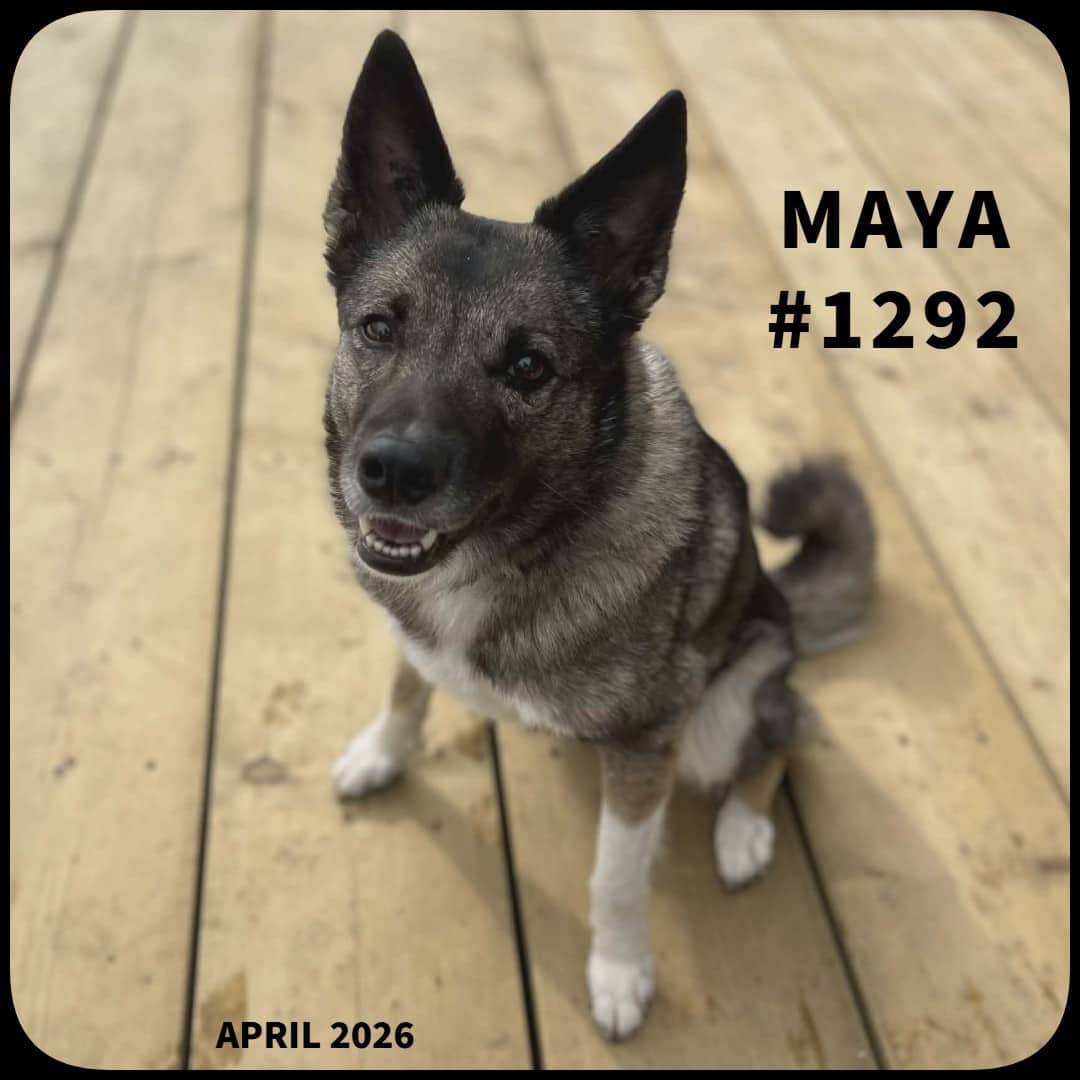
This is an old Scandinavian hunting breed, a hardy spitz developed to track moose and other big game in the cold and the dark. The look is classic spitz: curled tail, pricked ears, a thick grey coat. The temperament is bold, independent, and loyal. These are not soft, biddable dogs. They have their own opinions, and they were bred to make decisions in the field without a handler telling them what to do.
Why they are uncommon in MB rescue
There simply are not many Norwegian Elkhounds in Manitoba to begin with. It is a niche breed here, kept mostly by people who specifically wanted one. So they show up in rescue less often than common breeds, and when they do it is usually a single dog rather than a litter.
Manitoba Mutts runs a strong northern transfer pipeline that brings in a lot of dogs from remote communities, and many of those are spitz-type crosses. An Elkhound-looking dog in MB rescue is more often one of those northern spitz mixes than a registered Elkhound. If breed type matters to you for temperament reasons, read the foster notes and ask about energy, prey drive, and vocal habits rather than relying on the breed label alone.
Manitoba climate fit: made for this winter
If there is one breed engineered for a Manitoba winter, this is close to it. The Norwegian Elkhound carries a dense weatherproof double coat developed for Scandinavian cold and long hours outdoors in harsh conditions. Our winter is the harshest of any major Canadian city, with minus 30 nights, minus 40 windchills, no chinook to break the cold, and five to six months of it. A healthy Elkhound takes that in stride and often prefers being outside in the snow to being indoors.
Summer is the weak spot. Manitoba summers are hot and humid, regularly 32C with a heavy humidex, and a dog carrying that much coat overheats fast in that weather. Plan for shade, water, air conditioning on the worst days, and walks scheduled for early morning or evening. Mosquitoes and West Nile add a summer concern across the province, so factor in prevention.
Health to ask the foster about
Elkhounds are generally a robust, healthy breed, which is part of their appeal, but ask the foster about a few things. Hip dysplasia can occur, as in many medium-to-large breeds. Ask about eyes, since the breed has some known eye conditions. Ask about weight, because Elkhounds love food and gain easily, and an overweight Elkhound stresses its joints.
Also ask about thyroid history if known. A foster who has lived with the dog can tell you about energy level, any joint stiffness, and whether the dog keeps a healthy weight easily. With a rescue dog of uncertain background, the foster's direct observations are worth more than the breed average.
What it is like to live with a Norwegian Elkhound
This is a hardy, independent working dog, not a couch ornament. Know what you are getting.
- Independent and bold. They think for themselves and can be stubborn. Training works best with patience and rewards, not force.
- Vocal. Elkhounds were bred to bark to hold game and alert hunters. They use their voice, and that can be a lot in close quarters.
- Strong prey drive and a serious nose. A good recall and a secure yard matter, because a scent or a small animal can pull them away.
- Needs real exercise. A daily walk plus some running or play keeps them sane. A bored Elkhound gets loud and destructive.
- Heavy shedder. The double coat blows out seasonally and you will have hair everywhere during those weeks. Regular brushing helps.
- Loyal and devoted to their people once bonded, but reserved with strangers.
What the adoption fee covers and how to search
A Manitoba rescue adoption fee usually covers spay or neuter, core vaccines, deworming, and a microchip, and often a vet check and any care the dog needed in foster. The fee is set by each rescue, not by us, and it generally costs far less than arranging that vet work yourself.
Because Elkhounds are rare here, the smart move is to set up an alert on this page and to include spitz-type crosses in your search if temperament matters more than papers. Use the filters to narrow by location across Winnipeg, Brandon, and province-wide rescues. When a match appears, you apply directly with the rescue and they make the decision.
Looking more broadly? Browse every adoptable dog across the province on Dog Adoption Manitoba.
The rescues that most often list Norwegian Elkhounds across the province are Winnipeg Humane Society, Manitoba Mutts Dog Rescue, and D'Arcy's ARC. For breed-specific background, the Canadian Kennel Club is a useful reference.
Norwegian Elkhound Adoption FAQ — Manitoba
Tap a question to expand
How many Norwegian Elkhounds are available for adoption in Manitoba?▼
Where can I find Norwegian Elkhound adoption near me in Manitoba?▼
Are Norwegian Elkhounds good for a Manitoba winter?▼
Why are Norwegian Elkhounds rare in Manitoba rescue?▼
Are Norwegian Elkhounds easy to train?▼
Do Norwegian Elkhounds shed a lot?▼
Is LocalPetFinder a shelter or does it charge fees?▼
How much does it cost to adopt a Norwegian Elkhound in Manitoba?▼
Can I get a Norwegian Elkhound free to a good home in Manitoba?▼
Are these Norwegian Elkhounds for sale in Manitoba?▼
Where can I buy a Norwegian Elkhound in Manitoba, and should I?▼
Are there free Norwegian Elkhounds in Manitoba, or norwegian elkhounds under $500?▼
Are there Norwegian Elkhound puppies in Manitoba, or only adults?▼
Where can I find a Norwegian Elkhound near me in Manitoba?▼
Popular dog breeds in Manitoba
Norwegian Elkhound adoption by city in Manitoba
Each city page lists only the norwegian elkhounds available from rescues serving that city, with local adoption details.
Need to rehome a Norwegian Elkhound?
If you can no longer keep your Norwegian Elkhound, you can list them for free on LocalPetFinder. Your dog stays in your home until you find the right family, you screen who applies, and there is no surrender fee. Not sure yet? Our guide to surrendering a dog in Canada walks through every option first.
List your dog for free →