The short answer
Your new Toronto rescue cat will probably hide for three to seven days, skip food in the first 24 hours, and look nothing like the personality the shelter or foster described. None of that is a problem. Set up one quiet safe room (easy in a condo or apartment), sit with the cat each day, talk softly, and let it come to you. Call the vet only if your cat has eaten zero food at 48 hours, has not used the litter box in 24 hours (especially a male cat), or shows lethargy past day three.
The 3-3-3 rule explained
The 3-3-3 rule is the decompression timeline most rescue cats follow. It is not a guarantee, and individual cats run faster or slower, but it captures the curve well enough that Toronto fosters and rescue coordinators use it as the default expectation when placing a cat. The American Association of Feline Practitioners (AAFP) client guidelines describe the same decompression pattern.
- 3 days to decompress. The cat is overwhelmed. Expect hiding, stress-fasting, possible litter box avoidance, flinching at small sounds, and no interest in toys. You may not see the cat at all. This is normal.
- 3 weeks to settle. The cat begins to learn your routine. It eats at predictable times, explores during quiet hours, and may start sleeping in open spots when you are not looking. Trust is building.
- 3 months to bond. The cat's real personality emerges. The playful one starts playing. The vocal one starts talking. The lap-cat starts seeking laps. This is the cat you actually adopted.
Set up the safe room before pickup
The safe room is the single most important setup decision you make. Pick the smallest, quietest room in your home with a door that closes. A bathroom works. A den works. A spare bedroom works. In a downtown studio or open-concept condo with no second room, a large dog crate or a screened-off corner becomes the temporary safe zone. An open living space with no boundary is the hardest version of the first week, so create one.
Safe room checklist:
- Litter box on one side of the room. Use the same litter the rescue used if you can.
- Food and water on the opposite side from the litter box. Cats prefer them well apart.
- One hiding spot. A cardboard box on its side, an under-bed cave, or a covered cat bed. The hiding spot is non-negotiable.
- Soft bedding the cat can sleep on or knead.
- One quiet toy, like a small plush or a crinkle ball. Skip the noisy battery-powered toys for now.
- A scratching surface, vertical or horizontal.
- Lower lighting if possible. Bright overhead lights add stress.
Keep the safe room closed and low-traffic for the first three days. No vacuuming, no loud TV, no visitors, and no other pets allowed in. The household should feel quieter than usual, not louder.
Why your cat is hiding (and why it's fine)
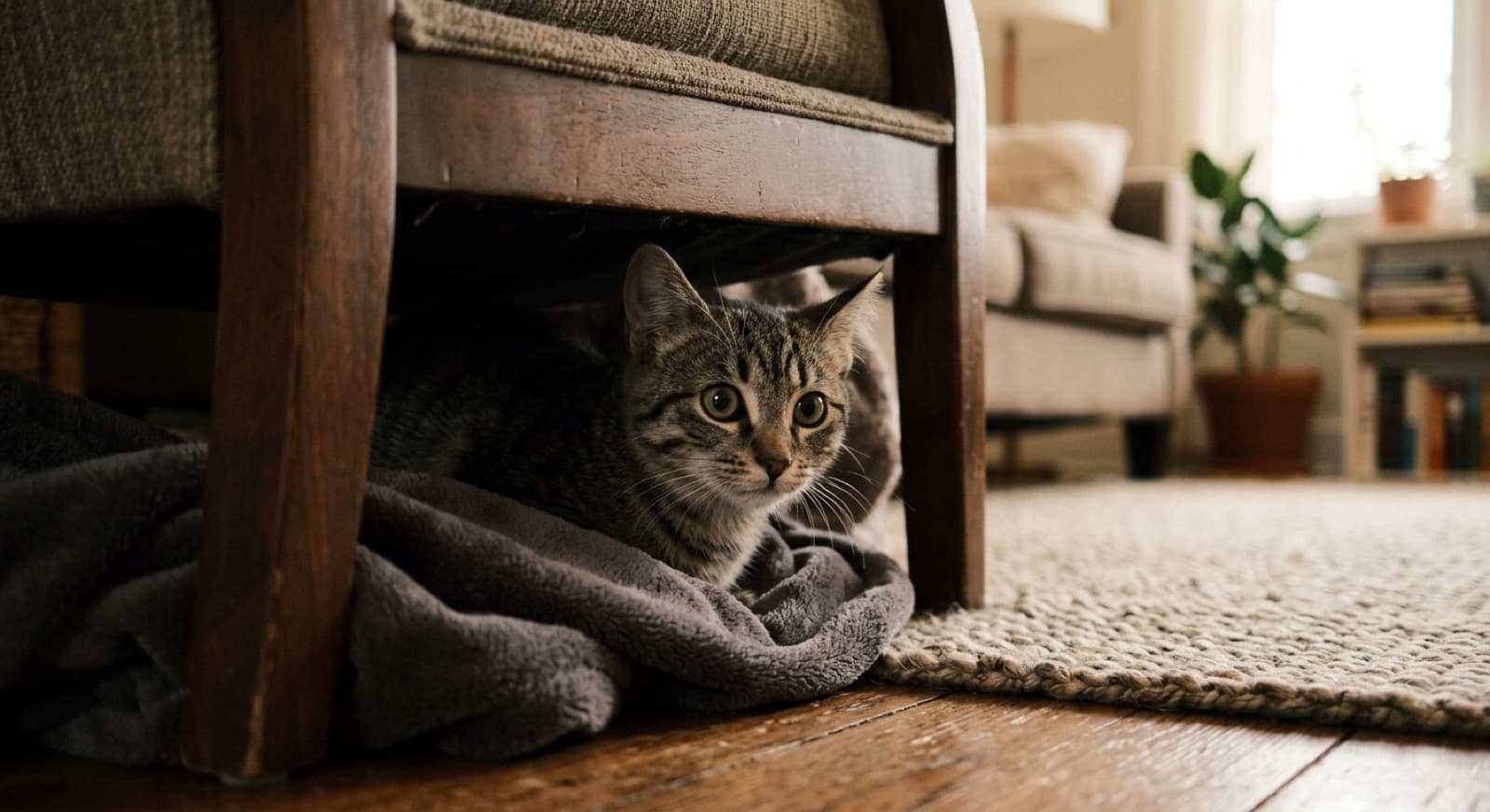
Hiding is a survival instinct, not a sign of unhappiness or a behaviour problem. Your cat just left a familiar environment, whether a foster home, a shelter kennel, or a stray situation, and arrived somewhere that smells, sounds, and looks unfamiliar. The cat's brain is doing one job: figure out whether the new environment is safe. Until that assessment finishes, the cat will pick the smallest, most enclosed space it can find and wait.
The ASPCA cat care guidance treats hiding as expected during the first week and advises against pulling cats out. The Cornell Feline Health Center documents the same pattern in newly-placed cats.
The signs that matter are not whether you can see the cat. They are eating, drinking, and litter box use. All three can happen at 3 a.m. while you sleep. If they are happening, the cat is fine.
Day-by-day playbook
Day 1: arrival
- Bring the cat home in its carrier. Walk straight to the safe room. Do not give a tour of the home first.
- Set the carrier on the floor and open the door. Do not pull the cat out. Most cats walk out within five minutes to a few hours.
- Show the cat the litter box, food, and water. Sit quietly for a few minutes, then leave.
- Come back once or twice for short visits. Sit on the floor and let the cat approach. If it hides, that is fine.
- No other pets in the room. No visitors. Keep household noise low.
Day 2 to 3: decompression
- Most cats stay hidden during these days. Do not pull them out from under the bed.
- Check food, water, and litter box each visit. Top up and scoop daily.
- If the food bowl is untouched at 48 hours, call the rescue. Try warming a small amount of wet food and putting it near the hiding spot.
- Sit quietly in the safe room one to three times a day for 15 to 30 minutes, doing something boring like reading or scrolling. Your boring presence is what builds trust.
- If you have other pets, start scent-swapping. Rub a soft cloth or sock against each animal's cheek and swap them between rooms.
Day 4 to 7: emerging
- By day four or five, most cats start exploring the safe room during quiet hours, especially overnight.
- You may see them eating during the day for the first time. Some let you stroke them while they eat.
- Keep feeding times consistent. Cats are routine-driven, and predictability builds the bond faster than affection does.
- End of week one: open the safe room door for short periods so the cat can explore the rest of the home on its terms. Do not force it out.
- Keep other pets separated. Visual contact through a baby gate or cracked door is appropriate around week two.
Signs of stress vs. signs that need a vet
Most first-week behaviour that looks alarming is just stress. A handful of signs cross the line into vet-call territory. Know the difference before you need it.
Call a vet right away if:
- Zero food eaten in 48 hours. A cat that stops eating can develop a serious liver problem, and the risk climbs at the 48-hour mark.
- No litter box use in 24 hours, especially in a male cat. A urinary blockage is a true emergency and can be fatal within 24 to 48 hours.
- Vomiting or diarrhoea longer than 24 hours.
- Lethargy that continues past day three (the cat is awake but unresponsive, not just sleeping).
- Visible injury, eye or nose discharge, laboured breathing, or noticeable weight loss.
Toronto has 24-hour emergency veterinary care available across the GTA. Ask your adoption rescue or your regular daytime vet which after-hours clinic they recommend for your neighbourhood. We deliberately do not name specific clinics here because emergency availability changes, and your rescue or daytime vet will give you the current right answer. If your cat came through the Toronto Humane Society at 11 River Street, its adoption team is a good first call for vet referrals.
Signs of trust as your cat settles
Trust does not arrive in one obvious moment. It shows up in small things, often before you notice them. Watch for any of these in week two or three:
- Comes out from hiding when you enter the room, not when you leave.
- Plays with a toy while you are present, instead of waiting for you to go.
- Slow blinks at you. This is feline affection. Slow blink back.
- Eats with you in the room.
- Allows a chin or cheek scratch without flinching.
- Sleeps somewhere open instead of fully hidden.
- Approaches you when you sit down.
- Walks toward you with its tail held up, a feline hello.
Litter box setbacks in the first week
A new cat skipping the litter box in the first 24 to 48 hours is common. Stress is the usual cause. So is unfamiliar litter, an unfamiliar location, or a box that feels too exposed.
Troubleshooting steps that fix most first-week litter problems:
- Use the same litter the rescue used. Switch brands later, gradually, if you want to.
- Keep the box in the safe room, not the main hallway, until the cat is comfortable.
- Scoop daily. Some cats refuse a soiled box even once.
- Make sure the box is big enough. The cat should be able to turn around with room to spare.
- If you have multiple cats, the rule is one box per cat plus one extra.
If the cat has not used the box at all in 24 hours, especially a male cat, that is a vet call, not a litter problem. A urinary blockage presents as zero output and can turn fatal fast. The International Association of Animal Behaviour Consultants (IAABC) keeps a directory of certified feline behaviour consultants for ongoing litter issues past the first two weeks.
Toronto rescue paths: foster-based vs. shelter adoption
Toronto's main cat rescue paths produce different first-week experiences, and knowing which path you went through helps set realistic expectations.
Foster-based rescues like Annex Cat Rescue, Toronto Cat Rescue, and North Toronto Cat Rescue place cats with home-based fosters before adoption. By the time you bring the cat home, the foster has weeks or months of notes: how the cat behaves with other cats, with dogs, with kids, at meal times, and at night. Your first week is verification, not discovery. The cat will still hide for a few days because the environment is new, but the personality you read in the foster profile is the personality you got.
Shelter adoption through the Toronto Humane Society or City of Toronto Animal Services works differently. Shelter cats live in a busier, louder environment than a foster home, so the personality the shelter sees is often more guarded than the cat's real personality. Your first week is genuine discovery. Patience matters more on this path because the real cat may not appear until week three or four.
Neither path is better. Foster-based is lower-variance but inventory is smaller, and some rescues run a careful adopter-matching process that can take a few weeks. Shelter adoption is higher-variance but you can often meet and take home a cat the same week. The first-week behaviour you should expect just runs on different timelines.
Condo and apartment living: a Toronto note
Most Toronto adopters bring a rescue cat home to a condo, an apartment, or a downtown rental. That is good news for a new cat. A contained, indoor-only home is exactly what a cat needs while it learns the layout and starts to feel safe. Two small things are worth handling early.
First, balcony safety. Cats can slip through railings or fall from a height, and a curious new cat is more likely to bolt toward an open door. Keep balcony doors closed or properly screened for at least the first month, and ideally always. Many Toronto cat owners net or screen their balconies so the cat can enjoy the air safely.
Second, noise. A high-rise comes with elevator hums, hallway voices, and the occasional fire alarm test that an apartment cat will not have heard. Give the cat a quiet interior room away from the front door for the first week so the building's sounds stay in the background while it decompresses. For the longer-term question of whether to ever let the cat outside, the indoor vs. outdoor cats in Toronto guide covers traffic, coyotes in ravine neighbourhoods, and the lifespan gap.
Browse adoptable cats in Toronto
Toronto rescue cats from the Toronto Humane Society, Annex Cat Rescue, Toronto Cat Rescue, and other GTA rescues all come with adoption support. Reach out to the rescue if first-week behaviour worries you.
See Available Cats →The “cat hiding for 5 days” panic
Around day four or five, most adopters hit the same panic moment: the cat has been here almost a week and I have barely seen it. Is something wrong?
Here is the honest breakdown. Hiding for five days with eating, drinking, and litter box use is normal. The cat is decompressing on the slower end of the curve and will come out when ready. Hiding for five days without eating is a vet call, not a behaviour question. Hiding for five days with eating but zero litter output, especially a male cat, is also a vet call.
The check you can do without disturbing the cat: mark the food bowl level with a marker, check the water level, and count litter clumps. If you are getting daily changes on all three, the cat is fine and just needs more time. If you are getting nothing for 48 hours on any of them, call.
The first vet visit
Book a baseline vet visit within one to two weeks of adoption, even if everything looks fine. This sets up the medical record with your chosen Toronto clinic, gives the vet a baseline weight and physical exam, and is the right moment to discuss spay or neuter timing if it is not already done, vaccine schedules, and microchip registration.
If spay or neuter is still pending, the spay and neuter for cats in Toronto guide covers timing, cost ranges, and low-cost clinic options. For more on each local rescue and what they offer after adoption, see the best cat rescues in Toronto overview.
What NOT to do in week one
- Do not pull the cat out from under furniture.
- Do not let visitors in to meet the cat. The household is enough.
- Do not introduce the cat to other resident pets in the first seven days.
- Do not take the cat outside, even on a leash or to a balcony, for at least four weeks. Indoors only until the cat fully knows your home as home base.
- Do not change food abruptly. Transition over seven to ten days if you want to switch.
- Do not bathe the cat unless it is medically necessary. Cats clean themselves, and a bath in the first week breaks the trust you are building.
- Do not move the litter box to a different spot mid-week. Pick the spot before pickup and leave it.
Frequently asked questions
What is the 3-3-3 rule for rescue cats?
The 3-3-3 rule is a simple decompression timeline that most rescue cats follow. Three days to start decompressing, when the cat is usually hidden, often not eating much, and may not use the litter box where you can see them. Three weeks to learn your routine, start exploring during quiet hours, and feel safe in the home. Three months to fully settle and show their real personality. Most Toronto adopters say their cat finally felt like “their cat” somewhere between week four and week eight.
How long until my rescue cat comes out of hiding?
Most rescue cats hide for three to seven days. Some hide for two weeks. A small number hide for a month, especially adult cats who came from a long shelter stay or a stressful surrender. Hiding by itself is not a problem. The signs that actually matter are whether the cat eats, drinks, and uses the litter box. If all three are happening overnight while you sleep, the cat is fine.
Is it normal for a new cat to not eat?
Skipping food for the first 24 to 48 hours is a normal stress response. Use the exact same food the rescue used. Leave the bowl in a quiet spot away from foot traffic. Try a small amount of warm wet food on a saucer. Do not hover. If your cat has eaten zero food at the 48-hour mark, call the rescue or your vet. Cats who stop eating can develop a serious liver problem quickly, and 48 hours is the threshold where the risk starts to climb.
When should I take my new rescue cat to the vet?
Book a baseline vet visit within one to two weeks of adoption, even if everything looks fine. This sets up a medical record and catches anything the shelter exam missed. Go sooner if you see any of these: no food for 48 hours, no litter box use for 24 hours (a urinary blockage in a male cat is a true emergency), vomiting or diarrhoea longer than 24 hours, lethargy past day three, a visible injury, or eye or nose discharge.
How do I set up a safe room in a Toronto condo or apartment?
Pick the smallest, quietest room you have with a door that closes. A bathroom, a den, or a bedroom all work. In a studio or open-concept condo with no second room, use a large dog crate or a screened-off corner as a temporary safe zone. Put the litter box on one side and the food and water on the opposite side. Add a soft bed, one hiding spot like a cardboard box on its side, and one quiet toy. Keep the space low-traffic for the first three days.
Should I leave my new cat alone or interact a lot?
Sit quietly in the safe room one to three times a day for 15 to 30 minutes, doing something boring like reading or scrolling your phone. Talk softly when you enter and leave. Let the cat approach you when it is ready. Do not pull it out from under furniture. Do not stare or reach for it. Boring, predictable presence builds trust faster than any toy or treat.
My new cat is hissing. Is that normal?
Yes. Hissing is fear, not aggression. The cat is telling you it needs space. Do not reach for it. Do not punish or scold. Sit still, look away, breathe slowly, and let it calm down. Hissing usually fades within the first week as the cat realises you are not a threat. If hissing comes with swatting or biting that draws blood, contact your rescue for behaviour support.
When can I introduce my new cat to my other pets?
Start scent-swapping between days three and seven. Rub a soft cloth on the new cat when you can, leave it where your other pets sleep, and bring a scented cloth from them back to the safe room. First visual contact through a baby gate or cracked door is appropriate around week two. Supervised face-to-face only after two to four weeks, and only if everyone stays calm during scent introductions. Rushing this step is the most common reason adoptions struggle.
Is foster-based adoption different from shelter adoption in Toronto?
The first week looks different on each path. Cats from foster-based rescues like Annex Cat Rescue or Toronto Cat Rescue come with a personality profile written in a home environment, so your first week is more verification than discovery. Cats from a shelter like the Toronto Humane Society or City of Toronto Animal Services come with less behavioural history from a home, so the first week is genuine discovery. Both paths produce great matches. The shelter path just asks for a bit more patience.
How long until my cat trusts me?
Real trust takes weeks to months. You will see early signs by week two or three: the cat eats with you in the room, comes out when you sit down, slow-blinks at you, or sleeps in the open. Deep trust like lap sitting, belly exposure, and following you room to room often shows up around month two or three. Some cats stay reserved their whole lives, and that is also normal. The bond is not measured by how cuddly the cat is.
What if my cat will not use the litter box?
Litter box setbacks are common in the first week. The usual causes are stress, the wrong location, or unfamiliar litter. Use the same litter the rescue used. Keep the box in the safe room, not the main hallway. Scoop daily. If the cat has not used the box at all in 24 hours, especially a male cat, call a vet. A urinary blockage is a medical emergency. For ongoing litter problems past week one, ask your rescue for behaviour support before changing the setup.
Should I bring my kids in to meet the new cat on day one?
No. Days one through three should be quiet adults only. Kids can meet the cat on day four or five, briefly, sitting on the floor in the safe room and letting the cat approach if it wants to. No picking up, no chasing, no loud voices. Explain to kids that the cat is shy and needs to come to them. Most cats warm up to calm children faster than anxious adults expect.
Does living in a high-rise condo change anything for a new cat?
Mostly in good ways. A condo is a contained, indoor-only environment, which is exactly what a new rescue cat needs while it learns your home as home base. Two things to watch: keep balcony doors closed or screened, because cats can slip out or fall, and be ready for elevator and hallway noise that an apartment cat will not hear. Give the cat a quiet interior room away from the front door for the first week. Most Toronto condo cats settle in beautifully once the safe room routine is in place.