The short answer
Train recall hard, but never trust it off-leash in an unfenced space. A Beagle’s nose overrides training when a scent hits, so exercise on a long line, in fully fenced dog parks, or a secure yard. Escaping is the breed’s top rescue reason, so secure the fence and the doors, and microchip plus keep the Ottawa licence tag on. The baying is instinctive, manageable but not eliminable, a real consideration in apartments and townhouses. Beagles are independent but very food-motivated, so keep training short, upbeat, and treat-rich. Lead exercise with the nose: sniff walks and scent games beat plain walking.
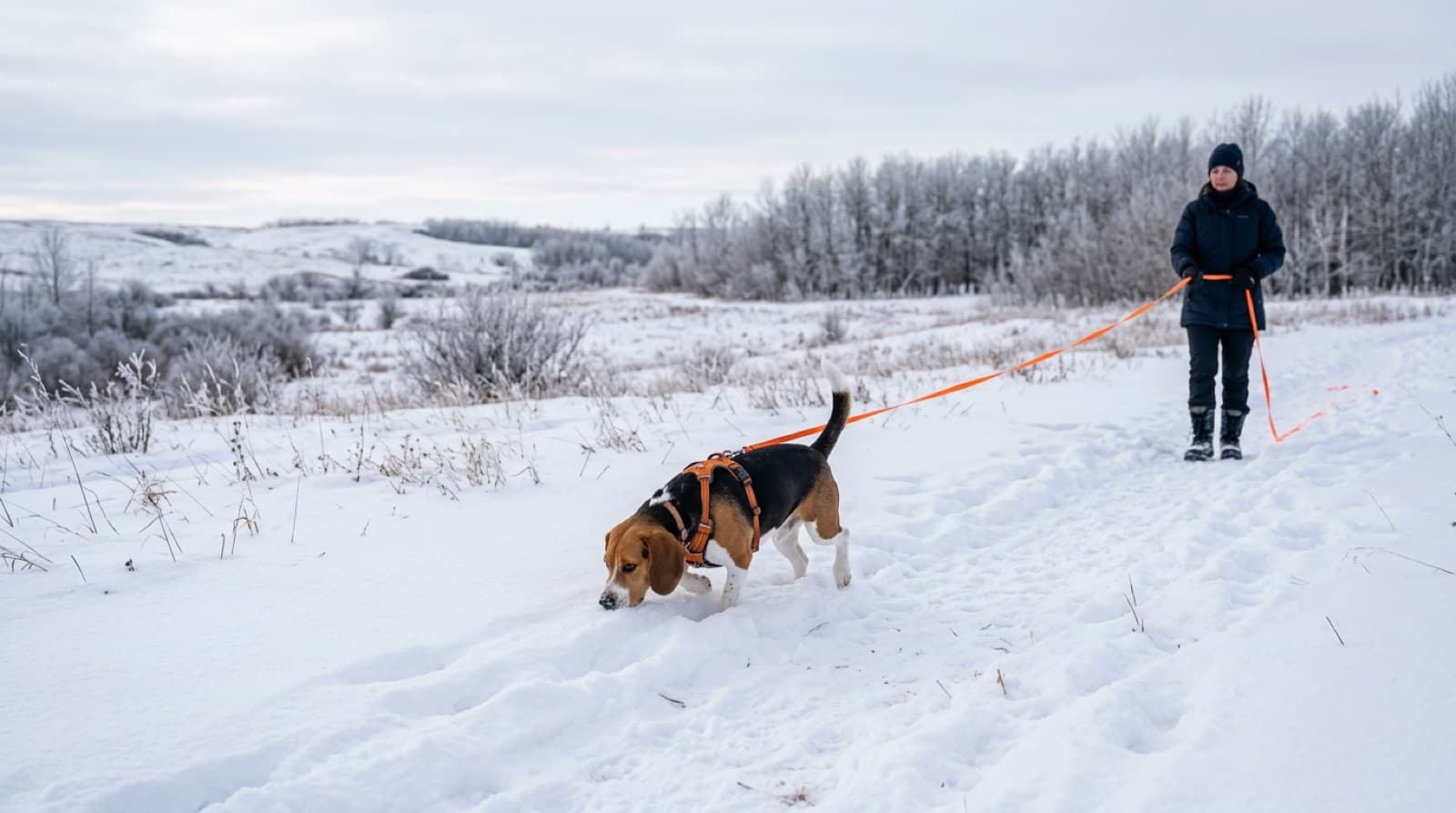
The nose beats the recall, and that is the whole game
Every honest Beagle guide starts here, because it shapes everything else. Beagles were bred over centuries to put their nose to the ground and follow a scent trail with total focus, ignoring distractions, including a handler calling them back. The Canadian Kennel Club describes the Beagle as a determined scent hound first and foremost. That is a feature, not a flaw, and it is exactly why Beagles have been such successful hunting hounds. But in a pet home it means the recall you build in the backyard evaporates the moment a real scent takes over.
So the rule is simple and non-negotiable: a Beagle does not run loose in unfenced spaces. Not on a quiet Ottawa trail, not in an empty field, not “just this once.” Use a long line for freedom with control, and reserve off-leash running for fully fenced dog parks. This is not you failing to train the dog well enough. It is the single most experienced Beagle owners and rescues agreeing on the same point: the nose is stronger than the training, and planning around it is what keeps the dog alive.
Secure the environment before you trust the dog
Escaping is why Beagles top the list of missing dogs and a common reason they land in rescue. A Beagle on a scent will dig under a fence, squeeze through a gap, or bolt through a door left ajar. Prevention is environmental:
- A fence at least four to five feet high, with the bottom secured against digging
- Gaps closed and gate latches the dog cannot nose open
- Strict door discipline, with the whole household bought in
- Never loose in an unfenced yard, even for a minute
- Microchip registered and current, plus the City of Ottawa licence tag on the collar
For the licence details and why the tag speeds a safe return, see our Ottawa pet licensing guide. For settling a newly adopted Beagle safely in the first days, our first-week rescue dog guide covers decompression and door safety.
Find your Beagle in Ottawa
Adult rescue Beagles come with foster notes on temperament, vocal level, and how they do with kids and dogs, so you can match the individual to your home. Browse live NCR inventory.
See Available Beagles →Training an independent, food-driven hound
Beagles are not stubborn out of defiance, they are independent workers who were never bred to look to a handler for direction. Combine that with the distracting nose and you get a dog that takes patience to train. The lever that makes it work is food: Beagles are intensely food-motivated, so small rewards or portions of the daily kibble turn training into a game the dog wants to play.
Keep sessions short and upbeat, train in low-distraction settings before adding challenge, and never let it become a battle, because a Beagle will simply disengage. Use force-free, reward-based methods, punishment shuts down a scent hound fast. If you want structured help, Ottawa has plenty of positive-reinforcement trainers and group classes. Just count every training treat as part of the daily calories, because the same food drive that powers training is what makes obesity, covered in our Beagle health guide, the breed’s biggest health risk.
Frequently Asked Questions
Can Beagles be trained to have reliable recall?
You can build a good recall, but you should never trust it completely off-leash in an unfenced space, and that distinction matters. A Beagle is a scent hound bred to follow a trail single-mindedly, ignoring everything else, and when a strong scent hits, the nose overrides training in a way it does not for most breeds. Even a well-trained Beagle may put its nose down and simply leave. So train recall hard, reward it richly, and use it every day, but treat off-leash freedom in unfenced areas as off the table. Exercise your Beagle on a long line, in fully fenced dog parks, or in a secure yard. This is not a training failure, it is the honest reality of the breed, and accepting it keeps your dog safe.
Why do Beagles escape so much?
Because the nose leads and the body follows. A Beagle that catches an interesting scent will dig under a fence, squeeze through a gap, climb, or bolt through an open door to follow it, and it will do so with a determination that surprises owners. This is the single most common reason Beagles go missing and end up in Ottawa rescue. Prevention is about securing the environment, not just training: a fence at least four to five feet high with the bottom secured against digging, gaps closed, gate latches the dog cannot nose open, and strict door discipline with the whole household on board. Never leave a Beagle loose in an unfenced yard, even for a minute. Microchip the dog and keep the City of Ottawa licence tag on, because a lost Beagle is far more likely with this breed.
How do I stop my Beagle from baying and howling?
You manage it more than you eliminate it, because baying is deeply instinctive, a Beagle’s loud, carrying hound voice is what it was bred to use on a trail. That said, you can reduce it. Make sure the dog is well exercised and mentally tired, because a bored, under-stimulated Beagle vocalises more. Avoid accidentally rewarding the noise with attention. Teach a "quiet" cue by rewarding calm silence. Address separation-related howling with gradual alone-time training rather than punishment. And be realistic before you adopt: if you live in an Ottawa apartment or attached townhouse with sound-sensitive neighbours, a Beagle’s voice is a genuine consideration. Some baying is part of owning the breed, and a Beagle will never be a silent dog.
Are Beagles hard to train?
They are not unintelligent, they are independent and easily distracted, which is different. A Beagle was bred to work on its own initiative following a scent, not to look to a handler for direction, so it is less naturally biddable than a Border Collie or a Lab. Add the powerful nose that pulls attention away, and training takes more patience and consistency. The good news is that Beagles are highly food-motivated, which is a training superpower if you use it well. Keep sessions short, upbeat, and rich with rewards, train in low-distraction settings before adding challenge, and never let training become a battle, because a Beagle will simply disengage. Progress is real, it is just slower and requires managing the environment rather than expecting off-leash obedience.
What is the best way to exercise a Beagle in Ottawa?
Lead with the nose. A Beagle needs a solid hour or more of daily activity, and scent-based exercise satisfies the breed in a way plain walking does not. Sniff walks on a long line, where the dog is allowed to track and explore at its own pace, tire a Beagle out mentally and physically. Scent games and food-puzzle work at home add enrichment. For off-leash running, use only fully fenced dog parks, never an open field or trail, because the nose will take the dog away. In an Ottawa winter, keep the coldest-day outings shorter and swap in indoor scent games and puzzle feeders. A well-exercised Beagle is calmer, quieter, and far less likely to invent its own entertainment through escaping or destruction.
Should I use a long line with my Beagle?
Yes, a long line is the single most useful piece of equipment for a Beagle owner. A 15 to 30-foot long line clipped to a well-fitted harness (not a collar, to protect the neck) lets your Beagle range, sniff, and explore with real freedom while you keep physical control the recall alone cannot guarantee. It is the safe middle ground between a short leash and true off-leash, which is not appropriate for the breed in unfenced spaces. Use it on Ottawa trails, in open parks, and anywhere the dog would otherwise be tempted to follow a scent and vanish. Practise recall on the long line constantly, rewarding every check-in, so you build the best recall the dog is capable of while never risking a scent-driven bolt.
Are Beagles good with kids and other dogs?
Generally very good, which is a big part of their family appeal. Beagles are pack hounds bred to work in groups, so they are typically sociable, tolerant, and friendly with other dogs, and their sturdy, merry temperament suits households with children. As always, supervise young kids and dogs together, teach children to respect the dog around food, given the Beagle’s intense food drive, a resource-guarding flashpoint to manage, and read the individual dog. A rescue’s foster notes will tell you how a particular Beagle does with kids, dogs, and cats. The bigger training challenges with a Beagle are almost never aggression, they are the nose, the voice, and the appetite, not sociability.
How do I manage a Beagle’s food obsession in training?
Turn it into an asset while managing the downside. The food drive that makes a Beagle counter-surf and raid the garbage is the same drive that makes it eager to work for treats, so use small, low-calorie rewards or portions of the dog’s daily kibble to train, and you will have a motivated student. The management side is about the environment: keep counters clear, secure the garbage behind a latched cupboard door, do not leave food unattended, and never feed from the table, which teaches begging. Count all training treats as part of the daily calorie budget so the food-driven training does not create the obesity that is the breed’s biggest health risk. Discipline about food, in both directions, is central to living well with a Beagle.
Related Guides
New dog? Start with these care guides
Everything a new adopter needs to set up a safe, happy home.