The short answer
You cannot exercise a Border Collie into calmness by running alone, that just builds a tireless athlete. The breed needs at least two hours of activity daily, but the key is mental work, not just physical: a Border Collie was bred to think and problem-solve for hours. Combine physical exercise (walks, off-leash running, hikes) with heavy mental stimulation (training, puzzles, scent work, and above all dog sports like agility). Fifteen minutes of hard mental work can tire a BC more than an hour of fetch. Without this, they develop obsessive behaviours (spinning, shadow-chasing) and destructiveness, the top reason they land in rescue. They love Ottawa winters; lean on indoor mental work on brutal days.
The running trap
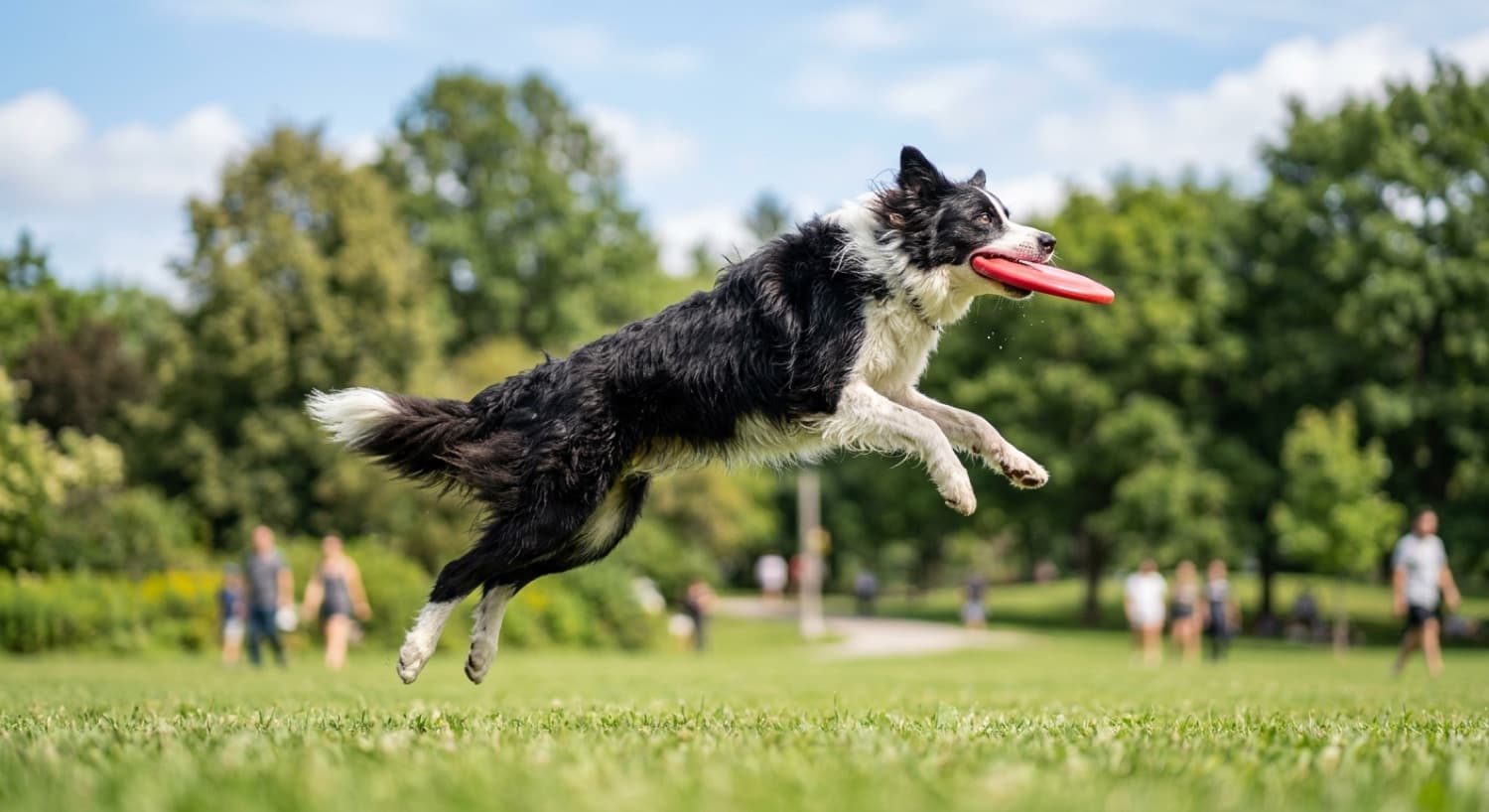
Here is the mistake that catches most new Border Collie owners. Faced with an energetic dog, they run it, more walks, more fetch, more off-leash sprinting. The Border Collie, an endurance athlete bred to work all day, simply gets fitter, and the fitter it gets, the more exercise it takes to tire it, until the owner is running a dog that never seems satisfied and still misbehaves at home.
The problem is that physical exercise was never the whole job. The Canadian Kennel Club describes the Border Collie as remarkably intelligent and bred to work in close partnership using thought and instinct. That brain is the part you have to tire, and running does not touch it.
Tire the brain, and prevent the obsessions
The formula that works is physical exercise plus, crucially, substantial mental work: training sessions, puzzle feeders, scent games, learning tricks and toy names, and above all dog sports (agility, flyball, disc, obedience, rally, treibball, herding). A short, challenging training session can tire a Border Collie more than a long run, because it engages the problem-solving mind the breed lives for. Rotate activities to keep them novel, and spread short mental sessions through the day.
This is not just about a tired dog, it is about preventing the compulsive behaviours a bored Border Collie develops: obsessive spinning, tail-chasing, and shadow- or light-chasing that can become genuine disorders, plus destructiveness and misdirected herding (nipping at heels, chasing bikes). These behaviours are the top reason the breed lands in rescue, and they are largely preventable with enough mental engagement. If you see them emerging, add mental work and structure, ideally with a positive-reinforcement trainer, covered alongside settling a new dog in our first-week guide.
Find your Border Collie in Ottawa
If hours of daily physical and mental engagement sound like a joy rather than a chore, a rescue Border Collie is an extraordinary partner. Browse available Border Collies and mixes from Ottawa and NCR rescues, with foster notes on drive.
See Available Border Collies →Exercise through an Ottawa winter
Winter suits the breed, Border Collies love cold and snow, so keep up outdoor exercise, snowy running and play burn energy well (rinse road salt off the paws, watch for ice balls). Off-leash running at spaces like Bruce Pit or Conroy Pit, once recall is reliable, works year-round; see our off-leash parks guide.
On the most brutal cold days, when outdoor time is limited, lean hard on indoor mental work: training, puzzles, scent games, and trick sessions, plus indoor dog-sport facilities and classes many Ottawa owners use through winter. The rule never changes: a Border Collie’s needs do not shrink with the temperature, so if the cold cuts a walk short, make up the difference with mental stimulation, or you will have a frustrated dog by February.
Frequently Asked Questions
How much exercise does a Border Collie really need?
A lot, but the more important truth is that physical exercise alone is not the answer. A Border Collie needs at least two hours of activity a day, and often more, but the mistake owners make is thinking that means running: a Border Collie is an endurance athlete, so the fitter you make it through running and fetch, the more physical stamina it develops, and you end up with a tireless dog you cannot satisfy with exercise. The breed’s real need is mental work, its herding job was as much about thinking, problem-solving, and responding to subtle cues as running. So the right formula is a combination: solid daily physical exercise (walks, hikes, off-leash running with reliable recall, swimming) plus substantial mental stimulation (training, puzzles, scent work, and ideally dog sports). A mentally-tired Border Collie is calm; a merely physically-tired one is a fit dog looking for its next job.
Why is mental stimulation more important than physical exercise for a Border Collie?
Because the breed was built to think, not just to move. Border Collies were developed to make decisions, read livestock, respond to a shepherd’s subtle signals, and problem-solve for hours, so they have an extraordinary need for mental engagement that plain physical exercise does not touch. An owner who only runs their Border Collie discovers two things: the dog becomes fitter and harder to tire, and it still behaves badly, because its brain is bored even when its body is not. Mental work, training sessions, puzzle feeders, scent games, learning tricks and names, and structured problem-solving, genuinely tires a Border Collie in a way running cannot, and it is the key to a calm, contented dog. A useful rule of thumb: fifteen minutes of hard mental work (a challenging training session) can tire a Border Collie more than an hour of fetch. Engage the mind, and the behaviour problems that fill rescues largely disappear.
What happens if a Border Collie does not get enough exercise and mental work?
It develops the behaviour problems that make Border Collies one of the more commonly surrendered breeds. A Border Collie starved of physical and, especially, mental outlets becomes anxious, frustrated, and destructive, and it channels that unspent drive into problematic behaviours: obsessive spinning, tail-chasing, shadow- and light-chasing (which can become a genuine compulsive disorder that is hard to reverse), pacing, excessive barking, destructiveness, and herding behaviours directed at children, other pets, cars, or bikes (including nipping at heels). The dog is not being bad; it is a working animal with no work, and its brilliant mind turns inward or destructive. This is the single biggest reason Border Collies end up in rescue, and it is entirely preventable with adequate exercise and mental stimulation. If you are seeing these behaviours, the answer is almost always more mental work and structure, ideally with a positive-reinforcement trainer, not less activity.
What are the best mental-stimulation activities for a Border Collie?
Variety and challenge are the goals. Training is the foundation: teach obedience, tricks, the names of toys, and complex behaviour chains, Border Collies love learning and can master astonishing numbers of commands, and daily training sessions are both bonding and tiring. Puzzle feeders and food-dispensing toys make the dog work for meals. Scent games and nosework engage a different part of the brain. Structured problem-solving toys and games challenge the mind. And above all, dog sports are the gold standard for the breed: agility, flyball, disc, obedience, rally, treibball, and herding (where available) provide exactly the physical-and-mental combination a Border Collie craves, plus structure and a job. In Ottawa, there are training clubs and sport facilities that offer classes in these. Rotate activities to keep them novel, because a Border Collie’s clever mind adapts fast, and mix short, intense mental sessions through the day rather than relying on one long walk.
Can I tire out a Border Collie in an apartment or small yard?
It is genuinely difficult, and honestly the breed is a poor fit for apartment or low-space living, but if that is your situation, the emphasis has to shift heavily to mental work and off-site exercise. You cannot meet a Border Collie’s physical needs in a small space, so you would need to commit to substantial daily outings, long walks, hikes, off-leash running where safe, plus dog sports or daycare, and then load the at-home time with intensive mental stimulation: training, puzzles, scent work, and structured games. Some Border Collies do live successfully in apartments with owners who are genuinely dedicated to this, but many struggle, and the breed’s barking, sound sensitivity, and need for space make it a hard match for close-quarters living. Be honest with yourself: if you cannot provide the hours of combined physical and mental engagement the breed needs regardless of your home size, a different breed will be happier, and so will you.
How do I exercise a Border Collie through an Ottawa winter?
Winter is actually one of the easier seasons, because Border Collies love the cold and snow. Keep up the outdoor physical exercise, most Border Collies are delighted by snow and will happily run, play, and work outdoors through an Ottawa winter (rinse road salt off the paws afterward and watch for ice balls between the toes). Snowy off-leash running, once recall is solid, and snow-based play burn energy well. The bigger lever in winter, as always, is mental work: on the most brutal cold days when outdoor time is limited, lean hard on indoor training sessions, puzzle feeders, scent games, and trick-training to satisfy the brain. Many Ottawa owners also use indoor dog-sport facilities and training classes through the winter months. The key point is that a Border Collie’s needs do not shrink in winter, so if the cold cuts your walks short, make up the difference with extra mental stimulation indoors, or you will have a frustrated dog by February.
Are Border Collies good off-leash, and can they run in Ottawa parks?
They can be excellent off-leash with good training, which is one of the breed’s joys, but their herding instinct needs managing. Border Collies are highly trainable and can develop reliable recall, making off-leash running at appropriate Ottawa off-leash areas a great way to burn energy. The caveats are the herding drive and sensitivity: some Border Collies will try to herd other dogs, joggers, cyclists, or children by circling and nipping, and some are reactive to fast movement, so early socialisation, a solid recall, and reading your individual dog matter. Introduce off-leash gradually, ensure recall is genuinely reliable first, and choose quieter times if your dog is prone to herding others. See our Ottawa off-leash parks guide for spots like Bruce Pit and Conroy Pit. A well-trained Border Collie with good recall and manageable herding drive is a fantastic off-leash companion; one that chases and nips needs more training before earning that freedom.
Related Guides
New dog? Start with these care guides
Everything a new adopter needs to set up a safe, happy home.