The short answer
The “small dog syndrome” Chihuahua is made, not born. Snappiness and fear-barking come from under-socialisation and over-babying, not the breed. The fix is to treat a Chihuahua like a real dog: socialise it gradually and positively, train it with reward-based methods, let it walk instead of carrying it everywhere, and set consistent boundaries. Snappiness at strangers is almost always fear, address it by building confidence, never by punishment or by scooping-and-soothing (which rewards the fear). House-training takes extra consistency (small bladders, cold winters, use indoor potty options on brutal days). Trained well, a Chihuahua is confident, devoted, and delightful.
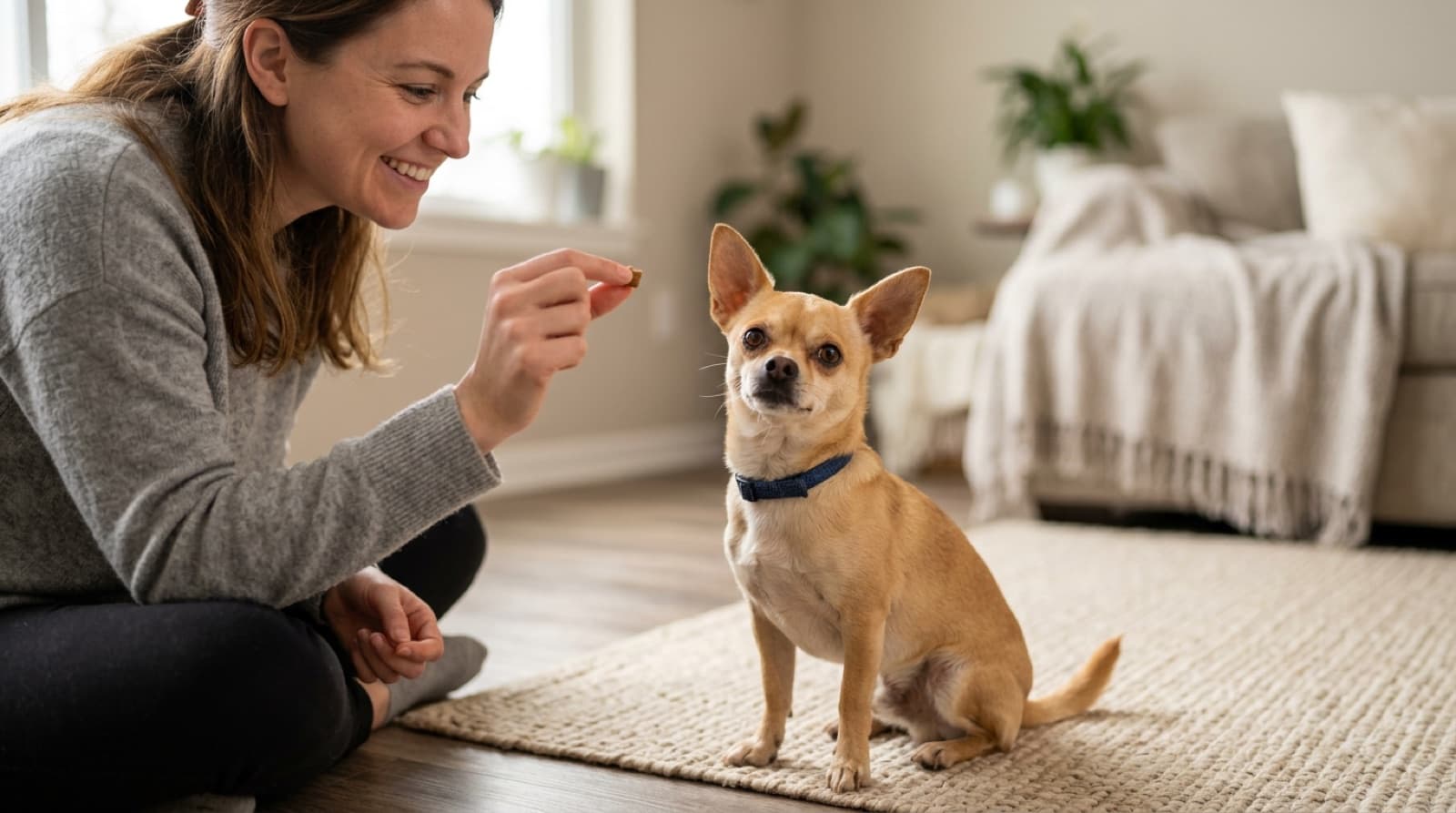
The stereotype is a training failure, not a breed trait
Start here, because it reframes everything. The snappy, shrill, fearful Chihuahua everyone pictures is not the breed’s true nature, it is what happens when a naturally cautious small dog is never socialised, never trained, carried everywhere instead of walked, and comforted every time it shows fear (which teaches the dog that fear works). The Canadian Kennel Club describes the Chihuahua as a graceful, alert, spirited companion, and a well-raised one is exactly that.
The practical takeaway: a Chihuahua needs the same investment as a big dog, socialisation, training, exercise, and boundaries. The mistake is treating it as an accessory rather than a dog. Because so much depends on how a Chihuahua was raised, adopting an adult with a visible, tested temperament removes much of the guesswork, and a rescue’s foster notes on how the dog does with strangers, kids, and other dogs are gold.
Building confidence and handling fear
Most Chihuahua “aggression” is fear creating distance. The response that works is confidence-building, not punishment (which deepens fear) and not scoop-and-soothe (which rewards it). Socialise gradually and positively: pair new people, places, and sounds with treats at a distance the dog can handle, keep exposures short and successful, and let the dog approach on its own terms rather than forcing or flooding it.
With strangers, create distance from the trigger, reward calm, make people predict good things, and ask visitors to ignore the dog and let it come to them. For a persistent fear problem, a positive-reinforcement trainer or behaviourist experienced with small fearful dogs is worth the investment. Settling a newly adopted Chihuahua gently in the first days is covered in our first-week rescue dog guide.
Find your Chihuahua in Ottawa
Adult rescue Chihuahuas come with foster notes on temperament, socialisation, and how they do with strangers, kids, and other dogs, so you can match the individual to your home. Browse live NCR inventory.
See Available Chihuahuas →House-training the tiny dog in an Ottawa winter
Chihuahuas have a reputation for being hard to house-train, and the reasons are practical: small bladders mean frequent trips, tiny accidents are easy to miss (so the dog keeps going indoors unnoticed), and a thin-coated dog reasonably resists going out into brutal Ottawa cold. The fundamentals are the same as any dog but need more consistency: scheduled frequent potty trips, immediate reward the moment the dog goes in the right spot, close supervision or confinement to prevent unseen accidents, and thorough enzymatic cleanup of mistakes.
The Ottawa-specific move is to set up an indoor potty option, pee pads or a small litter tray, for the coldest stretches, so the dog is not fighting both house-training and dangerous cold at once. And pair every winter outing with proper gear, covered in the adoption and health guides, so going out is tolerable. Use the breed’s food motivation to power training, minding the tiny calorie needs noted in our Chihuahua health guide.
Frequently Asked Questions
What is a Chihuahua’s temperament really like?
A well-raised Chihuahua is confident, bold, alert, deeply devoted to its person, and often surprisingly brave for its size, they genuinely do not know they are tiny. They tend to bond intensely, sometimes to one person, and can be loving lap dogs and lively little characters. The flip side, and the source of the breed’s reputation, is that a poorly-socialised, over-babied Chihuahua can become fearful, distrustful of strangers, snappy, and a nuisance barker. That is not the breed’s true nature, it is what happens when a nervous small dog is never taught to cope with the world and is instead coddled and allowed to run the house. The temperament you get depends enormously on socialisation and handling, which is exactly why adopting an adult with a known, tested temperament is such an advantage.
Is "small dog syndrome" real?
Not as a breed trait, it is a training-and-socialisation failure that gets blamed on the dog. "Small dog syndrome" describes a little dog that is bossy, snappy, barky, and fearful-aggressive, and it happens because tiny dogs are often not treated like dogs: they are carried everywhere instead of walked, never properly socialised, never trained, picked up and soothed when they growl (which rewards the fear), and allowed to do things no one would tolerate from a large dog. The dog learns that barking and snapping work and that the world is scary. The fix is to treat a Chihuahua like a real dog: socialise it, train it with positive methods, let it walk and explore, set consistent boundaries, and avoid reinforcing fearful behaviour. Do that, and the "syndrome" largely disappears.
How do I socialise a Chihuahua properly?
Gradually, positively, and without overwhelming the dog. Socialisation means calm, positive exposure to a wide range of people, sights, sounds, surfaces, and (carefully) other friendly dogs, so the dog learns the world is safe. For a naturally cautious small breed, go at the dog’s pace: pair new experiences with treats and praise, keep encounters short and positive, and never force the dog into something that frightens it or flood it. Let the Chihuahua approach new things on its own terms. Crucially, resist the urge to scoop the dog up and cuddle it the instant it seems nervous, which teaches it that nervousness earns rescue and that the ground is dangerous. For an adopted adult who missed early socialisation, this becomes gentle, patient confidence-building, and a positive-reinforcement trainer can help. The goal is a dog that meets the world calmly rather than defensively.
Why is my Chihuahua snappy or aggressive with strangers?
Almost always fear, not dominance. A Chihuahua that growls, snaps, or barks defensively at strangers is usually frightened and using the only tools it has to create space, and the behaviour is frequently made worse by well-meaning owners who pick the dog up and soothe it (rewarding the fear) or who never socialised it to strangers in the first place. The worst response is punishment, which increases fear and can escalate the aggression. The right approach is to build the dog’s confidence and change its emotional response: create distance from the trigger, reward calm behaviour, pair strangers with good things (treats appearing when a person approaches, at a distance the dog can handle), and never force interactions. Teach visitors to ignore the dog and let it approach on its own terms. For a persistent problem, a positive-reinforcement trainer or behaviourist experienced with fearful small dogs is worth it.
Are Chihuahuas hard to house-train?
They can be, and it is one of the more common frustrations with the breed, for a few practical reasons. Small dogs have small bladders and need to go more often, their tiny accidents are easy to miss and clean up (so the dog is inadvertently allowed to keep going indoors), and in a cold Ottawa winter a thin-coated Chihuahua understandably resists going outside, which sets back training. Success comes from the same fundamentals as any dog but applied with more consistency: frequent, scheduled potty trips, generous reward the instant the dog goes in the right place, close supervision or confinement to prevent unwitnessed accidents, and thorough enzymatic cleanup of any mistakes. Many Ottawa Chihuahua owners also set up an indoor potty option (pee pads or a litter tray) for the coldest days, so the dog is not fighting both house-training and dangerous cold at once. Patience and routine win.
Can Chihuahuas be trained well?
Yes, absolutely, they are intelligent, food-motivated, and quite capable of learning obedience, tricks, and good manners, and many excel at small-dog sports and even therapy work. The breed’s reputation for being untrainable comes not from a lack of ability but from owners who never bother to train them, assuming a tiny dog does not need it. Treat a Chihuahua as a trainable dog and it will surprise you. Use positive, reward-based methods with small, soft treats (mind the tiny calorie needs), keep sessions short and upbeat to hold the dog’s attention, and start with the fundamentals: name recognition, sit, recall, polite greetings, and accepting handling for grooming and dental care. Consistency from the whole household matters, especially not letting the dog get away with things because it is cute. A trained Chihuahua is a joy; an untrained one is where the breed’s bad reputation comes from.
Should I carry my Chihuahua everywhere?
Mostly no, and this is one of the most important mindset shifts for a Chihuahua owner. It is tempting to carry such a tiny, portable dog constantly, but doing so deprives it of walking, exploring, sniffing, and building confidence on its own four feet, and it can reinforce anxiety by teaching the dog that the ground is unsafe and that being scooped up is the default. Let your Chihuahua walk and be a dog. Certainly pick the dog up when there is a genuine hazard, an off-leash large dog, a truly dangerous situation, deep snow or ice it cannot handle, but as a general rule, let it use its legs and engage with the world. This builds the confidence that prevents the fearful, snappy behaviour the breed is unfairly known for. Winter is the fair exception: in dangerous Ottawa cold, carrying a properly-dressed Chihuahua for stretches of a walk is sensible.
Related Guides
New dog? Start with these care guides
Everything a new adopter needs to set up a safe, happy home.