The short answer
The Doberman is a sensitive velcro dog, not a movie villain. A well-raised Dobie is loyal, brilliant, and intensely bonded, wanting to be with its people constantly. It is naturally alert and protective, so thorough socialisation is essential to keep that balanced, an under-socialised large guardian is a liability. Dobermans need 1 to 2 hours of daily exercise plus mental work, and they are prone to separation anxiety, so plan for company. Train with positive, reward-based methods, the breed is sensitive and harsh handling backfires. Check housing and insurance restrictions (no Ontario ban, but some restrict the breed). An adult with a known temperament is the safest first Doberman.
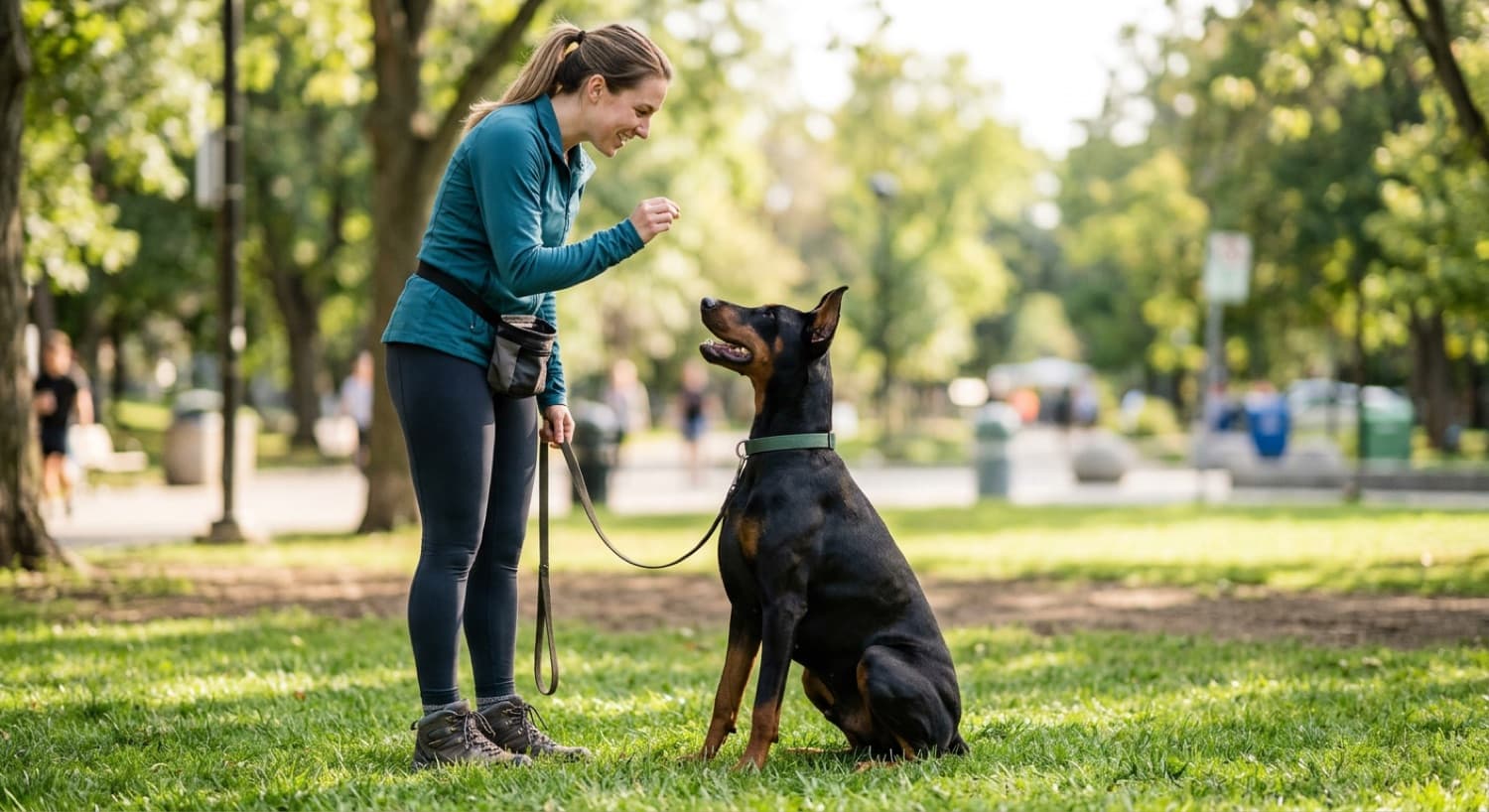
The reputation vs the reality
Start here, because it reframes everything. The Doberman’s image, the fierce guard dog of films, badly misrepresents the modern breed. A well-bred, well-raised Doberman is intelligent, loyal, sensitive, and deeply people-focused, a velcro dog that wants constant closeness and can be genuinely needy for affection. The Canadian Kennel Club describes the Doberman Pinscher as loyal, alert, and intelligent, and today’s breeding has emphasised a stable, family-friendly temperament.
The practical takeaway: a Doberman is a companion that needs company, engagement, and training, not a weapon or a yard ornament. Its natural alertness and protectiveness are assets when balanced by good socialisation, and problems arise only when the breed’s real needs, companionship, exercise, mental work, and socialisation, go unmet. Because so much depends on how a Doberman was raised and handled, adopting an adult with a visible, tested temperament removes much of the guesswork.
Socialisation, and training a sensitive breed
Socialisation is the non-negotiable with a Doberman. The breed’s size, strength, and protective instinct mean an under-socialised dog can become fearful or reactive in ways that are hard to live with and, given the breed, genuinely consequential. Positive, gradual exposure to many people, dogs, places, and situations teaches the dog that its default should be confidence, not suspicion. For a rescued adult who may have missed early socialisation, this becomes patient confidence-building, ideally with a positive-reinforcement trainer, and any reactivity should be addressed early with professional help.
When it comes to obedience, Dobermans are brilliant and eager, but sensitive, so reward-based methods are essential; harsh corrections damage the trust this breed depends on and can create fear. Keep training upbeat and consistent, start early, and give the clever mind ongoing challenges. Settling a newly adopted Doberman gently is covered in our first-week rescue dog guide.
Find your Doberman in Ottawa
Adult rescue Dobermans come with foster notes on temperament and how they do with strangers, kids, and other animals, so you can match the individual to your home. Browse live NCR inventory.
See Available Dobermans →Exercise, company, and being a good ambassador
A Doberman needs one to two hours of daily exercise plus mental work, walks, running, fetch, training, puzzles, and ideally a dog sport (the breed excels at obedience, agility, tracking, and rally). Just as important is company: as intensely bonded velcro dogs, Dobermans are prone to separation anxiety, so plan for a household that is not away all day every day, and use gradual alone-time training, safe chews, and a midday walk or daycare for long workdays. A fulfilled, well-exercised, well-companioned Doberman is calm and content; a bored, lonely one is where problems start.
Finally, own the reputation by countering it: a well-socialised, well-trained, calm and friendly Doberman in public is the best argument against the stereotype, and it helps every Doberman that comes after. Check the housing and insurance considerations in our Doberman adoption guide before you bring one home.
Frequently Asked Questions
What is a Doberman’s temperament really like?
Far softer than the reputation suggests. A well-bred, well-raised Doberman is intelligent, loyal, sensitive, and intensely bonded to its family, often described as a "velcro dog" that wants to be with its people constantly and can be genuinely needy for affection and company. They are alert and naturally protective, which is the guardian heritage, but modern Dobermans have largely been bred toward a stable, affectionate, family-friendly temperament, and many are gentle, even sensitive to the point of being emotionally attuned to their owner’s mood. They are also highly trainable and thrive on having a job and a close partnership. The movie-villain image of a vicious guard dog does not reflect a properly-bred and socialised Dobie. What the breed genuinely needs is companionship, mental engagement, exercise, socialisation, and training, deny those and a bored, lonely, under-socialised Doberman can develop anxiety or problem behaviours, but that is a failure of care, not the breed’s nature.
Why is socialisation important for a Doberman?
Because the breed combines size, strength, intelligence, and a natural protective instinct, and socialisation is what ensures that protectiveness stays balanced and appropriate rather than tipping into fearfulness or reactivity. Thorough, positive socialisation, calm exposure to many people, dogs, environments, and situations from as early as possible, teaches a Doberman that the world is generally safe and that it does not need to be on guard against everything, producing the stable, confident adult the breed should be. For a puppy, the early months are critical; for an adopted adult who may have missed that window, socialisation becomes ongoing, patient confidence-building at the dog’s pace, ideally with a positive-reinforcement trainer. Given the breed’s guardian nature and the real-world consequences (both for safety and for the breed’s reputation) of an under-socialised large protective dog, this is essential work, not optional polish. A well-socialised Doberman is a stable, trustworthy companion; the alternative is a liability the breed does not deserve.
Are Dobermans good with children and other pets?
A well-bred, well-socialised Doberman is often excellent with its family’s children, loyal, gentle, and protective, and many are wonderful family dogs. The usual sensible precautions apply: supervise interactions with young children given the breed’s size and energy, and teach kids to treat the dog respectfully. With other pets, early socialisation is key: many Dobermans live happily with other dogs and with cats they were raised alongside, but some can be dog-selective or same-sex aggressive with other dogs, and the guardian and prey drives vary by individual, so introductions should be careful and a rescue’s notes on how the specific dog does with other animals are important. As with any large, powerful breed, the individual dog’s tested temperament matters far more than breed generalisations, which is a strong argument for adopting an adult Doberman whose behaviour with kids, dogs, and cats is known rather than gambling on a puppy.
How much exercise does a Doberman need?
A substantial amount, both physical and mental. Dobermans are athletic working dogs that need a good one to two hours of exercise a day, brisk walks, running, fetch, and active play, plus significant mental stimulation through training, puzzle toys, and ideally a job or dog sport. The breed excels at obedience, agility, tracking, protection sports, and rally, and channelling that intelligence into structured activity is deeply satisfying for the dog. An under-exercised, under-stimulated Doberman becomes restless, anxious, and potentially destructive, and because the breed is so bonded and sensitive, boredom and loneliness compound the problem. In an Ottawa winter, the short coat limits long cold-weather outings, so a coat is needed and the coldest days call for more indoor mental work and games, but the exercise needs do not disappear with the temperature. Plan for a dog that needs real daily activity and engagement, not a couch ornament, and factor that into whether the breed fits your lifestyle.
Are Dobermans easy to train?
Yes, remarkably so, they are one of the most intelligent and trainable breeds, quick to learn and eager to work with their people, which is why they excel in obedience, service, and sport. That trainability is a joy and a responsibility: a Doberman learns fast, good habits and bad, so early, consistent training matters. Crucially, the breed is sensitive, both emotionally and to handling, so positive, reward-based methods are essential; harsh corrections can damage the trust and confidence a Doberman relies on and can create fear or anxiety in a dog that deeply wants to please. Keep training upbeat, engaging, and consistent, start early with socialisation and the fundamentals, and give the brilliant mind ongoing challenges. Enrol in a positive-reinforcement class both for the training and the socialisation. The main risk with a Doberman is not that it cannot learn but that its intelligence and sensitivity are mishandled, so reward-based training suits the breed perfectly.
Do Dobermans have separation anxiety?
They can, more than many breeds, precisely because they are such intensely bonded velcro dogs. A Doberman wants to be with its people, and one left alone too much, or without adequate exercise and mental engagement, can develop genuine separation anxiety, showing as destruction, barking, pacing, or distress when alone. This is a real consideration before adopting: the breed is not well suited to a household where the dog will be alone for very long stretches every day with nothing to do. Prevention and management combine plenty of exercise and mental work (a fulfilled dog copes better) with gradual alone-time training, safe chews and puzzle feeders when you leave, and undramatic departures and arrivals. For long workdays, a midday walk, a dog walker, or daycare makes a real difference. If separation anxiety becomes severe, work with a positive-reinforcement trainer or behaviourist. Being honest about how much company you can provide is part of deciding whether a Doberman is the right breed for you.
Does the Doberman’s reputation cause real problems?
Yes, and it is worth understanding as part of owning the breed. Despite the reality that a well-raised Doberman is a loyal, sensitive family companion, the breed’s guard-dog history and media portrayal mean it faces real-world discrimination: some landlords refuse the breed, some home and tenant insurers restrict or decline coverage, and some members of the public react with unwarranted fear. There is no Ontario law banning Dobermans, but these private restrictions are real, so prospective owners should check their rental and insurance situation before adopting (covered in our adoption guide). The best response to the reputation is to be an excellent ambassador for the breed: a well-socialised, well-trained, well-mannered Doberman that is calm and friendly in public does more to counter the stereotype than any argument. Responsible ownership, socialisation, and training benefit not just your dog but the breed’s standing, which matters for every Doberman that comes after.
Related Guides
New dog? Start with these care guides
Everything a new adopter needs to set up a safe, happy home.