The short answer
A Frenchie's breathing problem is also a cooling problem. The flat face (BOAS) makes panting far less effective, so heatstroke is a real, potentially fatal risk that strikes faster and at lower temperatures than in other dogs. In Ottawa summers: air conditioning, shade, water, cool surfaces, exercise only in the cool of morning or evening, and never in a parked car. Know the heatstroke signs, frantic panting, bright red or bluish gums, wobbling, collapse, and treat them as an emergency. Walk on a harness, never a collar. Keep exercise modest. In winter, a thin-coated Frenchie also needs a warm coat. When in doubt, stay in and stay cool.
Heatstroke is an emergency, act fast
If you see frantic panting, bright red or bluish gums, drooling, wobbling, vomiting, glazed eyes, or collapse in warmth, move the dog to cool air, wet the body with cool (not ice-cold) water, offer small sips, and get to an emergency vet immediately, calling ahead. Even apparent recovery needs a vet, damage can develop hours later. Ottawa has 24-hour care, including the Alta Vista Animal Hospital. Save the number now.
Breathing and cooling are the same problem
This is the insight that keeps a Frenchie safe. Dogs cool themselves mainly by panting, moving air over the wet surfaces of the mouth and airway so heat evaporates away. A French Bulldog’s flat-faced anatomy, the same narrowed nostrils and overlong soft palate that cause its snorting and snoring (BOAS), makes panting far less effective. So the dog that struggles to breathe also struggles to cool itself, which is why the breed overheats so dangerously.
Once you understand that link, the safety rules follow naturally: anything that makes breathing harder, heat, humidity, exertion, pressure on the neck, excess weight, also makes cooling harder and raises the danger. The full medical picture of BOAS and the breed’s other conditions is in our French Bulldog health guide.
The Ottawa summer rules
- Air conditioning on hot, humid days, a Frenchie is an indoor dog when it is warm.
- Exercise only in the cool of early morning or evening, and keep it short. Skip it entirely on hot days.
- Never leave a Frenchie in a parked car, even briefly, even with windows cracked.
- Shade, water, and cool surfaces always available outdoors; a cooling mat helps indoors.
- Watch the breathing as your guide, if it is struggling, stop and cool down.
- Keep the dog lean, excess weight worsens both breathing and heat tolerance.
And always walk on a harness, not a neck collar, so nothing presses on the already-narrow airway. These are not fussy precautions, they are the difference between a safe Frenchie and an emergency.
Find your French Bulldog in Ottawa
A Frenchie is a wonderful companion for an owner who understands its needs. Browse available French Bulldogs and Frenchie mixes from Ottawa and NCR rescues, with foster notes on temperament and health.
See Available French Bulldogs →Frequently Asked Questions
Why do French Bulldogs struggle to breathe and cool down?
It comes down to their flat-faced (brachycephalic) anatomy. A French Bulldog has the same soft tissue as a longer-nosed dog packed into a much shorter skull, which leaves narrowed nostrils, an overlong soft palate, and a compressed airway, together called BOAS (brachycephalic obstructive airway syndrome). This makes moving air harder, which is why Frenchies snort, snore, and tire easily. Critically, dogs cool themselves mainly by panting, moving air over the wet surfaces of the mouth and airway to shed heat, and a Frenchie’s restricted airway makes panting far less effective. So the same anatomy that causes noisy breathing also cripples the dog’s ability to cool itself, which is why French Bulldogs are so dangerously prone to overheating. Understanding this connection is the key to keeping the breed safe: their breathing and their heat vulnerability are the same problem.
How dangerous is heat for a French Bulldog in Ottawa?
Genuinely dangerous, and this is the single most important safety issue with the breed. Because a Frenchie cannot pant effectively, it can overheat and suffer heatstroke far faster and at lower temperatures than a normal-nosed dog, and heatstroke can be fatal or cause permanent organ damage. Ottawa’s hot, humid July and August, and increasingly warm shoulder seasons, are a real hazard for the breed. A Frenchie can get into trouble on a warm day during ordinary activity, in a parked car (never, ever leave one there), or even in a hot, poorly-ventilated room. Humidity makes it worse, because panting relies on evaporation. The practical rule for Ottawa summers is simple and strict: keep the dog cool, air conditioning, shade, water, cool surfaces, exercise only in the cool of early morning or evening, and never push a Frenchie in the heat. When in doubt, stay in and stay cool.
What are the warning signs of heatstroke in a French Bulldog?
Learn these, because fast action saves lives. Early signs include excessive, frantic panting, heavy laboured or noisier-than-usual breathing, drooling, restlessness, and bright red gums and tongue. As it worsens, you may see weakness, stumbling or wobbliness, vomiting or diarrhea, gums turning pale or bluish, glazed eyes, collapse, and eventually seizures or unconsciousness. Any of these in a warm environment is a medical emergency. Move the dog to shade or air conditioning immediately, offer small amounts of cool (not ice-cold) water, wet the body with cool water especially the belly, groin, and paws, and get to an emergency vet right away, calling ahead. Do not use ice-cold water or ice, which can cause shock and constrict blood vessels. Even a dog that seems to recover needs vet assessment, because internal damage can develop hours later. Prevention is far better than treatment: keep a Frenchie out of heat in the first place.
How much exercise can a French Bulldog safely handle?
Less than most dogs, and always adjusted for temperature. French Bulldogs are low-endurance dogs whose restricted airways mean they tire and overheat quickly, so they need only modest exercise, short, gentle walks and play, rather than long runs or vigorous activity. Watch the dog’s breathing as your guide: if it is struggling, snorting hard, or lagging, stop and rest. Crucially, scale exercise to the weather: in cool conditions a Frenchie can enjoy a decent walk, but in heat or humidity, exercise should be minimal and confined to the coolest parts of the day, or skipped entirely on hot Ottawa days in favour of indoor play in the air conditioning. Never let a Frenchie overexert in warmth, and never assume it will pace itself, many will push past their limits to keep up or play, so it is your job to set the limit. A harness (never a neck collar) also helps by keeping pressure off the airway.
Should I use a harness instead of a collar on my French Bulldog?
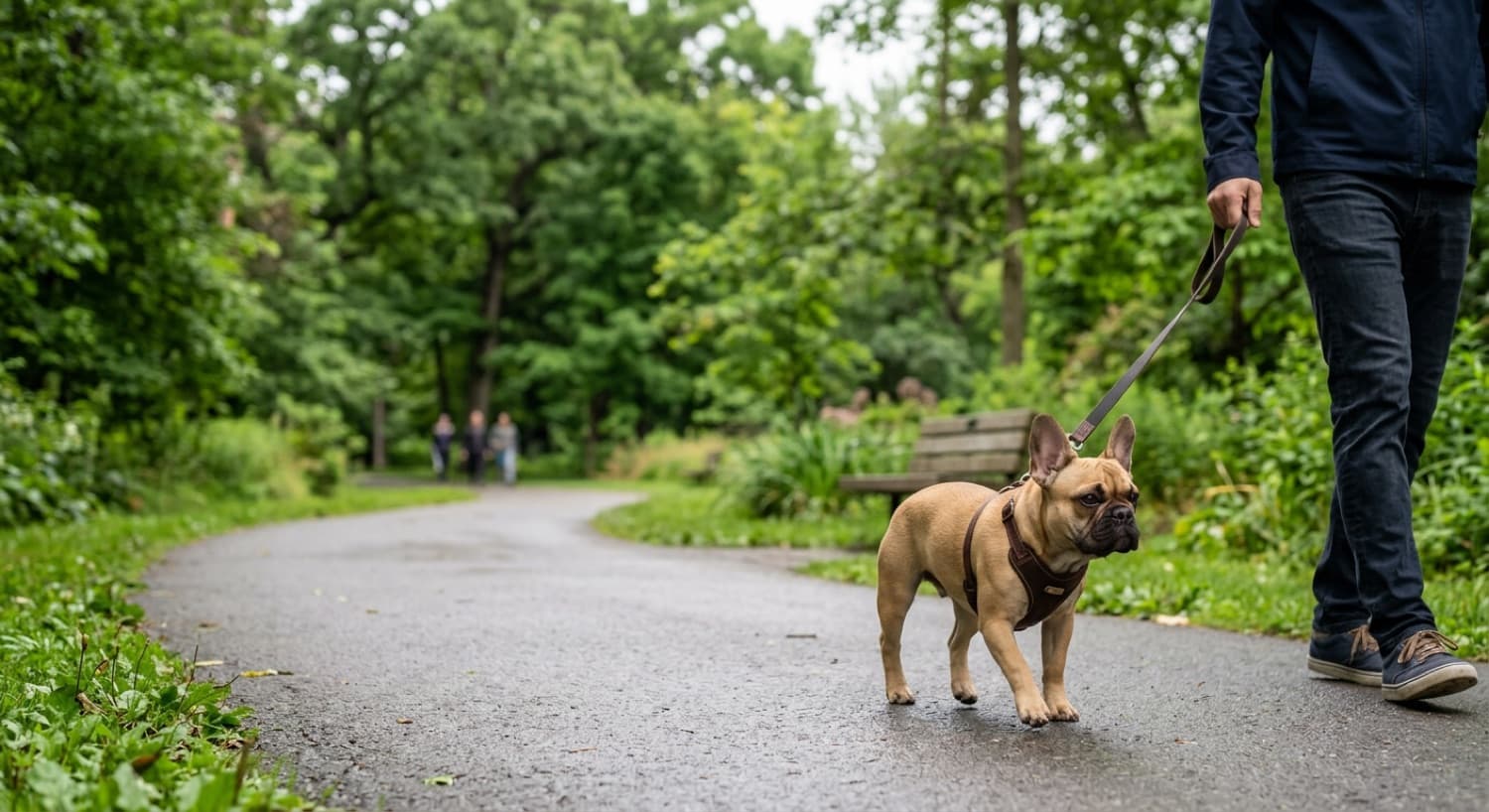
Yes, always use a harness, never a neck collar, for walking a French Bulldog, and it is directly tied to the breathing issue. A collar sits right over the already-compromised airway, and any pulling or pressure on the neck further restricts a Frenchie’s breathing and can aggravate the trachea, which is the last thing a dog with a narrow airway needs. A well-fitted harness distributes any pressure across the chest and shoulders instead, keeping the neck and airway clear. This small change genuinely helps a Frenchie breathe more comfortably on walks and reduces strain. Choose a harness designed for the breed’s broad chest and short body, and make sure it fits snugly without rubbing the folds. Keep the collar for ID tags only, worn loosely, and attach the leash to the harness. For a breed whose whole challenge is moving air, taking pressure off the airway is an easy, meaningful win.
Does BOAS surgery help a French Bulldog breathe better?
It can help significantly for many affected dogs, and it is worth discussing with your vet if your Frenchie has moderate to severe breathing difficulty. BOAS surgery typically widens the narrowed nostrils and trims the overlong soft palate, and sometimes addresses other airway abnormalities, to reduce the obstruction and let the dog move air more easily. Done by an experienced vet or surgeon, often when the dog is young, it can meaningfully improve breathing, exercise tolerance, heat tolerance, and quality of life, and may reduce the risk of the condition worsening over time. It is not a cure-all, and it carries the anaesthetic risks that are higher in brachycephalic dogs, so it is a decision to make carefully with your veterinarian based on your individual dog’s assessment. If you adopt a Frenchie with noticeable breathing difficulty, ask your vet whether a surgical assessment is warranted, and never treat serious breathing struggle as just normal Frenchie noise.
Do French Bulldogs get cold in Ottawa winters too?
Yes, the breed is vulnerable at both ends of the temperature range, though heat is the dangerous one. French Bulldogs have a thin, single coat and little body fat, so they lose heat quickly and genuinely feel Ottawa’s winter cold, needing a warm, well-fitted coat or sweater for walks and short outings on the coldest days. Their compromised airways can also find very cold, dry winter air harder to breathe. So a Frenchie is fundamentally an indoor dog that needs climate management year-round: protected from dangerous heat in summer and kept warm and comfortable in winter, most at ease in a temperature-controlled home. Winter walks should be brief and bundled, with attention to the paws (rinse road salt, watch for ice). The good news is that a Frenchie’s low exercise needs make short winter outings plus indoor play perfectly adequate, so you are not fighting to burn off high energy in the cold the way you would with a working breed.
Related Guides
New dog? Start with these care guides
Everything a new adopter needs to set up a safe, happy home.