The short answer
The Portie is generally healthy, and its two most feared inherited conditions, GM1 storage disease and juvenile dilated cardiomyopathy (JDCM), now have DNA tests, so well-bred puppies from tested parents are effectively protected. The conditions to watch are hip dysplasia and inherited eye disease (PRA), both screenable. Porties live 11 to 13 years. Routine Ottawa care runs $900 to $1,600 a year plus HST, plus non-negotiable grooming every 6 to 8 weeks. Keep the dog lean, source from tested lines, and consider insuring early for the orthopedic wildcard. Make all health decisions with your vet.
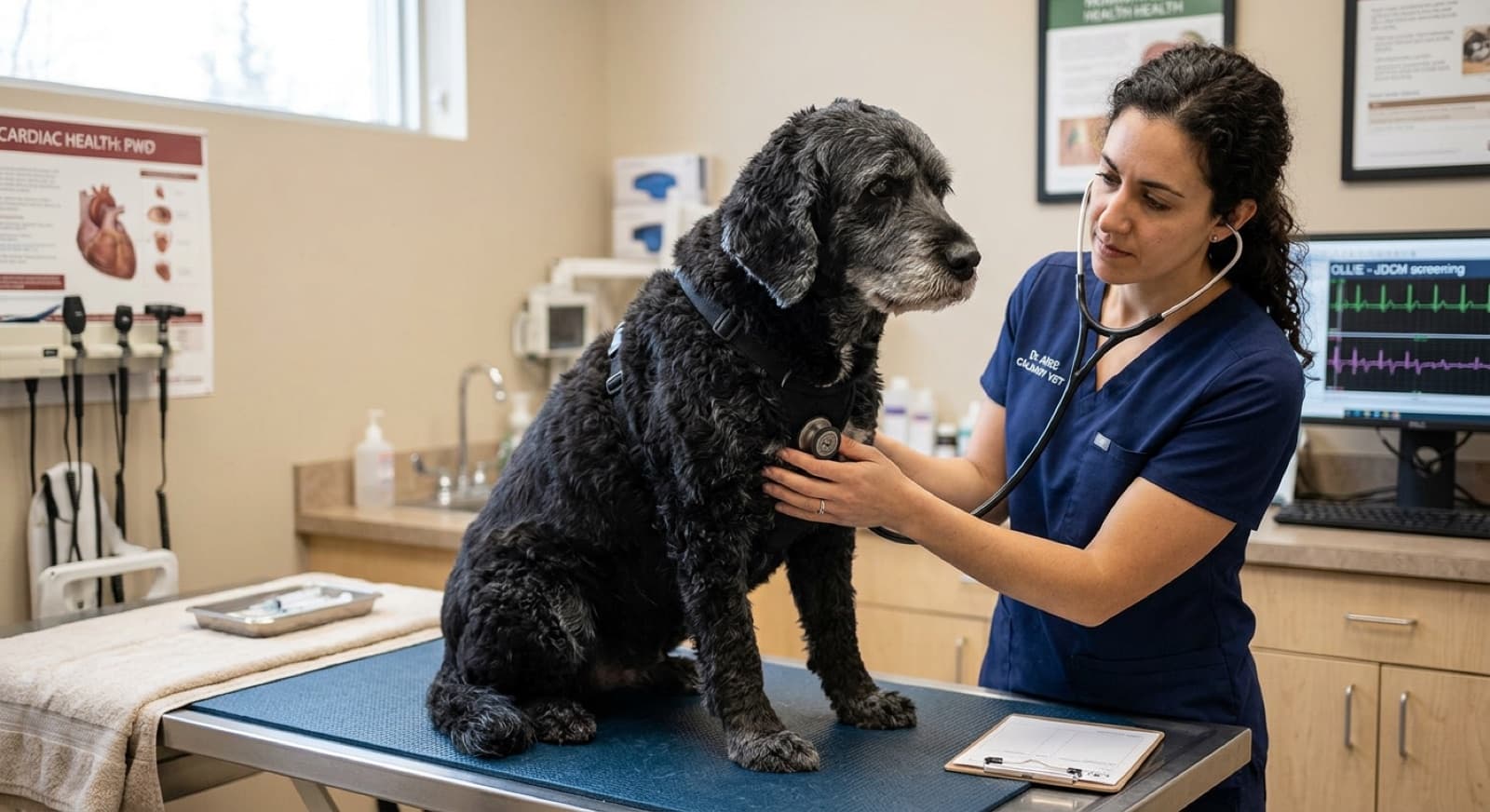
The Portuguese Water Dog is one of the better health stories in the purebred world. The breed’s most catastrophic conditions were, decades ago, a real threat, but DNA tests changed everything: responsible breeders now screen their stock and simply do not produce affected puppies. What remains is a short, manageable list of conditions an Ottawa owner should understand. Every point here should be discussed with your own veterinarian.
Source matters more than almost anything
GM1 and JDCM are fatal puppy conditions, but both are recessive and both have DNA tests, so a puppy from tested parents is protected. This is why the source of a Portie is a health decision: tested lines versus an untested backyard or scam source is the difference between a protected dog and a gamble. For an adopted adult Portie, the highest-risk puppyhood window has already passed.
Hips, eyes, and the tested conditions
Hips. Hip dysplasia leads to arthritis; signs include stiffness, trouble rising, and lameness. Breeders screen (OFA or PennHIP); owners keep the dog lean, exercise appropriately, and avoid overexercising a growing puppy. Severe cases can need surgery, the breed’s main orthopedic wildcard.
Eyes. Progressive retinal atrophy (PRA) causes gradual vision loss; a DNA test exists for the common Portie form, and annual eye exams catch cataracts and other issues. Report any bumping into things or dim-light hesitancy to your vet.
GM1 and JDCM. Both are fatal puppy-onset diseases, both recessive, both DNA-testable, so responsible breeding prevents them entirely. The Canadian Kennel Club and the breed club are good starting points on health testing. For routine-care savings see our Ottawa low-cost vet guide.
Meet a healthy Portie in Ottawa
Rescue Porties come with a vet workup and honest health and temperament notes. Browse available Portuguese Water Dogs and mixes from Ottawa and Ontario rescues.
See Available Portuguese Water Dogs →Frequently Asked Questions
What health problems are Portuguese Water Dogs prone to?
Portuguese Water Dogs are generally a healthy, robust breed, but they carry a handful of specific inherited conditions that responsible breeding and genetic testing largely control. The main ones are hip dysplasia (a malformed hip joint leading to arthritis), progressive retinal atrophy or PRA (an inherited eye disease causing gradual vision loss and eventual blindness), GM1 gangliosidosis (GM1 storage disease, a fatal inherited neurological condition of puppies), and juvenile dilated cardiomyopathy or JDCM (a devastating heart condition that causes sudden death in young puppies). The remarkable thing about the Portie is that DNA tests exist for GM1 and JDCM, so responsible breeders test their breeding stock and can avoid producing affected puppies entirely, which is why buying or adopting from tested lines matters enormously. Beyond these, the breed can also have some risk of hair-follicle and other minor issues, and, like all dogs, age-related conditions. Overall a well-bred Portie from tested parents is a healthy, long-lived dog, and the single most protective thing is genetic-test transparency. Always discuss your individual dog’s health with your veterinarian.
What are GM1 and JDCM, and why do they matter?
GM1 gangliosidosis (GM1 storage disease) and juvenile dilated cardiomyopathy (JDCM) are two serious, fatal inherited conditions historically associated with the Portuguese Water Dog, and they matter because both now have DNA tests, which transformed the breed. GM1 is a fatal neurological storage disease: affected puppies appear normal at birth but decline neurologically and do not survive. JDCM is a heart-muscle disease that causes sudden death in young puppies, typically before six months. Both are recessive, meaning a puppy is only affected if it inherits the gene from both parents, so a simple DNA test of breeding dogs lets a responsible breeder pair carriers safely (carrier to clear) and never produce an affected puppy. This is exactly why the source of your Portie matters: a puppy from DNA-tested parents is effectively protected from these conditions, while a puppy from an untested backyard or scam source is not. For an adopted Portie, especially an adult who has clearly survived puppyhood, the acute risk of these puppy-onset diseases has passed, but knowing the dog’s background where possible is still useful. Genetic testing is the Portie health success story.
Do Portuguese Water Dogs have hip or eye problems?
Yes, hip dysplasia and inherited eye disease are the two orthopedic and sensory conditions to know for the breed. Hip dysplasia is a malformation of the hip joint that leads to arthritis, with signs including stiffness, difficulty rising, reluctance to jump or run, and lameness; responsible breeders screen hips (OFA or PennHIP), and owners manage risk by keeping the dog lean, providing appropriate exercise, and not overexercising a growing puppy. On the eyes, progressive retinal atrophy (PRA) is an inherited degeneration of the retina causing gradual, painless vision loss and eventual blindness; there is a DNA test for the common Portie form, so tested lines can avoid it, and cataracts and other eye issues also occur, making the annual eye exam worthwhile. Neither condition is a reason to avoid the breed, they are simply what a Portie owner watches for and what good breeding screens against. For an adopted Portie, keeping the dog lean protects the joints, and any change in vision (bumping into things, hesitancy in dim light) warrants a vet or veterinary ophthalmologist check. Both are manageable with early attention.
How much does Portuguese Water Dog health care cost in Ottawa?
Routine annual care for an active medium-sized dog, a wellness exam, vaccines, parasite prevention, and dental attention, runs roughly $900 to $1,600 a year for a Portie in Ottawa, plus Ontario’s 13 per cent HST, and on top of that is the significant, non-negotiable grooming cost for the continuously growing coat (professional grooming every 6 to 8 weeks). The budget wildcards are the breed conditions: hip surgery if dysplasia is severe (can reach several thousand dollars), management of PRA-related vision loss (largely supportive), and any cardiac care. The good news is that GM1 and JDCM, the two catastrophic conditions, are essentially prevented by genetic testing at the breeding stage, so a well-sourced Portie rarely faces them. This combination, mostly healthy but with a possibility of orthopedic surgery, plus guaranteed ongoing grooming, is why owners often find pet insurance worthwhile, ideally taken out while the dog is young and healthy. See our Ottawa low-cost vet guide for routine-care savings, and remember grooming is a separate, ongoing line item insurance does not cover.
Is pet insurance worth it for a Portuguese Water Dog?
Often yes, though the calculus is a bit different from a high-risk breed. The Portie is generally healthy, especially from DNA-tested lines, so you may go years with only routine costs, but the breed does carry a real possibility of hip dysplasia (potentially surgical and expensive) and other conditions, and insurance taken out while the dog is young and healthy locks in coverage before anything becomes a pre-existing exclusion. This matters most for hips: if a dysplasia diagnosis is already on the record, no insurer will cover the eventual surgery. Premiums for a young Portie commonly run $45 to $75 a month in Ottawa. Note that insurance covers illness and injury, not the routine grooming that this breed absolutely requires, which remains your ongoing cost. Weigh insurance against your emergency savings buffer, if you could comfortably absorb a $4,000 orthopedic bill, self-insuring is reasonable; if not, coverage taken out early is sensible for a breed whose main financial risk is a single big orthopedic event. Either way, budget the grooming separately.
How long do Portuguese Water Dogs live?
Portuguese Water Dogs typically live around 11 to 13 years, a good lifespan for a medium-sized dog, and a well-bred Portie from health-tested lines, kept lean, well-exercised, and well cared for, often reaches the upper end. Longevity depends on the usual levers plus the breed-specific one: source the dog from genetically tested parents (which effectively eliminates the catastrophic GM1 and JDCM risks), keep the dog lean to protect the joints, stay on top of eye and cardiac checks, maintain the coat and skin, and provide the substantial exercise this athletic breed needs for physical and mental health. For Ottawa owners, that lifespan means over a decade of an active, joyful, water-loving companion, provided you commit to the exercise and grooming. A Portie adopted as an adult still has many good years ahead, and because the most dangerous conditions strike in puppyhood, an adult rescue Portie has already cleared the highest-risk window. With attentive care, most Porties enjoy long, vigorous, healthy lives.
Related Guides
New dog? Start with these care guides
Everything a new adopter needs to set up a safe, happy home.