The short answer
The pug’s flat face drives its health issues. The big one is BOAS (a breathing disorder that also makes pugs dangerously heat-intolerant, sometimes needing surgery). Also plan for eye problems (their prominent eyes injure easily), skin-fold infections, spinal conditions, luxating patella, obesity (worsens everything), and the serious neurological Pug Dog Encephalitis. Pugs live 12 to 15 years. Routine Ottawa care runs $800 to $1,400 a year plus HST, but surgery and chronic care can add a lot. Keep the dog lean, manage heat rigorously, use a harness, and insure early. Make all health decisions with your vet.
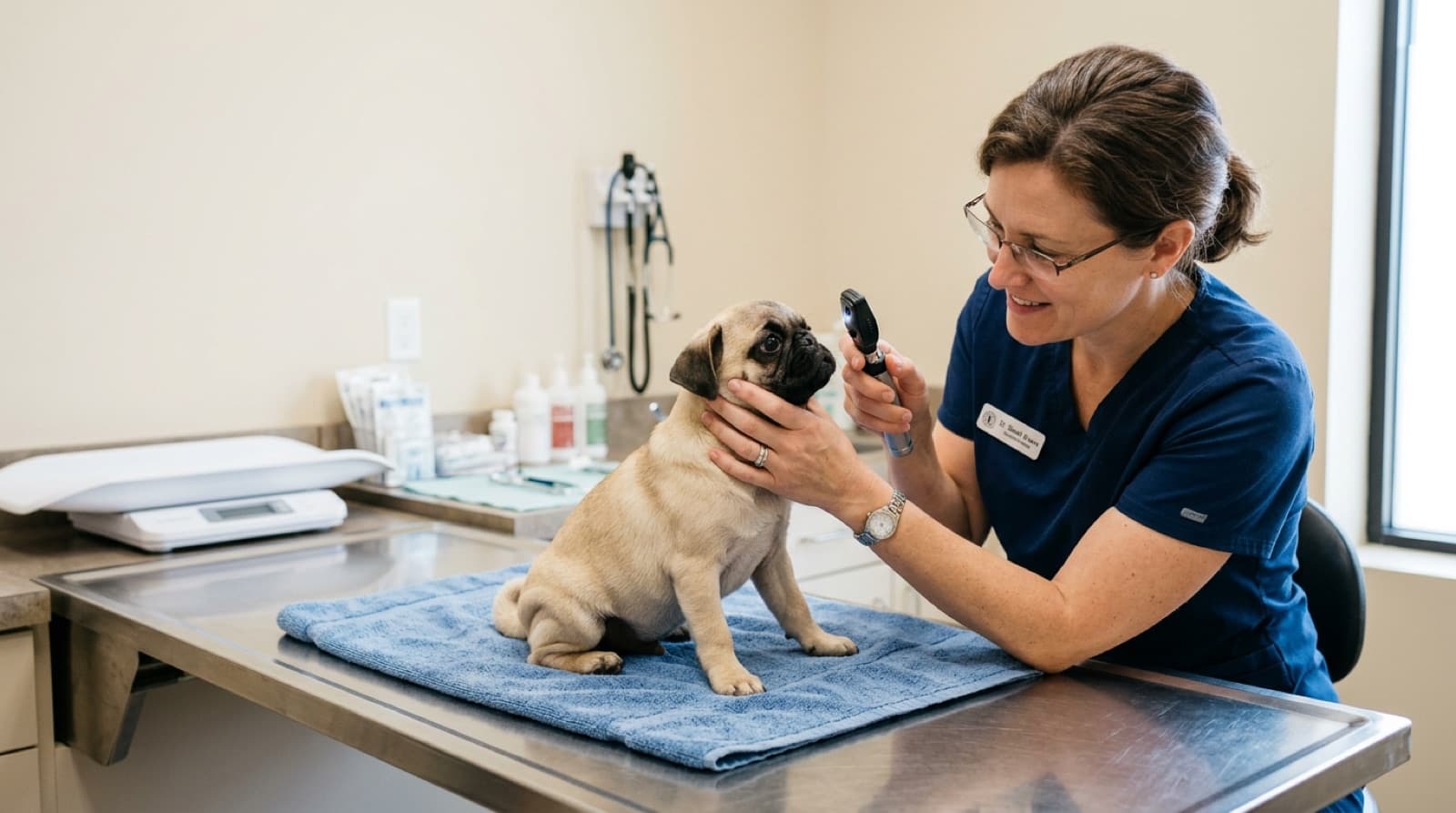
There is no honest way to write about pugs without putting health front and centre. This is a breed whose defining feature, the flat face, is also the source of most of its problems, and a responsible owner needs to understand that going in. Many pugs live happy lives, but they ask more of an owner than most breeds. This is a planning list; every point should be discussed with your own veterinarian.
Heat and eye emergencies
Because of BOAS, pugs cool themselves poorly and can suffer fatal heatstroke far more easily than a normal-nosed dog, signs like frantic laboured breathing, blue-tinged gums, weakness, or collapse in heat are an emergency, cool the dog and get to a vet immediately. A prolapsed eye (proptosis) or a sudden painful, cloudy, or injured eye is also an emergency. Ottawa has 24-hour care including the Alta Vista Animal Hospital. Save the number now.
Breathing, eyes, folds, and more
BOAS. The defining issue, a breathing disorder from the shortened skull. Ranges from snorting to laboured breathing and dangerous heat intolerance; many pugs benefit from corrective surgery. Keep the dog lean, avoid heat and exertion, and use a harness not a collar.
Eyes. The prominent eyes injure easily, corneal ulcers, dry eye, pigmentary keratitis, and (in trauma) proptosis. Take any eye change seriously. Skin folds. Facial and body folds trap moisture and get infected; clean them routinely.
Spine, knees, weight, and PDE. Hemivertebrae (linked to the screw tail) and luxating patella occur; obesity worsens everything, so weight control is the top lever; and Pug Dog Encephalitis is a serious, breed-specific, often-fatal neurological disease to be aware of. See our daily brachycephalic-care guide for heat and weight management, and our Ottawa low-cost vet guide for routine-care savings.
Meet a pug in Ottawa
Rescue pugs come with a vet workup and honest health notes, so you know exactly what you are taking on. Browse available Pugs and pug mixes from Ottawa and Ontario rescues.
See Available Pugs →Frequently Asked Questions
What health problems are Pugs prone to?
Pugs are a brachycephalic (flat-faced) breed, and that anatomy drives most of their health issues, so a prospective owner should understand them clearly. The central one is Brachycephalic Obstructive Airway Syndrome (BOAS), a breathing disorder from the shortened skull, narrowed nostrils, and elongated soft palate, which causes snoring, snorting, noisy or laboured breathing, exercise intolerance, and dangerous heat sensitivity, and which can require corrective surgery. Their prominent eyes are vulnerable to a range of problems: corneal ulcers and injuries, dry eye, pigmentary keratitis, and in severe cases proptosis (the eye coming out of the socket). Skin-fold dermatitis (infection in the facial and body folds) is common and needs routine cleaning. They are prone to obesity, which worsens everything, and to spinal conditions (including hemivertebrae, malformed vertebrae linked to the screw tail) and luxating patella. Finally, pugs have a serious, breed-specific, often-fatal neurological condition called Pug Dog Encephalitis (PDE). This is a real list, and while many pugs live happily, the breed genuinely requires an owner ready for higher-than-average vet care and diligent heat and weight management. Always make health decisions for your individual dog with your veterinarian.
What is BOAS, and how serious is it in pugs?
BOAS (Brachycephalic Obstructive Airway Syndrome) is the breathing disorder caused by the pug’s flat-faced anatomy, and it is the breed’s defining health issue and a genuine welfare concern. The short skull crowds the same soft tissue a normal-nosed dog has into far less space, producing narrowed nostrils, an elongated soft palate, and other obstructions that make breathing harder. Signs range from the “normal”-for-pugs snorting and snoring to noisy, laboured breathing, gagging, exercise intolerance, blue-tinged gums, and collapse in severe cases. Crucially, BOAS makes pugs dangerously unable to cool themselves (dogs cool by panting, which a compromised airway does poorly), so they are at high risk of life-threatening heatstroke, a serious concern in Ottawa summers. Many pugs benefit from BOAS surgery (widening the nostrils and shortening the soft palate), which can dramatically improve quality of life, so a pug with significant breathing difficulty should be assessed by a vet, ideally one experienced with brachycephalic airways. Day to day, management means keeping the dog lean (excess weight worsens BOAS), avoiding heat and strenuous exercise, using a harness not a collar (to avoid pressure on the airway), and watching for worsening signs. BOAS is the single most important thing to understand about pug health.
Do Pugs have eye problems?
Yes, eye problems are common and important in pugs, because their large, prominent, shallow-set eyes are both a breed hallmark and a vulnerability. The prominence leaves the eyes exposed and easily injured, so corneal ulcers and scratches are frequent, and pugs are also prone to dry eye (insufficient tear production), pigmentary keratitis (a brown pigment creeping across the cornea that can impair vision), entropion (eyelids rolling in), and, in severe trauma or pressure, proptosis, where the eyeball actually prolapses from the socket, a true emergency. Signs of eye trouble include squinting, tearing, redness, cloudiness, pawing at the eye, or a visibly changed eye, and any of these warrants prompt veterinary attention, because eye conditions can deteriorate and threaten vision quickly. Prevention and management include protecting the eyes from injury (careful play, keeping the dog away from hazards at eye level), keeping facial-fold hair from rubbing the eyes, managing dry eye with prescribed drops if diagnosed, and regular vet eye checks. For an Ottawa pug owner, the practical rule is to take any eye change seriously and see the vet quickly, and treat a prolapsed eye as an immediate emergency. Ask a rescue about any known eye history in an adopted pug.
How much does Pug health care cost in Ottawa?
Pugs are one of the more expensive small breeds to care for, precisely because of the brachycephalic issues. Routine annual care, a wellness exam, vaccines, parasite prevention, and dental attention, runs roughly $800 to $1,400 a year for a pug in Ottawa, plus Ontario’s 13 per cent HST, but the breed’s budget wildcards are significant: BOAS surgery (widening nostrils and shortening the soft palate) can run well into four figures; eye conditions may need medication, specialist care, or surgery (a corneal ulcer or proptosis can be costly, and dry eye means lifelong drops); skin-fold infections need ongoing management; and serious conditions like Pug Dog Encephalitis or spinal disease can be very expensive. Because food quantities are small, feeding a pug is cheap, but the potential for airway, eye, and neurological costs is real and is why the breed is one of the most-recommended for pet insurance. Keeping the dog lean is the single most cost-effective health measure, as obesity worsens breathing, joints, and more. This elevated and somewhat unpredictable cost profile is exactly why budgeting honestly, and insuring early, matters so much for this breed. See our Ottawa low-cost vet guide for routine-care savings.
Is pet insurance worth it for a Pug?
For pugs, pet insurance is one of the more clearly worthwhile investments among the breeds, precisely because their brachycephalic health issues are both likely and expensive. BOAS surgery, eye conditions, skin problems, and the possibility of serious neurological or spinal disease add up to a genuinely elevated lifetime cost, and insurance taken out while the dog is young and healthy locks in coverage before anything, especially the breathing and eye issues that so often surface, becomes a pre-existing exclusion. This is the crux for pugs: the conditions they are prone to are exactly the ones insurers will exclude if already documented, so early enrolment is the whole game. Premiums for a young pug are often somewhat higher than for a non-brachycephalic small breed precisely because insurers know the risks, commonly $50 to $90 a month in Ottawa, but the potential payouts (BOAS surgery, eye surgery) are correspondingly large. For an adopted adult pug, insurance is trickier because existing conditions may already be excluded, so ask the rescue about the dog’s known health first. If you take on any pug, treat a realistic health budget or insurance as part of the commitment, not an optional extra, this is a breed where the health costs are the ownership costs.
How long do Pugs live, and how can I keep mine healthy?
Pugs typically live around 12 to 15 years, a reasonable lifespan for a small dog, and a well-cared-for pug, kept lean and managed carefully, can reach the upper end and live a happy life despite the breed’s challenges. The highest-value things an Ottawa owner can do are: keep the dog lean (obesity worsens breathing, joints, and every other pug problem, so this is the number-one lever), manage heat rigorously (no hot-weather exertion, AC and shade in summer, because heatstroke is a real killer for this breed), keep exercise gentle and moderate (the breathing anatomy limits what is safe), clean the facial and body folds routinely to prevent infection, protect and monitor the eyes, use a harness instead of a collar, keep up dental care, and see the vet promptly for any breathing or eye change. Establishing care with a good vet, ideally one experienced with brachycephalic breeds, and considering BOAS assessment if the dog struggles to breathe, rounds out the picture. For an adopted pug, even an adult or senior, attentive weight and heat management plus prompt vet care can add good, comfortable years. The breed asks more of an owner than most, but a well-managed pug rewards it with years of comedic, affectionate companionship.
Related Guides
New dog? Start with these care guides
Everything a new adopter needs to set up a safe, happy home.