The short answer
The breed-defining concern is cancer, especially osteosarcoma (bone cancer), which Rottweilers develop at higher rates than most dogs. They are also prone to hip and elbow dysplasia, aortic stenosis (a heart defect), bloat, and cruciate ligament tears. Because they are large and grow fast, lean weight and joint care are critical. Act fast on any persistent limp or bony swelling, given the bone-cancer risk. Keep up vet exams, know the bloat signs, and enrol insurance while the dog is young. Rottweilers typically live 8 to 10 years. Ottawa has strong local orthopaedic, cardiology, and oncology care (Alta Vista, VCA 404, OVC Guelph).
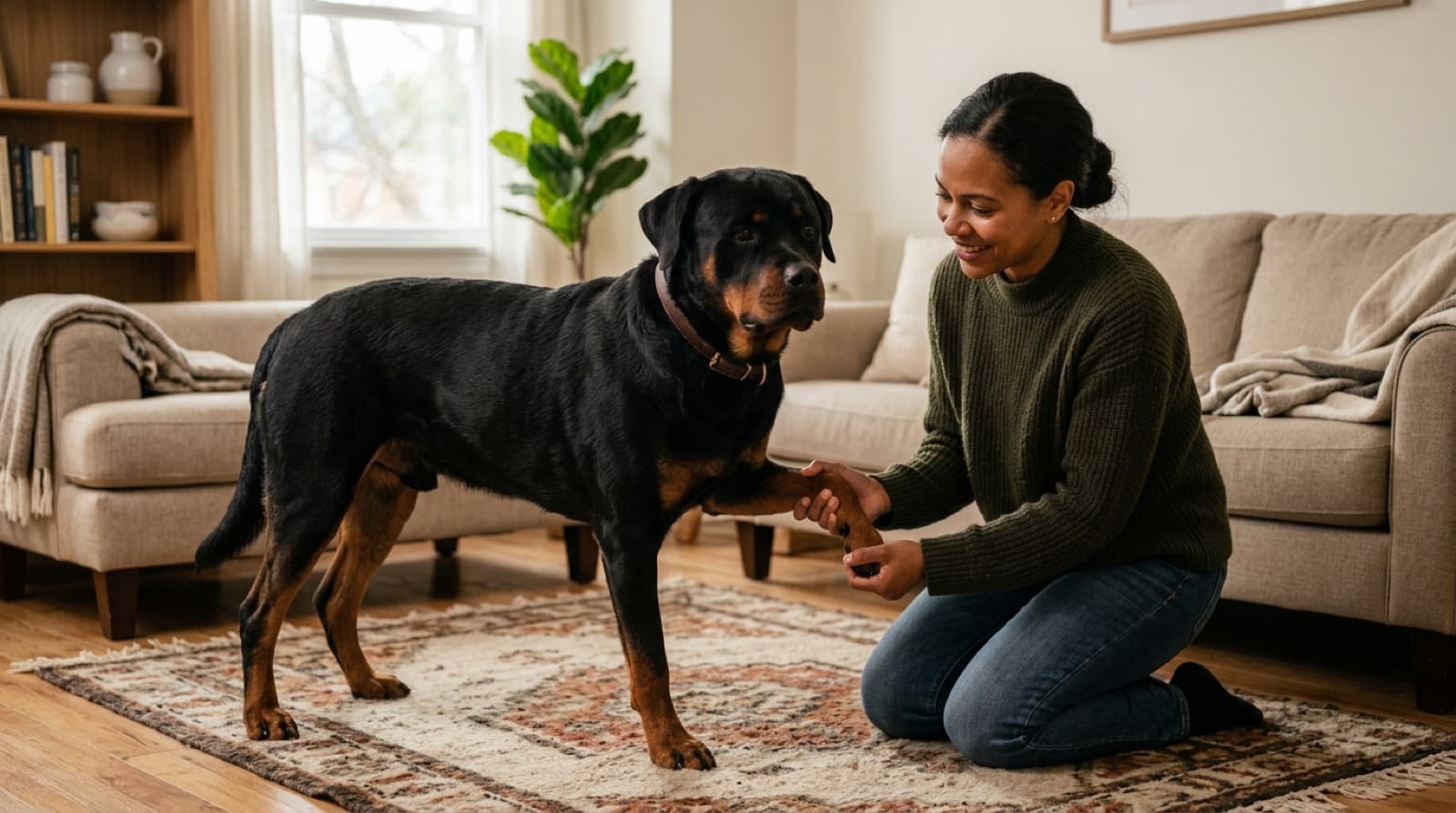
Cancer, and why any limp matters
The breed’s most serious risk is cancer, especially osteosarcoma, an aggressive bone cancer that most often strikes the limbs of large, fast-growing dogs. Early signs are lameness or a bony swelling on a leg that does not resolve, easily mistaken for a sprain, so any persistent limp or swelling in a Rottweiler warrants prompt imaging rather than waiting it out. Osteosarcoma is painful and fast, and treatment (which may involve amputation and chemotherapy) is expensive and usually needs specialist oncology at Alta Vista Animal Hospital, VCA 404, or OVC Guelph. The breed also sees lymphoma and other cancers. This risk is the biggest single reason to insure a Rottweiler early.
The Orthopedic Foundation for Animals maintains the hip, elbow, and cardiac databases reputable Rottweiler breeders screen against.
Joints, heart, and bloat
Hip and elbow dysplasia. Common in the breed. Keep the dog lean, protect growing joints in puppyhood by avoiding forced running and jumping, and watch for stiffness and a bunny-hopping gait. Management ranges from weight control and supplements to surgery.
Cranial cruciate ligament tears. The large frame stresses the knees, and cruciate rupture is common, showing up as sudden hind-leg lameness. Surgery is usually needed and is a significant cost.
Aortic stenosis. The breed’s heart concern, a narrowing below the aortic valve, often first flagged as a murmur on a routine exam. Significant cases need a cardiology referral, available in Ottawa at Alta Vista or VCA 404.
Bloat (GDV). The deep chest raises the risk of this sudden emergency. Learn the signs, swollen belly, unproductive retching, restlessness, and act immediately; Ottawa has 24-hour emergency care. Ask your vet about a preventive gastropexy and bloat-smart feeding. Hypothyroidism and entropion (an inward-rolling eyelid) are also seen and both are treatable.
What it costs, and the Ottawa care picture
| Condition | Typical Treatment Cost | Notes |
|---|---|---|
| Cancer (diagnosis + treatment) | $8,000 to $25,000+ | Osteosarcoma may mean amputation + chemo; Alta Vista / VCA 404 / OVC Guelph |
| Hip or elbow surgery | $5,000 to $8,000+ | Per joint; conservative management cheaper |
| Cruciate ligament surgery | $4,000 to $7,000 | Common in large breeds; per knee |
| Emergency bloat surgery | $4,000 to $8,000+ | Time-critical; Ottawa has 24-hour emergency care |
| Hypothyroidism (annual meds) | $150 to $400 / year | Inexpensive, lifelong, very manageable |
Figures are Canadian dollars and before Ontario’s 13 per cent HST. For lower-cost routine care options, see our Ottawa low-cost vet guide.
Meet an adoptable Rottweiler in Ottawa
A rescue Rottweiler comes with a vet workup already done, often more real health information than a breeder puppy. Browse who is available.
See Available Rottweilers →Frequently Asked Questions
What health problems are Rottweilers prone to?
Rottweilers are a strong, generally healthy breed with a few significant breed-specific risks. The most serious is cancer, especially osteosarcoma (bone cancer), which the breed develops at notably higher rates than most dogs. They are also prone to hip and elbow dysplasia, aortic stenosis (a heart defect), bloat (gastric dilatation-volvulus), cranial cruciate ligament rupture in the knees, hypothyroidism, and eye conditions like entropion. Because Rottweilers are large and grow fast, joint health and lean weight matter enormously. Most Rottweilers live 8 to 10 years. Knowing the risks lets you keep the dog lean, stay ahead of the joints, catch cancer early, and, importantly for this breed, carry insurance enrolled while the dog is young.
Do Rottweilers have a high cancer risk?
Yes, and it is the breed’s most serious health concern. Rottweilers have an elevated cancer risk overall and are particularly associated with osteosarcoma, an aggressive bone cancer that most often strikes the limbs of large, fast-growing breeds. Early signs are lameness or a swelling on a leg that does not resolve, and it can be mistaken for a sprain, so any persistent limp or bony swelling in a Rottweiler warrants prompt imaging rather than waiting. Osteosarcoma is painful and fast, and treatment, which may involve amputation and chemotherapy, is expensive and usually needs specialist oncology at Alta Vista Animal Hospital, VCA 404, or OVC Guelph. The breed also sees lymphoma and other cancers. This risk is the single biggest reason to insure a Rottweiler early.
How much do Rottweiler health problems cost to treat in Ottawa?
It ranges widely. Routine care runs a few hundred dollars a year, but the breed’s serious risks are expensive: cancer diagnosis and treatment often reaches into the thousands or tens of thousands, hip or elbow surgery can be $5,000 to $8,000 or more per joint, cruciate ligament surgery runs $4,000 to $7,000, and emergency bloat surgery is $4,000 to $8,000. Ontario adds 13 per cent HST to vet services. Ottawa is well served for advanced care, with orthopaedic surgery, cardiology, and oncology available at Alta Vista Animal Hospital, VCA 404, and OVC Guelph, so help is close, but it is not cheap. That strengthens the case for insurance or a dedicated emergency fund.
Should I get pet insurance for a Rottweiler?
For this breed, strongly yes. The elevated cancer risk plus the orthopaedic and bloat risks mean a single major event can easily exceed years of premiums. Enrol while the dog is young and healthy, because insurers exclude pre-existing conditions, and a large breed adopted as an adult may already have hip changes or a heart murmur on record. Expect roughly $60 to $110 a month for a young Rottweiler, more as the dog ages, since large breeds cost more to insure. Read how the policy handles hereditary and breed-specific conditions, per-condition and annual limits, and the reimbursement percentage. With Ottawa specialty care readily available but expensive, the financial cushion is what lets you say yes to treatment when it matters.
What are the signs of hip dysplasia in a Rottweiler?
Hip dysplasia is common in the breed, a malformation of the hip joint that leads to arthritis. Watch for a bunny-hopping gait, reluctance to jump or climb stairs, stiffness after rest that eases with movement, a swaying rear, or difficulty rising. Signs can appear young or develop with age. Because Rottweilers are heavy and grow fast, keeping a puppy lean and not over-exercising growing joints is genuinely protective. X-rays confirm it, and management ranges from weight control, joint supplements, and physiotherapy to surgery in severe cases. Reputable breeders screen parents through OFA hip and elbow evaluations, which reduces but does not eliminate the risk. Elbow dysplasia and cranial cruciate ligament tears are also common and cause similar lameness.
What is bloat, and are Rottweilers at risk?
Bloat, or gastric dilatation-volvulus (GDV), is a sudden, life-threatening emergency where the stomach fills with gas and can twist, cutting off blood flow. Large, deep-chested breeds like the Rottweiler are at elevated risk, and it can kill within hours, so every owner should know the signs: a swollen or distended belly, unproductive retching, restlessness, drooling, and distress. If you see these, it is an immediate emergency. Ottawa has 24-hour emergency hospitals including Alta Vista Animal Hospital, VCA 404, and the Ottawa Veterinary Emergency Clinic, so know your nearest one and its route in advance. Risk-reducing steps include feeding smaller meals, avoiding heavy exercise right after eating, and discussing a preventive gastropexy with your vet, sometimes done at the time of spay or neuter.
How long do Rottweilers live, and how do I maximise it?
Rottweilers typically live 8 to 10 years, on the shorter side for a large breed, largely because of the cancer risk. The levers you control most are weight, joint care, and early detection. Keep the dog lean throughout life, because excess weight accelerates the joint disease this breed is prone to and worsens nearly every outcome. Protect growing joints in puppyhood by avoiding forced running and jumping. Act fast on any persistent limp or bony swelling, given the osteosarcoma risk. Keep up annual vet exams, twice a year for seniors, so heart murmurs and early problems are caught, and follow bloat-prevention feeding. None of this defeats the breed’s cancer risk, but it protects the joints and buys more good years.
Is it safe to adopt an adult Rottweiler with unknown health history?
Usually yes, and often more predictable than a puppy. A reputable rescue does a vet workup before adoption and shares what it knows, and with a large breed you may learn more about an adult’s joints and temperament than about an untested puppy. Book your own wellness exam with an Ottawa vet in the first week or two to set a baseline, including a look at the hips and heart. For a senior Rottweiler, plan to absorb some vet costs directly, since insurers exclude pre-existing conditions and large breeds age faster. Many adopters find the loyalty and steadiness of an adult Rottweiler well worth it, and rescues are honest about any known health or joint issues so you can plan.
Related Guides
New dog? Start with these care guides
Everything a new adopter needs to set up a safe, happy home.