The short answer
Samoyeds are reasonably healthy, with a few specific concerns. Plan for hip dysplasia, eye conditions (PRA, cataracts, glaucoma), the breed-specific hereditary kidney disease (Samoyed hereditary glomerulopathy, worse in males, DNA-testable), and a predisposition to diabetes (a manageable but lifelong cost). Also watch for hypothyroidism and some heart conditions. The thick double coat means real summer heat sensitivity in Ottawa despite the love of cold. Samoyeds live 12 to 14 years. Routine Ottawa care runs $1,000 to $1,700 a year plus HST, before grooming. Keep the dog fit, screen for the breed’s issues, manage heat, and insure early. Make all health decisions with your vet.
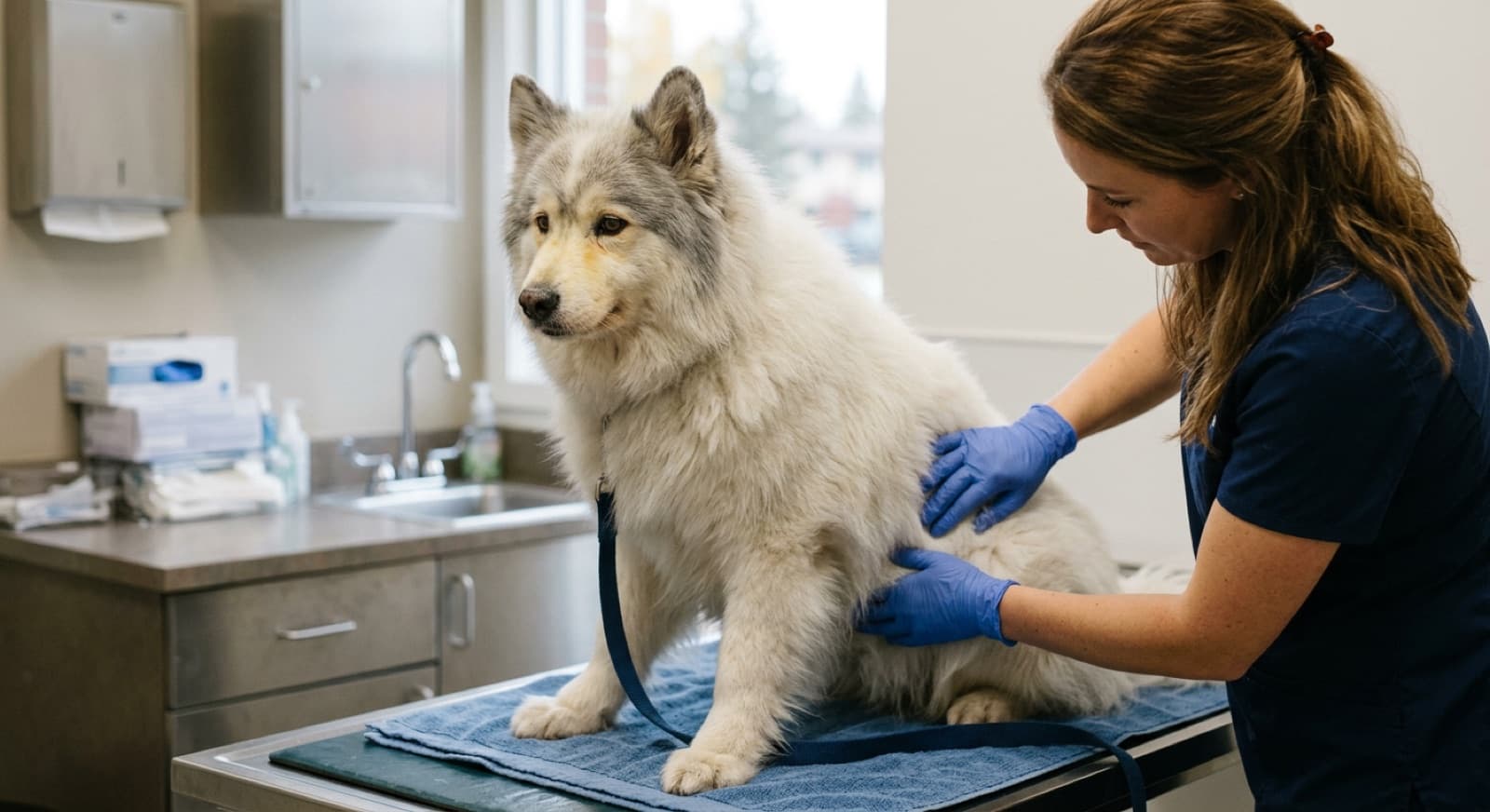
Samoyeds are, on the whole, a hardy and long-lived Arctic breed, but they carry a specific set of concerns, including one kidney condition unique to the breed. This is a planning list, so an Ottawa owner knows what to watch for and where the budget goes, and every point should be discussed with your own veterinarian.
Signs that need prompt care
Increased drinking and urination, weight loss, or poor appetite can signal kidney disease or diabetes, both breed concerns, and warrant a vet visit. Sudden eye pain, redness, or cloudiness may be acute glaucoma, a same-day emergency. And in summer, signs of overheating in this thick-coated breed are a heat emergency. Ottawa has 24-hour care, including the Alta Vista Animal Hospital. Save the number now.
The kidney condition and diabetes
Samoyed hereditary glomerulopathy (SHG). This is a breed-specific inherited kidney disease that progressively damages kidney function, inherited in an X-linked pattern so it tends to hit males earlier and harder, often in young dogs. A DNA test identifies the genetic status, which is why responsible breeders test breeding stock. Watch for increased drinking and urination, weight loss, and poor appetite, especially in a young male, and ask your vet specifically about SHG if kidney signs appear.
Diabetes. Samoyeds are among the breeds more prone to diabetes mellitus, usually in middle to older age. It is manageable with daily insulin, diet, and monitoring, many diabetic dogs live well for years, but it is an ongoing commitment. Keep the dog lean, watch for increased thirst, urination, and appetite with weight loss, and catch it early through routine vet checks.
Hips, eyes, thyroid, heart, and heat
Hips. Hip dysplasia occurs; keep the dog lean and fit, avoid overexercising a growing puppy, and screen through breeders who test.
Eyes. PRA, cataracts, and glaucoma occur; responsible breeders certify eyes, and an annual check plus prompt attention to any change helps.
Thyroid and heart. Hypothyroidism (easy to test and treat) and some heart conditions (including subaortic stenosis) occur in the breed; routine checks catch them.
Heat. The thick double coat means real summer heat sensitivity, provide shade, water, AC, and cool-hour exercise in Ottawa summers, and never shave the coat (it insulates against heat too). For routine-care savings, see our Ottawa low-cost vet guide.
Meet a healthy Samoyed in Ottawa
Rescue Samoyeds come with a vet workup and honest health notes, so you know what you are adopting. Browse available Samoyeds and mixes from Ottawa and NCR rescues.
See Available Samoyeds →Frequently Asked Questions
What health problems are Samoyeds prone to?
Samoyeds are a reasonably healthy, hardy Arctic breed, but they carry several concerns worth knowing. The notable ones are hip dysplasia (present in the breed), eye conditions (progressive retinal atrophy, cataracts, glaucoma), and, distinctively, Samoyed hereditary glomerulopathy, a breed-specific inherited kidney disease. Samoyeds are also among the breeds more prone to diabetes mellitus, and they can develop hypothyroidism and certain heart conditions (including subaortic stenosis). On top of the medical conditions, the thick double coat means the breed is genuinely heat-sensitive, so overheating is a real Ottawa summer concern despite the dog’s love of cold. Most conditions are manageable, and the highest-value things an Ottawa owner can do are keep the dog fit and lean, stay on top of eyes and thyroid, manage summer heat carefully, and use a good vet who can screen for the breed’s specific issues. Always make health decisions for your individual dog with your veterinarian.
What is Samoyed hereditary glomerulopathy?
Samoyed hereditary glomerulopathy (SHG) is an inherited kidney disease specific to the breed, caused by a genetic defect affecting the kidney’s filtering structures (the glomeruli), which progressively damages kidney function. It is inherited in an X-linked pattern, so it tends to affect males more severely and earlier, often with signs appearing in young dogs, while carrier females may have milder disease. Signs of kidney trouble can include increased drinking and urination, weight loss, poor appetite, and lethargy, and progressive kidney disease is serious. A DNA test is available to identify the genetic status, which is why responsible breeders test breeding stock to avoid producing affected dogs. It is one of the reasons to adopt from, or buy from, sources that health-test, and to be aware of the breed’s kidney predisposition. If a Samoyed shows signs of kidney disease, especially a young male, ask your vet specifically about SHG, and any breeding-source dog should ideally come from tested parents.
Are Samoyeds prone to hip dysplasia and eye problems?
Both occur in the breed. Hip dysplasia, an inherited malformation of the hip joint leading to arthritis, is present in Samoyeds, so responsible breeders screen hips (OFA or PennHIP), and owners help by keeping the dog lean and appropriately exercised, and not overexercising a growing puppy. Signs include stiffness, difficulty rising, reluctance to jump or climb, and lameness. On the eyes, Samoyeds are prone to several inherited conditions, progressive retinal atrophy (gradual vision loss), cataracts, and glaucoma (a painful, sight-threatening emergency when acute), so responsible breeders have breeding dogs’ eyes certified, and owners benefit from an annual vet eye check plus prompt attention to any redness, cloudiness, or vision change. Neither issue is universal, but both are worth screening and monitoring for. For an adopted Samoyed, a baseline vet exam including hips and eyes, and awareness of the signs, catches problems early and keeps the dog comfortable and mobile.
Do Samoyeds get diabetes?
Samoyeds are among the breeds with a higher predisposition to diabetes mellitus, a condition in which the body cannot properly regulate blood sugar, usually appearing in middle-aged to older dogs. Signs include increased thirst and urination, increased appetite with weight loss, lethargy, and, if unmanaged, more serious complications. The good news is that canine diabetes is manageable with veterinary care: it is typically controlled with daily insulin injections, dietary management, and monitoring, and many diabetic dogs live well for years with consistent care, though it is an ongoing commitment of time and cost. Keeping a Samoyed lean and fit supports metabolic health and may reduce risk, and catching diabetes early through attention to the signs and routine vet checks leads to better outcomes. If your Samoyed shows increased drinking, urination, or appetite changes with weight loss, ask your vet to check for diabetes. It is a serious but manageable condition, and awareness of the breed’s predisposition helps.
How much does Samoyed health care cost in Ottawa?
Because Samoyeds are medium-large and reasonably healthy, routine care is moderate-to-higher: a wellness exam, vaccines, parasite prevention, and dental attention run roughly $1,000 to $1,700 a year in Ottawa, plus Ontario’s 13 per cent HST, and on top of that comes significant grooming for the heavy double coat. The budget wildcards are the breed-specific and age-related conditions: hip surgery if severe, ongoing management of the hereditary kidney disease or diabetes (which mean lifelong treatment and monitoring), eye care or surgery, and any cardiac issues. Diabetes in particular is a meaningful ongoing cost (insulin, monitoring, special diet). This combination of predictable grooming plus the potential for expensive chronic conditions is exactly why pet insurance, taken out while the dog is young and healthy, tends to pay off for the breed, and why realistic lifetime costs run higher than the moderate size alone suggests. See our Ottawa low-cost vet guide for routine-care savings.
Is pet insurance worth it for a Samoyed?
Often yes, given the breed’s risk of expensive chronic conditions. Samoyeds are reasonably healthy, but the breed carries real wildcards, the hereditary kidney disease, a predisposition to diabetes (a lifelong management cost), hip issues, eye conditions, and heart problems, several of which can be expensive over the dog’s life. Insurance taken out while your Samoyed is young and healthy, before any condition is documented, locks in coverage before exclusions apply. This matters especially for the chronic conditions like diabetes and kidney disease that, once diagnosed, become pre-existing exclusions no insurer will cover. Premiums for a young Samoyed commonly run $50 to $85 a month in Ottawa. Note that insurance covers illness and injury, not routine grooming, which stays your ongoing cost. Weigh it against your savings buffer, and if you insure, do it early and confirm the breed’s known conditions are covered from the start. For a breed with real chronic-disease risk, early insurance is a sensible hedge.
How long do Samoyeds live?
Samoyeds typically live around 12 to 14 years, a good lifespan for a medium-large breed, and an active, well-cared-for Samoyed with good genetics often reaches the upper end, while the kidney disease, diabetes, or other conditions can shorten a life. Longevity depends on the usual levers: keeping the dog fit and lean, staying current on eye, thyroid, and (given the breed’s risks) kidney and metabolic monitoring, managing summer heat carefully, and annual (later twice-yearly) vet visits that catch conditions early. For Ottawa owners, that lifespan means over a decade of a joyful, social companion, and a long-term commitment to the breed’s substantial grooming and exercise needs plus watchfulness for the chronic conditions it can develop. A Samoyed adopted as an adult still has many good years ahead, and with attentive care and screening, most enjoy a long, active, happy life, especially thriving in the Ottawa winters they were built for.
Related Guides
New dog? Start with these care guides
Everything a new adopter needs to set up a safe, happy home.