Showing 4 dogs
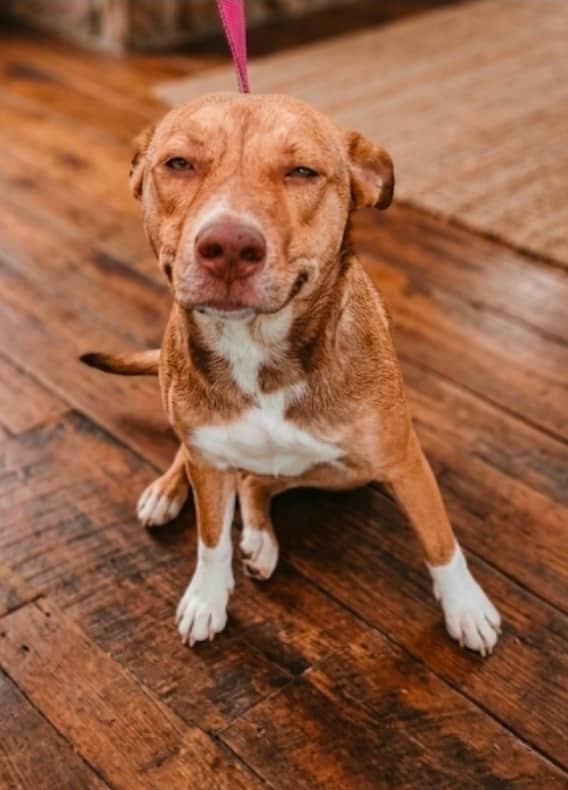
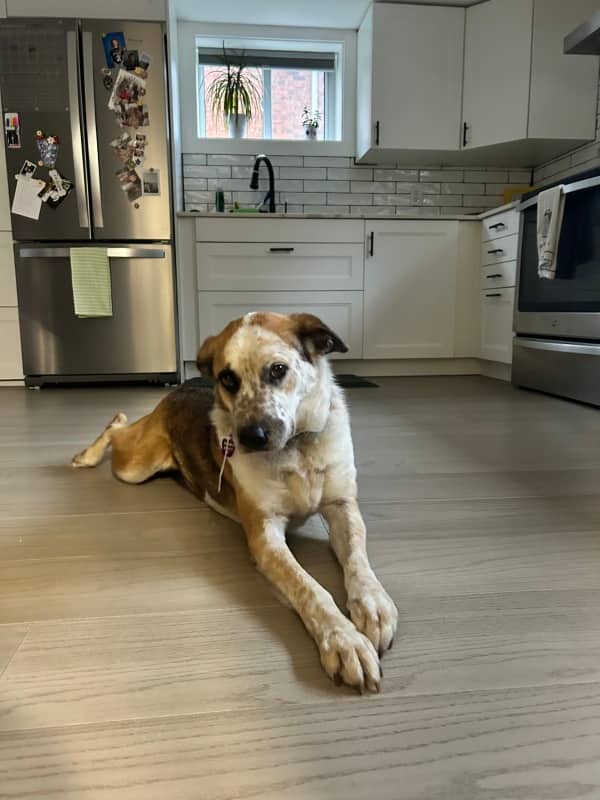
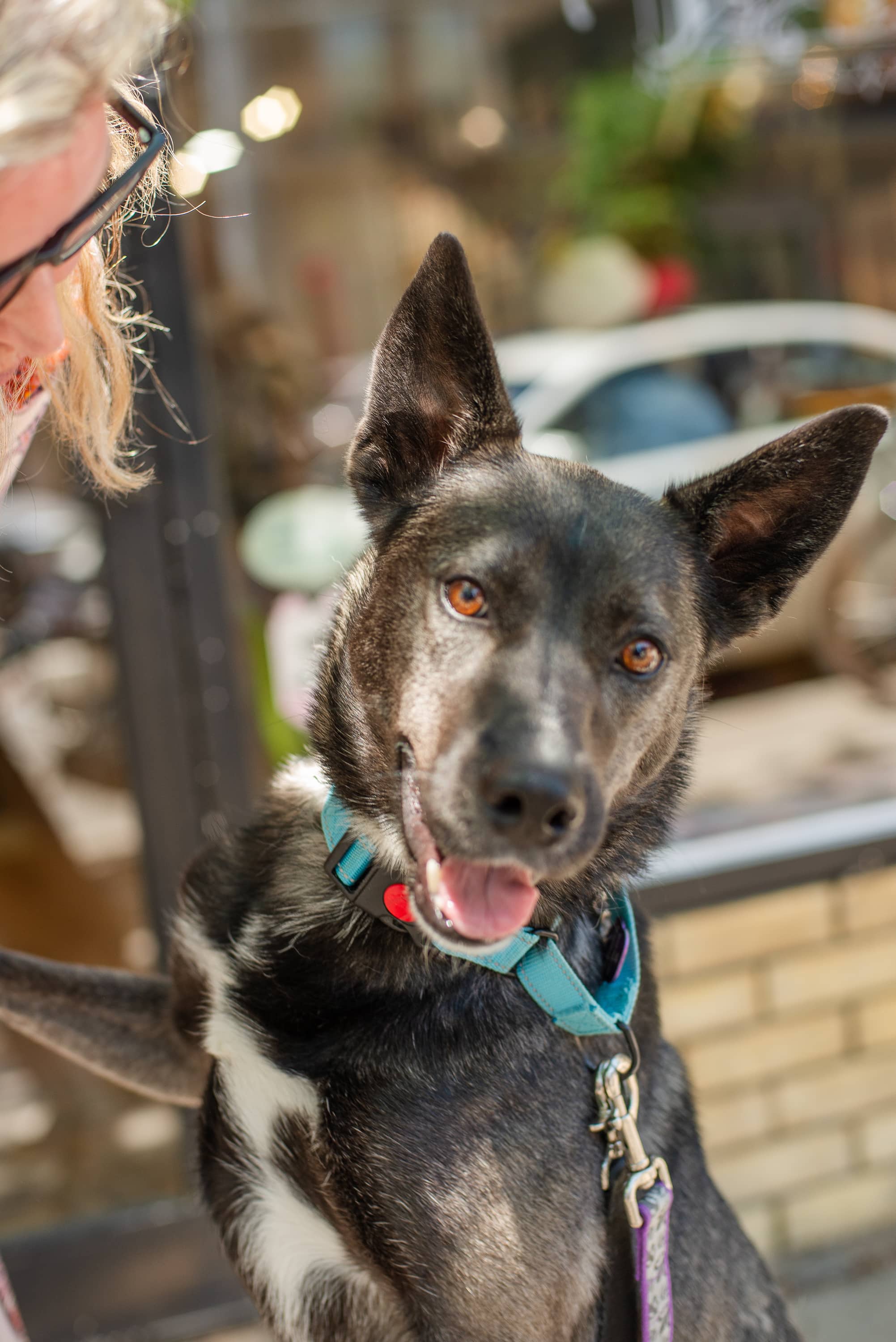
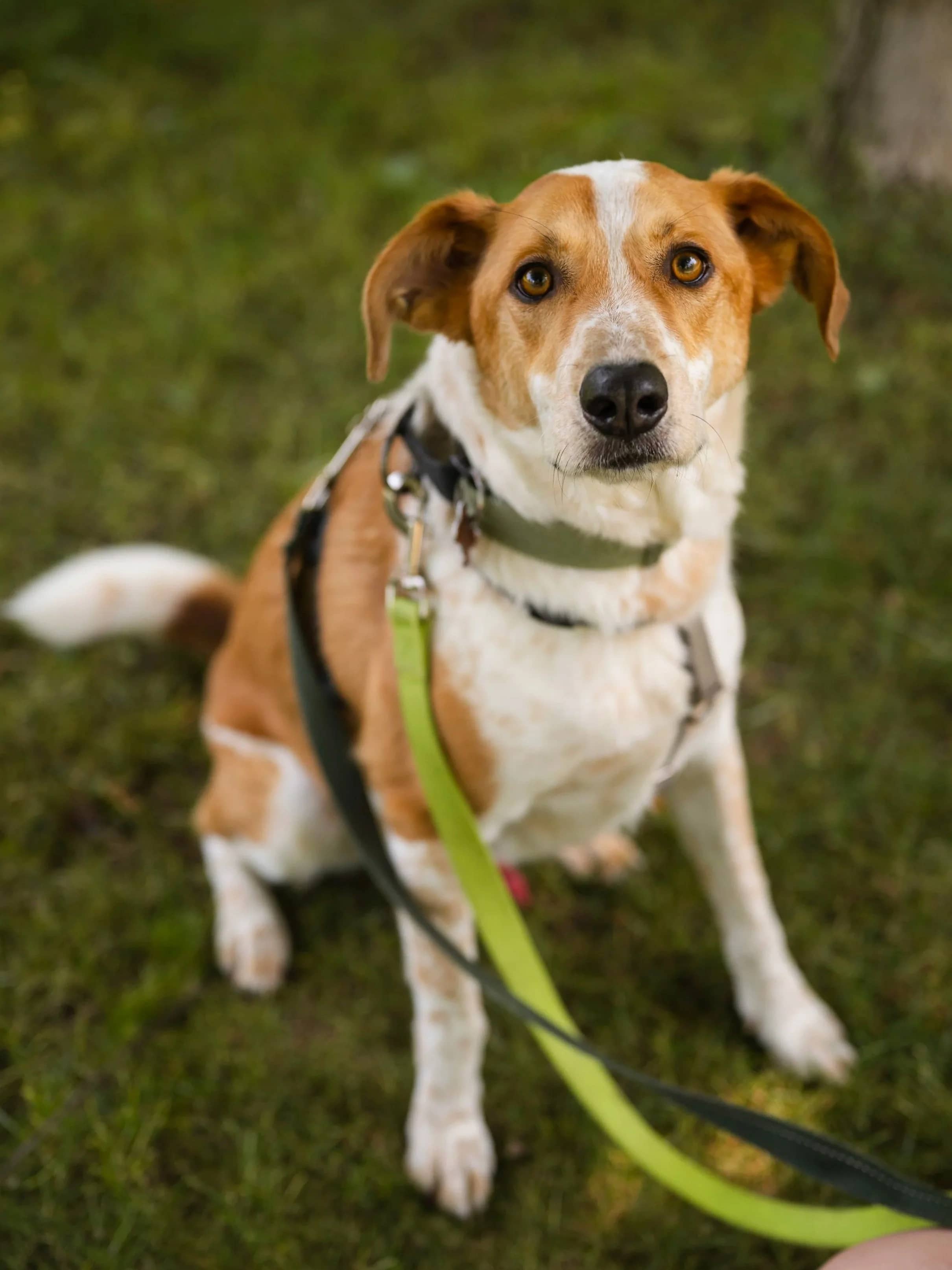
Australian Cattle Dog (Blue Heeler)s in Toronto, right now
We're currently tracking 4 adoptable Australian Cattle Dog (Blue Heeler)s in or near Toronto, listed by 2 rescues including Redemption Paws and Fetch + Releash. Listings update regularly, and most Australian Cattle Dog (Blue Heeler)s in Toronto get adopted within days of being posted — if one catches your eye, reach out fast.
See every adoptable Australian Cattle Dog (Blue Heeler) across Ontario →
Adopting a Blue Heeler in Toronto
Blue Heelers — formally Australian Cattle Dogs (ACDs) — appear in Toronto and GTA rescue more often than the breed's popularity would suggest. The Toronto Humane Society on River Street, Save Our Scruff, City of Toronto Animal Services, and Ontario SPCA Toronto Area branches see Heelers and Heeler crosses regularly. The pattern is sharp. A first-time owner picked up a Heeler because of the "smart, loyal, trainable" reputation, did not understand that smart-loyal-trainable describes a working dog that needs a job, and the dog ended up in rescue at 8 to 24 months — usually for resource guarding, ankle nipping, or destructive boredom in a downtown condo.
This page pulls every adoptable Heeler from the launched GTA shelters into one searchable place, refreshed regularly. Demand is moderate among experienced active homes — listings move within 3 to 5 days. Toronto rescues place Heelers with applicants who genuinely run, hike or bike daily, have suburban or rural-adjacent space, and understand that ACDs are working herding dogs first and pets second. The breed is not a Liberty Village or CityPlace condo fit. GTA suburbs (Mississauga, Vaughan, Markham, Oakville, Pickering) with backyards work; downtown does not.
Extreme exercise plus mental work — non-negotiable
The ACD was bred to drove cattle across hundreds of kilometres of Queensland outback — the breed runs all day and thinks while doing it. A 30-minute walk twice daily does not meet the requirement. Realistic Toronto Heeler exercise is 90 to 120 minutes of physical work daily (running, hiking the Sunnybrook trails, bikejoring along the Don Valley path, fetch on a fenced field) PLUS 30 to 45 minutes of structured mental work (training drills, puzzle feeders, scent games, herding-style fetch). Heelers who get the physical without the mental still develop nuisance behaviours — they need both.
Dog sports anchor most Toronto Heeler homes — herding (drives to Caledon or Schomberg trial venues), agility (multiple GTA clubs), disc, dock diving, rally obedience, scent work. Without a sport or structured outlet the dog invents its own work — herding cats, herding children, redirecting on ankles, fence-running. Bored Heelers chew through drywall. Daycare 2 to 3 days a week helps for working homes but does not replace owner-led exercise. GTA daycare runs $40 to $60 per day, and not every facility takes high-drive herders — confirm before applying.
Herding-redirect nipping and the GTA family pattern
Heelers nip cattle on the heel — hence "Heeler" — and the genetic predisposition does not turn off in family environments. Children running, joggers passing on a Beaches boardwalk, scooters in High Park, cyclists on the Don River trail all trigger the chase-and-nip instinct. The redirect work is real and ongoing: teach an incompatible behaviour (mat targeting, place command), manage the environment (long-line, fenced yard, no off-leash where joggers or kids run loose), and reward calm. A well-managed Heeler in a kid home is fine; an unmanaged Heeler will eventually break skin on a running child.
Toronto rescues will ask about the children in the home, the layout (open-plan with running room or apartment with no buffer), and the off-leash situation. Heelers placed with families typically go to homes with kids 10+, fenced suburban yards, and adopters with prior herding-breed experience. First-time dog owners in a downtown condo with toddlers are not the placement target.
Health load — PRA, deafness, hip dysplasia
Progressive retinal atrophy (PRA) is the most-watched genetic disease in the breed — adult-onset blindness from roughly age 4 to 8. Reputable breeders DNA-test (Optigen prcd-PRA panel). Rescue Heelers can be tested through OVC Guelph ophthalmology or VCA Canada Toronto branches; annual ophthalmology assessment from age 4 catches progression early. Hereditary cataracts and primary lens luxation are also breed concerns.
Congenital deafness is well-documented and linked to the merle and white-pattern coat genetics — red and blue heelers with heavy white head markings carry higher risk. The BAER (Brainstem Auditory Evoked Response) test at OVC or a GTA specialty practice confirms unilateral or bilateral deafness; deaf Heelers do beautifully with hand-signal training but need fenced exercise areas (sound-based recall does not work). Hip and elbow dysplasia run at moderate rates given the working build. Lifespan 13 to 15 years is realistic — the breed is generally hardy beyond the eye and ear load. Pet insurance taken out the week of adoption is essential.
What Heelers are actually like to live with
A well-matched Blue Heeler in Toronto is one of the most loyal, intelligent, and capable working dogs in any rescue. The realistic parts to plan for:
- Extreme exercise. 90 to 120 minutes daily physical PLUS 30 to 45 minutes mental work.
- Never off-leash unfenced. Prey drive plus herding chase makes joggers, cyclists, deer and squirrels triggers.
- Herding-redirect nipping. Real ongoing work in family environments. Kids 10+ generally.
- Suburban or rural-adjacent. GTA suburbs with backyards (Mississauga, Vaughan, Markham, Oakville) work; downtown condos do not.
- Dog sports anchor most homes. Agility, herding, disc, scent work, rally obedience.
- Annual ophthalmology from age 4 for PRA monitoring.
- BAER deafness test on intake if heavy white head markings.
- 13 to 15 year lifespan. Senior hip and joint monitoring.
What the fee usually covers
Blue Heeler adoption fees at Toronto and GTA rescues typically run $400 to $800 for an adult dog, $600 to $1,000 for puppies under 1 year. The fee covers spay or neuter, core vaccinations, microchip, deworming, ophthalmology assessment, BAER testing where indicated, and a vet check before placement. Confirm the exact number on the dog's own listing.
How to actually search
Apply within 3 to 5 days when an experienced active home matches. Use the filters above to narrow by energy (high), size (medium, 35 to 50 lbs), compatibility, and shelter. Read foster notes on herding redirect status, off-leash reliability (most are unfenced-unsafe), eye and hearing assessment, and dog-park behaviour. Foster homes will set up a video call before in-person meet — many rescues require a home visit for Heelers.
Looking more broadly? Browse every adoptable dog across the province on Dog Adoption Ontario.
The rescues that most often list Australian Cattle Dog (Blue Heeler)s across Ontario are Toronto Humane Society, Save Our Scruff, City of Toronto Animal Services, and Ontario SPCA (Toronto Area). For breed-specific background, the Canadian Kennel Club is a useful reference.
Australian Cattle Dog (Blue Heeler) adoption in other Ontario cities
Australian Cattle Dog (Blue Heeler) Adoption FAQ — Toronto
How many Australian Cattle Dog (Blue Heeler)s are available for adoption in Toronto?
As of September 2026, 4 Australian Cattle Dog (Blue Heeler)s are available for adoption in Toronto across 2 rescues on LocalPetFinder. Listings update regularly as dogs are adopted and new ones arrive — browse the current Australian Cattle Dog (Blue Heeler)s above and apply directly through the rescue.
Where can I adopt a Blue Heeler near me in Toronto?
Heelers and Australian Cattle Dog crosses appear regularly in Toronto and GTA rescue. The major sources are the Toronto Humane Society on River Street, Save Our Scruff foster-based rescue, City of Toronto Animal Services West/North/East shelters, and Ontario SPCA Toronto Area branches. Demand is moderate among experienced active homes — set up an alert and apply within 3 to 5 days of a dog appearing. Toronto rescues place Heelers with applicants who genuinely run, hike or bike daily, have suburban or rural-adjacent space, and understand that ACDs are working herding dogs first and pets second.
Can a Blue Heeler live in a Toronto condo?
Almost never well. The ACD was bred to work cattle across hundreds of kilometres of Queensland outback and needs 90 to 120 minutes of physical exercise plus 30 to 45 minutes of mental work daily. A Liberty Village or CityPlace condo with a 30-minute lunchtime walk is not enough — bored Heelers chew drywall, fence-run on balconies, redirect on family members, and develop nuisance barking. GTA suburbs (Mississauga, Vaughan, Markham, Oakville, Pickering) with backyards and adopters who run or bike daily are the realistic placement target. Downtown condos are not.
Why do Heelers nip ankles and is it dangerous?
Heelers were bred to nip cattle on the heel to drive them — the genetic predisposition does not turn off in family environments. Children running, joggers passing in a park, scooters in High Park, cyclists on the Don River trail all trigger the chase-and-nip instinct. With ongoing redirect work (mat targeting, place command, incompatible-behaviour training) and environmental management (long-line, fenced yard, no off-leash where joggers run) it is manageable. Without that work an unmanaged Heeler will eventually break skin on a running child. Toronto rescues place Heelers with kids 10+ as a general rule and ask about the home layout.
Are red Heelers more likely to be deaf?
Congenital deafness in ACDs is linked to the merle and white-pattern coat genetics, and both red and blue heelers with heavy white head markings carry higher risk than dogs with solid colour. Bilateral deafness is the most-watched concern; unilateral (one-sided) deafness is more common and often goes undiagnosed without testing. The BAER (Brainstem Auditory Evoked Response) test at OVC Guelph or a GTA specialty practice confirms hearing status. Deaf Heelers do beautifully with hand-signal training but need fenced exercise areas — sound-based recall does not work. Rescues will note BAER results on the listing where the test has been done.
How much does it cost to adopt an Australian Cattle Dog (Blue Heeler) in Toronto?
Adopting an Australian Cattle Dog (Blue Heeler) in Toronto typically costs $300 to $700, and puppies usually carry a premium at $500 to $900. The exact fee varies by rescue, and older dogs are often reduced. That fee is not a purchase price. It covers work already done on the dog: spay or neuter, vaccinations, deworming, microchip, and a basic vet workup, which would cost several hundred dollars more if you arranged it yourself after buying. Buying the same breed from a registered breeder generally runs well over $1,000, usually with a waitlist. Ask the rescue what is included before you apply, since a few include extras like a starter bag of food or a first-month insurance trial.
Are these Australian Cattle Dog (Blue Heeler)s for sale in Toronto?
Not for sale, for adoption, which is usually the better deal. Every Australian Cattle Dog (Blue Heeler) here comes from a Toronto rescue or shelter, not a breeder, pet store, or classified seller. Adoption fees are typically $300 to $700, with puppies at $500 to $900 and already include vaccinations, deworming, microchip and spay or neuter when age-appropriate, versus roughly $2,000 to $5,000 or more to buy an Australian Cattle Dog (Blue Heeler) from a breeder. If you searched "australian cattle dog (blue heeler) for sale toronto" or "australian cattle dog (blue heeler) puppies for sale," adopting gets you a healthy, vetted dog for a fraction of the price.
Where can I buy an Australian Cattle Dog (Blue Heeler) in Toronto, and should I?
You can buy from a registered breeder, but it is worth weighing against adoption first. A reputable Australian Cattle Dog (Blue Heeler) breeder typically charges $2,000 to $5,000 or more and often has a waitlist, while a rescue Australian Cattle Dog (Blue Heeler) costs $300 to $700, with puppies at $500 to $900 fully vetted and may be available now. Be cautious of cheap australian cattle dog (blue heeler)-for-sale ads on classified sites and marketplaces, which are frequently backyard breeders or puppy-mill resellers with unvetted, sometimes sick animals and no health guarantee. If you do buy, insist on seeing where the puppies were raised and getting vet records. For most families in Toronto, adopting a rescue Australian Cattle Dog (Blue Heeler) is cheaper, faster, and gives an dog in need a home.
Are there free Australian Cattle Dog (Blue Heeler)s in Toronto, or australian cattle dog (blue heeler)s under $500?
Adoption is the closest honest answer, and it is not free. A rescue Australian Cattle Dog (Blue Heeler) in Toronto typically costs $300 to $700, with puppies at $500 to $900, so the lower end lands under the "$500" people search for and the rest does not. What the fee buys is work already done, the vaccinations, deworming, microchip and spay or neuter, which would cost more than the fee itself if you arranged it yourself, and it is still far below breeder prices. Be wary of genuinely free australian cattle dog (blue heeler) listings. An animal advertised free to a good home has usually not been vetted, and free rehoming ads are the route flippers and unregistered breeders use to move animals with no health guarantee and no recourse. Paying a rescue fee buys you a dog someone has already examined, treated, and been honest with you about.
Are there Australian Cattle Dog (Blue Heeler) puppies in Toronto, or only adults?
Both, but adults far outnumber puppies, and it is worth knowing that before you start looking. Most Australian Cattle Dog (Blue Heeler)s arriving in Toronto rescue are adolescents and adults, because that is the age at which first homes tend to give up. Puppies do come through, usually as accidental litters or with a surrendered mother, and they are typically spoken for quickly. Setting an alert beats refreshing the page. It is also worth asking whether you actually want one: an adult arrives with a temperament a foster has already observed and described, where an Australian Cattle Dog (Blue Heeler) puppy is a prediction, and for this breed in particular knowing what you are getting is the more useful thing.
Where can I find an Australian Cattle Dog (Blue Heeler) near me in Toronto?
Start with the listings on this page, which pull from Toronto rescues and shelters and are refreshed regularly, so what you see is what is genuinely available rather than a stale directory. If nothing suits today, that is normal for this breed: rescue intake is intermittent rather than steady, and a breed with none listed this week often has several next month. Setting an alert beats checking back, and it is worth widening to nearby towns, since most rescues serving Toronto will adopt out across a reasonable driving distance rather than only inside one municipality.
Have a dog to rehome?
Rehoming an Australian Cattle Dog (Blue Heeler) in Toronto?
List your dog free. Local adopters browsing Toronto see owner listings first: no shelter, no fees, you choose the home.
List your pet free →Takes 3 minutes. You stay in control of who adopts.
Not seeing one yet?
Get notified when an Australian Cattle Dog (Blue Heeler) is listed in Toronto
We'll email you the moment an Australian Cattle Dog (Blue Heeler) is listed in Toronto on LocalPetFinder, from a rescue or an owner rehoming.
One email when there's a match. Unsubscribe anytime.
For rescues & shelters
Are you a Toronto-area rescue? List your adoptable dogs free.
Free shelter account: your dogs appear here and across LocalPetFinder, with analytics and adoption applications included.