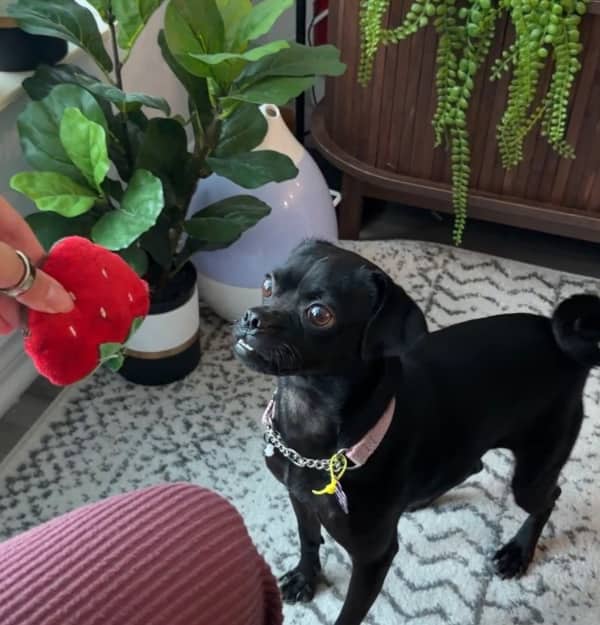
Pugs in Toronto, right now
We're currently tracking 1 adoptable Pug in or near Toronto, listed by 1 rescue including Redemption Paws. Listings update regularly, and most Pugs in Toronto get adopted within days of being posted — if one catches your eye, reach out fast.
Adopting a Pug in Toronto
Pugs and Pug crosses appear in Toronto and GTA rescue regularly through the year. The Toronto Humane Society on River Street, Save Our Scruff, City of Toronto Animal Services, and Ontario SPCA Toronto Area branches see Pugs from owner-experience mismatches, families that did not understand the brachycephalic medical load, and puppy-mill rescue operations (the breed is heavily commercially bred and overrepresented in mill seizures). The breed is a toy companion developed in ancient China, standing 10 to 13 inches and weighing 14 to 18 lbs.
This page pulls every adoptable Pug from the launched GTA shelters into one searchable place, refreshed regularly. Pugs are condo-tolerant, family-friendly, and one of the most stranger-social small companions in any GTA rescue. The mismatch shows up when adopters underestimate the brachycephalic medical load, the Toronto humid summer heat risk, or the lifetime cost of veterinary care for a breed that needs continuous airway and weight management.
Brachycephalic medicine — Toronto humid summer warning
The Pug is the most extreme brachycephalic among the toy companions — narrowed nostrils, elongated soft palate, hypoplastic trachea, and laryngeal saccule eversion are all common findings. BOAS (Brachycephalic Obstructive Airway Syndrome) presents on a spectrum from mild snoring to life-threatening airway collapse. Toronto humidex 35 to 40°C in July and August is the dangerous window. Brachycephalic dogs cannot cool effectively through panting and overheat in 5 to 10 minutes of mid-day exercise. Heat stroke in a Pug progresses to organ failure quickly and is a leading cause of preventable death in the breed.
Realistic Toronto Pug summer management is dawn or post-sunset walks only when humidex exceeds 28°C, AC continuously available, never left in a car or sun porch even briefly, and a cooling mat at home. BOAS surgical correction (staphylectomy + alar fold resection) costs $3,500 to $6,000 at VCA Canada Toronto or Toronto Veterinary Emergency Hospital and is commonly recommended by age 2 to 3 for the breed. Pet insurance taken at adoption is essential — Pug lifetime medical costs are among the highest of any small breed.
Pug Dog Encephalitis (PDE) — breed-specific fatal brain disease
PDE (Necrotizing Meningoencephalitis) is a Pug-specific autoimmune brain disease affecting approximately 1 to 2% of the breed. Onset is typically between 2 and 7 years and progression is rapid — seizures, behavioural changes, blindness, and death within weeks to months of diagnosis. There is no cure. Some dogs respond temporarily to immunosuppressive therapy. A DNA test exists that identifies high-risk genetic markers but does not predict disease onset with certainty — affected dogs typically inherit two copies of the susceptibility allele.
Toronto Pug adopters should ask the rescue whether PDE DNA testing has been done on the dog (most have not — testing is more common in breeder lines). The disease is uncommon enough that the breed remains worth adopting, but the possibility should inform pet insurance decisions and your vet should know the breed-specific risk. Sudden seizures, behavioural changes, or blindness in a young adult Pug warrant immediate evaluation at OVC Guelph or VCA Canada Toronto neurology.
Hemivertebrae, hip dysplasia, obesity — orthopaedic load
Hemivertebrae (a congenital spinal malformation) is breed-typical in Pugs because the screw-tail trait genetically correlates with vertebral malformation. Most affected dogs are clinically fine — the malformation is incidental finding on imaging. A minority develop progressive neurological signs (rear-end weakness, ataxia, urinary incontinence) requiring surgical decompression at OVC Guelph or VCA Canada Toronto at $8,000 to $14,000. Hip dysplasia runs at moderate rates given the small build but the chondrodystrophic structure. Patellar luxation occurs.
Obesity is the dominant chronic management issue. The breed loves food, has a low exercise tolerance due to brachycephalic limits, and the Toronto humid summer further restricts activity. Pugs above 20 lbs are obese — every extra pound worsens BOAS and orthopaedic strain. Realistic Toronto management is precise measured feeding (no free-feeding), low-calorie treats, and weight monitoring at every vet visit. Obesity prevention is the single most cost-effective health investment for the breed.
Eye disease and skin folds — daily care commitment
The shallow Pug eye orbits and prominent globes create chronic eye disease risk — corneal ulceration, dry eye (keratoconjunctivitis sicca), pigmentary keratitis, and traumatic proptosis (eye displacement from the socket). Toronto specialist ophthalmology at VCA Canada Toronto or OVC Guelph runs $300 to $800 per consultation; surgical eye removal in severe trauma cases $2,500 to $4,500. Daily eye protection is the practical reality — protect the face during play with other dogs, avoid rough handling around the head, and keep the facial skin folds clean.
The deep nose-roll and facial folds trap moisture, food debris, and bacteria. Daily wiping with a damp cloth (no medicated wipes unless directed by vet) prevents fold dermatitis. Untreated fold dermatitis progresses to chronic infection and surgical fold resection in severe cases. Lifespan 12 to 15 years is realistic with management. Toronto Pug lifetime cost runs $25,000 to $45,000 — substantially higher than non-brachycephalic small breeds.
What Pugs are actually like to live with
A well-matched Pug in Toronto is one of the most affectionate, stranger-social, child-friendly small companions in any GTA rescue. The breed was developed for human companionship and the temperament is genuinely social. The honest parts to plan for:
- Brachycephalic heat risk. AC essential, dawn/dusk walks above humidex 28°C.
- BOAS surgery $3,500 to $6,000 commonly indicated by age 2 to 3.
- Obesity is the dominant chronic issue. Precise measured feeding required.
- Daily facial fold cleaning and eye protection during play.
- Hemivertebrae and PDE breed-specific risks. Pet insurance essential.
- Genuinely condo-tolerant. 14 to 18 lbs. Family-friendly with respectful children.
- 12 to 15 year lifespan. Lifetime cost $25,000 to $45,000.
- Modest exercise tolerance. Multiple 15 to 20 minute walks daily.
- Stranger-social. Among the friendliest small companions in any GTA rescue.
What the fee usually covers
Pug adoption fees at Toronto and GTA rescues typically run $400 to $700 for an adult dog, $600 to $900 for puppies. The fee covers spay or neuter, core vaccinations, microchip, deworming, and a vet check before placement. BOAS surgery and ongoing brachycephalic management are not typically included — budget pet insurance from day one. Confirm the exact number on the dog's own listing. GTA ethical breeder pricing runs $2,500 to $4,500 — rescue is materially cheaper and Pug puppy-mill rescue operations sometimes release dogs into Toronto rescue at standard adoption fees.
How to actually search
Apply within 5 to 7 days when a Pug matches. Use the filters above to narrow by age, compatibility, and shelter. Read foster notes on BOAS severity, weight, eye condition, facial fold dermatitis history, hemivertebrae findings, child compatibility, and exercise tolerance. Foster homes will set up a video call before in-person meet — most rescues prefer adopters who commit to pet insurance and understand the brachycephalic medical load.
Looking more broadly? Browse every adoptable dog across the province on Dog Adoption Ontario.
The rescues that most often list Pugs across Ontario are Toronto Humane Society, Save Our Scruff, City of Toronto Animal Services, and Ontario SPCA (Toronto Area). For breed-specific background, the Canadian Kennel Club is a useful reference.
Pug guides for Toronto adopters
Pug Adoption in Toronto: Where & What to Know
Adopt a Pug or Pug mix in Toronto: the charming flat-faced companion, why they land in rescue, the real brachycephalic health-cost picture, adoption vs breeder, and where to find one.
11 min read readPug Health Issues: A Toronto Owner’s Guide
Pug health for Toronto owners: BOAS breathing problems, heat sensitivity, eye conditions, skin-fold dermatitis, spine, Pug Dog Encephalitis, obesity, and why insurance matters.
12 min read readLiving With a Pug in Toronto: Heat, Winter & Daily Care
Day-to-day care for a brachycephalic Pug in Toronto: managing summer heat and heatstroke risk, winter cold, safe exercise, weight control, and fold and eye care.
11 min read readPug Adoption FAQ — Toronto
How many Pugs are available for adoption in Toronto?
As of September 2026, Pugs are rare in Toronto rescue — only 1 is listed right now across 1 rescue on LocalPetFinder. They tend to get adopted fast, so setting an alert is the most reliable way to find one.
Where can I adopt a Pug near me in Toronto?
Pugs and Pug crosses appear in Toronto and GTA rescue regularly through the year. The major sources are the Toronto Humane Society on River Street, Save Our Scruff foster-based rescue, City of Toronto Animal Services West/North/East shelters, and Ontario SPCA Toronto Area branches. The breed is heavily commercially bred and overrepresented in puppy-mill rescue seizures, so Pugs appear in rescue more often than the breed's rescue-network footprint suggests. Set up an alert and apply within 5 to 7 days — small companion breeds move within a week when posted. Adoption fees run $400 to $700 for adults, $600 to $900 for puppies.
Why are Pugs so heat-sensitive in Toronto summer?
The Pug is the most extreme brachycephalic among the toy companions — narrowed nostrils, elongated soft palate, hypoplastic trachea. Dogs cool primarily by panting, and panting is mechanically inefficient when the airway is compromised. Toronto humidex 35 to 40°C in July and August creates a window where mid-day exercise produces heat stroke in 5 to 10 minutes. Realistic management is dawn or post-sunset walks only when humidex exceeds 28°C, AC continuously available, never left in a car, and a cooling mat at home. BOAS surgical correction at $3,500 to $6,000 at VCA Canada Toronto or Toronto Veterinary Emergency Hospital significantly improves heat tolerance.
What is Pug Dog Encephalitis (PDE)?
PDE (Necrotizing Meningoencephalitis) is a Pug-specific autoimmune brain disease affecting approximately 1 to 2% of the breed. Onset is typically between 2 and 7 years. Progression is rapid — seizures, behavioural changes, blindness, and death within weeks to months. There is no cure. Some dogs respond temporarily to immunosuppressive therapy. A DNA test identifies high-risk genetic markers but does not predict onset with certainty. Toronto Pug adopters should ask the rescue whether PDE DNA testing has been done and inform their vet of the breed-specific risk. Sudden seizures or behavioural changes in a young adult Pug warrant immediate evaluation at OVC Guelph neurology.
Can a Pug live in a Toronto condo?
Yes — Pugs are one of the best-matched small companions for Toronto condo living when brachycephalic management is taken seriously. At 14 to 18 lbs they fit weight caps in most Liberty Village, CityPlace, the Annex, and Yonge corridor buildings. Exercise needs are modest — 15 to 20 minute walks multiple times daily, plus indoor play. The breed sleeps 14 to 16 hours daily and is quiet. The honest caveats are summer heat management (AC essential, no humidex walks above 28°C), precise weight management (every extra pound worsens BOAS), and lifetime medical cost $25,000 to $45,000. Toronto Humane Society and Save Our Scruff both place Pugs into downtown condos regularly.
How much does it cost to adopt a Pug in Toronto?
Adopting a Pug in Toronto typically costs $300 to $600, and puppies usually carry a premium at $500 to $900. The exact fee varies by rescue, and older dogs are often reduced. That fee is not a purchase price. It covers work already done on the dog: spay or neuter, vaccinations, deworming, microchip, and a basic vet workup, which would cost several hundred dollars more if you arranged it yourself after buying. Buying the same breed from a registered breeder generally runs well over $1,000, usually with a waitlist. Ask the rescue what is included before you apply, since a few include extras like a starter bag of food or a first-month insurance trial.
Are these Pugs for sale in Toronto?
Not for sale, for adoption, which is usually the better deal. Every Pug here comes from a Toronto rescue or shelter, not a breeder, pet store, or classified seller. Adoption fees are typically $300 to $600, with puppies at $500 to $900 and already include vaccinations, deworming, microchip and spay or neuter when age-appropriate, versus roughly $2,000 to $5,000 or more to buy a Pug from a breeder. If you searched "pug for sale toronto" or "pug puppies for sale," adopting gets you a healthy, vetted dog for a fraction of the price.
Where can I buy a Pug in Toronto, and should I?
You can buy from a registered breeder, but it is worth weighing against adoption first. A reputable Pug breeder typically charges $2,000 to $5,000 or more and often has a waitlist, while a rescue Pug costs $300 to $600, with puppies at $500 to $900 fully vetted and may be available now. Be cautious of cheap pug-for-sale ads on classified sites and marketplaces, which are frequently backyard breeders or puppy-mill resellers with unvetted, sometimes sick animals and no health guarantee. If you do buy, insist on seeing where the puppies were raised and getting vet records. For most families in Toronto, adopting a rescue Pug is cheaper, faster, and gives a dog in need a home.
Are there free Pugs in Toronto, or pugs under $500?
Adoption is the closest honest answer, and it is not free. A rescue Pug in Toronto typically costs $300 to $600, with puppies at $500 to $900, so the lower end lands under the "$500" people search for and the rest does not. What the fee buys is work already done, the vaccinations, deworming, microchip and spay or neuter, which would cost more than the fee itself if you arranged it yourself, and it is still far below breeder prices. Be wary of genuinely free pug listings. An animal advertised free to a good home has usually not been vetted, and free rehoming ads are the route flippers and unregistered breeders use to move animals with no health guarantee and no recourse. Paying a rescue fee buys you a dog someone has already examined, treated, and been honest with you about.
Are there Pug puppies in Toronto, or only adults?
Both, but adults far outnumber puppies, and it is worth knowing that before you start looking. Most Pugs arriving in Toronto rescue are adolescents and adults, because that is the age at which first homes tend to give up. Puppies do come through, usually as accidental litters or with a surrendered mother, and they are typically spoken for quickly. Setting an alert beats refreshing the page. It is also worth asking whether you actually want one: an adult arrives with a temperament a foster has already observed and described, where a Pug puppy is a prediction, and for this breed in particular knowing what you are getting is the more useful thing.
Where can I find a Pug near me in Toronto?
Start with the listings on this page, which pull from Toronto rescues and shelters and are refreshed regularly, so what you see is what is genuinely available rather than a stale directory. If nothing suits today, that is normal for this breed: rescue intake is intermittent rather than steady, and a breed with none listed this week often has several next month. Setting an alert beats checking back, and it is worth widening to nearby towns, since most rescues serving Toronto will adopt out across a reasonable driving distance rather than only inside one municipality.
Have a dog to rehome?
Rehoming a Pug in Toronto?
List your dog free. Local adopters browsing Toronto see owner listings first: no shelter, no fees, you choose the home.
List your pet free →Takes 3 minutes. You stay in control of who adopts.
Not seeing one yet?
Get notified when a Pug is listed in Toronto
We'll email you the moment a Pug is listed in Toronto on LocalPetFinder, from a rescue or an owner rehoming.
One email when there's a match. Unsubscribe anytime.
For rescues & shelters
Are you a Toronto-area rescue? List your adoptable dogs free.
Free shelter account: your dogs appear here and across LocalPetFinder, with analytics and adoption applications included.