The short answer
Sunnybrook Park's off-leash dog area is a large open field in the Don Valley flats, between Eglinton Avenue East and the West Don River, near the Sunnybrook stables. It is one of Toronto's best spaces for high-energy dogs that need to run. Off-leash is allowed only inside the posted boundary; dogs stay leashed everywhere else, including near the river and the stables. The field is mostly unfenced, so it works best for dogs with reliable recall. Unlike many Toronto parks, Sunnybrook has free parking lots, though they fill fast on warm weekends. Transit access is limited, so most owners drive. Coyotes live in the valley, so keep your dog close.
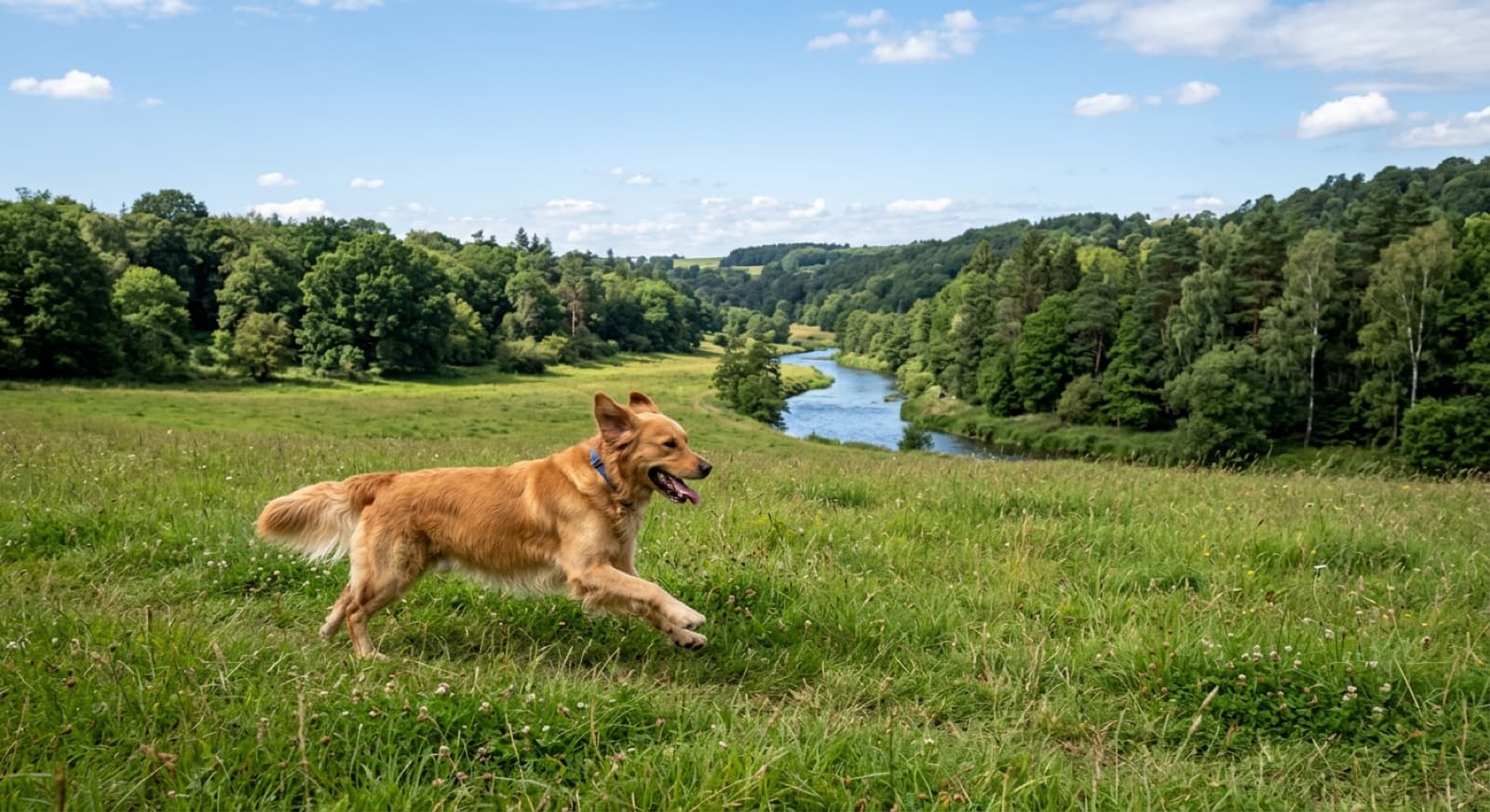
Where Sunnybrook Park is, and what dogs can use
Sunnybrook Park sits in the Don Valley in midtown Toronto, tucked into the ravine south of Eglinton Avenue East and reached mainly from Leslie Street. It is part of a chain of connected valley parks that runs along the West Don River, and it is best known for the Sunnybrook stables, the cricket and rugby pitches, and the wide flat flats at the bottom of the valley. Most Toronto dog owners hear “Sunnybrook” and picture a giant dog field, and for once that mostly holds, but only inside the posted off-leash boundary.
The City of Toronto manages the park and marks the off-leash area with signs. Off-leash is allowed only inside that marked zone. Everywhere else in the park, dogs must be leashed. That includes the river edges, the stables area, the sports fields, the parking lots, and the connecting trails into the rest of the valley system. Bylaw officers do patrol the valley parks, especially in the busy warm months.
The off-leash field: big, open, and mostly unfenced
The off-leash zone is a large open field in the lower flats of the valley, near the West Don River and within walking distance of the stables. It is one of the bigger open off-leash spaces in the city. Where most Toronto parks give you a small fenced enclosure, Sunnybrook gives you a wide flat field with long sightlines and room for a full-speed run. For a confident dog that loves to sprint, it is hard to beat.
Here is the catch, and it is the most important thing in this guide. The off-leash field is mostly unfenced. The boundary is marked by signs, not by a fence. The West Don River runs along one edge, and roads and parking lots sit nearby. A dog that takes off after a squirrel or another dog can reach the water or the pavement. So Sunnybrook is a recall test, not a free-for-all. If your dog comes back every single time you call, even with distractions around, the open field is a gift. If not, use a long line, or choose a fully fenced park until the recall is reliable.
Best for high-energy dogs
Sunnybrook earns its reputation as a big-dog field. The open flat ground suits high-drive breeds that need to burn real energy: huskies, shepherds, heelers, young retrievers, and the kind of dog that turns a small fenced park into a frustrated lap-pacer. The space lets you throw a ball the full length of a sprint, or just let two well-matched dogs chase each other at speed. A dog that comes home tired from a small enclosure often comes home genuinely satisfied from Sunnybrook.
That open layout is also why recall matters so much. The same space that lets your dog run lets it run away from you. Owners of high-energy dogs are exactly the people who should drill recall before turning their dog loose here, because a fast dog covers the distance to the river or the road in seconds.
Parking and getting there
This is where Sunnybrook stands apart from most Toronto off-leash parks: there is real, free parking.
- Free parking lots: Sunnybrook has several lots in the valley, reached from the main entrance off Leslie Street and from the Eglinton Avenue East side. They are free, which is rare in Toronto. On warm weekends they fill by mid-morning, so come early or go on a weekday.
- By car: The valley entrances off Leslie and off Eglinton East both wind down into the flats. Follow the signs to the lots near the sports fields and stables.
- By transit (limited): There is no subway station nearby. You would take a bus toward Leslie or Eglinton East and walk down into the valley, a longer trek than at transit-friendly parks. Check the current TTC routes before you go.
For most owners, Sunnybrook is a drive-to park, and the free parking is a big part of why it draws dogs from across the city. If you do not have a car, a transit-friendly park like High Park may be the easier choice.
Coyotes, the river, and wildlife
The Don Valley has a documented coyote presence, and the City of Toronto posts seasonal coyote awareness signs in valley parks like Sunnybrook. Coyotes are most active and territorial in late winter and spring during denning season. The standing guidance is simple:
- Keep your dog close, and leash up the moment you see a coyote.
- Make yourself big and loud (clap, shout, wave your arms) and back away calmly. Do not run. Do not turn your back.
- Never feed coyotes, and do not leave food scraps that draw them in.
- Small dogs are at higher risk; keep them close, especially at dawn and dusk.
The West Don River is the other hazard to manage. It can run fast after rain, the banks are slippery, and the water quality is variable. Dogs are meant to stay leashed and out of the river outside the off-leash zone, and even inside the field, the river edge is not a swimming spot. Treat it as a boundary to respect, not a feature. If your dog loves the water, the off-leash dog beach at Cherry Beach on the waterfront is the better fit.
Best times to go
The field gets busy on warm weekends, partly because the free parking pulls people in. The calm windows:
- Weekday early mornings (before 9am): the quietest stretch, mostly regulars and settled dogs, and the lots are empty.
- Weekday late afternoons and evenings: social but not packed, a good window if your dog likes play.
- Cooler or rainy weekday days: nearly empty, and the open field handles a bit of mud fine.
Avoid sunny weekend late mornings and early afternoons, when the lots fill and the field holds the most dogs. The open layout keeps even a busy day from feeling cramped, but if your dog needs space from others, the quiet windows are worth the early alarm.
Looking for a rescue dog ready for Sunnybrook?
Toronto rescues list adoptable dogs daily, including the high-energy dogs that thrive in a big open field. Foster homes know which dogs have the reliable recall an unfenced park like Sunnybrook needs, and which ones need more time first.
See Adoptable Toronto Dogs →What to bring
- Poop bags, always. The City fines for failing to scoop, separately from leash violations.
- A leash you keep on you even inside the off-leash field, plus a long line if your recall is still a work in progress.
- Water and a collapsible bowl in summer. The open field has little shade and gets hot at midday.
- A towel for muddy or snowy paws in the wet seasons. The valley flats can get soft after rain.
- A current city dog licence tag with your phone number. The boundary is unfenced near the river and roads, so a lost dog needs to be reunited fast.
- A tick check after walking the wooded valley edges in spring and summer. The brush and tall grass are where ticks live.
Etiquette: how to be a good Sunnybrook dog owner
- Recall before freedom. If your dog does not come when called, do not let it off near the river or the roads. Use a long line and earn the freedom first.
- Watch your dog, not your phone. The unfenced open field means a distracted owner is a real safety risk, and a fast dog can be a long way off before you look up.
- Leash up everywhere else. The off-leash field is one section. The stables, the river edges, the sports fields, the parking lots, and the trails into the rest of the valley are all on-leash.
- Read your dog's play. If your dog is overwhelmed or overwhelming others, leash up and take a break. A crowded weekend is not the place to test a dog still learning manners.
- Scoop every time, including off in the long grass. The valley is shared habitat and the bylaw officers do check.
Winter at Sunnybrook
Toronto winters change the valley. The open field gets snowy and the flats can be slushy in a thaw, but the wide flat ground is actually easier footing in snow than the icy ravine trails at hillier parks. The crowds thin out, so the winter regulars tend to have well-socialised dogs and the play is calmer. Carry a towel for paws, watch for road salt near the lots and entrances (it irritates pads, so rinse them at home), and keep sessions shorter in a deep cold snap. A short brisk run on a cold morning beats a long shivery one when it is well below freezing.
Summer brings the opposite problem. The open field has little shade and heats up at midday in July. The five-second rule helps on any paved approach: press the back of your hand on the pavement, and if you cannot hold it there for five seconds, it is too hot for paws. Bring water, and aim for early morning or the early evening when the field is cooler and quieter.
Sunnybrook and a newly adopted rescue dog
The leashed valley trails are a good place to start with a new dog. The unfenced off-leash field is not, at least not in the first few weeks. Sunnybrook is a busy open space: other dogs, the stables, joggers, cyclists, and the river all add up to a lot of stimulation for a dog still settling in. The 3-3-3 decompression window most Toronto rescues talk about (3 days to settle, 3 weeks to learn the routine, 3 months to fully trust) is hard to honour in an environment this big and open, and the unfenced boundary is a genuine safety risk before recall is solid.
Walk the leashed trails first, let your dog learn that you are the safe centre of its world, and prove the recall in a smaller, lower-distraction space before you turn it loose in the open field. Earning the freedom is the right order, and it is the same advice most Toronto trainers give.
City of Toronto bylaw recap
The rules that apply everywhere in Sunnybrook Park except the posted off-leash field:
- Dogs must be leashed at all times outside the marked off-leash area.
- Off-leash is allowed only inside the posted boundary; read the signs to know exactly where it starts and ends.
- You must carry a leash even inside the off-leash field, and your dog must come when called.
- Pick up after your dog every time. Bylaw officers issue fines for failing to scoop.
- Dogs must be leashed around the West Don River and kept out of the water; the valley is shared wildlife habitat.
- Off-leash fines in non-designated areas can run into the hundreds of dollars under the City's animal bylaw.
- Toronto requires dogs to be licensed; keep a current tag on the collar.
For the official park details, off-leash map, and current notices, see the City of Toronto's Sunnybrook Park page and the City's dogs in parks and off-leash areas page. The City updates rules and seasonal closures there.
Where to go if Sunnybrook is not the right fit
If your dog needs a fenced space, has shaky recall, or loves the water, Sunnybrook may not be your spot. A couple of alternatives:
- High Park off-leash: another large mostly unfenced zone in the west end, with excellent subway access if you do not have a car.
- A fully fenced neighbourhood dog park: safer for dogs with unreliable recall, especially in the first weeks after adoption.
Our full Toronto off-leash parks guide covers the designated off-leash areas across the city, with notes on which ones are fenced, which allow swimming, and which fit different dogs best.
Frequently asked questions
Where is the off-leash area in Sunnybrook Park?
The off-leash dog area sits in the lower flats of Sunnybrook Park, in the Don Valley between Eglinton Avenue East and the West Don River, near the Sunnybrook stables and the sports fields. It is a large open field, much bigger than the small fenced enclosures most Toronto parks offer. The City of Toronto posts the off-leash boundary with signs. Off-leash is allowed only inside the marked zone; dogs must be leashed everywhere else, including near the river, the stables, the parking lots, and the cricket and rugby pitches.
Is the Sunnybrook Park off-leash area fenced?
Mostly no, and this is the most important thing to know before you go. The Sunnybrook off-leash area is a large open field marked by signs, not a fence. That makes it one of the best places in Toronto for a big high-energy dog to truly run, but it only works for dogs with reliable recall. The West Don River runs along one edge and roads and parking lots sit nearby. A dog that bolts after a squirrel can reach water or pavement. If your dog does not come back every time you call, use a long line, or pick a fully fenced park until the recall is solid.
Is there parking at Sunnybrook Park?
Yes, and this is a real advantage over many Toronto off-leash spots. Sunnybrook Park has several parking lots in the valley, accessed from the main entrance off Leslie Street and from the Eglinton Avenue East side. The lots are free, which is rare for a Toronto park. On warm weekends they fill up by mid-morning, so come early or go on a weekday. The fact that you can actually drive and park makes Sunnybrook a popular choice for owners coming from across the city who want a big open field without a parking hunt.
How do I get to Sunnybrook Park by transit?
Transit access is the weak spot. Sunnybrook Park sits down in the Don Valley with no subway station nearby, so most people drive. By TTC, you would take a bus toward the Leslie Street or Eglinton Avenue East entrances and then walk down into the valley, which is a longer trek than transit-friendly parks like High Park. If you do not have a car, check the current TTC routes serving Leslie and Eglinton East before you go. For most dog owners, Sunnybrook is a drive-to park, and the free parking is part of why it works.
Is Sunnybrook Park good for high-energy dogs?
It is one of the best in Toronto for them. The off-leash field is large and open, so a high-drive dog (a husky, a shepherd, a heeler, a young retriever) gets room to sprint that small fenced parks cannot match. The flat open ground means good sightlines and space for a game of fetch or a full-speed zoomie session. The trade-off is the unfenced boundary, so the dog needs reliable recall to use all that space safely. For a settled, recall-solid big dog, Sunnybrook is a gift.
Are there coyotes or wildlife in Sunnybrook Park?
Yes. The Don Valley has a documented coyote presence, and the City of Toronto posts seasonal coyote awareness signs in valley parks like Sunnybrook. Coyotes are most active and territorial in late winter and spring during denning season. The standard guidance is to keep your dog close, leash up if you see one, make yourself big and loud, never run, and never feed wildlife. The West Don River and the wooded valley edges also draw ducks, herons, and other animals; keep your dog out of the river and away from the wildlife.
Can my dog swim in the West Don River at Sunnybrook?
It is not a good idea, and dogs are meant to stay leashed and out of the water outside the off-leash zone anyway. The West Don River has variable water quality, can run fast after rain, and has slippery banks and debris. It is not a designated swimming spot. If your dog loves the water, the off-leash dog beach at Cherry Beach on the Toronto waterfront is the better choice. At Sunnybrook, treat the river as a hazard to manage, not a feature to enjoy.
How crowded does the Sunnybrook off-leash field get?
Busy on warm weekends, calm on weekday mornings and evenings. Because it is a big open field with free parking, sunny Saturdays and Sundays draw a lot of dogs and owners, and the lots fill early. The calmest windows are weekday early mornings before 9am and weekday late afternoons. The open layout means even a busy day feels less cramped than a small fenced park, but if your dog needs space from others or is still learning play manners, stick to the quiet windows.
What should I bring to Sunnybrook Park?
Poop bags (always, the City fines for not scooping), water and a collapsible bowl in summer because the open field has little shade, a leash you keep on you even in the off-leash zone, and a long line if your recall is still a work in progress. In winter, a towel for muddy or snowy paws. A current city dog licence tag with your phone number matters here because the area is unfenced and a lost dog near the river or the roads needs to be reunited fast. Check for ticks after walking the wooded valley edges in spring and summer.
What is the off-leash bylaw fine in Toronto?
Toronto requires dogs to be leashed everywhere except inside posted off-leash areas, and fines for off-leash dogs in non-designated areas can run into the hundreds of dollars under the City's animal bylaw. Bylaw officers patrol the valley parks. The fine is not the main reason to follow the rule, though. The unfenced boundary near the river and roads, plus the coyotes and wildlife in the Don Valley, are the real reasons. Keep your dog leashed until you are inside the signed off-leash field.
Is Sunnybrook Park good for a newly adopted rescue dog?
The on-leash valley trails, yes. The unfenced off-leash field, not in the first few weeks. Sunnybrook is a big open space with other dogs, the stables, joggers, cyclists, and the river nearby, which is a lot of stimulation for a dog still in the 3-3-3 decompression window (3 days to settle, 3 weeks to learn the routine, 3 months to fully trust). The unfenced boundary is also a safety risk if recall is not solid yet. Walk the leashed trails first, build your bond, and move to the open field once you trust the recall.
Sunnybrook Park off-leash vs a fenced dog park: which is better for my dog?
It comes down to recall. Sunnybrook's large open field is wonderful for confident dogs with rock-solid recall; they get the room to run that no small fenced park can offer. For a dog that bolts, slips collars, or is still learning to come when called, a fully fenced park is safer because the Sunnybrook boundary is unfenced near the river and roads. The honest answer most Toronto trainers give is to earn the open freedom. Start in a fenced space, prove the recall under distraction, then graduate to a big open field like Sunnybrook.