The short answer
Buy a litter box, unscented clumping litter, kitten food, bowls, a hard carrier, a tall scratching post and a wand toy. Kitten-proof by securing window screens and balcony gaps, tucking away cords, and blocking the spaces behind appliances and radiators. Confirm with the rescue which vaccines are done. Give the kitten one quiet room at first. Then play with it properly twice a day, because in a small apartment that is what prevents most of the problems people write in about.
Supplies you actually need
| Item | Why, and what to look for |
|---|---|
| Litter box and litter | One box per cat plus one spare. Low sides so a small kitten can climb in. Unscented clumping litter is what most kittens take to. |
| Food and water bowls | Shallow and wide. Ceramic or steel rather than plastic, which scratches and holds smells. |
| Kitten food | Food labelled for growth or for all life stages. Ask the rescue what it has been eating and buy that first. |
| Carrier | A hard-sided carrier that opens from the top. You will use it more than you expect, starting with the ride home. |
| Scratching post | Tall enough for a full stretch, and a horizontal cardboard scratcher too. Cheaper than a sofa. |
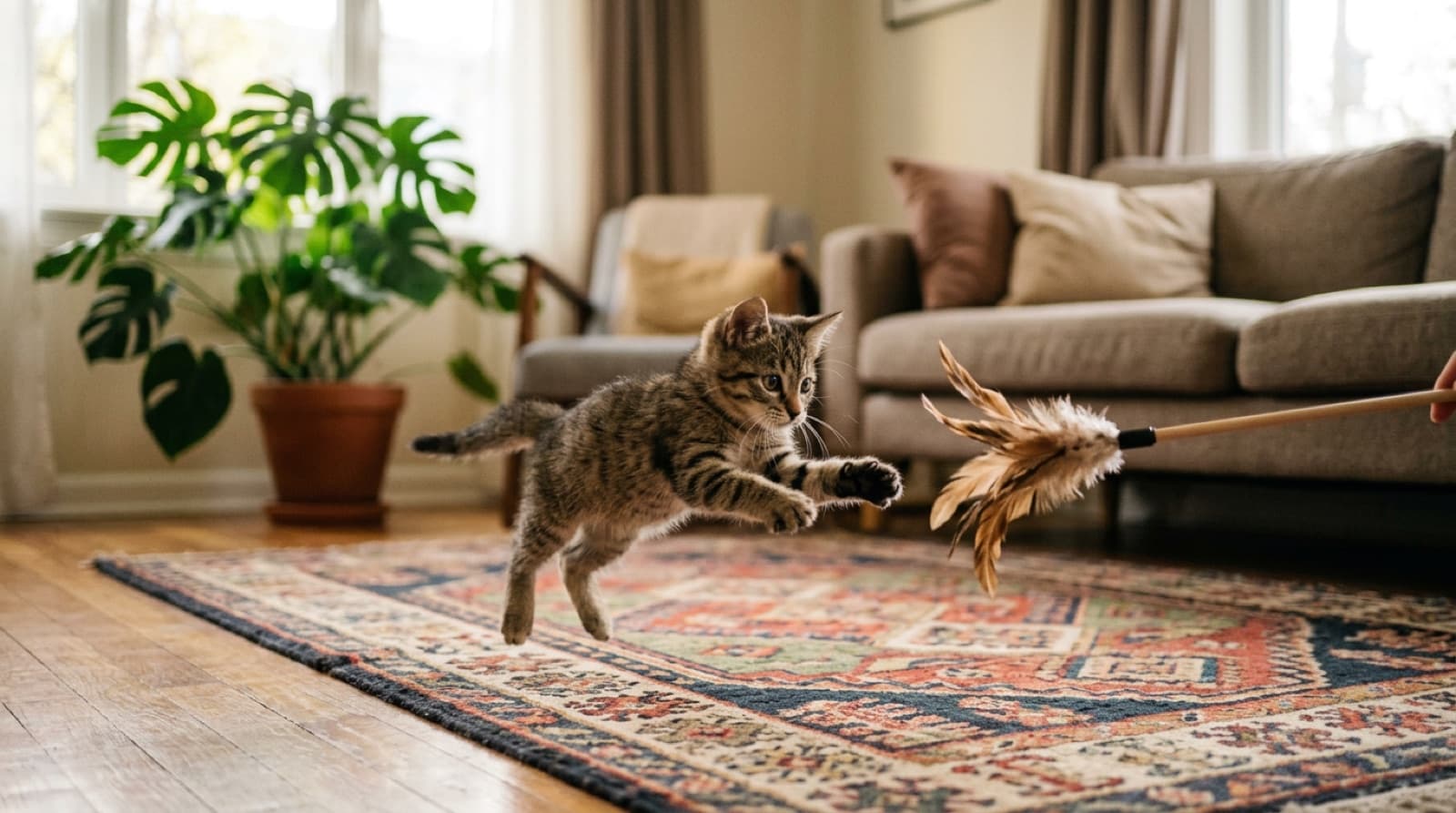
| Toys that move | A wand toy is the single most useful thing you can own. Skip anything with small glued-on parts. |
| Bed and hiding spot | A covered bed or a cardboard box. A kitten that can hide settles faster than one that cannot. |
| Nail clippers | Start trimming early, while it is a novelty rather than a fight. |
Kitten-proofing a Montreal apartment
Older plexes and walk-ups have a few hazards that newer buildings do not. Check every window screen before the kitten arrives, because old wooden frames and loose screens are how cats fall, and a screen that holds a grown cat will not necessarily hold one that climbs it. If you have a balcony, look at the gaps in the railing at kitten height rather than at your own.
Then do the ordinary sweep:
- Tuck away cords and blind pulls.
- Block the gaps behind the fridge and the stove.
- Check that radiators are not a climbing route to somewhere dangerous, or a burn risk in January.
- Move any houseplant you have not checked for toxicity.
Kittens fit through openings you would swear were too small. The test is not whether you can imagine the kitten going somewhere, it is whether the gap is physically closed.
The vaccine schedule
Most rescue kittens arrive with their first vaccines done, so the first thing to do is ask which ones. The schedule below follows the AAHA/AAFP feline vaccination guidelines that vets generally work from. Your vet decides what applies to your kitten, so treat this as a map of the conversation rather than instructions.
- 6 to 8 weeks: first FVRCP (the feline distemper combination). Deworming.
- 10 to 12 weeks: second FVRCP booster. First FeLV (feline leukemia virus), which the guidelines treat as core for every kitten under a year whatever the plan is for going outdoors.
- 16 to 20 weeks: final FVRCP of the kitten series. Second FeLV. Rabies, with timing set by the vaccine label and local rules rather than by the guideline.
- 5 to 6 months: spay or neuter, if the rescue has not already done it. Most have.
- Annually: wellness exam and boosters from the first birthday.
Food and feeding
Buy whatever the rescue has been feeding, at least for the first two weeks. A kitten is already coping with a new home, and changing food on the same day is how you end up cleaning the carpet. If you want to switch, do it over a week by mixing increasing amounts of the new food in. Use food labelled for growth or for all life stages, feed several small meals a day while the kitten is little, and keep water somewhere away from the food bowl, which most cats prefer.
Litter training, which is mostly not training
Kittens take to a litter box with very little help, and most arrive already doing it, having learned from their mother. What you control is whether the box is easy to use: low sides, quiet corner, away from food and water, scooped every day. One box per cat plus a spare is the rule, and in a small apartment that usually means two. When a kitten misses, look at the box before you look at the kitten, because placement, cleanliness and litter type explain almost all of it.
The socialization window
The feline sensitive period runs from roughly two to seven weeks, which means most of it happens before a rescue kitten ever reaches you. That is not a reason to skip the work. What follows is habituation, and the weeks after adoption still shape how a cat handles the ordinary intrusions of life. Handle the paws, look in the ears, get the carrier out and feed treats in it, run the vacuum in another room, have visitors say hello. Keep every one short and pleasant. A cat that learned early that a carrier is boring is a much easier animal at the vet for the next fifteen years, and the Cornell Feline Health Center is a good place to read further.
Winter in a Montreal apartment
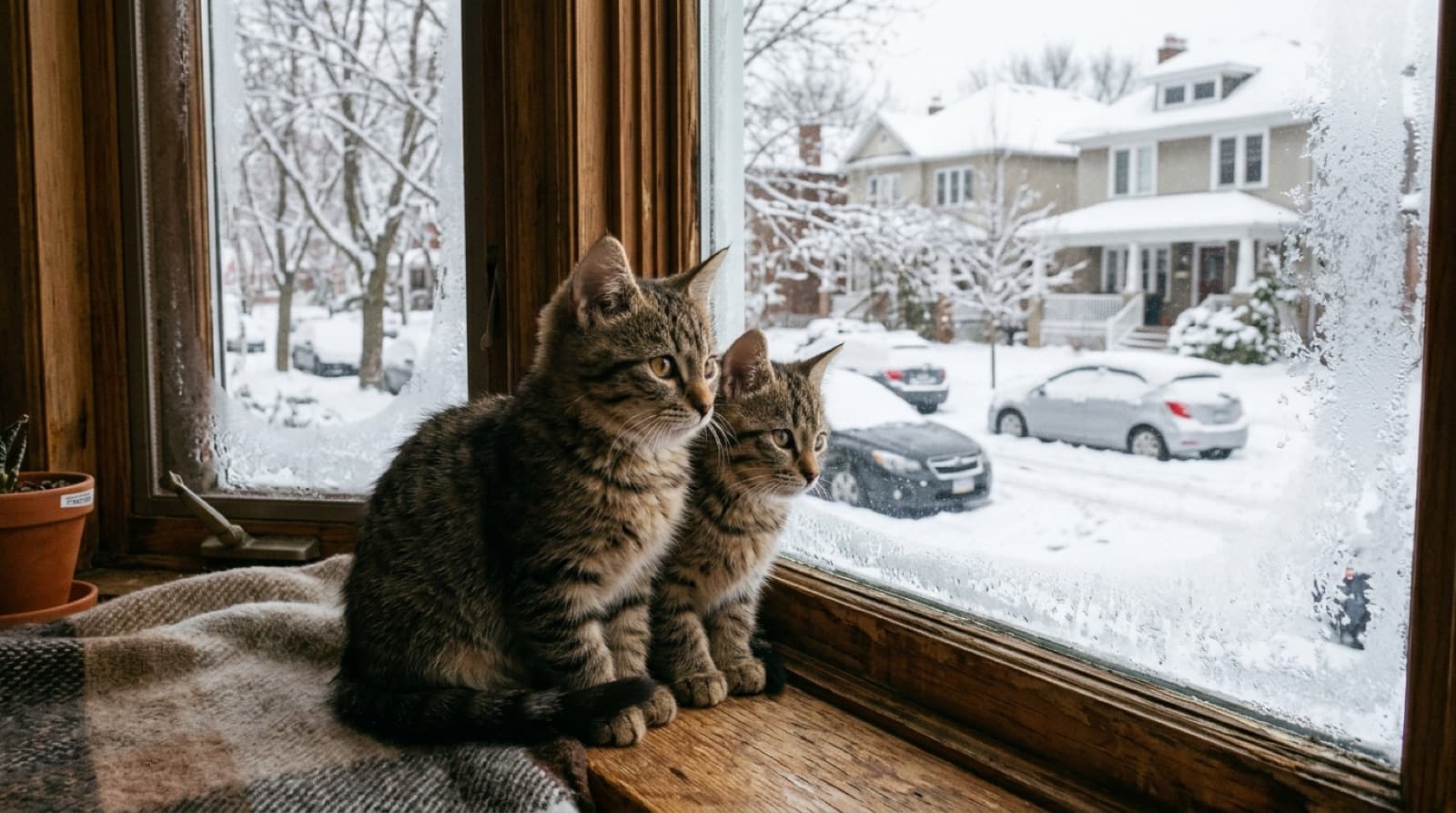
Indoor life is the norm for cats here and the winter is a large part of why. Four practical consequences. Dry heated air in an old building can leave a kitten with an itchy coat, so wet food and a humidifier are the first things to try. Road salt gets tracked into the vestibule and is worth wiping off paws, because a kitten will lick it off itself. Radiators that were a climbing hazard in October become a burn risk once the heat comes on. And a bored indoor kitten in February finds its own entertainment, which is why the twice-daily play habit matters more in a Montreal winter than it would somewhere with a garden.
The first 30 days
Week one is one quiet room and very little else. Week two, open the door and let the kitten decide how much of the apartment it wants. By week three or four you will see the actual personality arrive, and it is often louder than the one you met. Book the first vet visit early rather than waiting for a problem, get the remaining vaccines on the calendar, and start the twice-daily play habit now while it is easy to establish. Our Montreal cat adoption guide covers the settling-in pattern in more detail.
Looking for a kitten in Montreal?
Kittens are the first cats reserved at every rescue, so it pays to watch the listings rather than check in occasionally. Browse what is available across the Montreal-area organizations in one place.
Browse Adoptable Cats →New Kitten FAQ
Tap a question to expand