The short answer
Get a vet exam and urinalysis before changing anything else; infections, crystals, kidney disease, and arthritis are the most common hidden causes. A male cat straining and producing nothing is a same-day emergency: in Saskatoon that means the WCVM Veterinary Medical Centre, 306-966-7126, and calling ahead is mandatory. Once medicine is ruled out, the checklist is: one box per cat plus one, a box 1.5x your cat's length, quiet placement with escape routes, unscented clumping litter, and daily scooping. Former street cats from SCAT may need a short relearning period. The Saskatoon SPCA (306-374-7387) can help before a problem becomes a surrender.
Heads up: This article is informational and is not veterinary advice. Litter box avoidance is a symptom with many possible medical causes, and only a veterinarian who examines your cat can rule them out. See your Saskatoon vet before treating any of this as behavioural, and treat straining, crying in the box, or blood in urine as urgent. Contact details and emergency-intake rules are current as of July 2026; call ahead to confirm.
Ask anyone who fosters cats in Saskatoon what breaks adoptions, and litter box problems top the list. Not aggression, not scratching. Pee on the bed. The frustrating part, from the rescue side, is how often the cause was findable: a bladder infection nobody tested for, one box shared by three cats, a covered box next to a rumbling furnace. Families cycle through four litter brands, lose patience, and start drafting a rehoming post. If that is where you are, hold off and read our Saskatoon rehoming guide only after you have worked this checklist.
The single most useful habit is respecting the order: medicine first, setup second, stress third. Veterinary bodies including the American Veterinary Medical Association put house soiling near the top of feline health complaints precisely because so much of it is medical in origin. Cats mask pain. Often the very first outward sign of a urinary or joint problem is a puddle where a puddle should not be.
Saskatoon layers two local realities on top. First, winter: January lows average around -18°C here, and cats live fully indoors for months, which raises box workload and household tension. Our indoor vs outdoor guide explains why indoors is the right call year-round. Second, this city adopts out a lot of former street cats through SCAT Street Cat Rescue, and a cat that learned to toilet in dirt and snowbanks deserves a fair onboarding to plastic-box life. Both get their own sections below.
Medicine First: What Your Vet Is Ruling Out
An exam plus urinalysis is the cheapest diagnostic step you will ever buy compared with months of failed litter experiments. Bring specifics: when the accidents happen, where, urine or stool, and what changed at home in the two weeks before it started. These are the conditions on the vet's shortlist:
Urinary tract infection
Frequent small puddles, straining, vocalising in the box, extra licking afterward, sometimes pink-tinged urine. Treatable once diagnosed, invisible if you skip the urinalysis.
Bladder crystals and stones
Overlaps with UTI signs. In male cats, crystals can plug the urethra completely. That is the one true drop-everything emergency on this list (see the red box below).
Feline idiopathic cystitis
Bladder inflammation with no infection present, strongly tied to stress. Flares often follow a move, a new pet, or household upheaval, then settle and return.
Kidney disease and diabetes
Both push urine volume up. The cat drinks more, pees more, and a box schedule that worked for years quietly stops keeping up. Very common in seniors.
Arthritis
A stiff senior cat stops climbing over high box walls or descending basement stairs, then gets blamed for laziness. Peeing right beside the box is the classic tell.
Digestive trouble
Stool outside the box while urine habits stay normal points at constipation, diarrhoea, or pain during defecation, not a protest against the box itself.
Emergency: blocked male cat
A male cat cycling in and out of the box, straining, crying, and producing drops or nothing may have a urethral blockage. Untreated, it is fatal within a day or two. This is the one litter box symptom where waiting until morning is the wrong move.
Saskatoon's only true 24/7 small-animal emergency service is the WCVM Veterinary Medical Centre at the University of Saskatchewan, 52 Campus Drive, small-animal emergency line 306-966-7126. Calling ahead is mandatory, and overnight intake (10 p.m. to 7:30 a.m.) is restricted to life-threatening cases; a suspected blockage qualifies. If the phones go unanswered overnight, proceed to the centre and use the foyer telephone. Cats must arrive in a carrier. Earlier in the evening, some full-service clinics such as Stonebridge Veterinary Hospital offer extended evening hours; call ahead before driving.
Setup Second: The Box Audit
With medicine ruled out, audit the setup against what cats consistently choose when given options. Change one variable at a time and give each change a week or two to prove itself.
| Factor | Target | Common Saskatoon Mistake |
|---|---|---|
| Box count | Cats + 1, spread across the home | Two cats, one basement box, and surprise at the results. |
| Box size | About 1.5x the cat's body length | Standard pet-aisle boxes sized for kittens, used by 6 kg adults. A low-cut storage tote is bigger and cheaper. |
| Location | Quiet, open sightlines, an exit route, away from food | Beside the furnace that slams on at -25°C, or deep in a closet with one guarded doorway. |
| Litter type | Unscented, fine-grained, clumping | Perfumed litter chosen for human noses; abrupt brand switches with no transition period. |
| Litter depth | Roughly 5 to 7 cm | A thin scatter over bare plastic, or a deep unstable pit a stiff senior refuses to wade into. |
| Cleaning | Scoop daily; regular full change with unscented soap | Weekly scooping in a two-cat winter household, and washing the box with harsh ammonia-smelling cleaner. |
Senior cats deserve one extra pass: a low entry lip, a box on every floor, and no slippery flooring on the approach. Arthritis is underdiagnosed in cats, and box access is where it shows first.
The Former Street Cat: Relearning the Box
Saskatoon rehomes an unusual number of cats with outdoor histories thanks to SCAT Street Cat Rescue (306-955-7228), which has pulled street cats into foster care since 1996 and runs a trap-neuter-return program alongside adoptions. A cat that toileted in garden beds and snowbanks for its first years did not fail litter training; it never took the course.
Make the box feel like ground. Fine, soft, unscented litter is the closest texture to soil, which is why it is the standard recommendation for outdoor-history cats. A large box with low sides beats a small hooded one; nothing about a covered box resembles anything the cat has toileted in before.
Shrink the world first. One quiet room, the box in one corner, food and water far from it. A whole house gives a nervous former street cat too many soft-surface alternatives before the box habit sets. This mirrors the standard decompression protocol in our first-week guide for Saskatoon rescue cats, and litter reliability is one of its biggest payoffs.
Expect fast progress, not instant perfection. Burying waste is instinct; the box is just new packaging for it. Most former street cats connect the two within days in a calm room. If yours does not, loop in the foster home or SCAT directly; they have rebuilt this habit in hundreds of cats and know the tricks for the stubborn ones.
Stress Third: Box Politics and the Long Indoor Winter
Multi-cat friction is subtle. Cats rarely brawl over boxes; they control them by loitering. One cat lounging at the top of the basement stairs owns every box below it without lifting a paw. If the accidents belong to your more timid cat, map who sits where along the box routes. The fix is boxes in multiple zones so no single cat can gate them all, plus the cats-plus-one count as a hard minimum.
Timeline is your diagnostic tool. Stress accidents track events. A move, a new pet or partner, a renovation, a new baby, a schedule shift: if the first puddle appeared within two weeks of one of these, you likely have your answer. Keep the litter setup rigidly stable during chaotic stretches; it is the one variable you fully control.
Winter is the multiplier. With several Saskatoon nights a year at -30°C or colder, indoor confinement runs November through March. Box usage rises, tension between cats rises, stimulation falls. Counter it directly: an extra box, twice-daily scooping in the cold months, wand-toy sessions, food puzzles, and a window perch. An occupied cat is a cat with no spare energy for territorial statements on your duvet.
Spraying is its own file. Urine on vertical surfaces from a standing, tail-quivering cat is marking, not toileting, and hormones drive most of it. Sterilised cats spray far less; our Saskatoon cat spay and neuter guide covers the procedure, the city's subsidized program, and why every rescue cat arrives already fixed. Persistent spraying in a fixed cat usually means territorial stress, sometimes triggered by neighbourhood cats visible through windows, and warrants its own vet conversation.
Clean accidents with enzymes only. Enzymatic cleaners break urine compounds down; ordinary cleaners just hide the smell from you while the cat still reads the mark clearly. Never use ammonia-based products on urine spots. Once cleaned, block the spot temporarily (tinfoil, a closed door, a food bowl moved nearby) while the improved box setup wins the habit back.
Saskatoon Help, Before It Becomes a Surrender
Litter box trouble is solvable in most homes, and every organisation below would rather coach you through it than take the cat back. Your vet owns the medical side and any recurrence. The Saskatoon SPCA (306-374-7387) is the city's main shelter; if your cat came from there, call them early rather than late. SCAT Street Cat Rescue (306-955-7228) is the specialist call for anything involving a cat with an outdoor past.
Still choosing a cat? The Saskatoon rescue network places cats whose litter habits are already documented from weeks in foster care. That known history is one of the most underrated arguments for adopting: you are not guessing about the single behaviour most likely to make or break the placement.
Browse adoptable Saskatoon cats
Foster homes document litter habits before adoption, and every rescue cat arrives fixed, vaccinated, and microchipped. Listings updated regularly.
See Available Saskatoon Cats →Frequently Asked Questions
Why is my cat not using the litter box anymore?
When a previously reliable cat starts missing the box, assume medical until a vet says otherwise. Urinary tract infections, bladder crystals, kidney disease, diabetes, and arthritis all announce themselves through the litter box first. Book an exam and urinalysis with your Saskatoon vet before buying new litter or moving boxes around. If the vet clears the cat, then work the setup checklist in this guide: box count, box size, placement, litter type, and cleaning schedule, one change at a time.
My male cat keeps straining in the box. What do I do?
Treat it as an emergency, tonight. A male cat straining with little or no urine coming out may be blocked, and a full urethral blockage is fatal within a day or two. In Saskatoon, the WCVM Veterinary Medical Centre at the University of Saskatchewan (52 Campus Drive) is the city's only true 24/7 small-animal emergency service: 306-966-7126. Calling ahead is mandatory, and overnight intake between 10 p.m. and 7:30 a.m. is restricted to life-threatening cases. A blocked cat qualifies. Bring the cat in a carrier.
How many litter boxes should I have?
One per cat, plus one. A single cat gets two boxes, two cats get three, and so on. Spread them across the home in separate locations, because three boxes in one laundry corner function as a single location in cat terms. In a typical two-storey Saskatoon house with a basement, one box per level covers both the plus-one rule and the arthritis-friendly layout an older cat needs through the stiff winter months.
What litter should I use?
Start with unscented, fine-textured clumping litter. It is the consistent winner in feline preference research and feels most like the soft ground cats naturally choose. Skip the heavily perfumed products; the fragrance is for you, and plenty of cats vote against it with their bladders. If your cat came from a Saskatoon rescue or foster home, ask what litter it used there and buy that first. Match the known-good setup before you experiment.
How often do I need to scoop?
Daily, minimum, every box. Then do a full empty, wash with mild unscented soap, and refill on a regular schedule. Cats stand inside the box at nose level with the litter, so a box that seems acceptable to you is a different experience entirely for them. Daily scooping doubles as health monitoring: clump size, clump count, and anything unusual are exactly the details that make your vet visit productive if problems start.
My adopted street cat does not seem to understand the litter box. Is that normal?
Completely normal, and very fixable. A cat that lived outdoors learned to eliminate in soil, sand, and snow, not in a plastic box of clay pellets. SCAT Street Cat Rescue has been rehabilitating Saskatoon street cats since 1996, and relearning litter habits in a quiet foster room is a standard part of that process. At home, mimic it: one small room, a large low-sided box, fine unscented litter (closest texture to dirt), and patience. Most former street cats connect the dots within days because burying waste is instinct; the box is just new packaging.
Why did the problem start in January?
Winter concentrates everything indoors. Saskatoon January nights average around -18°C, with several nights a year at -30°C or colder, so cats here live entirely indoors through the cold months. That means more box traffic, litter fouling faster, more friction between cats sharing territory, and less stimulation overall. If accidents cluster in deep winter, scoop twice a day, add a box, and add play sessions and window perches before concluding your cat has developed a behaviour problem.
What is the difference between spraying and peeing outside the box?
Spraying is marking: the cat stands, backs up to a wall or couch arm, quivers its tail, and leaves a small amount of urine on a vertical surface. Missing the box is toileting: a squatting cat and a normal puddle on the floor. The distinction matters because the fixes differ. Spraying is heavily hormone-driven and drops dramatically after sterilisation, which our Saskatoon cat spay and neuter guide covers in detail. Squat-peeing points to the medical and setup causes in this article instead.
Should I punish the cat or rub its nose in the mess?
No, and please do not. The nose-rubbing advice is a myth that predates any understanding of cat behaviour. A cat cannot link punishment to a puddle made earlier; it just learns you are frightening, which increases stress, and stress is a direct driver of both idiopathic cystitis and avoidance peeing behind furniture. Stay neutral, clean with an enzyme cleaner, and fix the underlying cause. Cats return to boxes that feel safe and clean; fear does not create either condition.
What cleaner actually removes cat urine smell?
An enzymatic pet cleaner, and nothing else does the full job. Household cleaners hide the odour from you while leaving scent compounds a cat detects effortlessly, which invites a repeat visit. Saturate the spot, leave the cleaner to work per the label, and repeat for soaked-in or old stains. Avoid ammonia products entirely; urine contains ammonia compounds, so cleaning with ammonia refreshes the smell you are trying to erase.
Who in Saskatoon can help with cat behaviour problems?
Your own vet first, always, for the medical rule-out. Beyond that, the Saskatoon SPCA (saskatoonspca.com, 306-374-7387) is the city's main shelter and a sensible call before a litter problem turns into a surrender decision. For former street cats or community cats, SCAT Street Cat Rescue (streetcat.ca, 306-955-7228) has decades of foster-home experience rebuilding litter habits. If you adopted from either organisation, mention it; they know the cat's history and want the placement to succeed.
Are covered litter boxes bad?
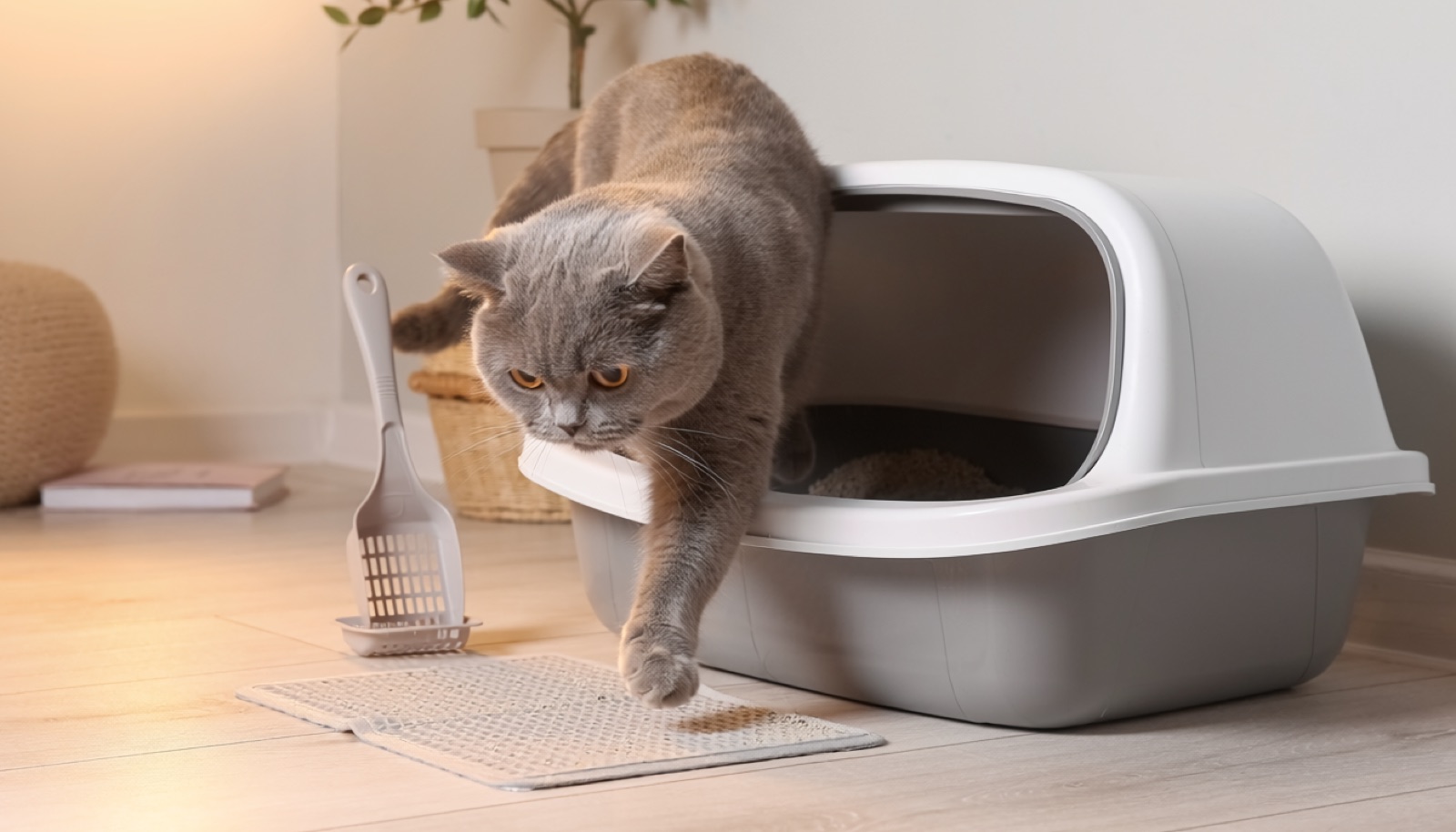
Not universally, but they are a fair suspect when troubleshooting. A hood concentrates odour inside the box where the cat is, blocks the sightlines cats prefer while eliminating, and creates one entrance that a housemate cat can guard. Some cats genuinely like the privacy; others quietly stop using the box and pick your laundry pile instead. Removing the lid costs nothing, so make it an early experiment. Give the open box two weeks before judging the result.
Related Saskatoon Guides
Fix the Box, Keep the Cat
Vet first, setup second, stress third. And if you are adding a cat, Saskatoon rescues place cats with litter habits already proven in foster care.
Browse Available Saskatoon Cats →New cat? Start with these care guides
Everything a new adopter needs to set up a safe, happy home.