The short answer
Buy a hard-sided carrier that opens from the top and front, then spend a couple of weeks making it a normal, safe napping spot before you ever need it. In the car, secure the carrier so it cannot slide, drape a towel over it, and keep things cool and calm. A pheromone spray in the carrier beforehand helps. Never leave a cat in a parked car, and never sedate without your vet. Some links here are Amazon affiliate links; we may earn a small commission at no extra cost to you, and it never changes what we recommend.
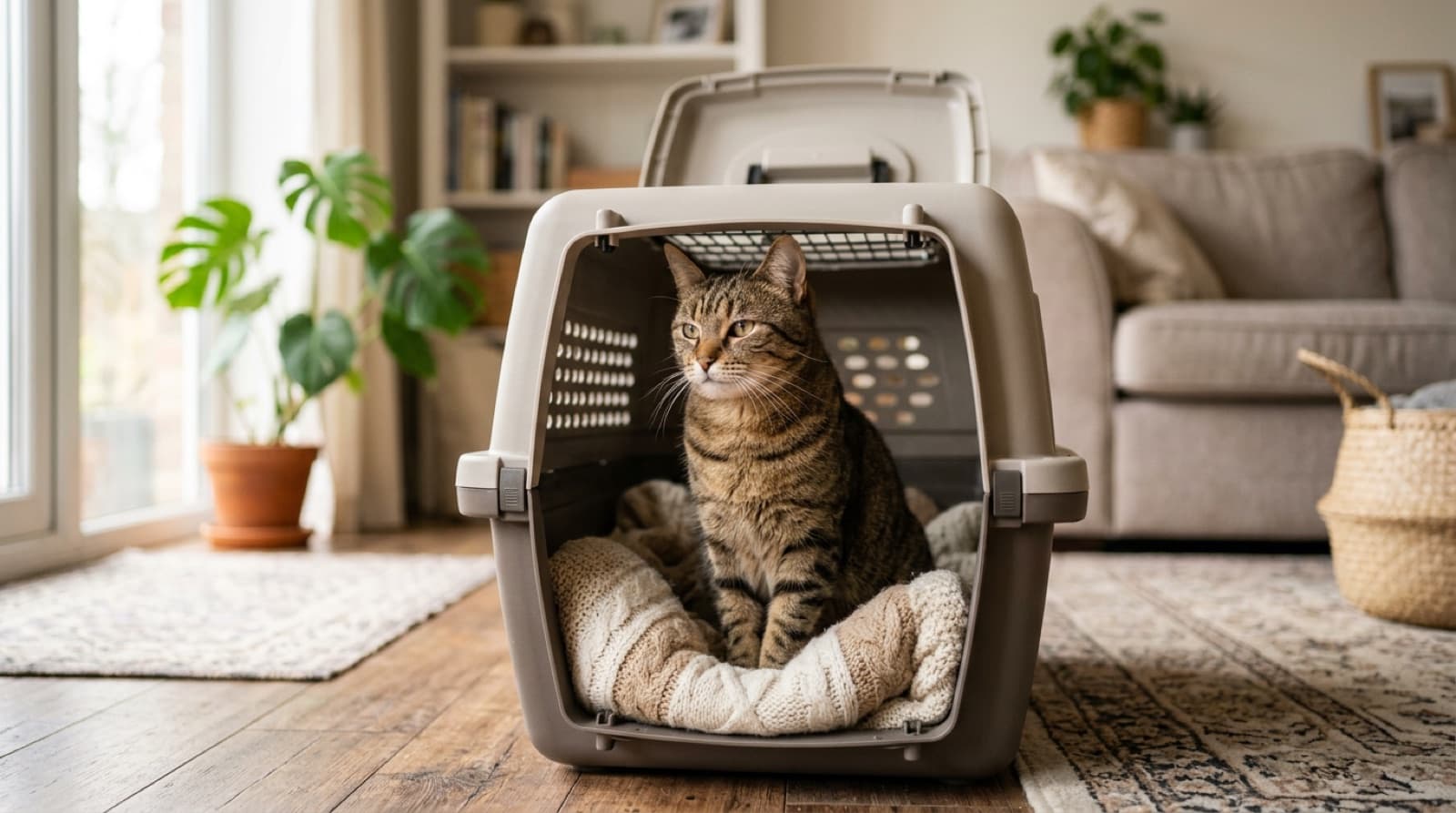
Ask any veterinary team what would make travel easier for cats and they say the same two things, and neither is a gadget: the right carrier, and a cat that already trusts it. Almost everything else, car sickness, the yowling, the claws-out struggle at the clinic door, traces back to a cat that only ever meets its carrier moments before something frightening. Fix the carrier and the relationship first, and the rest of this guide gets much shorter in practice.
Start with the right carrier
The carrier is your cat's portable safe den, so its design matters more than any other choice you make. International Cat Care and the American Association of Feline Practitioners both point to the same features. Choose one that is hard-sided and sturdy, not cardboard or flimsy fabric, so it holds its shape, protects the cat, and cleans easily if soiled. Most important, get one that opens from both the top and the front, ideally with a removable top half. That single feature changes everything: you can lower a frightened cat gently down into the base instead of shoving a braced cat through a small door, and your vet can lift the top off and examine the cat while it stays sitting calmly in the familiar base. Size it so the cat can stand, turn around and lie down, but not so large that it slides around in the car, and check for secure, quiet latches. A good top-and-front-loading hard carrier is a buy-it-once item.
Then do the step everyone skips
Here is the highest-leverage, lowest-cost thing you can do, and hardly anyone does it: leave the carrier out permanently, as ordinary furniture. When the carrier lives in a closet and only appears on vet day, it becomes a reliable warning sign, and the cat hides at the sight of it. When it lives open in a room the cat likes, with a familiar-smelling liner or pad inside, and you toss treats and feed the occasional meal in it, it becomes just another good napping spot. The AAFP guidance is to encourage the cat in voluntarily and never chase or force it. Once the carrier is neutral, practise the mechanics too: pick it up, carry it to the car, even take a short drive around the block, so travel day is not the first time any of it happens.
In the car
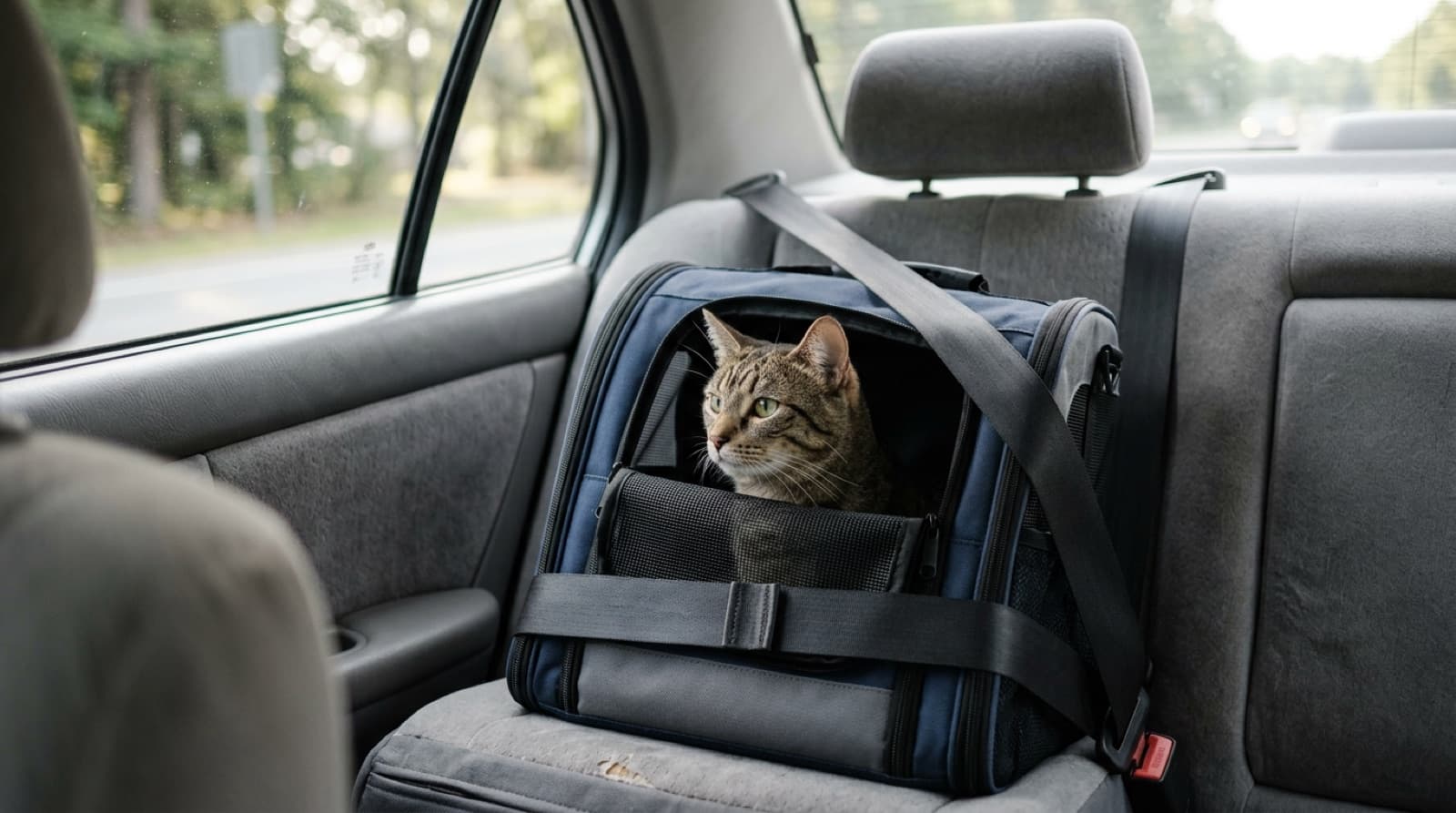
An unsecured carrier can slide, tip, or become a projectile in a sudden stop, which frightens the cat and endangers everyone. Both the AAFP and VCA stress securing the carrier: run the seatbelt through the handle or anchor it in the footwell with a carrier tether, never a loose carrier on a seat, and never in the front passenger seat, where a deploying airbag can crush it. Keep the car cool and quiet, and drape a towel partly over the carrier to cut the visual stimulation while leaving ventilation open. Motion sickness, drooling and vomiting, is common and mostly stress-driven in cats that rarely travel, so a small meal or an empty stomach for a few hours beforehand helps; for a cat that is severely car sick, ask your vet rather than reaching for anything yourself.
Never leave a cat in a parked car
Not for a few minutes, not with the windows cracked, not on a mild day. On a 24°C day the inside of a car can pass 34°C within ten minutes and climb well past 38°C soon after, and heatstroke causes irreversible organ damage and death. This one is absolute, with no exceptions. If you are travelling alone and need to stop, the cat comes with you or you do not stop.
Breaking the vet-visit stress cycle
The vet trip is the most common travel a cat does and the most stressful, and it builds a self-reinforcing loop: carrier, car, clinic, fear, and a worse experience next time. The whole point of the carrier work above is to break that loop at its start. On top of it, spray a synthetic feline facial pheromone inside the carrier about fifteen to thirty minutes before loading, so it has time to disperse, and never spray it directly on the cat. Keep the towel over the carrier in the waiting room, stay calm yourself, and where you can, choose a cat-friendly clinic that handles cats gently. For a genuinely severe traveller, vets sometimes prescribe a pre-visit anti-anxiety or anti-nausea medication, and if yours does, they will usually have you trial the dose at home first. That is a conversation to have with your vet, not a decision to make in the pharmacy aisle.
Long trips and moving house
A house move is one of the highest-risk moments for a cat to escape, with disrupted routines, open doors, and movers coming and going, so the prep starts before moving day. Update the microchip registration and the ID tag first, with the new address and phone number on file before you move, because that is exactly when a cat is most likely to slip out. Bring the used litter and familiar bedding, toys and scratcher so the scent stays constant rather than starting fresh, and in the new home set up one safe room, food, water, litter and a hiding spot, and let the cat decompress there before it has the run of the place. It is the same safe-room approach as settling in a newly adopted cat. For the journey itself, pack a travel litter box for stops and a collapsible bowl with water from home to avoid an upset stomach. And do a fresh cat-proofing sweep of the new place before the cat arrives.
Flying with a cat
Most small cats travel in-cabin, under the seat in an airline-compliant soft carrier, which vets prefer to the riskier cargo hold, where temperature and pressure are far less controlled. In-cabin pet slots are limited, so confirm the specific airline's size rules and book the pet reservation early, and measure against that airline's stated dimensions rather than trusting a generic “airline approved” label. On sedation, the Canadian Veterinary Medical Association and airlines generally advise against it for flights, because sedatives can impair breathing and temperature regulation at altitude, where the margin for error is smaller. As always, follow your vet's specific advice for your cat.
Talk to your vet, and never sedate on your own
Check with your vet before any travel beyond a routine short trip, and always for a senior cat or one with a health condition. Sedation carries real breathing and temperature-regulation risks and should only ever happen under veterinary direction. The products here, a good carrier, a liner, a pheromone spray, a tether, are comfort and safety aids; they help a cat cope, but they do not treat anxiety, nausea, or illness. Senior cats in particular tolerate travel less well, so see our senior cat care guide before a big trip.
The first trip is the ride home
Get the carrier right before adoption day. Browse adoptable cats from rescues across Canada.
Browse Adoptable Cats →Frequently asked questions
How do I travel with a cat?
Keep the cat in a sturdy carrier it is already comfortable in, secure that carrier in the car so it cannot slide or tip, keep things cool and calm, and never leave the cat alone in a parked car. The single biggest predictor of a smooth trip is a cat that already sees the carrier as a safe place, which takes a few weeks of familiarization beforehand. For anything longer than a routine trip, or for a cat with health issues, talk to your vet first.
What is the best cat carrier?
A hard-sided carrier that opens from both the top and the front, ideally with a removable top half, is the vet-recommended choice (per the AAFP and International Cat Care). Top-loading lets you gently lower a scared cat in rather than wrestling it through a front door, and a vet can lift the top off to examine the cat while it stays sitting calmly in the base. It should be just big enough for the cat to stand, turn around and lie down, with secure latches and good ventilation.
How do I get my cat used to a carrier?
Leave the carrier out permanently as ordinary furniture, door open, with familiar bedding inside, and feed treats and meals in it so it becomes a normal, positive napping spot long before any trip. The mistake almost everyone makes is storing the carrier in a closet and only producing it on vet day, which teaches the cat that the carrier means something scary. Never chase or force the cat in; let it choose to go in.
How do I calm a cat in the car?
Spray a synthetic feline facial pheromone inside the carrier about fifteen to thirty minutes before you leave (never directly on the cat), drape a towel partly over the carrier to cut visual stress, keep the car cool and quiet, and stay calm yourself, since cats read your tension. For genuinely severe anxiety, ask your veterinarian about options rather than medicating on your own.
Do cats get car sick?
Yes, motion sickness is common in cats and shows up as drooling, vomiting or restlessness, and it is mostly driven by stress in cats that only travel once or twice a year (VCA). A small meal or an empty stomach for a few hours before travel helps reduce nausea. For a cat that is severely or repeatedly car sick, ask your vet, who can advise on anti-nausea options.
Can I sedate my cat for travel?
Only under your veterinarian's direction, never on your own. Sedatives can affect a cat's breathing and ability to regulate temperature, which is a serious risk in the air, where airlines and the AVMA generally advise against sedation. Vets often prefer carrier training and pheromones first, and if medication is warranted they will usually have you test the prescribed dose at home before travel day.
How do I travel long distance or move house with a cat?
Update the microchip registration and ID tag before you go, because a move is one of the most common times a cat gets lost. Bring familiar bedding and the used litter so the scent stays constant, pack a travel litter box and a collapsible bowl with water from home, and set up one safe room in the new place first so the cat can decompress before exploring the whole house. Keep the cat in a secured carrier for the journey and plan cool rest stops.
Can cats fly in the cabin?
Most small cats can fly in-cabin under the seat in an airline-compliant soft carrier, which vets prefer over the riskier cargo hold. You must confirm the specific airline's size rules and book the limited in-cabin pet slot well in advance, and check with your vet about your individual cat before flying, especially a senior or a cat with any health condition.