The short answer
A senior cat (commonly 10+, mature from about 7) needs twice-yearly vet exams with bloodwork, a monthly home weigh-in, a low-entry litter box, and a warm draft-free bed for Saskatoon winters. Adoption is the bargain of the city: Saskatoon SPCA cats are Pick Your Price from a $25 minimum donation, fully vetted, and SCAT adults are $175 ($260 for a bonded pair). Overnight emergencies go to the WCVM Veterinary Medical Centre (306-966-7126); call ahead, it is mandatory.
Heads up: This article is informational, not veterinary advice. The signs listed here are cues to call a vet, never a diagnosis; senior-cat conditions are confirmed with exams and bloodwork, not guesswork at home. Fees and emergency-intake rules are current as of July 2026 and change; confirm with the organisation before you rely on them.
Walk past the kitten room at any Saskatoon shelter and you will find the seniors: calm, dignified, overlooked, and waiting longest. The economics of adopting one here are almost strange. The Saskatoon SPCA runs a Pick Your Price program for cats and kittens: you set your own adoption fee from a $25 minimum donation (suggested minimum $165), and every cat still goes home spayed or neutered, vaccinated, and microchipped, with a free vet visit included. SCAT Street Cat Rescue, foster-based in Saskatoon since 1996, adopts out cats a year and older for $175, or $260 for a bonded pair, with an FIV/FeLV test, tattoo, microchip, and a month of free insurance in the package.
What a senior asks of you in exchange is attention, not labour. Older cats develop a short, predictable list of conditions, and outcomes hinge on how early someone notices. The owner who weighs the cat monthly and books two vet exams a year catches problems at the cheap, treatable stage. That habit set is this article. For the settling-in period right after adoption, our first week with a rescue cat guide covers those early days; this one is about the long, good stretch that follows.
Surgery is the one senior-cat expense you can cross off entirely: every cat from the Saskatoon rescue network arrives already fixed. If you have an unfixed older cat at home instead, our Saskatoon cat spay/neuter guide covers costs and the city's subsidized program.
What “Senior” Actually Means
The working convention among vets: mature from about 7, senior from about 10. Indoor cats regularly reach their late teens, so “senior” describes the last third of life, not the last chapter. The AVMA's senior pet guidance treats it as a shift in care intensity: more frequent exams, routine bloodwork, closer attention to weight and mobility.
A 7-year-old “mature” cat adopted through Pick Your Price could reasonably share your home for another decade. That is the quiet arithmetic of senior adoption in Saskatoon: near-kitten lifespans left on the clock, at a fraction of the attention (and none of the destruction) a kitten brings.
Aging shows up in the body before the behaviour. A senior can look identical at 9 and 12 while kidney values drift the whole time, which is why the exam schedule below does the heavy lifting rather than your eyeballs.
Pick Your Price: The Saskatoon Senior-Cat Bargain
| Organisation | Tier | Fee |
|---|---|---|
| Saskatoon SPCA | Cats & kittens (Pick Your Price) | From $25 (suggested $165) |
| Saskatoon SPCA | Satellite-location cats | $165 |
| SCAT Street Cat Rescue | Adult cat (1+ years) | $175 (bonded pair $260) |
| SCAT Street Cat Rescue | Kittens (<6 months / 6–12 months) | $225 / $200 |
Saskatoon SPCA adoptables come spayed/neutered, vaccinated, and microchipped with a free vet visit (306-374-7387). SCAT fees include vet care and vaccines to the adoption date, spay/neuter, microchip, ID tattoo, an FIV/FeLV test, one month of free pet insurance, and a free VCA exam certificate (306-955-7228). Confirm current fees before visiting.
Notice what the pricing rewards. Kittens carry the highest fees; adults and seniors carry the lowest, and Pick Your Price puts the floor at a $25 donation for the same fully vetted package. A bonded pair of older cats at SCAT for $260 is two settled companions who keep each other company through your workday. Many Saskatoon seniors lose their homes to circumstances, not behaviour: an owner's death, a move, new allergies. (Facing that yourself? Our rehoming a cat in Saskatoon guide lays out the humane options.)
The Four Conditions That Fill Senior Vet Visits
Learn these four patterns and you know when to pick up the phone. What you cannot do is diagnose any of them from the couch; each needs an exam and bloodwork, and each is dramatically easier to manage early.
Dental disease
Mouth pain is the stealth reason older cats stop eating, and a cat off its food for more than a day is a problem on its own. Shelter seniors in Saskatoon often get dental work done before adoption; ask for the medical file. For a cat at home, a vet look inside the mouth is quick, and a cleaning under anaesthetic (after senior bloodwork) frequently produces a visibly happier cat within weeks.
Arthritis
Cats do not limp the way dogs do; they just quietly delete the movements that hurt. Cold makes it worse, and Saskatoon Januaries average -18°C overnight, so a stiff cat in a chilly back room is stiff all winter. Your vet can confirm arthritis and talk through pain management options. Never reach for human painkillers; acetaminophen and ibuprofen are toxic to cats.
Chronic kidney disease
Kidney disease creeps. By the time a cat looks sick, the disease has usually been working for a long while, which is exactly why senior bloodwork and a urine test at routine exams matter: they flag kidney changes early, when diet and management can slow things down. A senior cat that suddenly drinks like a dog has told you something. Book the vet visit.
Hyperthyroidism
An overactive thyroid cranks the metabolism up, so appetite goes up while the weight goes down. New owners often celebrate the appetite. In an old cat, hungry-but-shrinking is a warning pattern, not vigour. Diagnosis is a blood test, treatment options exist, and outcomes are good when it is caught early. Let your vet make the call.
The Care Routine: Two Exams, Twelve Weigh-Ins
Two vet exams a year. The senior convention doubles the schedule because a lot of feline aging fits inside six months. Ask your Saskatoon vet for a senior wellness plan: physical exam, bloodwork, urine test. Those screens find kidney and thyroid changes while they are still numbers on a page instead of symptoms on your floor.
One weigh-in a month. The most valuable free diagnostic in senior-cat care. Kitchen scale, baby scale, or you-plus-cat on the bathroom scale minus you. Log it. Fur hides weight loss until it is dramatic; the log catches a drift in weeks.
Read the litter box. You scoop it daily regardless. Bigger or more frequent urine clumps alongside a thirstier cat is the classic early kidney flag. Straining without producing urine is different: that is an emergency, today, not a note for the next appointment.
Watch the food bowl in both directions. Eating less can mean mouth pain. Eating far more while losing weight points at the thyroid. Either change lasting more than a few days is worth a call.
Warm Rooms, Short Commutes: Winterizing for an Old Cat
Saskatoon January nights average -18°C, and a handful of nights each winter reach -30°C or colder. Inside a heated house that still means cold floors, chilled window ledges, and drafty entryways, and arthritic joints register all of it. The fix is layout, not a thermostat war:
- ✓A padded bed on an interior wall, away from exterior doors and window drafts, ideally slightly elevated off the cold floor with an easy step up.
- ✓A daytime sun spot. A folded blanket on a south-facing ledge or couch arm gives the cat a solar-heated option; seniors will schedule their day around it.
- ✓Everything on one floor. Food, water, litter box, and bed on the level where the cat lives. A stiff cat asked to commute to a cold basement litter box in February will eventually decline the trip.
- ✓Low-entry litter box plus a night light. Old hips and dim eyes are a bad combination at 3 a.m. Both fixes cost almost nothing.
- ✓Ramps or steps to the favourite perch. Restore the windowsill and the bed without the painful leap. A storage bench pushed against the bed frame works fine.
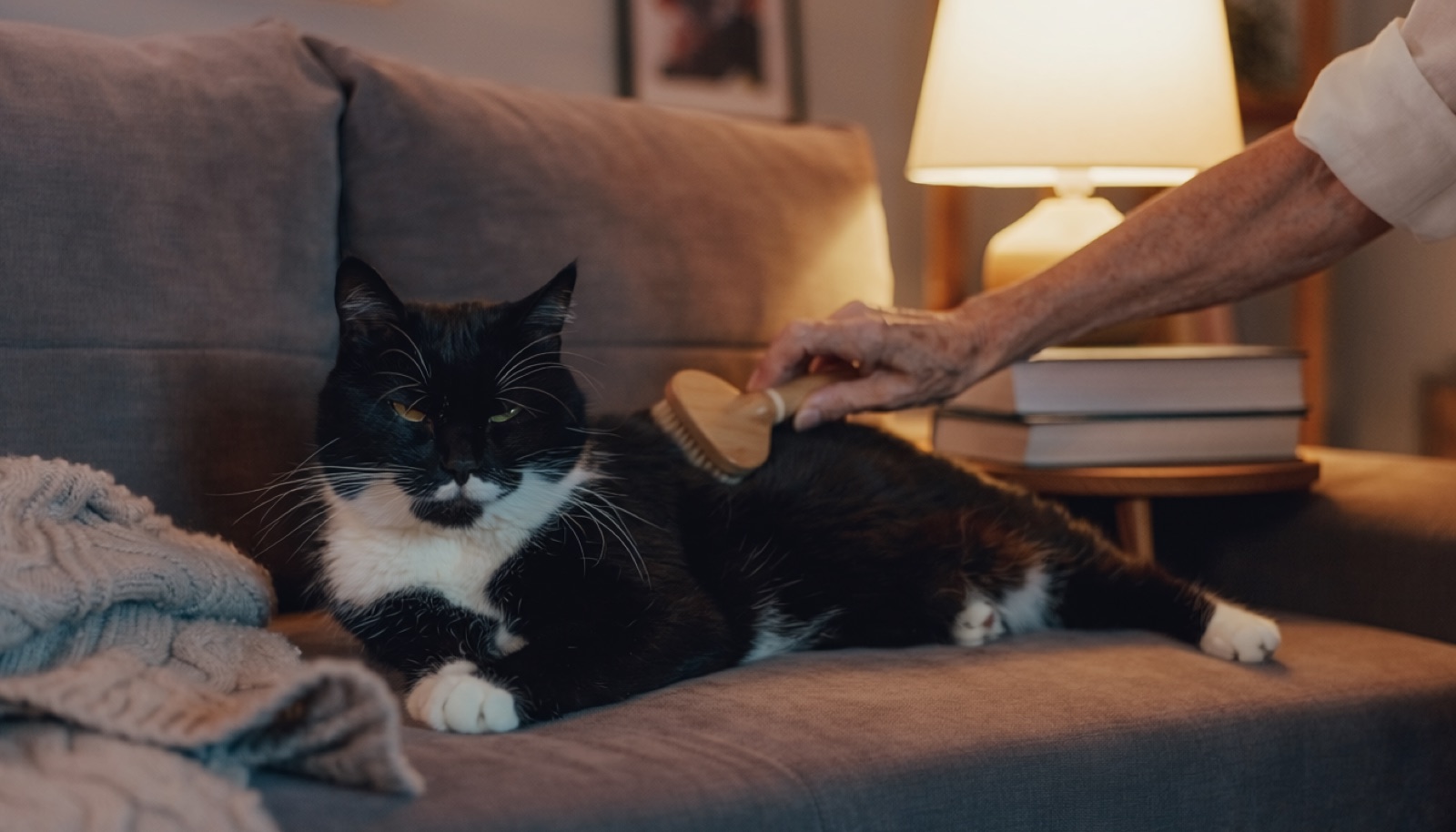
- ✓Help with grooming. A few minutes of soft brushing each week covers the spots stiff joints gave up on, and doubles as a lump, mat, and weight check.
It should go without saying on the prairie, but: senior cats live indoors. Slower reflexes, thinner cold tolerance, and Saskatoon traffic are a bad mix, and the city's at-large bylaw applies to cats in any case. Our indoor vs outdoor cats in Saskatoon guide owns that topic in full.
The $23.50 Detail: Saskatoon Licenses Cats at Any Age
Saskatoon's Animal Control Bylaw requires every cat over 4 months to be licensed within 30 days, and adopting a 14-year-old does not exempt you. The 2026 fee is $23.50 per year for a spayed or neutered cat ($52.50 intact). Since every shelter senior arrives fixed, you pay the low rate.
One senior-friendly wrinkle: a physical tag is not required if the cat is microchipped and the chip number is on file with the City. Shelter cats come microchipped, so licensing an adopted senior is a registration exercise, not a new collar argument with a cat who has opinions. The licence is also what gets a quiet, indoor-only senior identified and returned quickly if a door gets left open.
Emergencies in Saskatoon: The Rules Are Specific
Saskatoon's only true 24/7 small-animal emergency service is the WCVM Veterinary Medical Centre at the University of Saskatchewan, 52 Campus Drive, small-animal emergency line 306-966-7126. The entrance is on the east side of the building, off Veterinary Road. Before 10 p.m., Stonebridge Veterinary Hospital (306-244-2815) offers extended evening hours; call ahead there as well.
Know the overnight rules before the night you need them
- Between 10 p.m. and 7:30 a.m., WCVM intake is restricted to life-threatening (“red zone”) cases only
- Calling ahead is mandatory, and services have been temporarily reduced as of mid-2026, which makes the call even more important
- If the phones go unanswered overnight, proceed to the hospital anyway and use the telephone in the foyer
- Cats arrive in a carrier; keep one accessible at home, not buried in storage
For a senior cat, treat these as red-zone symptoms until a vet says otherwise: straining without producing urine, open-mouth or laboured breathing, sudden hind-leg collapse, repeated vomiting, or a cat that cannot be roused. Do not wait for morning to see if it improves.
Browse adoptable Saskatoon cats
Pick Your Price starts at a $25 donation for a fully vetted cat. The seniors are the calm ones at the back, and they have been waiting the longest.
See Available Saskatoon Cats →Frequently Asked Questions
What age is a cat considered senior?
The common veterinary framing is mature from about 7 and senior from about 10, and plenty of indoor cats push past 18. It is a care category rather than a deadline: senior status means twice-yearly exams, bloodwork screens, and a closer eye on weight, not that the cat is near the end. Saskatoon shelters use their own tiers for pricing; the Saskatoon SPCA prices all cats through Pick Your Price, and SCAT Street Cat Rescue counts any cat 1 year and up as an adult at $175.
How much does it cost to adopt a senior cat in Saskatoon?
Less than almost anywhere. The Saskatoon SPCA runs Pick Your Price for cats and kittens: you choose your adoption fee starting from a $25 minimum donation, with a suggested minimum of $165. SCAT Street Cat Rescue charges $175 for cats 1 year and up, or $260 for a bonded pair. Every adoptable at both organisations is spayed/neutered, vaccinated, and microchipped before going home. Add the city cat licence ($23.50 for a fixed cat) and you are still under what a single vet visit costs.
What is included in a Saskatoon SPCA Pick Your Price adoption?
Every Saskatoon SPCA adoptable comes spayed or neutered, vaccinated, and microchipped, and includes a free vet visit after adoption. The Pick Your Price model (minimum $25 donation, suggested $165) does not change what the cat comes with; it changes what you pay. SCAT goes further still on paperwork: their fee includes an FIV/FeLV test, ID tattoo, microchip, one month of free pet insurance, and a free exam certificate for a VCA clinic.
How often should a senior cat see the vet?
Twice a year is the convention for seniors, up from the annual exam younger cats get. Cats compress a lot of aging into each calendar year, and the conditions that dominate senior care (kidney disease, thyroid disease, dental disease, arthritis) all reward early detection through bloodwork and a hands-on exam. If your cat already has a diagnosis, your Saskatoon vet may set a tighter schedule. Ask for a written estimate for the senior panel; pricing varies clinic to clinic and asking is normal.
What health problems should I watch for in an old cat?
Four cover most of it: dental disease (bad breath, reluctant eating), arthritis (skipped jumps, stiffness), chronic kidney disease (more thirst, more urine, slow weight loss), and hyperthyroidism (big appetite with falling weight). None of these is diagnosable at home. The signs are your cue to book a vet visit, and all four are far more manageable caught early than late. That is the whole logic behind twice-yearly senior exams.
How do I know if my senior cat is in pain?
Cats hide pain, so look for subtraction rather than complaint: places the cat no longer goes, jumps it no longer makes, grooming it no longer does. A senior that stops sleeping on your bed, hesitates at stairs, or develops a greasy unkempt strip along its lower back is very likely sore, not lazy. Behaviour changes count too; a formerly social cat that starts hiding deserves a vet exam. When in doubt, book the visit and describe exactly what changed and when.
Where do I take my cat in Saskatoon in an overnight emergency?
The WCVM Veterinary Medical Centre at the University of Saskatchewan (52 Campus Drive), phone 306-966-7126. It is the city's only true 24/7 small-animal emergency service, but know the rules: between 10 p.m. and 7:30 a.m. it accepts life-threatening cases only, and calling ahead is mandatory. If phones go unanswered overnight, proceed anyway and use the telephone in the foyer. Bring the cat in a carrier. Before 10 p.m., Stonebridge Veterinary Hospital (306-244-2815) offers extended evening hours; call ahead there too.
Does a senior cat need a licence in Saskatoon?
Yes. Saskatoon's Animal Control Bylaw requires every cat over 4 months to be licensed within 30 days, and there is no seniors' exemption at the other end of life. The 2026 fee is $23.50 per year for a spayed or neutered cat ($52.50 intact). One useful wrinkle: a physical tag is not required if your cat is microchipped and the chip number is on file with the City, which suits older cats that have worn a collar grudgingly for 15 years. Since shelter seniors come microchipped, registration is mostly paperwork.
Do senior cats need a different litter box setup?
A lower one, and a closer one. Stepping over a high wall is a genuine obstacle for arthritic hips, and the first sign is often a puddle beside the box rather than in it. Use at least one low-entry box, put a box on every floor the cat uses, and add a night light nearby for aging eyes. If a reliably clean older cat starts missing the box, treat it as a medical question first (pain, kidneys, urinary trouble) and a behaviour question second. Your vet can rule the medical causes out.
How do I keep an older cat warm through a Saskatoon winter?
January in Saskatoon averages -18°C overnight and dips to -30°C or colder on a handful of nights each year. Indoors, that translates to cold floors and drafty windows, which old joints feel. Set up a padded bed against an interior wall away from doors, add a blanket in a sunny south-facing window for daytime, and shorten the commute by keeping food, water, and a litter box on the floor where the cat lives. Ramps or a step stool restore access to favourite perches without painful jumps. And seniors stay indoors, always.
Why adopt a senior cat instead of a kitten?
Because the guesswork is gone. With a senior, the shelter can tell you truthfully whether you are taking home a lap cat, a dignified roommate, or a chatterbox, and the cat you meet at the shelter is the cat you live with. Seniors arrive fixed, vaccinated, microchipped, and litter-trained, and they sleep through the night. Kittens are a joy and also a project. For students, apartment dwellers, and anyone who wants companionship without chaos, the senior room is where the matches are, and Pick Your Price makes it the cheapest room in the building.
My old cat is getting thin. Is that just age?
No. Thin is never just old. Gradual weight loss is the earliest visible thread of the most common senior conditions: kidney disease, hyperthyroidism, and dental pain all start there, and fur hides it until a lot of weight is gone. Weigh your cat monthly on a kitchen or baby scale and write the number down; a steady downward drift over two or three months is a vet appointment even if everything else seems normal. Bloodwork usually finds the answer, and the early version of the answer is the treatable one.
Related Saskatoon Guides
Name Your Price. Change a Whole Life.
Senior cats arrive fixed, vaccinated, microchipped, and fully themselves. Pick Your Price at the Saskatoon SPCA starts at a $25 donation.
Browse Available Saskatoon Cats →New cat? Start with these care guides
Everything a new adopter needs to set up a safe, happy home.