The short answer
Regina winter dog care comes down to windchill, not air temperature. Most healthy dogs walk fine to about -15. Below -25 windchill, keep it to quick potty breaks. At -30 to -40, which Regina hits several times most winters, skip the walk and use indoor exercise. Protect paws from road salt with balm and a post-walk rinse, put a coat on short-coat and small dogs, watch for frostbite on ear and tail tips, keep antifreeze locked away, and lean on indoor enrichment when the cold keeps you home. A rescue dog still settling needs extra patience because the cold limits the long walks that usually help.
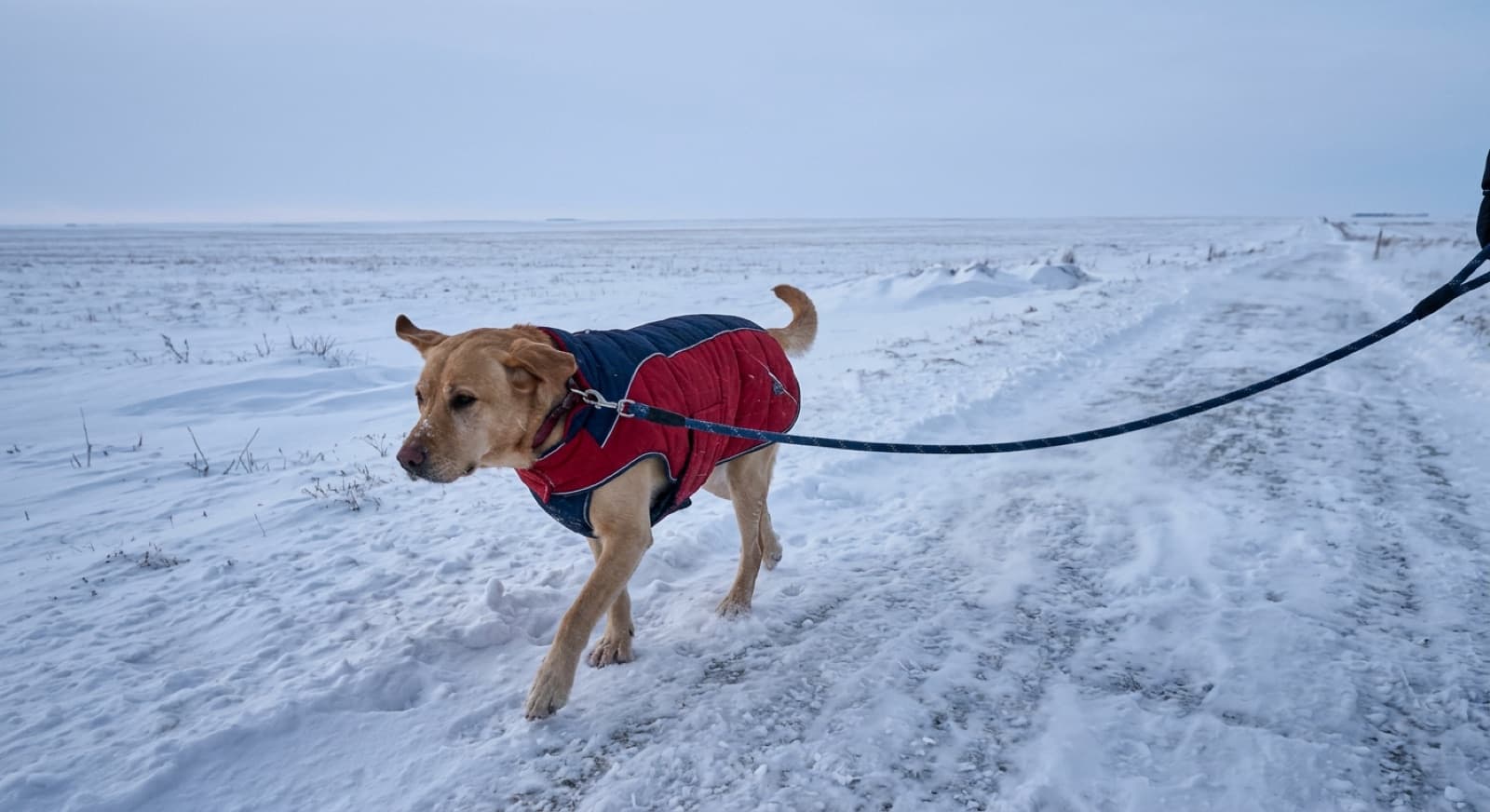
Why Regina cold changes everything
Regina winter is the real prairie deal. Air temperatures regularly sit between -15 and -30 from December through February, and a hard cold snap can push past -30 air temperature with windchills of -40 or colder. The city sits on flat open prairie with almost no natural wind shelter, so the wind cuts harder here than it does in cities ringed by hills or forest.
That wind is why windchill, not the thermometer reading, drives every decision in this guide. A -18 day with a stiff wind out of the northwest can hit a windchill of -30, and your dog feels the windchill, not the air number. Exposed skin and paw pads chill far faster in wind, and frostbite risk on ear tips and tail tips climbs sharply once windchill passes about -28.
If you have moved to Regina from a milder city, the adjustment is real. Walks that were routine in Vancouver or Toronto become genuinely risky here on the coldest days. The good news is that the routine is simple once you build it: check the windchill, protect the paws, dress short-coat dogs, keep cold walks short, and have an indoor plan for the days it is unsafe to go out.
The rest of this guide builds out that routine, with the warning signs every Regina owner should know cold.
When is it too cold to walk?
There is no single magic number because coat type, size, age, and health all shift the line. Use the windchill, watch your individual dog, and lean on these rough bands.
- Down to -15 windchill: Most healthy medium and large dogs with a normal coat are fine for a normal walk. Small and short-coat dogs may want a coat at the colder end.
- -15 to -25 windchill: Shorten the walk. Watch the dog closely. Coat and paw protection for short-coat and small breeds. Seniors and puppies move indoors earlier.
- -25 to -28 windchill: Quick potty breaks only for almost every dog. Even double-coated breeds should keep it short. Frostbite risk on ears, tail, and pads is real now.
- -30 and colder windchill: Skip the outdoor walk. A 5-minute potty break in a coat is the most exposure any dog should get. Use indoor exercise for the rest of the day.
Read your dog in real time. Shivering, hunching, lifting paws off the ground, whining, or trying to turn back are all signs the walk is too cold. A double-coated Husky who is happily trotting along in -28 is telling you something different than a Boxer who is hopping from foot to foot. Trust the dog in front of you over the chart.
Puppies, senior dogs, very small dogs, short-coat breeds, and any dog recovering from illness or surgery all feel the cold sooner. For those dogs, move every band up by about 10 degrees and plan more indoor time through the deep winter.
Frostbite and hypothermia: know the signs
These are the two cold-weather emergencies every Regina owner should be able to spot. Knowing the early signs buys you time. The American Veterinary Medical Association publishes a clear cold-weather pet safety guide worth reading before deep winter.
Frostbite
Frostbite hits the extremities first: ear tips, tail tip, paw pads, and for short-coat dogs the belly and groin. The skin may look pale, grey, or bluish, feel cold and firm to the touch, and the dog may favour a paw or hold up a foot. As the area warms it can swell, turn red, and become painful. Do not rub the area, and never use hot water or a heating pad. Warm the dog slowly with body heat or lukewarm water and call your vet. Treatment is a vet call, not a home job.
Hypothermia
Hypothermia is the dangerous one because the worst sign is when the shivering stops. Early on you see strong shivering, the dog seeking warmth, and reluctance to keep moving. As body temperature drops, the shivering ends and the dog becomes weak, stiff, lethargic, and slow to respond. Get the dog inside, dry, and wrapped in warm towels or a blanket immediately. If the dog does not warm and perk up within about 20 minutes, or seems disoriented or unusually sleepy, call your vet or a Regina emergency clinic right away.
Both risks climb fast if the dog gets wet, which is why slush puddles, overflow near storm drains, and thin ice over Regina ponds are more dangerous than dry cold. A wet dog in a prairie wind loses heat far faster than a dry one. If your dog gets soaked on a cold walk, head straight home and dry it off.
The Regina winter kit
A prairie winter kit is built around insulation and paw protection, not the rain gear a coastal owner needs. Here is what actually earns its keep.
1. An insulated, wind-resistant coat for short-coat and small dogs
If your dog is a Boxer, Pit Bull mix, Whippet, Greyhound, Doberman, Chihuahua, or a similar short-coat or small breed, a coat is gear, not a fashion choice. Look for full back and belly coverage, a wind-resistant outer shell, and a snug fit that does not slide around. Puppies and seniors of any breed benefit too. Thick double-coated breeds usually do not need one. The signal is the dog: shivering or hunching means it needs more insulation or a shorter walk.
2. Paw balm or booties
Regina streets and sidewalks get salt and de-icing grit through winter. Salt cracks paw pads, stings existing cracks, and upsets the stomach if licked off. A dog-safe paw balm or wax before the walk creates a barrier. Booties solve the salt and cold problem completely for dogs that tolerate them, though many dogs hate them at first and walk like the floor is lava. If your dog refuses boots, balm plus a thorough rinse after the walk works fine.
3. The paw-rinse station by the door
Keep a small bowl of lukewarm water and a towel by the door. After every salt-route walk, dip each paw, wipe between the toes, and towel dry. This pulls off salt and grit before the dog licks it, and it lets you check for packed snow-ice between the pads, which can ball up into hard, painful chunks on long-toe-hair breeds. Trim the hair between the pads flush before deep winter to cut down on ice balls.
4. Reflective and light-up gear
Regina sunsets in December land in the late afternoon, so most working owners walk in the dark on both ends of the day. A reflective collar, a reflective leash, and a clip-on LED light on the harness are cheap and make your dog visible to drivers on snowy streets. Snowbanks narrow the roads and push pedestrians closer to traffic, so visibility matters more in winter than any other season.
5. A long line for recall on ice
Snow muffles sound and dogs hear recall less clearly in winter. A 20 to 30 foot long line lets a dog that still needs recall practice run and sniff without going fully off-leash on icy footing. This matters most for a newly adopted rescue whose recall you do not yet trust. Save true off-leash freedom for fenced areas like the Mount Pleasant or Cathy Lauritsen off-leash parks.
The Regina winter daily routine
A solid cold-weather routine looks like this:
- Check the windchill first. Environment and Climate Change Canada's Regina forecast gives the windchill, not just the air temperature. That number tells you whether this is a normal walk, a short walk, or an indoor day.
- Suit up before the door. Coat on short-coat and small dogs. Paw balm or booties on any treated route. Reflective gear if it is dark. Your own proper winter gear, because a cold owner cuts the walk short for the wrong reason.
- Keep cold walks short. On a -20 windchill day, two or three short outings beat one long walk. Shorter trips limit exposure and let you check paws and warmth between them.
- Pick sheltered, lit routes. The pathways around Wascana Park and Wascana Lake, residential streets near A.E. Wilson Park, and Douglas Park offer some wind shelter and good lighting. Open, exposed stretches catch the worst of the prairie wind.
- Do the paw routine at the door. Rinse paws on salt-route days, towel dry, and check between the toes for ice and salt. Inspect pads for cracks.
- Have an indoor backup. When the windchill says stay home, run a training session or hand out a puzzle feeder instead. Decide this before the cold snap, not during it.
This routine adds five to ten minutes per walk over summer. After a couple of weeks it becomes automatic, and it heads off the frostbite, paw, and stir-crazy problems that owners who skip it run into by February.
Browse adoptable dogs in Regina
Regina Humane Society and Bright Eyes Dog Rescue list adoptable dogs year-round. Match by coat type and energy to find a dog suited to prairie winters, all in one place.
See Available Regina Dogs →Indoor exercise for housebound days
On a -35 day, the walk is off the table, but a working Border Collie, Husky, or shepherd cross still needs to burn energy. Owners who skip exercise entirely on cold days end up with chewing, barking, and a restless dog. Mental work is the answer, and it tires a dog out as much as a walk.
- Training sessions. Five to fifteen minutes of high-engagement training counts as real mental exercise. Polish recall, teach a new trick, run duration sits and downs. Several short sessions a day add up fast.
- Snuffle mats and puzzle feeders. Hide kibble in a snuffle mat or a puzzle toy. Replace the food bowl entirely on indoor days so every meal is brain work.
- Hide and seek. Have someone hold the dog, hide behind furniture or in another room, and call them. Free, easy, and dogs love it.
- Scent games. Hide a high-value treat in one of three boxes and let the dog find it. Build up to multiple hides across rooms. This is genuine cognitive work.
- Stairs. If you have stairs, a few slow, controlled sets up and down is physical exercise for a fit adult dog.
- Indoor fetch or tug. A hallway, a basement, or a garage with the car out works for a short fetch or tug session for dogs that need to move.
Plan the indoor side of the routine before the cold snap arrives. A dog with a puzzle feeder and two training sessions on a -35 day is a calmer dog than one stuck staring out the window.
Other Regina winter hazards
Antifreeze
Ethylene glycol antifreeze tastes sweet, dogs will drink it, and even a small amount can be fatal. Winter is the high-risk season because of garage spills, leaking vehicles, and driveway puddles. Clean up spills immediately, store containers sealed and out of reach, and steer your dog clear of coloured puddles in garages and parking lots. If you suspect ingestion, treat it as an emergency and call your vet or a Regina emergency clinic at once. The treatment window is short.
Thin ice and frozen water
Ice over Wascana Lake and Regina ponds is not uniformly safe, and a dog that breaks through cannot always climb out. Cold-water immersion brings on hypothermia quickly. Keep your dog leashed near any frozen water unless you know the ice is thick and stable.
Ice balls and cracked pads
Long toe hair on breeds like Goldens, Aussies, and Bernese collects snow into hard ice balls between the pads that can cut and hurt. Trim the toe hair flush before winter and check between the pads on and after each walk. The freeze-thaw cycle and road salt also crack pads. Balm before, rinse after, and a vet check for any crack that bleeds or makes the dog limp.
Recall on snow and ice
Snow muffles sound, so dogs hear recall less clearly in winter, and icy footing makes a hard sprint riskier for joints. Keep a dog with shaky recall on a long line, and use fenced off-leash areas for free running. This is doubly important for a new rescue still learning that coming back is worth its while.
Senior dogs in winter
Joint stiffness in cold weather is real, and senior dogs feel it. Shorter, more frequent walks beat one long outing. A coat keeps the back and joints warmer during the walk, and a five-minute slow indoor warm-up before stepping out helps stiff older dogs. After the walk, towel dry and offer a warm, draft-free sleeping spot away from exterior doors.
Watch for new limping, reluctance to walk, or trouble on stairs after cold outings. Joint supplements like glucosamine and omega-3 fish oil help some seniors, but talk to your vet before starting anything. If your senior is refusing to walk at all in the cold, that is a vet conversation about pain management, not a dog to push through the cold.
Settling a new rescue dog through a prairie winter
Adopting in winter brings an extra wrinkle. A new rescue is already decompressing, and the long, calm walks that usually help a dog settle are limited by the cold. The fix is to lean harder on the indoor side and keep everything predictable.
- Give a warm, quiet base. A draft-free bed away from exterior doors and high-traffic areas gives the dog a safe place to retreat. Cold floors near doors are not it.
- Build a low-stress potty routine. A coat and paw protection make cold trips outside calmer. Keep them short and matter-of-fact so going out in the cold does not become a battle.
- Use indoor enrichment to bond. Training games, snuffle mats, and hand-feeding build trust and burn energy without needing a long cold walk. This is where the relationship gets built in winter.
- Keep recall on a long line. Until you trust the dog's recall, the long line keeps it safe on icy footing and muffled-sound days.
- Expect the 3-3-3 timeline to play out indoors. The decompression curve does not pause for winter. It just happens more inside, so do not read a quiet first few weeks as a problem.
For the full decompression playbook, see our first week with a rescue dog in Regina guide, which walks through the 3-3-3 rule step by step.
When to call a vet
Some winter problems are wait-and-see. Others need a same-day vet call. Here is the rough triage.
Call a vet today or go to emergency:
- Hypothermia signs that do not resolve within 20 minutes of warming: continued shivering or, worse, shivering that has stopped, plus weakness, stiffness, or confusion.
- Suspected frostbite: pale, grey, or bluish skin, cold and firm to the touch, the dog favouring a paw or ear.
- Suspected antifreeze ingestion. This is fatal without fast treatment.
- A paw pad crack that bleeds, or limping that does not settle after warming and rest.
- A dog that fell through ice or got soaked in freezing conditions and cannot warm up.
Book a routine vet visit within the week:
- Mild paw pad cracking you cannot keep ahead of with balm.
- Senior dog joint stiffness that affects walking.
- A dog that seems withdrawn, eats poorly, or changes behaviour noticeably through the dark months.
Know which Regina emergency clinic is closest to you before you need it, and keep the number in your phone. In a real cold-weather emergency, you do not want to be searching for it. For everyday concerns, your regular vet is the right call.
Frequently asked questions
How cold is too cold to walk a dog in Regina?
For most healthy medium and large dogs with a normal coat, walks are fine down to about -15 Celsius. Below that, shorten the walk and watch the dog. Once the windchill hits -25 to -28, keep walks to quick potty breaks for almost every dog. At a windchill of -30 to -40, which Regina sees several times most winters, skip the outdoor walk entirely and use indoor exercise instead. Small dogs, short-coat breeds, puppies, and seniors feel the cold sooner, so move them indoors earlier. The windchill number matters more than the air temperature because Regina sits on open flat prairie with very little wind shelter.
What are the signs my dog has frostbite?
Frostbite shows up first on the extremities: ear tips, tail tip, paw pads, and for short-coat dogs the belly and groin. Watch for skin that turns pale, grey, or bluish, feels cold and hard to the touch, and the dog favouring a paw or holding up a foot. As the area warms it may swell, redden, and become painful. Do not rub the area and do not use hot water or a heating pad, both make it worse. Warm the dog slowly with body heat or lukewarm (not hot) water and call your vet. Frostbite is a same-day veterinary concern.
What are the signs of hypothermia in a dog?
Early hypothermia looks like strong shivering, the dog seeking warmth, and reluctance to keep moving. As it worsens the shivering stops, which is the dangerous turn, and the dog becomes weak, lethargic, stiff, and slow to respond. Get the dog inside, dry, and wrapped in warm towels or a blanket right away. If the shivering does not settle within about 20 minutes, or the dog seems disoriented or unusually sleepy, call your vet or a Regina emergency clinic immediately. Hypothermia is more likely after a dog gets wet in slush or falls through thin ice.
Does road salt hurt my dog's paws in Regina?
Yes. Regina and many residential streets use salt and de-icing grit through winter. Salt dries out and cracks paw pads, stings any existing cracks, and causes stomach upset if the dog licks it off later. Protect the paws with a dog-safe balm or wax before the walk, or use booties if your dog tolerates them. After every walk on a treated route, rinse the paws in lukewarm water and towel them dry. Check between the toes for packed ice and salt. A two-minute paw routine at the door prevents most winter paw problems.
Does my dog need a coat in a Regina winter?
Short-coat and small dogs do. Boxers, Pit Bull mixes, Whippets, Greyhounds, Dobermans, Chihuahuas, and similar breeds lose heat fast and benefit from an insulated, wind-resistant coat any time the windchill drops below about -10. Puppies and senior dogs of any breed also do better with a coat. Thick double-coated breeds like Huskies, Malamutes, Samoyeds, and Bernese handle Regina cold well and usually do not need one, though even they have a limit in extreme windchill. The test is simple: if your dog shivers, hunches, or lifts paws on the walk, it needs a coat or a shorter walk.
How do I exercise my dog when it is too cold to go outside?
Indoor mental work tires a dog out as much as a walk. A 15 to 20 minute training session of sits, downs, spins, and place commands settles most dogs. Snuffle mats and puzzle feeders make the dog work for meals. Hide-and-seek with treats around the house, scent games with a treat hidden in one of a few boxes, and a few sets of stairs all burn energy. On a string of -35 days, swapping the food bowl for a puzzle feeder and running two short training sessions keeps a high-energy dog from climbing the walls. A skipped walk in dangerous cold is not a welfare problem when you replace it with enrichment.
Is antifreeze dangerous to dogs in winter?
Very. Ethylene glycol antifreeze tastes sweet, dogs will lap it up, and even a small amount can be fatal. Winter is the high-risk season because of garage spills, leaking vehicles, and driveway puddles. Clean up any spills immediately, store containers sealed and out of reach, and keep your dog away from coloured puddles in parking lots and garages. If you suspect your dog drank antifreeze, treat it as an emergency and call your vet or a Regina emergency clinic right away. Speed matters because the window for effective treatment is short.
Can I let my dog off-leash on a frozen Regina lake or pond?
Be cautious. Ice on Wascana Lake and other Regina water bodies is not uniformly safe, and a dog that breaks through cannot always self-rescue. Cold-water immersion brings on hypothermia fast. Keep your dog leashed near any frozen water unless you know the ice is thick and stable. The bigger off-leash risk in winter is recall: snow muffles sound and dogs do not hear a recall as clearly, so a new rescue dog with shaky recall is safer leashed on icy days. Stick to fenced off-leash areas like the Mount Pleasant or Cathy Lauritsen off-leash parks for free running in winter.
How do I keep a newly adopted rescue dog comfortable through a Regina winter?
Go slow and keep it predictable. A new rescue is already decompressing, and the cold limits the long walks that usually help a dog settle, so lean on indoor enrichment and short, calm leash walks instead. Give the dog a warm, draft-free bed away from exterior doors. Build a simple potty routine with a coat and paw protection so going outside in the cold stays low-stress. Keep recall on a long line until you trust it, because icy footing and muffled snow make off-leash freedom riskier early on. The 3-3-3 decompression timeline does not pause for winter; it just plays out more indoors.
Are short walks enough exercise in winter?
For physical needs, often not on their own, which is why pairing short walks with indoor enrichment works best. Several short outings beat one long cold walk because they limit exposure and let you check paws and warmth between trips. Add puzzle feeders, training, and indoor games to cover the rest. Working breeds like Border Collies, Huskies, and shepherd crosses need real daily stimulation, and a string of cold days without it leads to chewing, barking, and restlessness. Plan the indoor side of the routine before the cold snap arrives, not during it.
Do dogs get the winter blues in Regina?
Some owners and vets report that dogs become noticeably lower energy, sleep more, and seem flatter through the dark, cold months. The research base is thin, but the pattern is common enough to take seriously. Reduced daylight, shorter outings, and less stimulation all play a part. The fix is the same as for people: keep some kind of outdoor time on milder days, hold the daily routine steady, and keep mental enrichment up. If your dog seems genuinely withdrawn, eats poorly, or changes behaviour sharply, see your vet to rule out a medical cause.
Related Regina dog guides
First Week With a Rescue Dog
The 3-3-3 rule, decompression, and how to start a Regina rescue dog right.
Regina Off-Leash Parks Guide
Every off-leash park in Regina, with notes on which work for winter and new rescue dogs.
Best Dog Rescues Regina
Regina Humane Society and Bright Eyes Dog Rescue compared on cost, wait time, and best fit.
All Regina Dogs
Every adoptable dog from Regina rescues, with size, breed, and energy filters.
Find your Regina dog
Browse adoptable dogs from Regina rescues. Match by coat type and energy to find a dog suited to prairie winters.
Browse All Regina Dogs →New dog? Start with these care guides
Everything a new adopter needs to set up a safe, happy home.