The short answer
Colour and pattern describe the coat, not the cat. A Domestic Shorthair can be grey, black, orange, white, tabby, tuxedo, calico, or tortoiseshell, and none of those is a breed or a personality. A grey DSH is not a Russian Blue. Calicos and tortoiseshells are almost always female, and most orange cats are male, because the orange gene sits on the X chromosome. Grey DSH kittens are popular and move fast in Calgary rescues, so the way to find one is a live listing alert, not a single shelter.
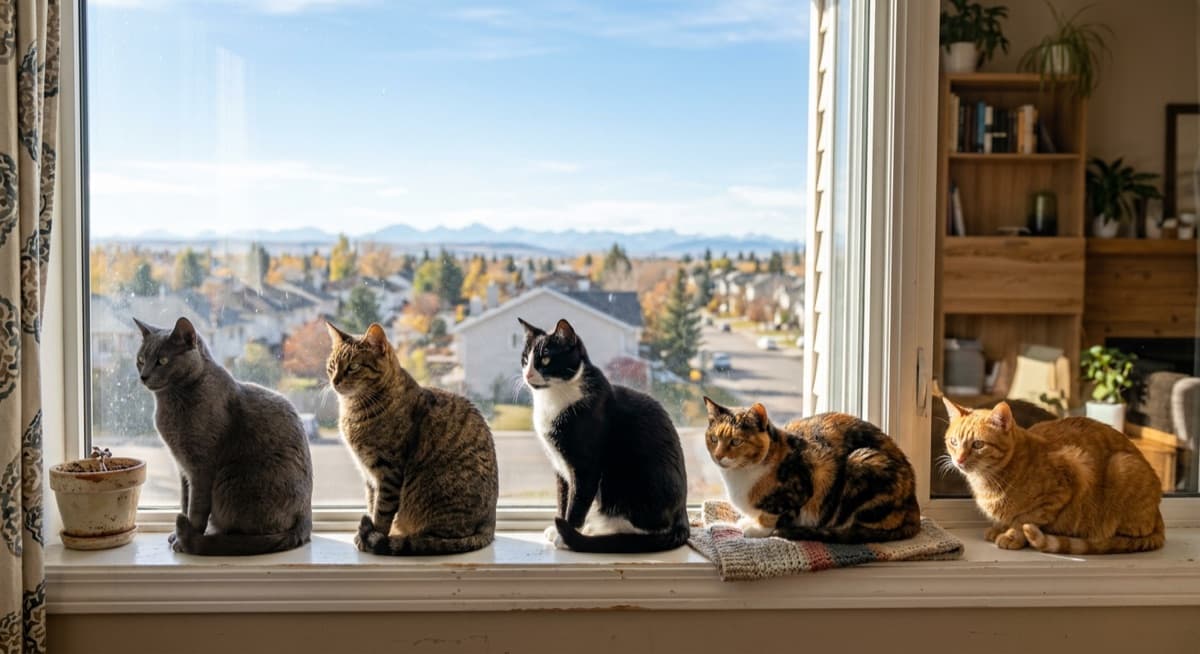
Colour is not breed, and it is not personality
The single most useful idea on this page: a Domestic Shorthair’s colour and pattern tell you what it looks like and nothing else. Not its breed, since DSH is not a breed at all (see what a Domestic Shorthair is). Not its temperament, since the folklore linking colour to personality is far weaker than it sounds, which we cover in the DSH personality guide.
Why does this matter for adoption? Because choosing a cat by colour is one of the most common mistakes Calgary adopters make. People search for a grey kitten or an orange tabby specifically, then overlook the calm adult tuxedo in the next kennel who is actually the right cat for their home. Learn the patterns so you understand what you are seeing, then choose on behaviour.
The Domestic Shorthair colour and pattern catalogue
Every coat you will see on a Calgary rescue DSH is one of these, or a combination:
| Pattern / colour | What it looks like |
|---|---|
| Tabby | Stripes, swirls, or spots with an M on the forehead. Comes in classic (swirled), mackerel (vertical stripes), spotted, and ticked. The most common pattern of all. |
| Tuxedo / bicolour | Black (or grey, or orange) with white chest, belly, and paws. A tuxedo is just a bold bicolour. |
| Calico | Distinct patches of orange, black, and white. Almost always female. |
| Tortoiseshell | Mottled, brindled orange and black with little or no white. Almost always female. A torbie is a tortoiseshell with tabby striping. |
| Solid | One colour all over: black, white, orange, or grey. |
| Grey (“blue”) | The dilute form of black. Cat people traditionally call grey cats blue. Still a DSH, not a Russian Blue. |
| Colourpoint | Pale body with darker face, ears, legs, and tail. Siamese-like colouring can appear in mixed cats too. |
Most cats combine these. A single Calgary DSH can accurately be a grey mackerel tabby with white, all at once. The listing just picks the most obvious descriptor.
The genetics, in plain language
The gene for orange versus black sits on the X chromosome. That one fact explains why most orange cats are male and why nearly all calicos and tortoiseshells are female.
You do not need a genetics degree, just three ideas:
Orange is X-linked. Females have two X chromosomes and can carry both orange and black, which produces the mixed orange, black, and white of calico and tortoiseshell coats. Males have one X, so they are usually all orange or all black, not patched. That is why a calico is almost certainly female and why the rare male calico (an extra chromosome) is sterile, not special. Feline practitioner guidance from the American Association of Feline Practitioners covers the welfare implications of these rare chromosomal cats in more clinical depth.
Dilution makes grey. Grey is genetically “dilute black,” controlled by a separate gene. Dilute orange is cream. This is why grey shows up so often in random-bred cats: it only needs the common dilution gene, no breed required.
White is a mask. White spotting and solid white sit on top of whatever colour is underneath. A tuxedo is a mostly black cat with a lot of white spotting. For a deeper but readable explanation, the Cornell Feline Health Center is a trustworthy source on feline biology.
The grey DSH kitten question
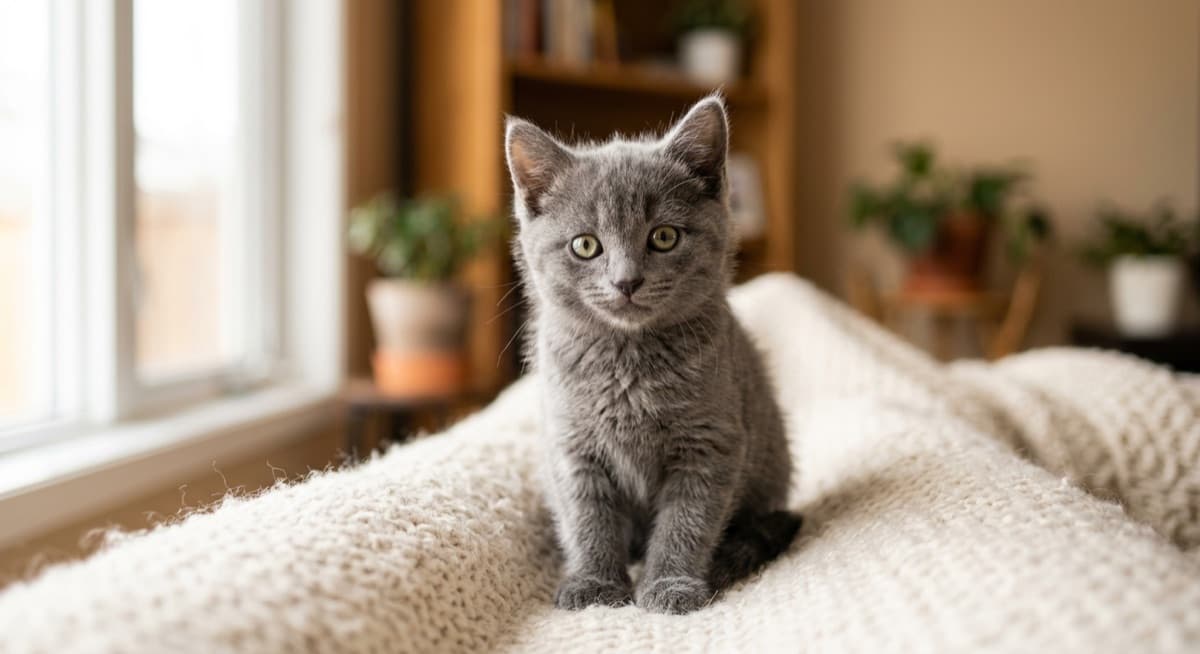
“Domestic Shorthair grey kitten” is one of the most searched cat phrases, so it earns its own section. People picture a soft, plush, silvery grey kitten and assume it is a special type. It is not. It is an ordinary, healthy kitten of mixed ancestry whose coat happens to carry the common dilution gene. That is good news: grey DSH kittens are widely available in Calgary rescues, not rare or expensive.
A few honest expectations. Solid grey and grey tabby kittens are popular, so they get adopted quickly when they post, often within days during kitten season. A grey kitten generally stays grey, but the exact shade can shift slightly and faint tabby striping may show or fade as the adult coat comes in. And a grey kitten is not a Russian Blue or a Chartreux. Those are pedigree breeds with papers and a registered breed standard maintained by registries like the Cat Fanciers’ Association; a grey rescue kitten with no papers is simply a grey DSH, which is healthier on average and a fraction of the price.
The practical way to land one: do not stalk a single rescue. Watch live listings across all Calgary rescues and adoption centres on the DSH adoption page, set a kitten alert, and be ready to apply the day a grey litter posts in any Calgary neighbourhood. For the full process and fees, see the Calgary DSH adoption guide.
The black cat gap, and why it is an opportunity
If grey kittens are the cats everyone wants, black cats are the cats everyone overlooks. Black and black-and-white DSH cats consistently wait the longest in Calgary rescues. The reason is mundane: they photograph poorly against shelter backgrounds and get scrolled past in online listings, not anything about the cats themselves.
Several Calgary rescues, including MEOW Foundation, AARCS, and the Calgary Humane Society, run reduced fees on black cats specifically to close this gap. A black DSH has the same health, the same lifespan, and the same full personality range as any grey or tabby cat. If your decision is being driven by colour at all, flipping it toward a black adult is often the best value, fastest, and most needed adoption in the city. Major welfare organizations including the ASPCA have documented this “black cat bias” in adoption data for years, and Calgary’s pattern matches it closely.
Browse Domestic Shorthairs by colour in Calgary
Grey, tabby, tuxedo, calico, black: live DSH listings from Calgary rescues, updated every couple of hours. Set a kitten alert so you do not miss a grey litter.
See Available Domestic Shorthairs →Frequently Asked Questions
Is a grey Domestic Shorthair a breed like a Russian Blue?
No. A grey DSH is a cat of mixed ancestry that happens to have a grey coat. Grey is the dilute form of black, controlled by a single gene, and it shows up constantly in random-bred cats. A Russian Blue or a Chartreux is a registered breed with a pedigree and a breed standard. They look superficially similar, but a grey rescue cat with no papers is a Domestic Shorthair, not a Russian Blue. Cat people often call grey cats blue, which is just the traditional colour name, not a breed.
Where can I find a grey Domestic Shorthair kitten in Calgary?
Solid grey and grey tabby DSH kittens turn up regularly at MEOW Foundation, the Calgary Humane Society, AARCS, and FRFA, especially during the spring and summer kitten season, but they get adopted fast because grey kittens are popular. The practical method is to watch live cat listings on LocalPetFinder, which aggregates Calgary rescues every couple of hours, and set an alert for kittens so you see new grey litters the day they post. Do not commit to a single rescue or a single colour; let the right kitten find you.
Why are almost all calico and tortoiseshell cats female?
Because the gene for orange versus black sits on the X chromosome. Female cats have two X chromosomes, so they can show both orange and black at once, which is what creates calico and tortoiseshell coats. Male cats have one X, so they are usually either orange or black, not both. The rare male calico has an extra chromosome, is almost always sterile, and is not more valuable despite the myth.
Does a Domestic Shorthair’s colour affect its personality?
Not in any way you can rely on. Coat colour is set by genes that have little to do with temperament. Owner surveys hint at tiny average tendencies, like slightly more reactivity in tortoiseshells, but the effect is small next to the difference between individual cats. Pick a Calgary DSH by the behaviour the foster describes, not its colour. Our DSH personality guide covers this in full.
What is the difference between a tabby and a Domestic Shorthair?
They describe different things, so a cat is usually both. Domestic Shorthair describes ancestry: mixed, short-haired, no pedigree. Tabby describes a coat pattern: stripes, swirls, or spots, with the signature M on the forehead. Most rescue tabbies are Domestic Shorthairs. Tabby is the most common pattern of all and comes in classic (swirled), mackerel (striped), spotted, and ticked forms.
Do kitten coat colours change as they grow?
Often, yes. Tabby markings can be faint at birth and sharpen with age. Many kittens darken as they mature, and pointed kittens (Siamese-like colouring) are born pale and develop their points over weeks. A grey kitten generally stays grey, but the exact shade and any faint tabby striping can shift. Adopt for the cat, not the exact current shade, because the adult coat is not finished yet.
Are black Domestic Shorthairs harder to adopt in Calgary?
Yes, noticeably. Black and black-and-white DSH cats wait longer in Calgary rescues, largely because they photograph poorly against shelter backgrounds and get scrolled past online. Several Calgary rescues run reduced fees on black cats to balance this. A black DSH has the same health and the same temperament range as any other DSH, so it is frequently the best value adoption in the city.
What does "DSH" mean on a Calgary shelter listing?
It means Domestic Shorthair: a short-haired cat of mixed or unknown ancestry, the cat version of mixed breed. It is not a comment on the cat being plain. The colour or pattern listed beside it (grey, tabby, tuxedo, calico) describes the coat only. Neither the DSH label nor the colour tells you anything about breed or personality, so read the foster notes for the part that matters.
Domestic Shorthair Cats in Calgary
Browse adoptable DSH cats and kittens, every colour and pattern.
Calgary DSH Adoption Guide
The real fee, where to find one, kitten vs adult, and how to get approved.
DSH Personality and Temperament
Why colour does not predict personality, and what actually does.
What Is a Domestic Shorthair?
Why DSH is not a breed, and why that is a health and price advantage.