The short answer
A Domestic Shorthair has no breed personality, because DSH is not a breed. The full range of cat temperaments lives under that one label. What actually predicts a cat’s personality is the individual cat’s genetics, its early socialization, its life history, and its current environment, not its coat or colour. The orange cat and tortitude folklore exists, but the real effect is tiny. The single most reliable read you can get in Calgary is a foster home’s written notes on the actual cat. Choose the cat, not the type.
Why “DSH personality” is the wrong question
People search “Domestic Shorthair personality” expecting a breed profile, the way you would look up a Siamese or a Maine Coon. There is no such profile. A DSH is a short-haired cat of mixed ancestry, with no pedigree and no breed standard. If that is news, our explainer on what a Domestic Shorthair is covers the basics.
Because there is no breed behind the label, there is no average temperament to describe. The calmest cat at MEOW Foundation and the most hyperactive kitten at the Calgary Humane Society can both be Domestic Shorthairs. That sounds unhelpful. It is actually the best news an adopter gets, because it means almost any personality you want is available, if you know how to find it.
The actual range you will see
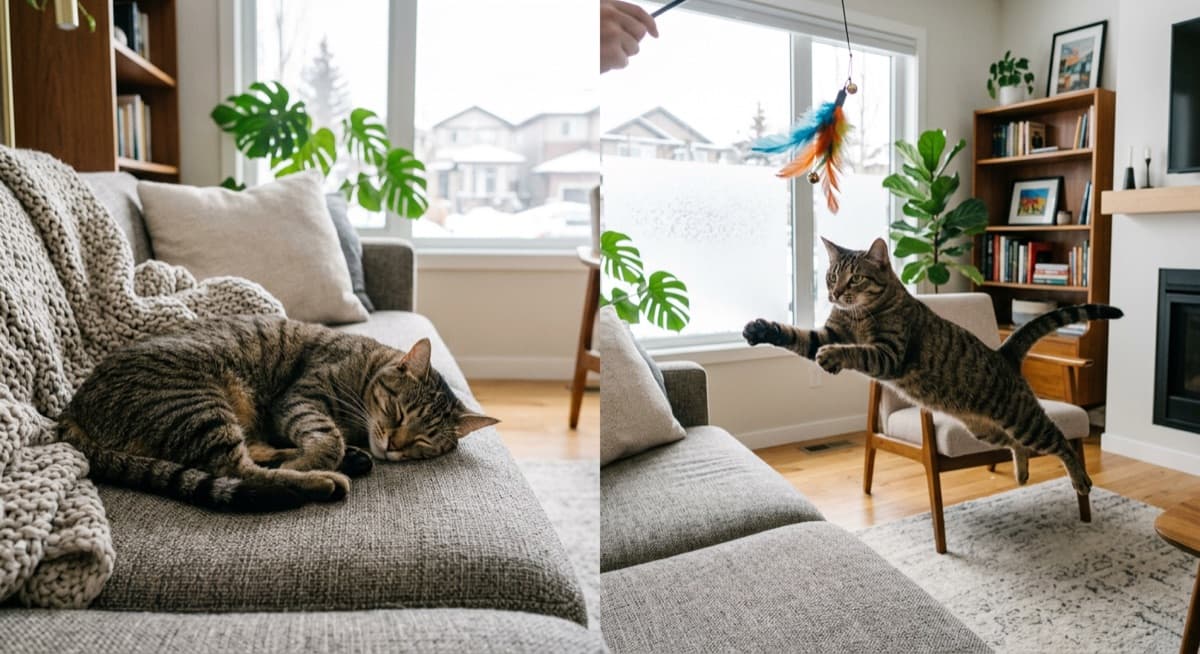
Across Calgary rescue DSH cats, the personalities fall on a few familiar spectrums rather than into types:
- Social to independent. Some DSH cats want to be on you constantly. Others love you but on their own terms. Both are normal and neither is “better.”
- High energy to mellow. Young DSH cats often need real daily play. Many adults and most seniors are content with short bursts and long naps.
- Bold to cautious. Confident cats greet visitors at the door. Cautious cats need a slow approach and a quiet home. A cautious cat is not a broken cat.
- Chatty to quiet. Some DSH cats narrate their entire day. Others are nearly silent. This one is largely individual luck.
Match the spectrum to your real Calgary life, not to an idea of a cat. A bold, energetic DSH in a quiet condo where it is alone ten hours a day is a mismatch waiting to become a behaviour problem. A mellow independent adult in that same condo thrives.
What actually shapes a cat’s personality
Four things matter far more than breed or colour: the individual cat’s genetics, the early socialization window, the cat’s life history, and the environment it is in right now.
Individual genetics. Boldness and sociability are partly heritable, but they come from the specific cat’s parents, not from a breed. A confident father, for example, tends to produce more confident kittens.
The early socialization window. Roughly two to nine weeks of age is when kittens learn that people are safe. Kittens gently handled by humans in that window usually become friendly adults. Kittens that missed it (born feral, for instance) can stay wary for life. This single factor outweighs almost everything else, a point International Cat Care emphasizes in its guidance on kitten development.
Life history. A cat that had a stable home and was surrendered for a reason that has nothing to do with behaviour (an allergy, a move, a landlord) usually settles quickly. A cat from neglect or repeated rehoming may carry that. The Cornell Feline Health Center is a solid, readable source on feline behaviour and stress if you want to read deeper.
Current environment. This is the one adopters underestimate. A cat in a loud shelter shows you its stressed self, not its real self. The same cat in a quiet Calgary home, given time, can be unrecognizable within weeks. The American Association of Feline Practitioners notes that environmental stress drives many behaviours owners read as “personality.” The ASPCA publishes accessible guides on cat behaviour and adjustment if you want a second read.
What the evidence says about coat colour and personality
Every cat owner has heard the stereotypes. Here is what the research actually shows for each:
| Folklore | What the evidence says |
|---|---|
| Orange cats are friendly and dim | Surveys hint at a small “easygoing” lean, but it is tiny next to individual variation. Most orange DSH cats are orange males, which may confound the perception. |
| Tortoiseshells have “tortitude” | Some owner surveys report slightly higher reactivity in torties and calicos. Real but weak. Not a reason to avoid one. |
| Tuxedo cats are sassy and smart | No meaningful evidence. Pure pattern, no personality link. |
| Black cats are calm and gentle | No reliable evidence. The kernel of truth is that black cats wait longer in rescues, so the adults you meet are often older and calmer by age, not colour. |
The takeaway is simple. Tendencies tied to colour, where they exist at all, are far smaller than the difference between any two individual cats. Choosing a Calgary DSH by colour is choosing on noise. For how the colours and patterns themselves work, see our guide on DSH colours and patterns.
How to read a Calgary foster assessment
Calgary rescues that foster (AARCS, the Calgary Humane Society, MEOW Foundation, FRFA) place cats in real homes and write down what they see. That assessment is the single most reliable personality predictor available to you, far better than a breed guess, a colour, or a brief, stressed meeting at the shelter.
When you read foster notes, look for concrete behaviour, not adjectives. “Sweet” tells you little. “Sleeps on the foster’s bed every night, hides for the first hour when guests arrive, ignores the resident dog” tells you almost everything. Ask the rescue direct questions: how is the cat alone during a workday, how did it handle the foster’s kids, does it tolerate handling and nail trims, how long did it take to settle.
Weight the foster history above the meeting in person. A confident cat can shut down in a shelter and a nervous cat can act calm because it is frozen. The foster saw the real cat over weeks. You see a snapshot under stress. For the wider step-by-step on application, home check, and pickup, see our Calgary DSH adoption guide.
The environment is half the personality
The most important thing to understand before adopting any DSH: the cat you bring home is not finished. A shy cat given a quiet safe room and a predictable routine often becomes a confident, affectionate cat within the first month. A cat denied that decompression can stay stuck in fear longer than it needed to.
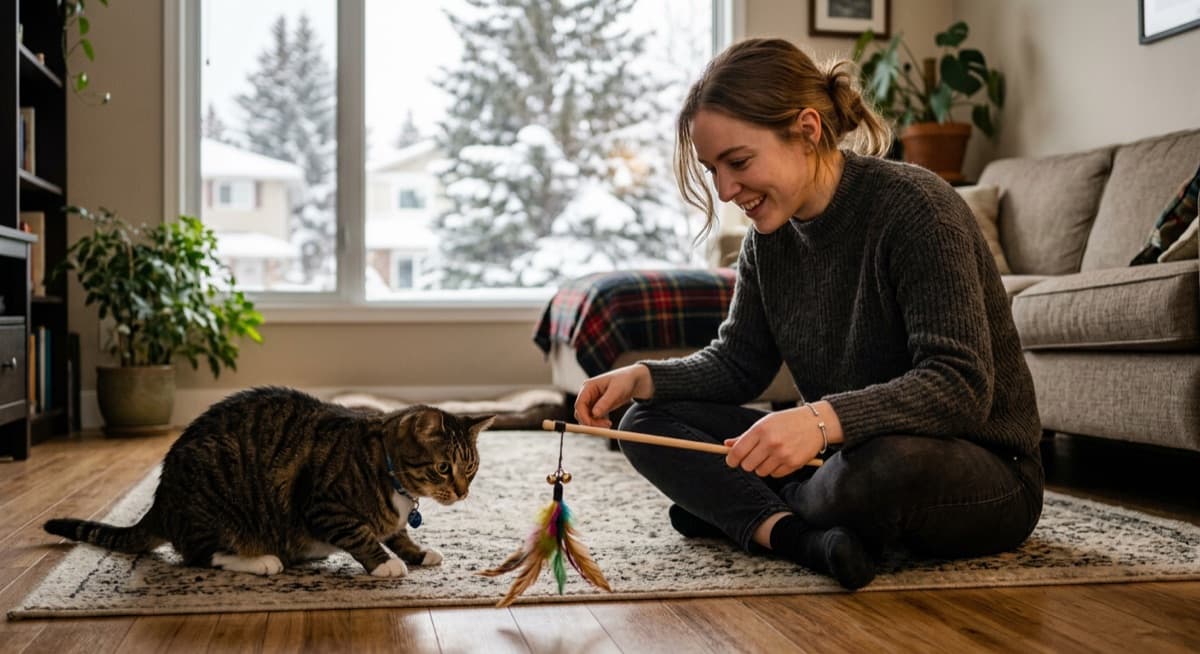
This is why the first month matters as much as the choice. Before pickup day, read the first 30 days with an adopted DSH and the first week 3-3-3 timeline. Through a Calgary winter, when the cat is indoors for months straight, daily play and enrichment are not optional extras. They are how an energetic DSH stays a good roommate instead of a frustrated one.
Find a DSH whose personality fits your home
Browse live DSH listings from Calgary rescues and read the temperament the foster described for each cat. Filter by energy and how each one does with kids, dogs, and other cats.
See Available Domestic Shorthairs →Frequently Asked Questions
What is the personality of a Domestic Shorthair cat?
There is no single one, because Domestic Shorthair is not a breed. A DSH can be a calm lap cat, an energetic acrobat, a chatty shadow, or an independent roommate. The label tells you the cat has a short coat and mixed ancestry. It tells you nothing about temperament. That is exactly why you choose a DSH by the individual cat, using a Calgary foster home assessment, rather than by the type.
Are Domestic Shorthair cats friendly and affectionate?
Many are, but it depends entirely on the individual cat and its early life, not on it being a DSH. A confident DSH that was handled gently as a kitten and had a calm life often becomes very affectionate. A DSH that missed early socialization or had a rough start may stay cautious. The good news is the DSH range is so wide that affectionate, people-loving cats are easy to find. Ask the rescue for a cat whose foster notes specifically say lap cat or velcro cat.
Do orange or tortoiseshell cats really have a distinct personality?
The folklore is strong and the evidence is weak. Owner surveys hint at small average tendencies, like tortoiseshell cats being slightly more reactive (the tortitude idea) or orange cats being slightly more easygoing, but the effect is tiny next to the variation between individual cats. Coat colour is set by genes that have little to do with temperament. Pick a Calgary DSH by the behaviour the foster describes, not its colour, and you will not be disappointed.
What actually determines a cat’s personality?
Four things matter far more than breed or colour: the individual cat’s own genetics, the early socialization window between roughly two and nine weeks of age, the cat’s life history (a stable home versus neglect or trauma), and the current environment. A scared cat in a loud shelter can become a confident cat in a quiet home within weeks. This is why a settled adult DSH described by a foster is the most reliable read you can get.
Are Domestic Shorthair cats good with kids and dogs?
Some are excellent and some are not, and the only honest predictor is the individual cat’s track record. A DSH that lived with a dog used to cats, or with children, and did fine is a far safer bet than any breed generalization. Calgary rescues that foster their cats, like AARCS and the Calgary Humane Society, write down exactly how each cat handled kids, dogs, and other cats. Use that, and do slow introductions regardless.
Is a kitten or an adult DSH more predictable in personality?
An adult is far more predictable. A kitten’s personality is still forming, so a playful kitten at eight weeks can grow into a reserved adult or the reverse. With an adult DSH, what you see and what the foster describes is largely what you get for the next decade and a half. For people getting their first cat who want a known temperament, the adult is the safer choice.
Can a shy or fearful DSH become confident after adoption?
Often yes, with time and the right setup. Many cats that seem withdrawn or fearful in a shelter are simply overwhelmed, not fundamentally fearful cats. Given a quiet safe room and the standard decompression timeline, a large share relax into a completely different cat within a month. A cat that was genuinely poorly socialized or traumatized is harder, which is why the foster’s honest read matters before you adopt.
How do I pick a DSH with the right personality for my home?
Ignore the label and the colour, and read the foster assessment like a job description. Decide what your Calgary life actually needs: a calm cat for a quiet condo, a confident playful cat for a busy family, an independent cat for long workdays. Then ask the rescue to point you at cats whose foster notes match. Meeting the cat helps, but a single shelter visit shows you a stressed cat, so weight the foster history more than the meeting.
Domestic Shorthair Cats in Calgary
Browse adoptable DSH cats, each with a personality the foster has described.
What Is a Domestic Shorthair?
Why DSH is not a breed, and what that means for what you can expect.
DSH Colours and Patterns
Tabby, tuxedo, calico, grey: why pattern is not breed and not personality.
First 30 Days With an Adopted DSH
How environment turns a shy cat into a confident one in the first month.