The short answer
Domestic Shorthair (DSH) is not a breed. It is the term for a short-haired cat of mixed or unknown ancestry. The cat equivalent of “mixed breed” in dogs. Most cats in Calgary rescues are DSH. Tabby, tuxedo, and calico are coat patterns, not breeds either. A cat DNA test rarely gives a satisfying “breed” answer but can flag health markers. Because of genetic diversity (hybrid vigour), DSH cats are generally healthier than purebreds and often live 15 to 20 years. For most first-time Calgary adopters, an adult DSH chosen by personality, not by label, is the best and safest cat.
Stop trying to find the “breed.” Choose the cat.
The single most useful mindset shift for a Calgary DSH adopter: a Domestic Shorthair has no breed personality to predict from, so the label tells you nothing. The foster home’s notes on the actual cat (how it handles people, kids, dogs, and being alone) are worth more than any breed guess or DNA percentage.
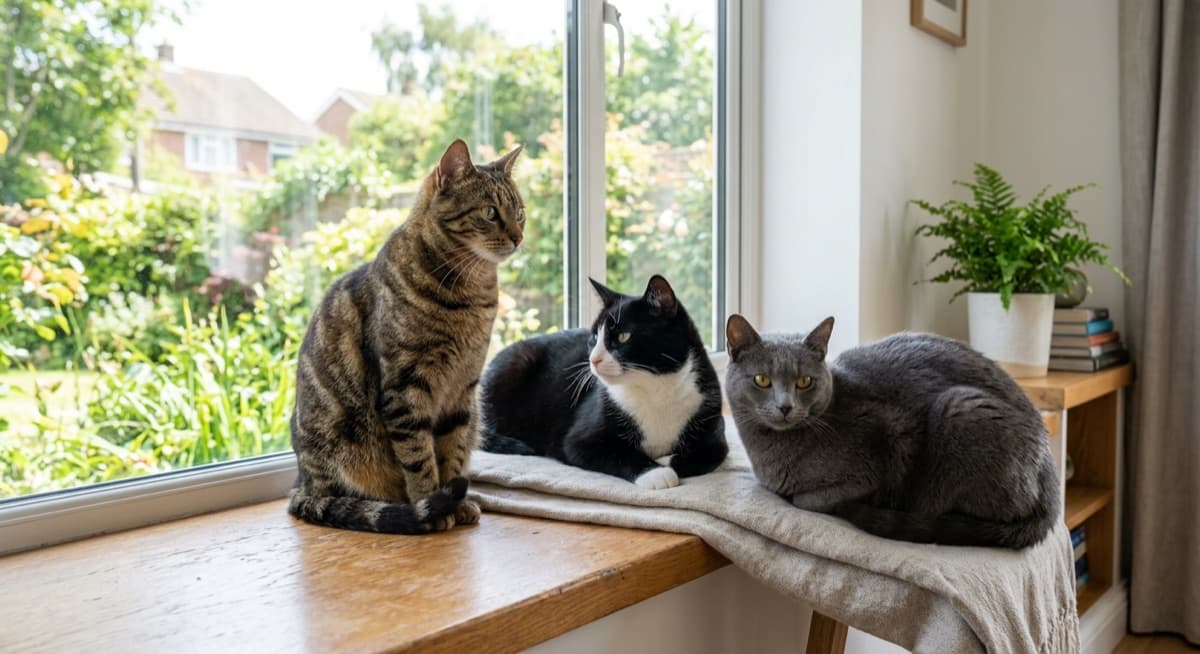
What does “Domestic Shorthair” actually mean?
A Domestic Shorthair is a short-haired cat of mixed or unknown ancestry. No pedigree, no breed standard. It is a description, not a breed, and it is the cat equivalent of calling a dog a “mixed breed” or a “mutt.”
A recognized cat breed has two things a DSH does not: a documented pedigree and a written breed standard that defines how the cat should look and, loosely, behave. Maine Coon, Siamese, Persian, Bengal: each is a deliberately maintained line. The Cat Fanciers’ Association maintains the registry and breed standards for purebred cats in North America (cfa.org); a DSH appears on none of those lists.
A Domestic Shorthair is what happens when cats reproduce on their own over many generations, with no human selecting for a standard. The result is a genetically broad, robust cat with a short coat. “Domestic Longhair” is the exact same thing with a longer coat. Neither is a breed.
The vast majority of cats in Calgary, in rescues and in homes, are DSH. When a shelter listing says “Domestic Shorthair,” it is not telling you the cat is plain or generic. It is telling you the cat has no known pedigree, which for most adopters is a feature, not a flaw. For a deeper look at where DSH cats come from and how to adopt one in Calgary, see our Domestic Shorthair adoption guide.
DSH vs tabby vs tuxedo vs calico: pattern is not breed
This is the most common point of confusion. A cat is usually a Domestic Shorthair and a tabby (or tuxedo, or calico) at the same time, because those words describe completely different things.
“Domestic Shorthair” describes ancestry. Mixed, short-haired, no pedigree.
Coat pattern words describe appearance:
- Tabby: striped, swirled, or spotted, with the signature “M” on the forehead. The most common pattern of all.
- Tuxedo: black with a white chest, belly, and paws.
- Calico: tri-colour patches of orange, black, and white. Almost always female.
- Tortoiseshell: mottled, brindled orange and black.
- Solid: one colour. Grey (often called “blue”), black, white, or orange.
None of these is a breed. A grey Domestic Shorthair kitten and an orange Domestic Shorthair kitten are not different breeds. They are the same kind of cat in different coats. The pattern tells you what the cat looks like and nothing about its personality. For a full breakdown of each pattern, the genetics behind it, and what it does (and does not) predict, see our DSH colours and patterns guide.
Domestic Shorthair vs Domestic Longhair
The only difference is coat length. A Domestic Shorthair has a short, low-maintenance coat that needs occasional brushing. A Domestic Longhair has a medium or long coat that needs regular brushing to prevent painful mats, especially around the belly and behind the legs.
Neither is a breed, and the two are not separate “types” of cat. Littermates from the same random-bred mother can include both, because coat length is just one inherited trait. If grooming time is a deciding factor for your Calgary household, this is the practical distinction that matters.
Can a DNA test tell me my cat’s breed?
Manage your expectations. Cat DNA tests are far better at flagging health markers than at answering “what breed is my cat.”
Tests like Basepaws and Wisdom Panel compare your cat’s DNA against reference breed populations. For a typical Calgary DSH, the result is usually “mostly domestic / random-bred” with small, low-confidence breed percentages. Cat breeds are genetically far less distinct than dog breeds, so the “ancestry” portion is rarely satisfying.
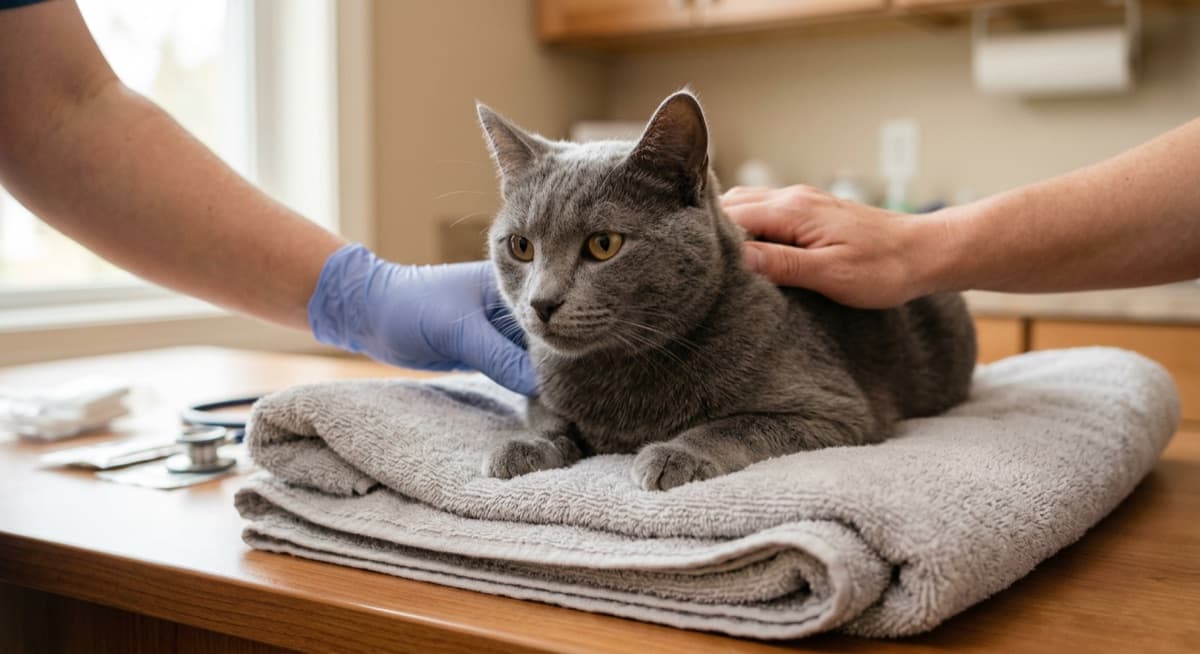
Where these tests do earn their cost is health. Many screen for known genetic markers, for example HCM (a heart condition) and PKD (a kidney condition). The Cornell Feline Health Center documents both conditions and their breed-linked patterns. For most adopters, though, a DSH’s genetic diversity already lowers inherited-disease risk, so routine vet care matters more than a test. Spend the money on a good first vet visit before you spend it on curiosity.
Are Domestic Shorthairs healthier than purebreds?
On average, yes, thanks to hybrid vigour. A wide gene pool means a lower chance of inheriting the recessive conditions that concentrate in closed pedigree lines.
Purebred cats carry well-documented breed-specific risks. Persians and other flat-faced breeds have breathing problems and a high rate of polycystic kidney disease. Maine Coons have an elevated rate of hypertrophic cardiomyopathy, a heart-muscle disease. The American Association of Feline Practitioners publishes feline health guidelines that document these breed-linked patterns. Several breeds also carry raised cancer or neurological risks.
A Domestic Shorthair is not immune to illness, and an individual cat’s history still matters. But as a population, DSH cats avoid those concentrated inherited burdens and commonly live 15 to 20 years with routine care. Combined with the lowest adoption fees, this is one of the strongest practical reasons to adopt a mixed cat rather than buy a purebred. The ASPCA publishes general feline care guidance that aligns with this view.
Why are almost all Calgary rescue cats DSH?
Because the Domestic Shorthair is by far the most common cat in the general population, so it dominates shelter intake. Purebreds are a small, deliberately bred minority. Most cats reproduce randomly, and their offspring are DSH by definition.
Calgary rescues like MEOW Foundation, the Calgary Humane Society, AARCS, and FRFA take in mostly DSH cats of every age, colour, and temperament. For an adopter, that is the opposite of a limitation: it means a huge selection, the lowest fees of any cat type, and the health advantages of genetic diversity. The “perfect” cat for your home is almost certainly a DSH already waiting in a Calgary foster home. For a thorough walk-through of what to expect, see our Calgary cat adoption guide.
Is a Domestic Shorthair good for a first-time owner?
For most first-time Calgary cat owners, a DSH is the best and safest choice, with one rule: choose the individual cat, not the label.
“DSH” does not guarantee a temperament, because it is not a breed. What it guarantees is range. Calm lap cats, playful goofballs, bold explorers, and quiet independent companions all live under the DSH umbrella. That variety is the advantage. You can match a cat to your real life instead of hoping a breed standard holds. For the patterns we see most often across DSH cats, see our DSH personality and temperament guide.
The safest first cat is usually an adult DSH whose personality is already settled and described by a foster home. A kitten is a delightful mystery; an adult is a known quantity. Either way, lean on the rescue’s assessment of the specific cat. For the at-home timeline, see the first 30 days with a DSH and the first week with a rescue cat. If you adopted and you are second-guessing the choice in the first few weeks, our DSH adoption regret and kitten-blues guide covers what is normal and what to do.
Frequently Asked Questions
Is Domestic Shorthair a real breed?
No. It is a description: a short-haired cat of mixed or unknown ancestry, the cat version of “mixed breed.” Recognized breeds have a pedigree and a breed standard; a DSH has neither. Most Calgary rescue cats are DSH, and that is a health and price advantage, not a downgrade.
DSH vs tabby: what is the difference?
Different categories. DSH describes ancestry; tabby describes a coat pattern (stripes, swirls, the forehead “M”). Most tabbies are DSH. Tuxedo, calico, tortoiseshell, and solid colours are also patterns, not breeds.
DSH vs Domestic Longhair?
Coat length only. Both are mixed-ancestry cats and neither is a breed. The DSH needs occasional brushing; the Longhair needs regular brushing to prevent mats. Littermates can be one of each.
Can a DNA test tell me the breed?
Rarely in a satisfying way. Most DSH results come back “mostly domestic.” Cat breeds are genetically far less distinct than dog breeds. The tests are more useful for flagging health markers (HCM, PKD) than for ancestry curiosity.
How can I tell what mix my DSH is?
Usually you cannot, and that is normal. A DSH is generations of random breeding, not a clean two-breed cross. Appearance gives weak clues at best. The foster home’s notes on the real cat matter far more than breed guesswork.
Are DSH cats healthier than purebreds?
On average yes, from genetic diversity (hybrid vigour). They avoid the concentrated inherited conditions of pedigree lines and commonly live 15 to 20 years with routine care. Individual history still matters.
How long do Domestic Shorthairs live?
Commonly 15 to 20 years indoors, sometimes into the early twenties. Indoor living, healthy weight, dental care, and annual vet visits are the biggest levers. Especially important given Calgary winters and river-valley coyotes.
Is a DSH good for a first-time owner?
The best starting point. Not because the label predicts temperament (it does not), but because the range means you can pick the exact personality you want. An adult DSH chosen from foster notes is the safest first cat.
Is American Shorthair the same as Domestic Shorthair?
No. American Shorthair is a real recognized breed with a pedigree. Domestic Shorthair is the catch-all for a short-haired cat of mixed ancestry. Shelters sometimes mislabel; no papers means it is a DSH.
Domestic Shorthair Cats in Calgary
Browse adoptable DSH cats from Calgary rescues. Every colour, age, and personality.
First Week With a Rescue Cat
The decompression timeline and safe-room setup for a newly adopted Calgary cat.
Calgary Cat Adoption Guide
Where to adopt, what it costs, and how the process works end to end.
Indoor vs Outdoor Cats in Calgary
Why the indoor choice matters most for DSH lifespan. Coyotes, cold, and traffic.