The short answer
Start the cat in one safe room with a litter box, food, water and a hiding spot, and let it emerge on its own. Expect hiding for a few days. Follow the three days, three weeks, three months rhythm. Switch food over about a week. Book a vet check within two weeks, and save the emergency line now. A male cat straining and unable to urinate is a same-hour emergency, so call 403-320-5200 and drive.
The most common mistake new adopters make is giving the cat too much, too soon.
A whole house, all the family, the resident dog, and a pile of new toys on day one is overwhelming for an animal that has just lost everything familiar. The kinder approach is almost the opposite. One quiet room, a few essentials, and time. Get the first week right and the cat trusts the house faster.
The rest of this guide walks through the safe room, the hiding phase, the food switch, finding a vet, and the handful of symptoms that turn a settling-in week into an emergency drive.
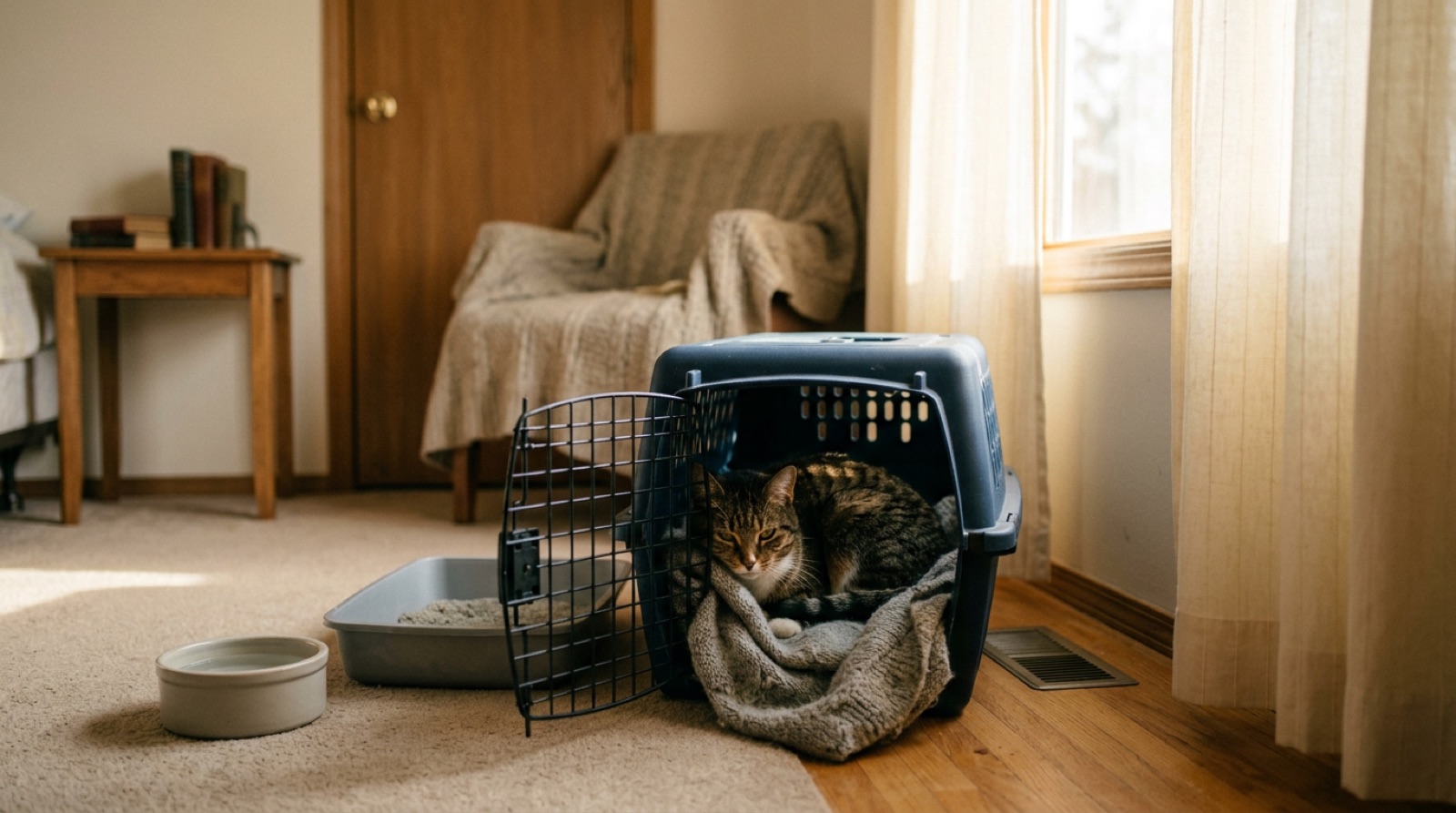
Set Up One Safe Room
Before the cat arrives, pick one quiet room and put everything it needs inside. A spare bedroom or a quiet office works well. This becomes the cat whole world for the first few days.
- →A litter box in a quiet corner, away from the food and water
- →Food and fresh water, kept apart from the box
- →A hiding spot, a covered bed, a box on its side, or space under the bed
- →A scratching post and one or two quiet toys
- →Somewhere for you to sit calmly nearby without crowding the cat
Open the carrier door and let the cat come out on its own. Do not tip it out or reach in. Then sit quietly, and let the cat decide when to explore. This one habit, patience over pressure, sets the tone for everything.
The Hiding Phase, and the 3-3-3 Rhythm
If your new cat vanishes under the bed and stays there, nothing is wrong. Most rescue cats hide at first. A useful way to picture the settling-in is the three-three-three rhythm.
| Stage | What is happening |
|---|---|
| First 3 days | Decompressing. Hiding, eating at night, wary. Leave it be and keep the room calm. |
| First 3 weeks | Learning the routine. Coming out more, testing the space, starting to trust you. |
| First 3 months | Truly settling. The real personality appears, and the cat treats the home as its own. |
Let the cat set the pace. Sit in the room and read aloud or talk softly so it gets used to your voice. Offer a treat or a wand toy but do not force interaction. When it chooses to approach you, that is the milestone that matters.
Switch Food Slowly, and Find a Vet
Ask the rescue what the cat has been eating and buy some of it. Change the diet over about a week by mixing an increasing amount of the new food into the old, because a sudden switch on top of moving stress is a reliable way to cause an upset stomach.
Register with a Lethbridge vet in the first week or two, even though adopted cats arrive vaccinated and altered. A baseline wellness visit catches anything the shelter could not see and gets you into a clinic before an emergency forces the decision. While you are at it, save the after-hours number. Family Pet Hospital & 24 Hour Pet Emergency Centre provides round-the-clock emergency care and asks after-hours callers to phone 403-320-5200 first.
Red Flags: When to Go Tonight
Most of the first week is calm. But a few symptoms are genuine emergencies, and knowing them ahead of time is the difference between acting and hesitating. If you see any of these, phone the emergency hospital and go.
- ⚠A male cat straining in the litter box, crying, or unable to pass urine. This is a blocked bladder and it is life-threatening within hours, not days. Go now.
- ⚠Not eating at all for more than 24 hours, which can trigger a serious liver problem in cats faster than in other animals
- ⚠Repeated vomiting, or any vomiting alongside lethargy and a refusal to drink
- ⚠Laboured, open-mouth or fast breathing, which cats almost never do unless something is wrong
- ⚠Severe or ongoing diarrhoea, especially with blood, or signs of dehydration
- ⚠A wound, limp, or sudden collapse, or any suspected poisoning
The one to burn into memory is the male cat that keeps going to the litter box, straining, crying, and passing nothing. That is a urinary blockage, and it kills within hours if untreated. Do not wait for morning, do not wait to see if it passes. Phone 403-320-5200 and drive. Identifying your nearest emergency option before you need it is the whole point of reading this section today.
Find your rescue cat in Lethbridge
Cats from Lethbridge and southern Alberta rescues, already altered and vaccinated, gathered into one list. Meet the one that suits your home. Listings refreshed regularly.
See Available Lethbridge Cats →Frequently Asked Questions
What do I do on the first day with a rescue cat?
Keep it small. Set up one quiet room with a litter box, food, water, a bed and a hiding spot, and let the cat come out of the carrier on its own time. Do not carry it around the house or introduce it to every family member and pet at once. A rescue cat has just lost everything familiar, and a single calm room is far less overwhelming than a whole house. Sit with it quietly, talk softly, and let curiosity do the work rather than forcing contact.
Why is my new cat hiding and not eating?
It is frightened, and this is normal. Many rescue cats spend the first few days hidden under a bed or behind furniture, coming out only when the house is quiet. The rough pattern people describe is three days to decompress, three weeks to settle into a routine, and three months to feel truly at home. Leave food, water and a litter box nearby, keep the room calm, and resist the urge to drag the cat out. It will emerge when it feels safe, usually at night first.
How do I switch my cat food without upsetting its stomach?
Slowly, over about a week. Start with whatever the shelter or foster was feeding, then mix in a little of the new food and increase the proportion each day. A sudden change on top of the stress of moving is a reliable way to cause diarrhoea. Ask the rescue what the cat has been eating and buy a bag of that to bridge the first days. If loose stool appears, slow the transition down rather than pushing through it.
When should I take a new rescue cat to the vet?
Book a wellness check within the first week or two, even though adopted cats leave already vaccinated and altered. It sets a baseline, registers you with a clinic before an emergency forces the choice, and catches anything the shelter could not see. More urgently, know where the after-hours hospital is now. Family Pet Hospital & 24 Hour Pet Emergency Centre in Lethbridge provides round-the-clock care, and its site directs after-hours emergencies to call 403-320-5200 before setting out.
What symptoms mean I should go to emergency tonight?
A male cat straining in the litter box and unable to urinate is the emergency to memorise, because a blocked bladder becomes life-threatening within hours. Also treat as urgent: not eating for more than a day, repeated vomiting, laboured or open-mouth breathing, severe diarrhoea especially with blood, collapse, a serious wound, or suspected poisoning. When any of these appear, phone the emergency hospital first on 403-320-5200 so they are ready, then drive. Do not wait to see if it passes.
How long until my rescue cat settles in?
Longer than a weekend, so set your expectations. The common rhythm is three days for the cat to stop panicking, three weeks to learn the household routine, and three months to fully relax and show its real personality. A cat that hides for a week is not a broken cat, it is a cautious one. Consistency is what speeds it up. Same feeding times, same litter, same quiet approach, and it will come around on its own schedule.
Should I let my new cat meet my other pets right away?
No, go slowly. Keep the new cat in its safe room and let the animals smell each other under the door for several days before any face-to-face meeting. Swap bedding between them so each gets used to the other scent. When you do introduce them, do it briefly and with an escape route, and never force it. Rushing introductions is the fastest way to start a lasting conflict. Patience in the first two weeks saves months of tension later.
My rescue cat is aggressive or swatting. Is that normal?
Often it is fear, not temper. A cat that hisses or swats in the first days is usually overwhelmed and telling you it needs space, so give it that space and let contact happen on its terms. Do not punish it, which only confirms that people are frightening. If genuine aggression continues past the settling-in weeks, or seems to come with pain, phone your vet, because pain and illness can show up as irritability. Most early swatting fades once the cat feels secure.
Where should I put the litter box?
Somewhere quiet, private and easy to reach, away from the food and water and away from noisy appliances. In the first week the box goes in the safe room so the cat never has to travel far or pass anything scary to use it. Scoop it daily, because a dirty box is one of the most common reasons a settling cat starts going elsewhere. If you have more than one cat, the rule is one box per cat plus one spare.
What if my new cat has an accident outside the box?
Clean it thoroughly with an enzyme cleaner so no scent remains to draw the cat back, and do not scold, which makes a stressed cat more anxious. In the first weeks, accidents usually mean stress, an unfamiliar box location, or a litter the cat dislikes. Make sure the box is clean, quiet and easy to find. If a cat that was reliably using the box suddenly stops, especially a male cat, treat it as a possible medical sign and call your vet rather than assuming it is behaviour.
Related Lethbridge Guides
One search, every Lethbridge rescue
Shelter cats and foster cats serving Lethbridge and southern Alberta, in a single list.
Browse Available Lethbridge Cats →New cat? Start with these care guides
Everything a new adopter needs to set up a safe, happy home.