The short answer
Adopting a lab Beagle in Calgary means opening your home to a dog who has lived in a cage and known nothing else. They may not understand grass, stairs, leashes, names, or food bowls. Decompression takes 6 to 12 months minimum, not the standard 3-3-3 timeline. Most lab Beagles in North America move through the Beagle Freedom Project and partner Canadian rescues; Calgary direct intake is rare. Fees are usually $0 to $300. Plan for higher first-year vet costs, slow force-free re-socialization, and patience measured in months. The reward is real, and so is the work.
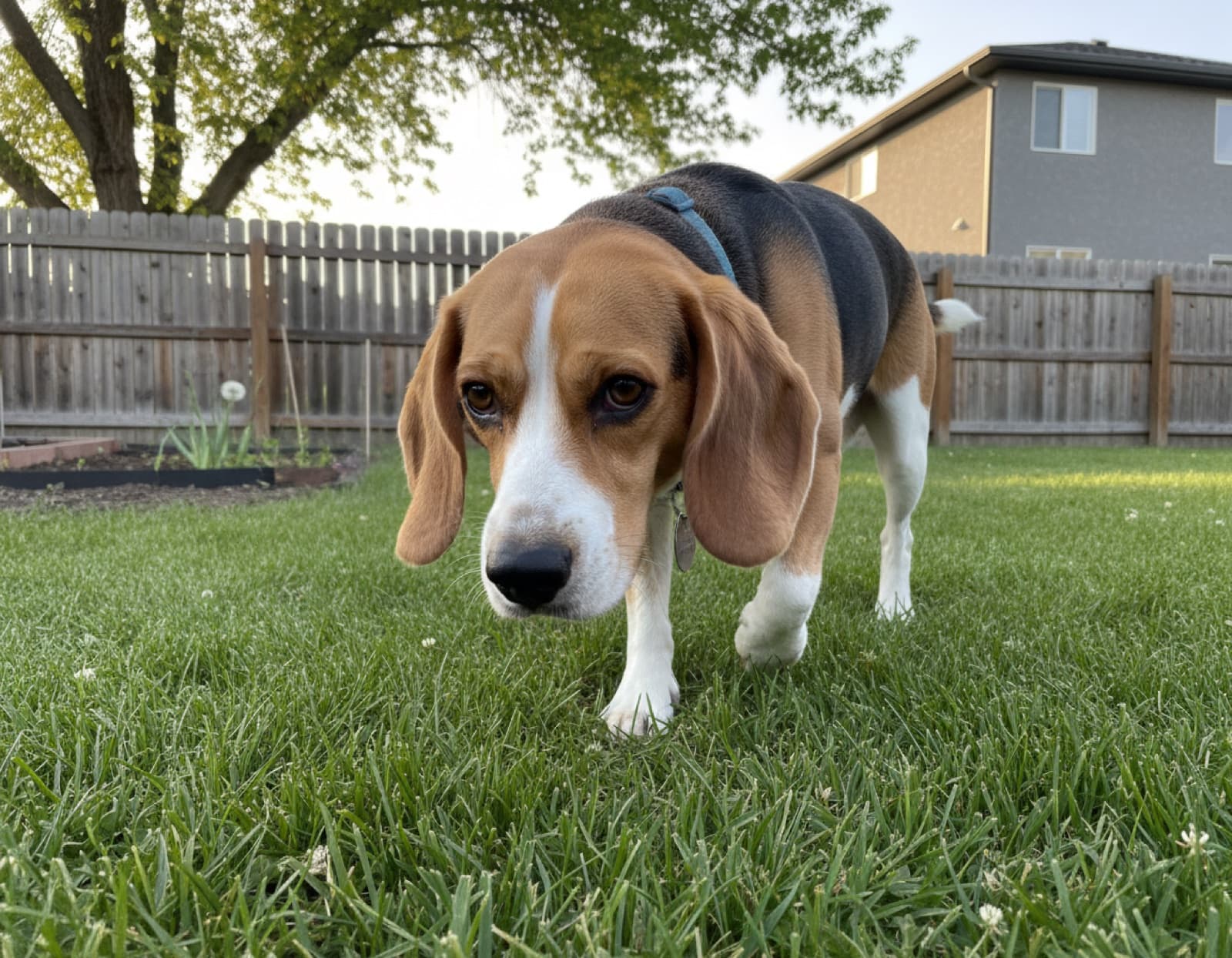
Beagles are the most-used breed in laboratory research worldwide. Tens of thousands live in research facilities in North America right now, and a small but growing number reach rescue every year. The 2022 Envigo release brought public attention to the issue, the Beagle Freedom Project keeps coordinating placements, and Canadian adopters can now apply through cross-border rescue networks. This guide is for Calgary adopters thinking seriously about bringing one of these dogs home. The work is slower than most rescues. The reward is watching a dog learn that the world is safe, often for the first time in its life.
Why Beagles are the most-used laboratory dog
The traits that make Beagles wonderful family dogs are the same traits that make them prized by research facilities. They are small (15 to 30 lbs adult), which means lower feed and housing costs. They are friendly, trainable, and tolerant of handling. They have remarkably uniform genetics within breeding lines, which makes scientific results easier to standardize. They tend to accept restraint without aggression. The Humane Society of the United States documents that Beagles make up the large majority of dogs used in research in North America.
Most research Beagles are bred specifically for laboratory use by commercial suppliers. They live their entire lives indoors in stainless steel kennels or runs, fed at scheduled times through dispensers, watered through metal valves, handled only by staff wearing gloves and protective clothing. Many have never been outdoors. Many have never met a child, a cat, or a dog of any other breed. Some have lived their full pre-rescue lives without ever hearing their own name.
When a research project ends or a facility downsizes, the dogs face one of three outcomes. They are transferred to another study. They are euthanized as the cheapest option for the facility. Or, increasingly, they are released to rescue partners under negotiated agreements. The third option is what creates the lab Beagle pipeline.
The Envigo Cumberland rescue, 2022
In May 2022, the US Department of Justice filed a civil case against Envigo RMS LLC, a commercial breeder operating a facility in Cumberland, Virginia, that supplied research Beagles to laboratories across North America. Federal inspectors documented dozens of serious Animal Welfare Act violations: dogs in unsanitary conditions, inadequate veterinary care, dogs euthanized without anesthesia, puppies dying of malnutrition.
A court-ordered settlement released approximately 4,000 Beagles from the Cumberland facility. The first 1,500 dogs transferred to rescue partners in the summer of 2022, with the remainder following over the next several months. The Humane Society of the United States coordinated the largest single distribution effort, working with hundreds of partner rescues across the US and Canada to place the dogs.
The Envigo dogs were breeding stock and puppies from a commercial supplier, not research subjects from a working laboratory. That distinction matters. Many had never been used in actual studies. They had still spent their entire lives in cages, with no exposure to ordinary household life, but most were medically intact. The Envigo placements continue to ripple through North American rescue networks years later. Many of the dogs are now four or five years old and still settling into pet life. A small number have continued to move through transfers and may eventually reach Alberta foster networks.
The Beagle Freedom Project
The Beagle Freedom Project is a US-based non-profit founded in 2010 that has released thousands of laboratory dogs (and other research animals) from facilities across North America. They negotiate directly with research labs, coordinate transport, provide initial veterinary care, and place dogs through a network of partner rescues.
The organization accepts Canadian adopter applications. Cross-border transport is coordinated through cooperating Canadian rescue partners, including breed-specific Beagle rescues in Ontario and Quebec, with occasional placements reaching Alberta through transfer networks. The application process is thorough and slow because lab Beagles need carefully matched homes. Expect a detailed questionnaire, reference checks, a home visit (often virtual for Canadian applicants), and a waiting period of weeks to months.
What to know about applying:
- Adoption fees are typically modest ($0 to $300) because the rescues are mission-driven and many lab dogs arrive with their initial vet workup covered.
- You will be asked about your daily routine, your household composition, your prior experience with fearful or shutdown dogs, and your time availability for the first three to six months.
- First-time dog owners are usually screened out. Households with prior experience with rescue or fearful dogs are preferred.
- You will likely be asked to commit to working with a force-free trainer if behavioural challenges emerge.
- Transport costs from the US to Calgary are real ($500 to $1,500 depending on route) and are usually the adopter's responsibility.
The application is rigorous because the placements are. Lab Beagles have a higher return-to-rescue rate than typical adoptions when adopters were not fully prepared. The screening is there to protect the dog.
Ridglan Farms, ongoing
Ridglan Farms is a Wisconsin-based research Beagle breeder that has been the subject of ongoing animal welfare investigations and litigation. Advocacy groups have documented conditions and pursued legal action over multiple years. As of writing, the Ridglan situation is still in legal motion, and the rescue community continues to follow developments closely.
For Calgary adopters, the practical implication is that the supply of lab-released Beagles from facilities like Ridglan is likely to continue, possibly in larger numbers if future court actions or facility closures release additional dogs to rescue. Staying connected to the Beagle Freedom Project and to Canadian breed-specific Beagle rescues is the way to hear about new releases when they happen.
The ASPCA tracks broader research-animal welfare issues across North America. Their resource page is a useful starting point for adopters who want to understand the larger context.
What a lab-released Beagle is actually like, day one
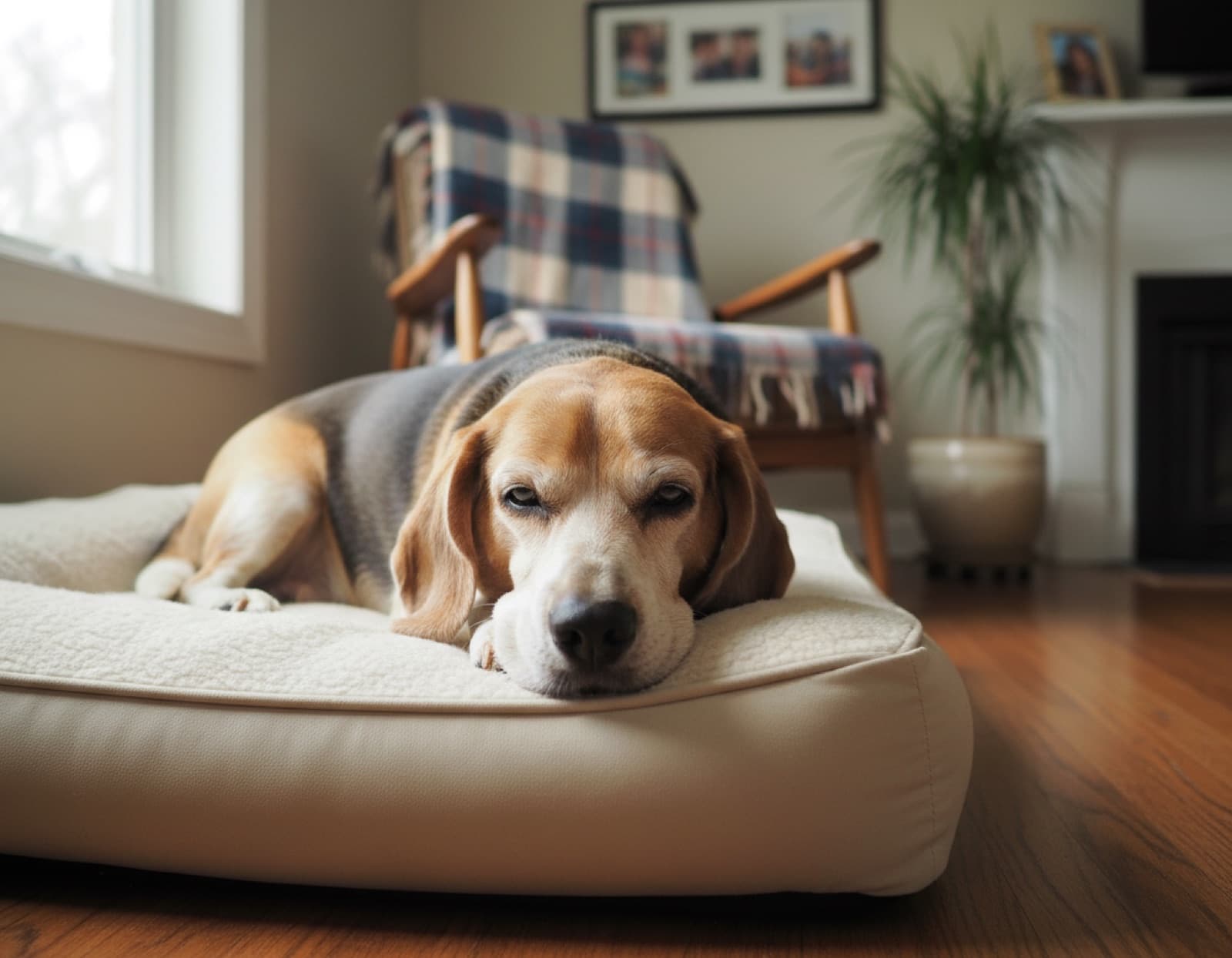
Set aside the social-media images of Beagles running joyfully across green fields the moment they leave their cages. Those moments do happen, but they are months in. The realistic picture of a lab Beagle on day one is much quieter, and the gap between what adopters expect and what they receive is the most common reason adoptions struggle.
What your dog has likely never experienced before:
- Grass under their paws. Most have only walked on smooth concrete or metal grates. Grass feels unstable and strange. Some refuse to step on it for days or weeks.
- Stairs. A simple flight of stairs can be a complete barrier. Many lab Beagles need to be carried up and down for the first few weeks, then gently taught one step at a time.
- Leashes and collars. The pressure of a collar around the neck or a leash tugging is genuinely alarming. Harnesses are gentler. The first leash walks are often inside the home, in a hallway, just learning that the leash exists.
- Sunlight and weather. Many have lived under fluorescent light their entire lives. Direct sun, wind, rain, and snow are all new and often frightening.
- Names. Research Beagles are usually identified by tattooed ear numbers, not names. A new name takes weeks or months to register as personally meaningful.
- Doorways and thresholds. A simple doorway between rooms can be a barrier the dog refuses to cross. Going through doors is something a pet dog learns and an unsocialized dog has to be taught.
- Food bowls on the floor. Many have been fed through dispensers or troughs at chest height. Bending the neck to a floor bowl is unfamiliar. Some refuse to eat from floor bowls for the first few days.
- Water from anything but a metal valve. Lap water from a bowl is a learned skill. Some lab Beagles dehydrate in the first 24 hours because they do not understand the water bowl is for drinking.
- Body contact. Many have only been handled by gloved hands. Bare human skin, hugs, lap sitting, and casual touch can all be alarming at first.
- Household sounds. Doorbells, vacuum cleaners, dishwashers, microwaves, TVs, kitchen blenders. Each one is a new and potentially frightening event.
- Other animals. Most have never seen a cat. Some have never seen a dog of a different breed. Resident pets are introductions, not assumptions.
- Children. Quick movements, high voices, and small bodies are unfamiliar and can be genuinely scary for a dog who has never seen one.
The first 30 days are about safety, low stimulation, and slow exposure. Not training. Not socialization. Not house guests. Decompression.
The 3-3-3 rule, applied to a lab Beagle
The standard 3-3-3 rule for rescue dogs is 3 days of survival, 3 weeks of settling, 3 months of bonding. For a lab Beagle the same shape applies but the timeline stretches.
| Phase | Standard rescue | Lab Beagle reality |
|---|---|---|
| Survival | First 3 days | First 2 to 4 weeks. Dog may shut down completely, refuse food, hide, not respond to name. |
| Settling | 3 weeks | 3 to 6 months. Routine becomes familiar; some confidence emerges; basic milestones reached. |
| Bonding | 3 months | 6 to 12 months. Real personality surfaces; trust deepens; the dog starts to seek you out. |
| Full integration | Often 6 months | 12 to 24 months for many. Some lab Beagles carry specific fears for life and need permanent accommodation. |
The most important thing to know is that the timeline is not linear. A dog who seems to be doing well in week two may shut down again in week four. A dog who has not eaten from your hand for three months may suddenly do it on month four. Two steps forward and one step back is the norm, not a problem.
The force-free decompression protocol
Force-free, threshold-based exposure is the only approach that works reliably with lab dogs. The American Veterinary Society of Animal Behaviour position statement on humane training is the foundation. No corrections, no flooding, no “just push through it.” A shutdown dog who is forced to face a fear gets worse, not better.
The standard protocol for the first 90 days:
- Set up a safe space before the dog arrives. A quiet room with a crate (door always open), a soft bed, water, and food bowls. This is the dog's decompression base. Limit access to the rest of the home until the dog initiates exploration.
- No visitors for the first 30 days. Not friends, not extended family, not the neighbour who wants to meet the new dog. The household needs to feel predictable before any new variables are added.
- Predictable daily routine. Feed at the same times. Walk at the same times (or to the same backyard spot). Wake and sleep at the same times. The dog has spent its life on a rigid lab schedule; the comfort of routine is profound.
- No demands for the first two weeks. Do not ask for sit, down, or any command. Let the dog watch the household from a safe distance. Reward calmly with a treat dropped near (not handed to) the dog when they make any voluntary approach.
- Threshold exposure to each new thing. Grass: start by carrying the dog outside, setting them on a soft towel on the grass, and letting them choose to step off. Stairs: start at the bottom and reward stepping on one stair, then two. Each exposure happens at the dog's pace, never the adopter's.
- Decompression sleep. Lab Beagles often sleep 18 to 20 hours a day in the first weeks. This is normal. Recovery from chronic stress requires extensive rest. Do not interrupt naps.
- Hand-feeding for bonding. Once the dog accepts food in your presence (often week two or three), offer kibble one piece at a time from a flat palm. Some lab Beagles take weeks to take food from a hand. The day they do is a real milestone.
- One new exposure at a time. If today is the first walk to the corner of the block, today is not also the first car ride or the first visit to the vet. Stack new exposures gently.
- Recognize success markers. First tail wag. First voluntary approach. First time eating in your presence. First time falling asleep with you in the room. First time playing with a toy. Each is a major milestone. Document them; you will want the record later.
When in doubt, slower is better. The dog has spent years on a schedule someone else chose. Letting them lead the pace is the gift you give them.
Housetraining a Beagle who has never lived in a house
Treat a lab Beagle as a never-housetrained adult puppy. The good news is Beagles are food-motivated and the standard reward-based housetraining methods work well. The slower news is the dog has no prior concept that outdoors is the bathroom, and that connection takes time to build.
The protocol that works:
- Predictable schedule. Outside every two hours during the day. Outside immediately after meals, after naps, after play, and before bed. A consistent schedule lets the dog's body sync with the rhythm.
- Same spot every time. Take the dog to the same backyard or grass spot on leash. The lingering scent from previous successful eliminations cues the next one.
- Reward calmly the moment they go. A high-value treat (cheese, hot dog, freeze-dried liver) and calm verbal praise. Not a parade. Lab Beagles startle easily; calm celebration works better than enthusiastic celebration.
- Enzymatic cleaners on accidents. Standard household cleaners do not remove the scent markers that draw the dog back to the same indoor spot. Enzymatic products are essential.
- No corrections. Rubbing a dog's nose in an accident or scolding does nothing useful and can shut down a fragile dog completely. Clean the accident silently and adjust the schedule.
- Crate or pen for unsupervised time. A correctly sized crate (large enough to stand and turn around, no larger) gives the dog a safe space and prevents accidents during decompression sleep.
- Months, not weeks. Three to six months of consistent work is the typical timeline. Some lab Beagles take longer. Some have it figured out in three weeks. The variation is wide.
For broader housetraining context that applies to Beagles in general, see our companion guide on Beagle housetraining and separation anxiety in Calgary.
Bonding with a traumatized rescue
Some lab Beagles bond fast. A meaningful minority become loving lap dogs within months and act as though they have always lived with you. Others take a year or more. A small percentage never fully bond in the way pet owners typically expect, and remain affectionate-but-cautious for life. Love them where they are.
What helps bonding develop:
- Hand-feeding meals. Once the dog accepts hand feeding, every meal becomes a relationship-building event. Sit on the floor, offer kibble piece by piece, do not press for eye contact.
- Soft, quiet voice. Lab Beagles often respond to a low, calm, melodic voice better than to a higher-pitched dog voice.
- Predictable routines. Knowing what comes next builds safety. Safety is the precondition for bonding.
- Allow the dog to initiate contact. Do not reach for the dog. Let them come to you. The first voluntary nose touch is a real moment.
- One person at a time. Many lab Beagles bond first with one household member, then expand. Do not panic if the dog seems to prefer one person; this is normal early bonding.
- Time with a confident resident dog (if available). A calm, friendly resident dog can model normal behaviour and shorten the timeline considerably. Make sure the resident dog tolerates a fearful new arrival; some do not.
- Patience that is measured in months. If you are tracking timelines in weeks, you will be disappointed. Track them in months.
The story we hear most often from adopters of former research Beagles is that the first six months are the hardest, and that by month nine or ten the dog they wanted is the dog they have. The work pays back. It just takes longer than most rescues do.
Foster networks and where to start in Alberta
Calgary direct intake of former research Beagles is rare. The realistic Canadian pathway runs through US-based releases (the Beagle Freedom Project being the largest), Ontario and Quebec breed-specific Beagle rescues, and occasional Alberta foster placements when transfers reach the prairies.
- Beagle Freedom Project: the largest US lab-Beagle rescue network. Accepts Canadian applications. Coordinates transport through cooperating Canadian rescue partners.
- Beagle Paws Edmonton: Alberta-based foster network for Beagles. Confirm current lab-rescue program status when you contact them; their primary program is general Beagle adoption, and they may or may not be active in lab transfers at any given time.
- Ontario and Quebec breed-specific Beagle rescues: several have ongoing partnerships with the Beagle Freedom Project. Cross-province transport to Alberta is possible for committed adopters.
- Calgary Humane Society: while CHS does not run a dedicated lab program, they do occasionally take in transfer Beagles from other rescues. Worth registering interest.
- AARCS, BARCS, Pawsitive Match, ARF Alberta: Alberta foster networks that occasionally receive lab transfers. Apply broadly and stay patient.
The realistic timeline for a Canadian adopter to bring home a former research Beagle is 6 to 18 months from application to placement, depending on availability and matching. Use the waiting time to prepare your home, line up your trainer, and read everything you can about the breed.
What Calgary adopters need to be ready for
The financial reality is roughly:
- Adoption fee: typically $0 to $300 for a lab-released Beagle through Beagle Freedom Project partners. Standard Calgary Beagle rescue runs $300 to $700 if you adopt a non-lab dog. An ethical Canadian Beagle breeder puppy runs $1,500 to $3,500.
- Transport from the US: $500 to $1,500 depending on route, typically the adopter's responsibility.
- First-year vet costs: plan higher than usual. Lab Beagles often have undiagnosed dental disease, untreated chronic conditions, or fertility-related issues from breeding stock. A full first-year workup with a Calgary vet may run $800 to $2,000.
- Pet insurance: strongly recommended. Lab Beagles often have unknown medical histories, and insurance carriers will treat existing conditions cautiously. Apply for coverage within the first week of adoption.
- Force-free trainer: $80 to $150 per session, with most lab Beagles benefiting from 4 to 12 sessions in the first year.
- Calgary dog licence: required for every dog three months and older under the Responsible Pet Ownership Bylaw.
The emotional reality is harder to budget for. Adopters typically describe the first 30 days as a mix of joy and grief: joy at the dog being safe, grief at watching what the dog has missed. Watching a four-year-old Beagle freeze at the sight of a kitchen table because she has never seen furniture is harder than the grooming stories suggest. The reward is also real. Watching the same dog wag her tail at you six months later, voluntarily climb the stairs on her own, and eat a meal in front of you is one of the most meaningful experiences in rescue.
Households that tend to thrive with a lab Beagle:
- Prior experience with rescue dogs, especially fearful or shutdown dogs.
- At least one adult home most of the day for the first 30 to 60 days.
- A calm, predictable household. Older children (ages 10+) are usually fine; younger children are often a poor first match.
- A confident, friendly resident dog who tolerates fearful new arrivals.
- Realistic expectations measured in months, not weeks.
- Capacity to absorb higher first-year vet costs without financial strain.
Calgary trainer and vet support
Force-free trainers are essential for lab Beagles. The Calgary trainers we recommend, who have experience with fearful and shutdown dogs:
- Raising Canine: Calgary force-free trainer with substantial experience supporting rescue placements. Threshold-based exposure, no aversive tools, gentle pace.
- Pup City Pup Academy: force-free Calgary trainer with rescue-friendly programming and private session options for dogs who cannot yet handle group settings.
For severe behavioural challenges (panic attacks, deep shutdown, self-injury, extreme fear that does not improve in months), a veterinary behaviourist referral is the right next step. Western Veterinary Specialist Centre in Calgary can coordinate referrals. A veterinary behaviourist is an actual veterinarian with additional behaviour specialty training; they can prescribe behavioural medication (fluoxetine, trazodone) where it is clinically warranted, which a trainer alone cannot do. Behavioural medication is sometimes the missing piece for severely traumatized dogs.
Your regular Calgary vet matters too. A patient, low-key vet who will sit on the floor for the exam, take extra time, and minimize handling stress is worth searching for. Ask other rescue adopters which vets they recommend for fearful dogs. The right vet keeps the relationship between dog and clinic from being another source of trauma.
Browse adoptable Beagles in Calgary
See current Beagles and Beagle mixes across 15+ Calgary rescues in one place. Inventory updates regularly. Specific lab-released Beagles arrive rarely, so set up notifications and stay in touch with the Beagle Freedom Project for cross-border placements.
See Available Beagles →Frequently Asked Questions
What should I expect from a former research Beagle?↓
How do you potty-train a lab Beagle who has never been outside?↓
Do former lab Beagles have PTSD?↓
How long does it take a research Beagle to decompress?↓
Where can I adopt a lab Beagle in Calgary?↓
What was the Envigo rescue?↓
What is the Beagle Freedom Project?↓
How much does it cost to adopt a former lab Beagle?↓
Are former lab Beagles good with kids and other pets?↓
Will my lab Beagle ever be a normal pet?↓
Continue reading
Beagle Adoption Calgary
The main Calgary Beagle adoption guide: rescues, fees, mixes, and why purebreds are rare in Alberta.
Is a Beagle right for you?
Honest household questions every Calgary adopter should answer before applying for a Beagle.
Scent drive and escape risk
Why Beagles follow their noses, how recall fails on a Calgary off-leash trail, and the escape-proofing checklist.
Beagle health issues
IVDD, ear infections, hypothyroidism, epilepsy, and what to ask a Calgary vet at each life stage.
New dog? Start with these care guides
Everything a new adopter needs to set up a safe, happy home.