The short answer
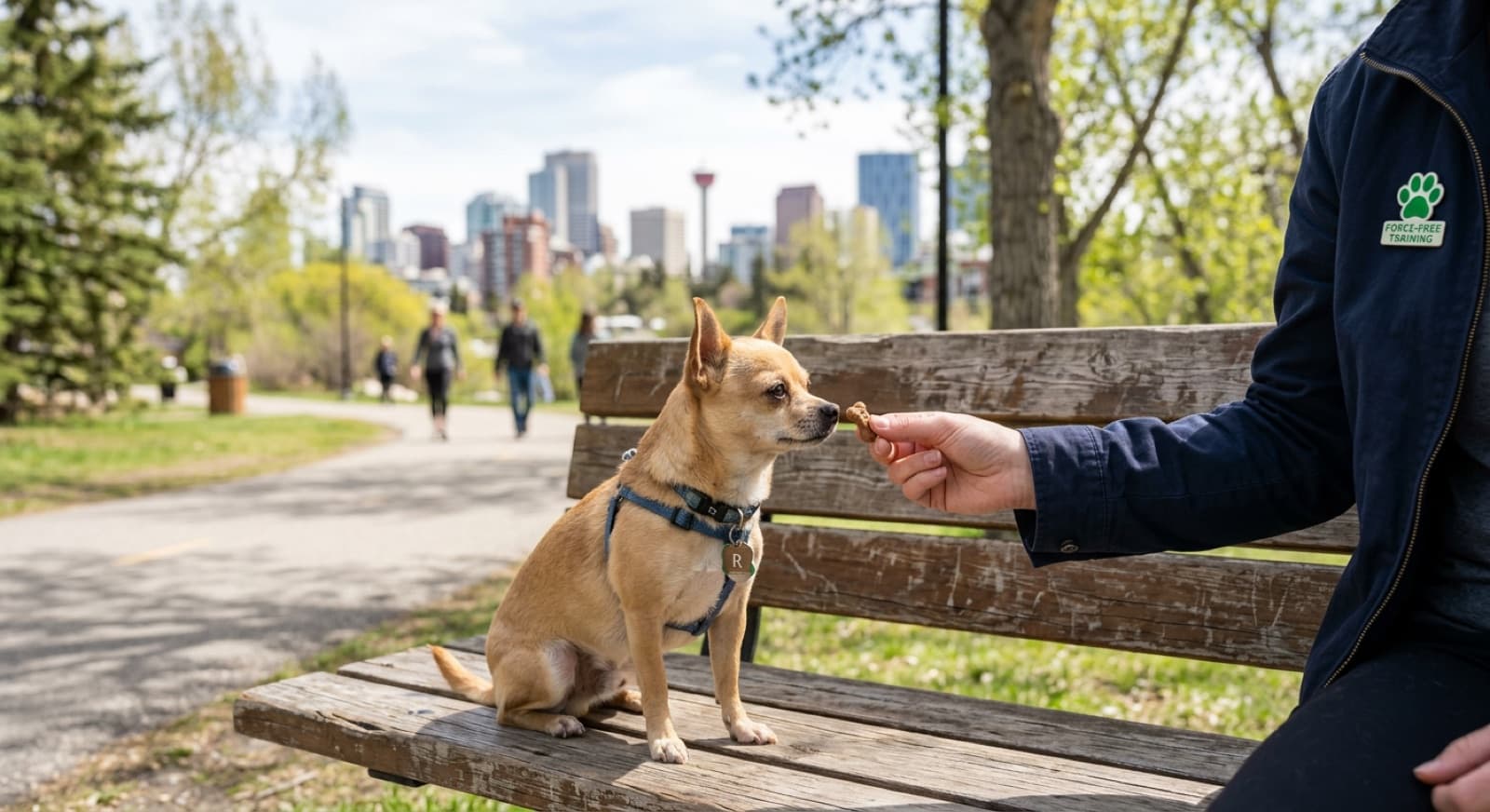
“Small dog syndrome” is not a breed trait. Modern dog behaviour science is clear: Chihuahua biting is a training and socialization issue, not a genetic flaw. Chihuahuas appear more aggressive because they are tiny (warnings are dismissed), under-socialized (often skipped puppy class), picked up without consent, and forced into uncomfortable situations (costumes, lap cuddles, strangers handling). The most common type is fear-aggression triggered by handling. Resource guarding and leash reactivity are also common. The fix is the same as for any breed: identify the trigger, stop reinforcing the behaviour, counter-condition with treats, desensitize gradually, and bring in a force-free Calgary trainer (Dogma, ImPAWSible Possible, Calgary K-9) if severity warrants it. Muzzle training is an underused safety tool. Dr. Jennifer Pelster at Calgary Veterinary Behaviour Services is the regional veterinary behaviourist for severe cases. Most biting Chihuahuas improve substantially within 8 to 16 weeks. Rehoming and behavioural euthanasia are rarely necessary.
A biting Chihuahua is not a bad dog. He is a scared dog reacting to a situation he did not choose.
The same defensive behaviour in a Labrador would be taken seriously and addressed with training. In a Chihuahua, it gets called “sassy” or “Napoleon complex” until the warnings escalate to broken skin. Treat your Chihuahua like a dog, not like a small-but-spicy version of a dog, and the behaviour usually improves faster than you expect.
The “small dog syndrome” myth, retired
Modern veterinary behaviour science rejects the idea that Chihuahuas are genetically wired to be aggressive. The American College of Veterinary Behaviorists, the AVSAB (American Veterinary Society of Animal Behavior), and every certified Calgary force-free trainer treat “small dog syndrome” as shorthand for a training and socialization gap, not a breed identity.
The Napoleon complex framing has been retired for the same reason “dominance training” has been retired: it does not match what behaviour research actually shows. Aggressive behaviour in any dog is overwhelmingly driven by fear, anxiety, pain, frustration, or learned defensive responses. Breed contributes some baseline tendencies, but the same Chihuahua raised with proper socialization, consent-based handling, and force-free training behaves dramatically differently from one raised without those inputs.
Why the myth persists:
- Size bias. Owners and the public dismiss small dog warnings (growls, snaps, lunges) as cute. The same warnings from a Lab would prompt training. The dog learns that warnings do not work and escalates to biting
- Socialization gap. Most Chihuahua owners do not take their dog to puppy class. They are easier to carry than walk, easier to keep at home than expose to the world. The dog reaches adulthood without ever having learned to navigate strangers, other dogs, handling, or new environments
- Constant pickup. Chihuahuas are picked up far more than any other breed. Most pickups happen without consent or warning. Every grab from above looks like a predator strike to a small dog
- Reinforcement loops. Chihuahuas often bark, growl, or snap to make scary things go away. When it works (the stranger backs off, the kid drops them, the vet pauses), the behaviour is reinforced
- Forced situations. Costumes, lap cuddles with no exit, being passed to strangers, being held while a child “hugs” them. The dog cannot leave, so the dog defends
The reframe: your Chihuahua is not aggressive. He is responding rationally to a series of situations he did not choose. Change the inputs, and the behaviour changes.
The four common types of Chihuahua aggression
| Type | Frequency in Chihuahuas | Trigger |
|---|---|---|
| Fear-aggression (handling) | Most common | Being grabbed, picked up, cornered, hugged, or face-approached |
| Resource guarding | Common | Food, bones, toys, sleeping spaces, sometimes a favourite person |
| Leash reactivity | Common | Other dogs, strangers, bikes on Calgary pathways. Usually defensive |
| Predatory chase | Less common | Cats, kids running, squirrels, small fast-moving objects |
Fear-aggression around handling is the type most Calgary Chihuahua owners deal with. The dog bites when picked up, when grabbed by the collar, when moved off the couch, when restrained at the vet, when a child reaches for him. The trigger is consistent: a human hand making contact without consent.
Resource guarding shows up around food bowls, bones, high-value chews, and sometimes the owner's lap. It is normal dog behaviour in any breed. Punishing the growl makes it worse. Counter-conditioning fixes it.
Leash reactivity in Chihuahuas looks alarming (lots of barking and lunging) but is almost always defensive, not predatory. The dog feels small, exposed, and trapped on a leash. Most reactive Chihuahuas are friendly off-leash with the same dogs they bark at on-leash.
Predatory chase is the least common and is genuinely managed differently from the other three. Chasing cats, small animals, or running kids is a hardwired prey-drive response. The fix is redirection (high-value reinforcement for impulse control) and environmental management (leash, baby gates, no off-leash around small animals).
The step-by-step fix for Chihuahua biting
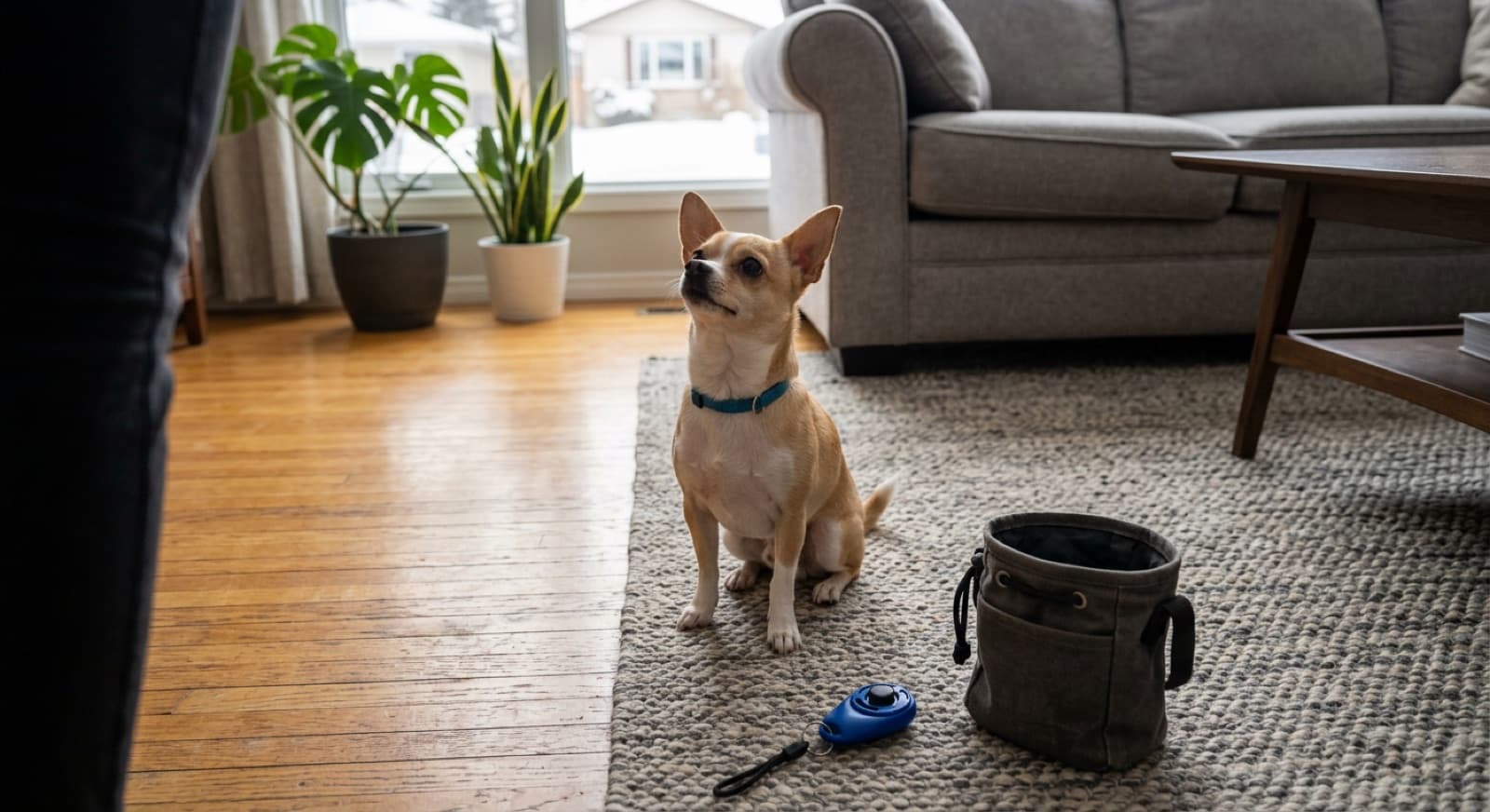
The protocol below applies to all four aggression types, with adjustments for the specific trigger. It is the same framework used by every certified Calgary force-free trainer.
Step 1: Identify the trigger. Get specific. Is it being picked up? Strangers approaching? Hands near the food bowl? Other dogs on walks? Write down every bite or growl incident for two weeks: time, place, what was happening, who was present. Patterns emerge fast. Generic “he is aggressive” is not actionable. “He growls when picked up off the couch by strangers” is.
Step 2: Stop reinforcing the behaviour. Do not grab a snapping dog. Do not yell, hit, scruff, or alpha-roll. These responses escalate fear and teach the dog that humans are dangerous. Also stop forcing the trigger situation. If your dog bites when picked up, stop picking him up for two weeks. If he guards the food bowl, feed him in a quiet space where no one approaches. Removing the rehearsal lets the dog reset.
Step 3: Counter-condition. Pair the trigger with something the dog loves (high-value treats: chicken, freeze-dried liver, cheese). The order matters. The trigger appears first, then the treat appears. Over time, the dog learns that the trigger predicts good things and the emotional response shifts from fear to anticipation. Example for hand-shy dogs: sit on the floor, present a closed fist at a distance the dog tolerates, then open and drop a treat. Repeat 50 times across several days. Gradually move the hand closer to the dog before the treat appears.
Step 4: Desensitize gradually. Increase the intensity of the trigger only as fast as the dog stays under threshold (calm enough to take treats). If the dog stops eating or shows warning signs (lip lick, head turn, whale eye, stiff body, freeze), you have moved too fast. Back off. The pace is the dog's pace, not yours. Most Chihuahuas show meaningful improvement within 2 to 4 weeks. Full resolution takes 8 to 16 weeks of consistent daily practice.
Step 5: Book a force-free trainer if severity warrants. Severity flags: broken skin, repeated bites, redirected aggression (biting the nearest human when frustrated), aggression in multiple unrelated contexts, sudden onset in an adult dog. Calgary force-free options below.
Step 6: Vet workup if the behaviour is sudden or escalating. Pain, thyroid issues, dental disease, eye issues, and neurological changes can all cause sudden aggression. Especially in Chihuahuas over 5, sudden behaviour change is medical until proven otherwise.
Calgary force-free trainers and behaviourists
Force-free (also called fear-free, R+, or positive reinforcement) is the only training approach recommended by the American College of Veterinary Behaviorists. Avoid any trainer who recommends prong collars, e-collars, or “dominance” methods for biting. They suppress warnings without addressing fear and often make biting worse.
Dogma Dog Training
Calgary's best-known force-free training school. Multiple locations across the city. Group classes (puppy, reactive dog, resource guarding) run $200 to $450 for a 6-week course. Private consultations $150 to $250 per session. Strong with small breeds and fear-based behaviour cases.
ImPAWSible Possible
Calgary force-free trainer specializing in reactivity and fear-aggression. Private sessions and small group reactivity classes. Pricing comparable to Dogma. Known for patient case work with severe biters.
Calgary K-9
Calgary trainer with force-free programs for small breeds. Private and semi-private sessions. Good fit for owners who want one-on-one work rather than group classes.
Dr. Jennifer Pelster, Calgary Veterinary Behaviour Services
The regional veterinary behaviourist for serious cases. Veterinarian with board certification in animal behaviour. Can prescribe behaviour medications (fluoxetine, trazodone, clonidine) alongside training, and rule out medical contributors. Referral is usually through your primary vet. Initial consultation $400 to $600 with a written treatment plan. Right path for: dogs that have broken skin repeatedly, bitten children, or not responded to 8+ weeks of force-free training.
Calgary Humane Society behaviour support
Free behaviour consultations for adopters in the first 30 days post-adoption. Phone and email support beyond that for any Calgary dog owner. Good first stop for early concerns.
Muzzle training for Chihuahuas
Muzzle training is one of the most underused safety tools for biting Chihuahuas. A properly fitted basket muzzle lets the dog pant, drink, and take treats while preventing bites. Train every dog with a bite history, even if you never expect to use it.
When to muzzle-train:
- Vet visits. A muzzle-trained dog is calmer at the vet because staff can examine without restraint stress. Calgary vets (Riverbend, Care Centre, McKnight 24-Hour) treat muzzle-trained dogs better, not worse
- Grooming. Nail trims, ear cleaning, matted-coat work all go safer with a muzzle
- Kid introductions. Removes the bite risk so you can focus on counter-conditioning
- Reactivity rehab walks. Some owners walk reactive Chihuahuas muzzled during the early phases of training as a safety net
- Stranger meetings. Family gatherings, new visitors in the home
What to buy: Baskerville Ultra basket muzzle, size 1 or 2 for most Chihuahuas. $25 to $40 at Calgary pet stores (Tail Blazers, Pet Planet, Bone & Biscuit). The basket design lets the dog pant and drink. Fabric “sleeve” muzzles are not safe for more than a few minutes because they restrict panting.
How to train: Force-free and slow. Treat near the muzzle (week 1). Treat through the muzzle opening (week 1 to 2). Brief snout-in-muzzle, no strap (week 2). Strap fastened for 5 seconds, then 30, then 2 minutes (week 3). Wear during pleasant activities like walks and treats (week 4). Most Chihuahuas can be fully muzzle-comfortable in 2 to 4 weeks of short daily sessions. Never strap a muzzle on an untrained dog.
Free muzzle training resources: The Muzzle Up! Project (muzzleupproject.com) and Calgary force-free trainer YouTube channels.
Multi-dog versus single-dog homes
Some Chihuahuas thrive in multi-dog homes. Others do significantly better as the only dog. The factor that matters most is the individual dog's history and temperament, not breed.
Chihuahuas that often do well in multi-dog homes:
- Socialized with other dogs from puppyhood
- Paired with another small or medium dog of compatible energy
- Have an established positive relationship with the resident dog before adoption
- Have a confident handler willing to manage resource access (separate feeding, separate beds, separate high-value chews)
Chihuahuas that often do better as the only dog:
- Have a history of dog-directed aggression (not just reactivity, but real conflict)
- Are extremely resource-guarding and the household cannot fully separate
- Are paired with a much larger dog whose play style is rough (size mismatch injury risk)
- Show chronic stress around the resident dog (avoidance, hiding, appetite loss, sleep disruption)
The decision is not breed-based. A Chihuahua that bonds with the resident dog can live happily for years in a multi-dog household. A Chihuahua that consistently shows stress should be reassessed. Quality of life matters for both dogs.
If you are considering adding a second dog to a household with a biting or reactive Chihuahua, do not. Resolve the existing behaviour issues first, ideally with a trainer assessment, before introducing a new dog. Adding stress rarely fixes existing aggression.
When to consider rehoming or euthanasia
Almost never, and never as a first response. Chihuahua biting is one of the most rehabbable behaviour issues in dogs because the underlying causes respond well to force-free training. Most Chihuahuas labeled “aggressive” can be substantially improved within 3 to 6 months.
Before considering either option, exhaust this sequence:
- Vet workup to rule out pain, thyroid, dental, neurological, and eye issues
- 8 to 12 weeks of consistent force-free counter-conditioning with a qualified Calgary trainer
- Veterinary behaviourist consultation (Dr. Jennifer Pelster) including behaviour medication if appropriate
- Environmental management changes (safe spaces, separated feeding, no forced handling, no children unsupervised)
- Reassessment at 6 months. Significant progress usually visible by then if the protocol is followed
Rehoming may be appropriate when: the dog has bitten and the home cannot fully implement management (e.g., young children, vulnerable adults), the dog shows clear stress in the current home that does not improve with environmental changes, the household genuinely cannot provide the training time the dog needs. Calgary rescues (AARCS, Pawsitive Match, Heaven Can Wait) accept owner surrenders without judgment when a placement is genuinely a better match.
Behavioural euthanasia is rare and serious. It is reserved for dogs with severe, unpredictable, and dangerous aggression that has not responded to behaviour medication and a veterinary behaviourist treatment plan. It is not appropriate for a Chihuahua who growls when picked up or who is reactive on leash. The decision is always made in consultation with a vet behaviourist, never by a frustrated owner alone.
The honest reality: most Chihuahua bite cases that owners feel hopeless about respond well to a structured force-free plan within months. Frustration is understandable, but a Chihuahua biting is not a moral failure of the dog or the owner. It is a training and management problem with a known fix.
Frequently Asked Questions
Is small dog syndrome real?
No. Modern veterinary behaviour science treats it as a training and socialization issue, not a breed trait. Chihuahuas appear more aggressive because warnings are dismissed, socialization is skipped, and they are constantly picked up without consent. The Napoleon complex framing has been retired by the behaviour field.
Why does my Chihuahua bite when I pick him up?
Fear-aggression around handling, the most common type. Stop all non-essential picking up for two weeks. Sit on the floor, let the dog approach, pair every hand appearance with a treat. Most Chihuahuas improve within 2 to 4 weeks of force-free counter-conditioning.
Why does my Chihuahua guard food?
Resource guarding, common in many breeds. It is anxiety, not dominance. Never punish a growl. Walk past the bowl and drop high-value treats in. Trade up for toys. Severe cases need a force-free trainer (Dogma, ImPAWSible Possible).
Is my leash-reactive Chihuahua aggressive?
Almost always not. Leash reactivity in small dogs is overwhelmingly defensive. Increase distance from triggers, mark and treat at calm distances, walk in quiet places (Nose Hill weekday morning, residential streets). Most reactive Chihuahuas improve in 6 to 12 weeks. Avoid prong and e-collars.
How do I stop biting toward kids?
Teach the kids, not just the dog. Rules: no picking up, no hugging, no chasing, no approach during eating or sleeping. Dog needs a safe space the kids cannot enter. Never leave alone with a child under 8. Any broken-skin bite on a child means a veterinary behaviourist consultation.
Should I muzzle train?
Yes, even if you never expect to use it. Baskerville Ultra basket muzzle ($25 to $40), force-free training over 2 to 4 weeks. Useful for vet visits, grooming, kid introductions, reactivity rehab. The Muzzle Up! Project has free guides.
When do I see a veterinary behaviourist?
Repeated broken-skin bites, bite to a child, unpredictable aggression, no improvement after 6 to 8 weeks of force-free training, sudden onset in an adult dog, generalized anxiety beyond aggression. Calgary referral: Dr. Jennifer Pelster, Calgary Veterinary Behaviour Services. $400 to $600 initial consultation.
Should I rehome or euthanize?
Almost never as a first response. Most biting Chihuahuas improve substantially in 3 to 6 months of consistent force-free work. Exhaust vet workup, 8 to 12 weeks of training, and a vet behaviourist consultation first. Behavioural euthanasia is rare and always vet-behaviorist endorsed, never an owner-alone decision.
Chihuahua Behaviour & Temperament Calgary
Honest breed temperament, what to expect day-to-day, common myths, and the personality range of rescue Chihuahuas.
Chihuahua Separation Anxiety
Why Chihuahuas are prone to separation anxiety, the desensitization protocol, and Calgary trainer support.
Is a Chihuahua Right for You?
Honest fit assessment for Calgary households, including kids, multi-dog homes, apartment living, and senior owners.
Chihuahua Adoption Calgary
Where to adopt a Chihuahua in Calgary, rescue partners, typical adoption fees, and what to expect from a rescue Chi.
New dog? Start with these care guides
Everything a new adopter needs to set up a safe, happy home.