The short version
Chihuahuas weigh 3 to 6 lbs and live 12 to 20 years. The core temperament is confident, alert, and intensely bonded to one chosen person. They are not lap accessories. They are watchdogs in tiny bodies. Expect alert barking at every doorbell, trembling in Calgary cold, deep velcro attachment to their primary person, and real aloofness with strangers. They are highly sensitive to harsh tones and rough handling and will shut down or snap if pushed. Most “bad Chihuahua” stories trace back to under-socialization, painful handling, or correction-based training, not the breed itself. Treat them as small, intelligent, easily-overwhelmed companions and they are extraordinary.
The Chihuahua Personality Core
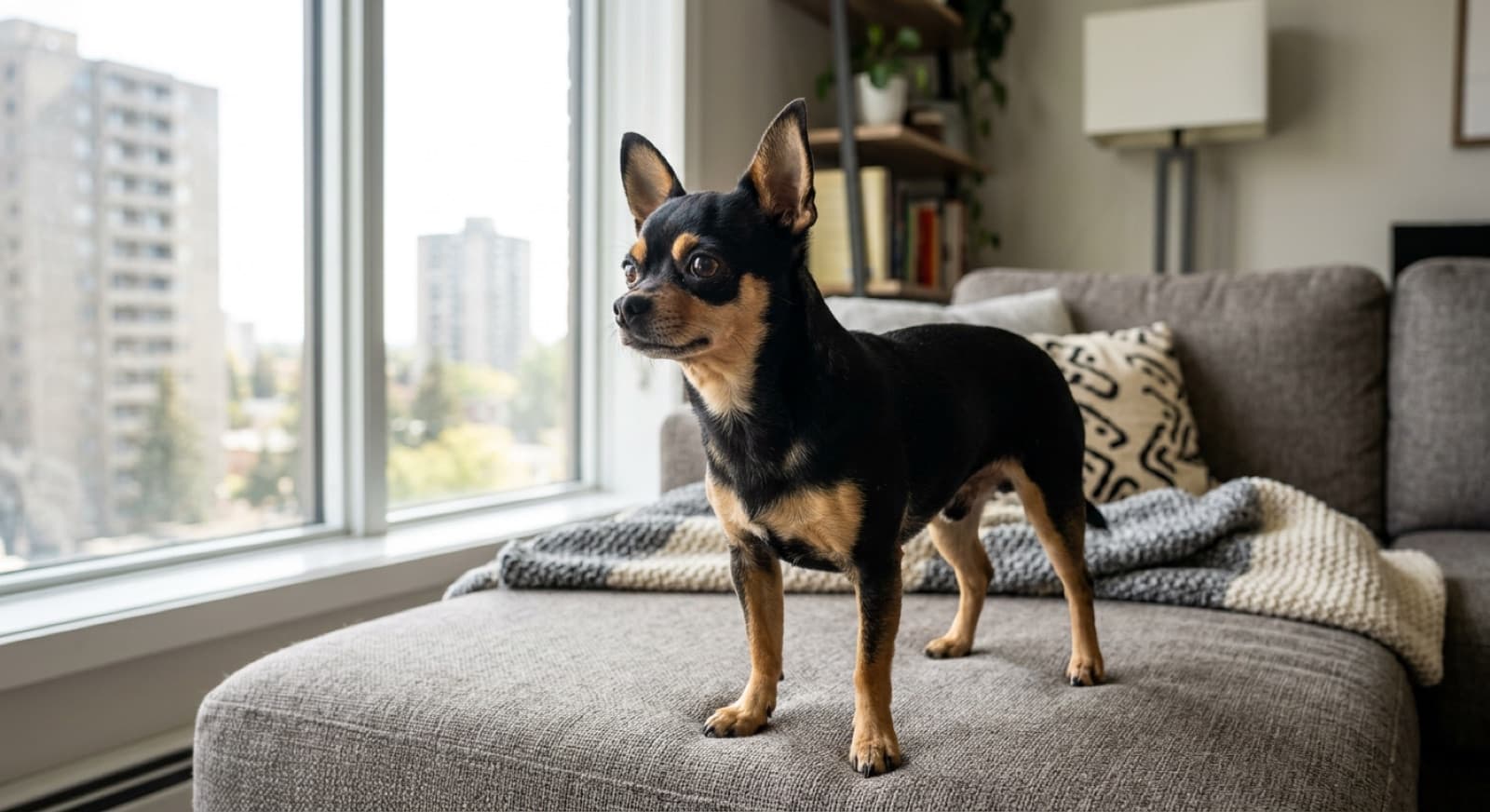
Strip away the purse-dog stereotype and you find a confident, bold, often fearless little dog. The breed standard calls for “terrier-like” spirit, and most Chihuahuas live up to it. They make eye contact with much larger dogs without backing down. They protest loudly when a stranger steps too close to their person. They follow their chosen human everywhere and want physical contact most of the day.
That confidence is not bluster. A Chihuahua who has been well-socialized and never punished for vocal warnings will hold ground in a calm, neutral way. The yapping, lunging, “ankle-biter” reputation usually shows up in dogs who learned early that the world is unpredictable and people grab at them without asking. Confidence and reactivity look similar from across the room. They are not the same thing.
The other half of the core is watchdog instinct. Chihuahuas bark at noises long before any larger breed has registered them. They were bred to alert their owners to anything unusual, and the breed never lost the job. In a Calgary house this means barking at hallway footsteps, the elevator chime, the buzz of the building intercom, and any squirrel passing the patio door. The alert is a feature, not a bug. The volume can be managed; the instinct cannot.
The Velcro One-Person Bond
Most Chihuahuas pick one person and lock in. Usually it is the one who feeds them, walks them, and shares the bed. The bond is genuinely deep and the dog will choose that person over food, over toys, and over other family members. If you live alone, this is wonderful. If you have a partner and kids, expect some hurt feelings as the dog quietly picks a favourite.
Other household members can build their own bond by hand-feeding meals, taking solo walks, and offering chew time. It works, slowly. The primary person usually stays preferred. Some Chihuahuas extend the bond to a second person, but a third or fourth is rare. Multi-person households work best when everyone accepts that the dog is going to pick one.
The flip side of velcro bonding is separation anxiety. Chihuahuas left alone for long stretches can develop real panic responses (panting, pacing, barking, house-soiling). Calgary rescue intake notes show this clearly: working-household surrenders are common, and a Chihuahua plus a 9-hour workday with no plan is one of the most predictable mismatches we see. If you work long days, plan for daycare, a walker, or work-from-home flexibility. Our Chihuahua separation anxiety guide covers prevention and treatment in detail.
The “Tiny Dog, Big Personality” Stereotype
How much of the “big personality in a tiny body” cliche is real? Most of it. Chihuahuas truly do not act like 4 lb dogs. They demand space, vocalize about preferences, refuse food they dislike, and stand their ground in front of much larger animals. They have opinions about routine, sleeping spots, and who is allowed on the couch.
What is breed-myth, though, is the idea that this personality is invincible bravado. Underneath, Chihuahuas are physically fragile and easily overwhelmed. The bold front is partly genuine confidence and partly compensation for being the smallest creature in every room. A confident Chi who has never been scared by rough handling or aggressive dogs is genuinely fearless. A Chi who has been startled, dropped, or grabbed once too often becomes loud and reactive instead of bold.
The other myth is “small dog syndrome.” The behaviour usually labeled this way (jumping, snapping, refusing to walk, demanding to be carried) is rarely a Napoleon complex. It is normal learned behaviour in a dog that was never asked to do anything different. Small dogs get picked up instead of trained, and reactivity gets laughed off because it is “cute” from a 4 lb dog. Train a Chihuahua like you would a 40 lb dog, in scale, and the “syndrome” mostly disappears.
Why Your Chihuahua Trembles
Trembling is the single most-Googled Chihuahua question. It has many causes and most are normal for the breed.
Cold (the most common Calgary cause)
Chihuahuas have very low body fat and minimal undercoat. They lose heat fast and start shivering well above the temperature most owners notice. Below 19C indoors, many Chis need a thin sweater. Below 0C outdoors, a real insulated coat is non-negotiable. A heated bed or self-warming pad usually solves indoor trembling overnight.
Excitement
A happy tremor when you come home, before dinner, or during a high-value treat is normal. The body is processing arousal. It passes in seconds to a couple of minutes.
Anxiety or fear
Vet visits, strangers in the home, fireworks, thunder, and unfamiliar dogs trigger anxious trembling. Often combined with tucked tail, lip licking, yawning, or hiding. Manage by removing or buffering the trigger, not by forcing the dog through it.
Hypoglycemia (low blood sugar)
A real risk in Chihuahua puppies and very small adults. Signs: trembling plus weakness, glazed eyes, wobbly gait, sometimes collapse. Emergency. Rub a small amount of corn syrup, honey, or maple syrup on the gums and head to a vet immediately. Prevent by feeding puppies 4 to 6 small meals a day until 6 months old.
Nausea or pain
A new tremor with vomiting, refusing food, hunched posture, or limping is a pain signal. Worth a vet check within 24 hours. Chihuahuas hide pain well and trembling can be the first visible sign.
The rule of thumb: short tremors that stop when the dog warms up or settles are normal breed behaviour. A new, persistent, or worsening tremor with any other symptom needs a vet. Calgary winter trembling is almost always cold-driven and resolves with a sweater plus heated bed.
The Watchdog Bark
Chihuahuas bark first and ask questions never. The breed was kept as a small house guardian for centuries. They alert to anything new. In a Calgary apartment that means hallway footsteps, the elevator opening, neighbours' doors, the building intercom, dogs passing on the sidewalk, and crows on the balcony. In a house it means the doorbell, delivery vans, and squirrels at the bird feeder.
You cannot train this instinct away. You can train the volume and duration down. The best approach is alert-bark management, not bark suppression.
- Acknowledge the alert. A calm “thank you” or “I see it” cue, followed by a treat. Teaches the dog the message was received.
- Counter-condition triggers. Door knock predicts treats raining from your hand, not threat. After 4 to 6 weeks the door knock cue becomes a happy expectation, not an alarm.
- Remove visual triggers. Window film on the patio door, baby-gates blocking sight-lines to the entry, and a quiet bed away from the front door cut alert opportunities in half.
- Build a settle cue. A mat or bed where the dog gets fed and chewed for being calm. Become the predictor of good things on the mat. The mat becomes the off-switch.
Shock collars, spray collars, and yelling all work in the short term and create a more anxious, less predictable dog in the medium term. Force-free Calgary trainers (Dogma, Calgary K-9, ImPAWSible Possible) run small-dog reactivity programs and are worth the $200 to $500 investment. Our Chihuahua biting and aggression guide covers the more serious end of the reactivity spectrum.
Aloof vs Fear-Aggressive
These two get confused often and they need different solutions.
Aloof. A Chihuahua who doesn't want strangers to touch it, moves behind your legs, watches with a hard stare, or growls quietly when a hand approaches is being normal. The breed is reserved with new people. Aloof Chis need space, choice, and time. Do not force greetings. Tell strangers no thank you to petting, hand the dog a high-value chew instead, and let it observe from a safe distance.
Fear-aggressive. A Chihuahua who lunges, snaps, or bites without an obvious threat (or with a threat the dog perceives but you cannot see) is past aloof. Common triggers are a hand reaching from above, being lifted by the collar or chest grab, having food or toys taken away, being startled awake, or being in physical pain. Fear-aggression usually comes from one of three sources: under-socialization in puppyhood, learned that growl warnings get punished (so the dog skipped straight to bite), or chronic dental, knee, or back pain.
Different problems, different solutions. Aloof needs space and patience. Fear-aggressive needs a force-free trainer, a vet check for pain (especially teeth and back), and a structured behaviour modification plan. Never punish growling. The growl is the warning before the bite. Punish the growl and you get the bite with no warning.
Sensitivity to Tone and Handling
Chihuahuas are emotionally sensitive in a way that surprises new owners. Yell once and they hide. Yank a leash and they shut down. Use a sharp tone of voice and they avoid you for hours. The breed reads micro-expressions and tone with unusual accuracy.
This is why force-free training is not optional with Chihuahuas. It is the only thing that works. Correction-based methods (leash pops, alpha rolls, e-collars, scruff shakes, water sprays) produce a dog that is afraid of you, not a dog that has learned. Force-free training (food, praise, play, removal of reward for unwanted behaviour) is faster and produces a confident, willing partner.
Handling sensitivity is the second piece. Pick a Chihuahua up from underneath. Slide one hand under the chest, the other supporting the rump, and lift to your body. Never grab from above. Predators come from above and the breed is genuinely wired to fear an overhead reach. Never pick up by the front legs. Never yank by the collar. Never scruff. Children should sit on the floor and let the dog come to them rather than chasing or grabbing.
Chihuahuas are also injury-prone. Tracheas are fragile (always walk on a harness, never a collar), knees luxate (don't let them jump from the bed or couch), and spines can herniate with rough handling. A Chi who has been hurt once will object loudly to all future pickups, even gentle ones. Rebuild the habit with patience and food rewards over weeks, not days.
The Warmth-Seeking Snuggler
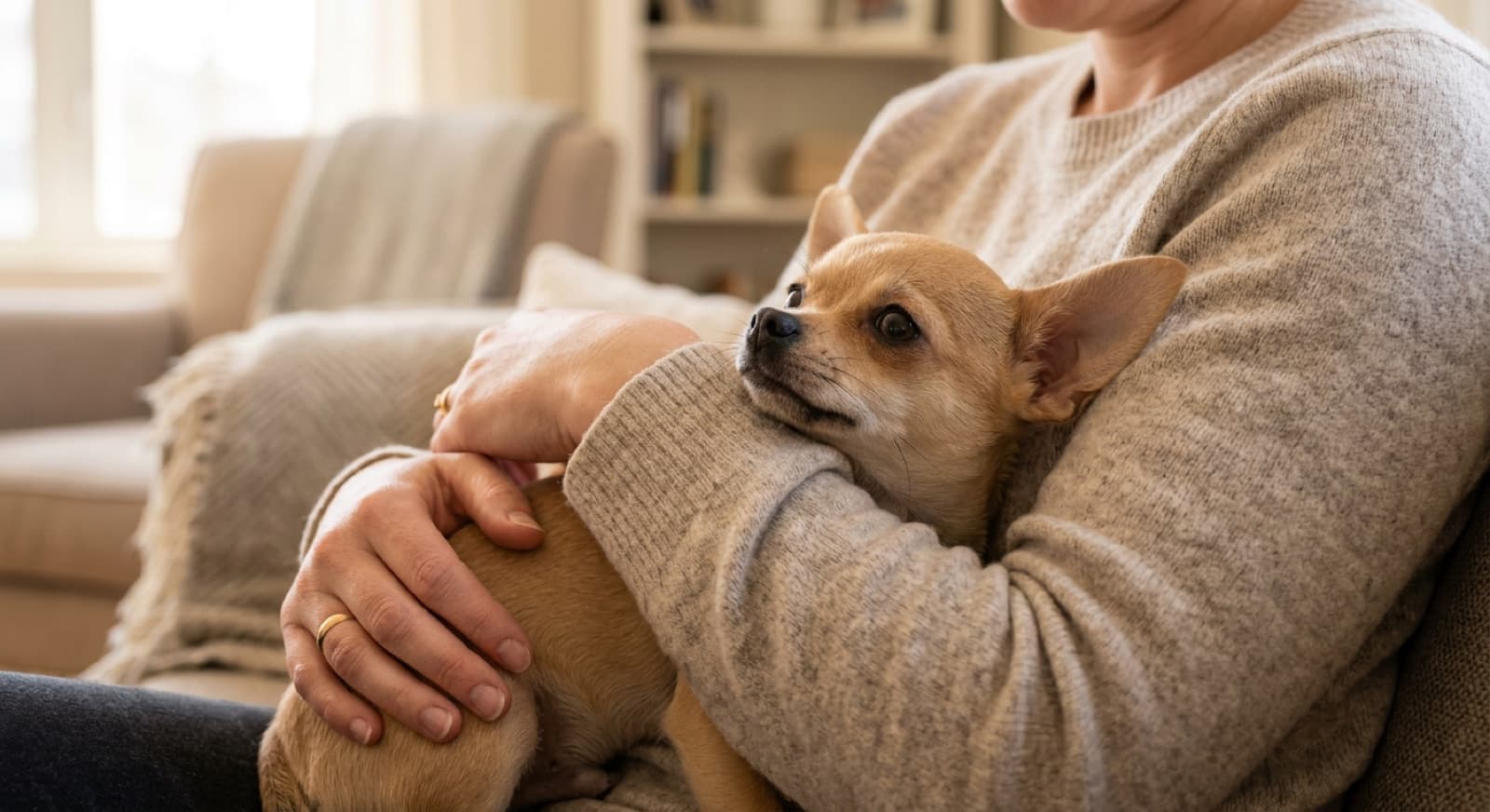
Cuddling is not just affection. It is thermal regulation. Chihuahuas have so little body fat and undercoat that they seek warmth as a basic survival behaviour. The classic Chihuahua moves are: burrow under the blanket, sit on the heating vent, perch on the back of the couch in the sunbeam, and sleep against a person's ribs or neck.
This is fine in moderation and helpful for the dog. A few practical tools that make a real difference in a Calgary home:
- Heated bed or self-warming pad. $30 to $80. The single best comfort upgrade for a Chihuahua.
- Indoor sweater for winter. A thin fleece or knit. Many Chihuahuas wear one indoors from November to March.
- Real insulated winter coat. Not a fashion vest. A proper coat for walks below 0C.
- Booties. Mandatory below -10C. Calgary sidewalk salt cracks paw pads fast and Chihuahuas cannot push through it like a 60 lb dog.
- Snuggle sack in the carrier. Useful for vet trips, friends' houses, and longer winter outings.
More on cold-weather management in our Chihuahua winter survival guide.
The “Diva” Reputation
Chihuahuas have a drama-queen image. Refuses food. Demands to be carried. Snubs guests. Sulks when ignored. Some of this is real and some is breed-myth dressed up as personality.
The real version: Chihuahuas have low frustration tolerance and they communicate displeasure loudly because they have no other tools. A 4 lb dog cannot push a 200 lb human out of the way. It can vocalize, refuse to eat, freeze on the walk, and protest with body language. What looks like drama is usually a frustration response from a dog whose preferences were never accommodated and whose limits were never taught.
The breed-myth version: that Chihuahuas are stuck-up by design. They are not. Well-socialized Chihuahuas with predictable routines, force-free handling, and gradual exposure to new things are sociable, adaptable, and generally cheerful. The “diva” pattern is created by environments where the dog learns that protesting works and where it never gets the chance to build resilience.
Fix the underlying frustration, build resilience with brief manageable challenges, and the drama mostly disappears.
Compatibility With Other Animals
With other dogs
Most Chihuahuas prefer other Chihuahuas or small dogs of similar size. Many multi-Chi households work beautifully. Large dogs are a real risk. A Chihuahua who has been startled, knocked over, or hurt by a big dog can become reactive to any dog taller than knee height. Calgary off-leash parks like Sue Higgins, Nose Hill, and River Park are usually too overwhelming. Small-dog playdates, fenced backyards, and quiet trail walks are a better fit.
With cats
Usually fine. Most Chihuahua and cat households reach a stable truce within weeks, often with the cat in charge. Slow introductions help: separate rooms first, baby gate exchanges, supervised meetings, then full access. Prey-drive incidents are rare with Chihuahuas. They are a companion breed, not a terrier or sighthound.
With kids
Conditional. Chihuahuas do well with older, calm kids (8+) who understand “sit on the floor, let the dog come to you, no grabbing.” They do poorly with toddlers and rough handling. Most Chihuahua bites of children happen when a child grabs, lifts, or chases the dog. Adult-only or older-kid households are the safest match.
With strangers
Aloof by default. The breed bonds intensely to its person and treats strangers with suspicion or indifference. This is normal. Push too hard and aloofness becomes fear-aggression. Let strangers ignore the dog. Let the dog approach if and when it wants.
Ready for the velcro life?
Calgary rescues have Chihuahuas and Chihuahua mixes in adoption rotation most weeks. Adult dogs from foster homes come with documented temperament notes: who they like, who they avoid, how they handle strangers, and what their warmth and walk routine looks like.
See Available Chihuahuas →Frequently Asked Questions
Why is my Chihuahua shaking?
Trembling has several causes. Cold is the most common in Calgary because Chihuahuas have very low body fat. Other causes are excitement, anxiety, low blood sugar in puppies, nausea, and pain. A short tremor that stops when the dog warms up or settles is normal. A new, persistent, or worsening tremor with lethargy or vomiting needs a vet within 24 hours. Calgary winter trembling is best managed with a heated bed, an indoor sweater, and a real winter coat plus booties for walks.
Why does my Chihuahua only love one person?
It is breed-typical. Chihuahuas were bred as one-person companion dogs and they pick a primary person, usually the one who feeds and walks them. Other family members can build their own bond through hand-feeding and solo time, but the primary person is usually still preferred. This is the velcro pattern. It is wonderful for solo owners and harder for families wanting evenly split attention.
Why does my Chihuahua bark at everything?
Watchdog instinct. Chihuahuas were bred to alert. In Calgary apartments this triggers on hallway footsteps, the elevator, dogs outside, and squirrels. Manage with counter-conditioning, a calm acknowledgment cue, removing visual triggers like window sight-lines, and a settle cue on a mat. Force-free Calgary trainers (Dogma, Calgary K-9, ImPAWSible Possible) run small-dog reactivity programs. Shock and spray collars usually make the dog more anxious.
Are Chihuahuas actually aggressive?
Most are aloof, not aggressive. Aloof means the dog moves away from strangers and may give quiet warnings (growl, hard stare). That is normal breed behaviour. True fear-aggression involves lunging, snapping, or biting and usually comes from under-socialization, punished growling, or chronic pain. Aloof needs space and patience. Fear-aggressive needs a force-free trainer, a vet check, and a structured behaviour plan.
Are Chihuahuas good with other dogs and cats?
With other dogs, they prefer Chihuahuas or small dogs of similar size and are often intimidated by large dogs. Calgary off-leash parks are usually too overwhelming. Smaller parks or scheduled small-dog playdates work better. With cats, usually fine. Most reach a stable truce with the cat in charge. Prey drive is rare in the breed.
Why does my Chihuahua hate being picked up?
Probably handling style. Predators come from above and Chihuahuas are wired to fear overhead reaches. Pick up from underneath: one hand under the chest, the other supporting the rump, lift to your body. Never grab from above, never lift by front legs, never scruff. A Chihuahua who has been hurt by past rough handling will object to all future pickups. Rebuild with patience and food rewards over weeks.
Are Chihuahuas drama queens?
Partly. The breed has low frustration tolerance and communicates loudly because it has no other tools. What looks like drama is usually frustration from a dog whose limits were never taught. Well-socialized Chihuahuas with predictable routines and force-free handling are far less “dramatic” than the stereotype suggests. Treat the underlying frustration and the drama mostly disappears.
How do Chihuahuas handle Calgary winters?
Badly without help, fine with the right gear. Indoors below 19C, many Chihuahuas need a thin sweater. Outdoors below 0C, a real insulated coat is non-negotiable. Below -10C, booties are mandatory because sidewalk salt cracks paw pads. Walks below -15C should be 5 to 10 minutes maximum, split into two short trips. A heated bed or self-warming pad is the best comfort upgrade for the breed. Most Calgary Chihuahuas do winter exercise indoors with food puzzles and hallway fetch.
More Chihuahua guides
Is a Chihuahua Right for You? →
Honest Calgary self-assessment. Lifestyle, budget, family, climate, and 12 questions before you adopt.
Chihuahua Separation Anxiety →
Why velcro bonding turns into anxiety, how to prevent it from day one, and what to do once panic has already started.
Chihuahua Biting and Aggression →
Fear-aggression vs aloofness, pain-driven reactivity, and the force-free Calgary plan for a dog that has already bitten.
Chihuahua Winter Survival →
Coats, booties, walk-time caps, and the indoor-exercise routine that keeps small dogs sane from November to March.
New dog? Start with these care guides
Everything a new adopter needs to set up a safe, happy home.