The honest version
Senior Chihuahuas are the most undervalued dogs in Calgary rescue. The math nobody runs is simple. Chihuahuas live 12 to 20 years, with many reaching 16 to 18 in good health. A 12 year old rescue Chi often has 5 to 8 years ahead. That is longer than the entire lifespan of many large breeds. What you bring home is a house-trained, calm, settled dog with a known temperament, a documented medical history, and a deep capacity for gratitude. Compassion pricing runs $135 to $300, sometimes free. Annual care runs $1,500 to $3,500. The emotional weight of a senior end-of-life chapter is real. So is the reward of giving a small loved dog a soft landing for her retirement. Most Calgary adopters who take this path say it was the most meaningful adoption of their lives.
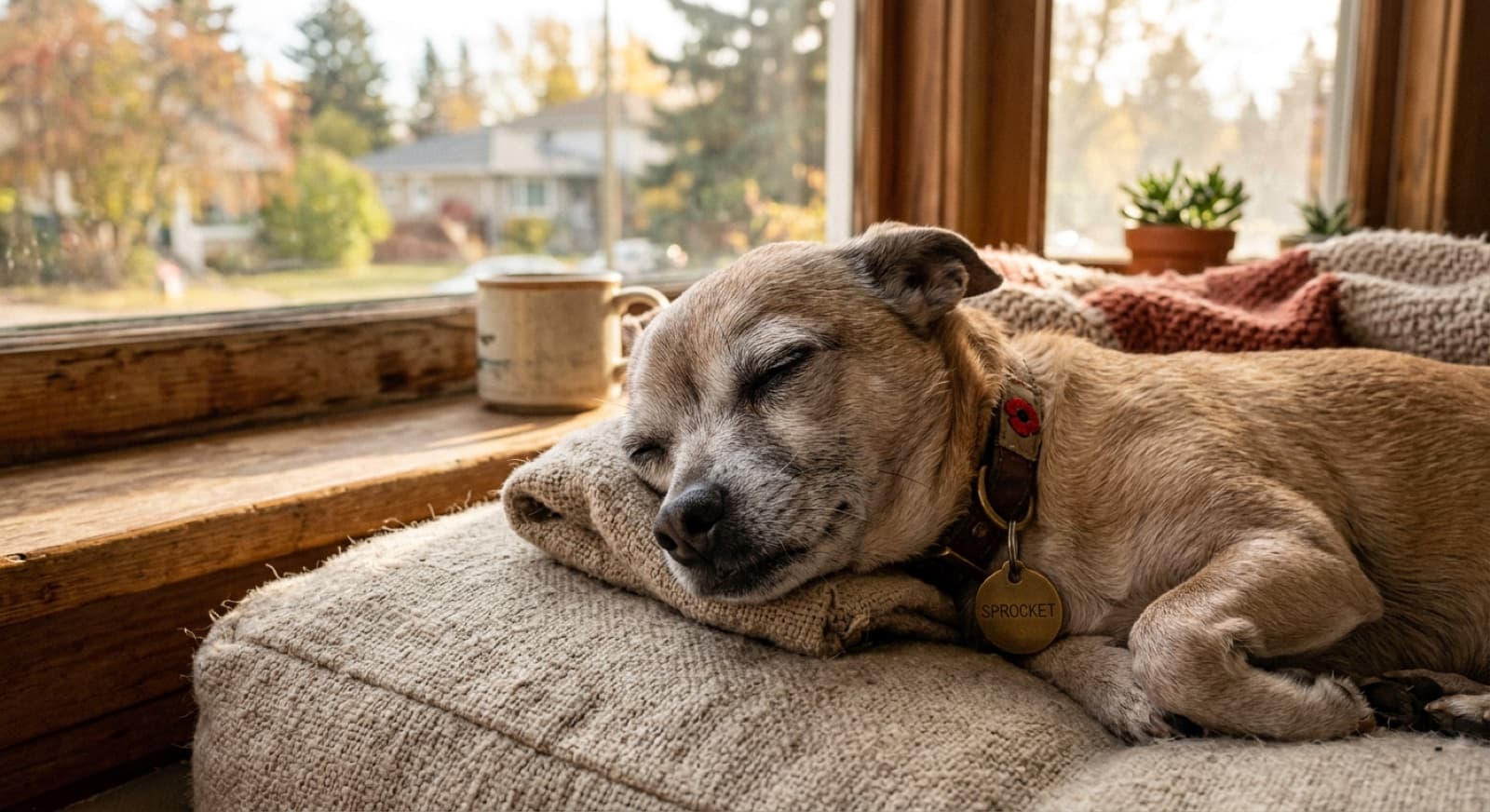
Why Calgary Rescues Fill With Senior Chihuahuas
Walk through any Calgary rescue list of small dogs and the pattern is clear. Senior Chihuahuas appear week after week, often three or four at a time. The reason is not breed neglect. It is breed math.
Chihuahuas live 12 to 20 years, longer than almost any other dog breed. The most common original owner of a Chihuahua is an older adult who chose a small lap dog as a quiet, manageable companion. When that owner dies or moves to assisted living, the dog is suddenly homeless. Family members are often unable to take the dog. Sometimes new family allergies appear. Sometimes the dog goes to a son or daughter who returns her after a few weeks. The Chihuahua, who has only ever known one quiet home and one loved person, ends up in rescue.
Other common surrender patterns include the owner developing late-onset allergies, the family being unable to handle senior medical care costs, divorce or job relocation forcing a sudden housing change, and adult children of a deceased owner who simply cannot keep the dog.
The pattern is heartbreaking but the dogs themselves are usually wonderful. Senior Chihuahuas come from homes where they were loved. They are typically house-trained, socialized to humans, used to a calm daily routine, and confused about why their world changed. What they need is a soft landing.
The Lifespan Math Nobody Runs
The biggest myth about senior dog adoption is that you are signing up for a short commitment. For a Chihuahua, that math is wrong.
Realistic remaining lifespan by age at adoption
- 10 year old Chihuahua: Often 6 to 10 years ahead. Many reach 16 to 18.
- 12 year old Chihuahua: Often 4 to 8 years ahead. Many reach 16 to 17.
- 14 year old Chihuahua: Often 2 to 6 years ahead. Many reach 16 to 18.
- 16 year old Chihuahua: Often 1 to 4 years ahead. The hospice end of the range.
Compare this to a Great Dane, where a 6 year old is already senior and may have only 2 to 4 years left. Or a Bernese Mountain Dog, where the median lifespan is 7 to 10 years total. A senior Chihuahua adopted at 12 will likely outlive a Bernese Mountain Dog adopted as a puppy.
This is the lifespan math that turns senior Chi adoption from a feel-good gesture into a genuine multi-year companion commitment. You are not signing up for a goodbye. You are signing up for a friend.
What You Are Really Adopting
A house-trained dog (mostly)
Most senior Chis arrive house-trained after a decade or more in a single home. Occasional overnight accidents are normal as kidneys age, easily managed with a pee pad backup near the door. You skip the eight weeks of puppy potty training entirely. For many adopters this alone justifies senior adoption.
A known temperament
Puppy adoption is partly a guess. Senior adoption is not. What the foster home describes is what you bring home. Reactive to other dogs? Documented. Scared of men in hats? Documented. Loves cats? Documented. The foster notes from Calgary rescues like AARCS, Furball Force, and BARCS are usually detailed and honest because the dog has lived in a real home for weeks.
A calm retirement companion
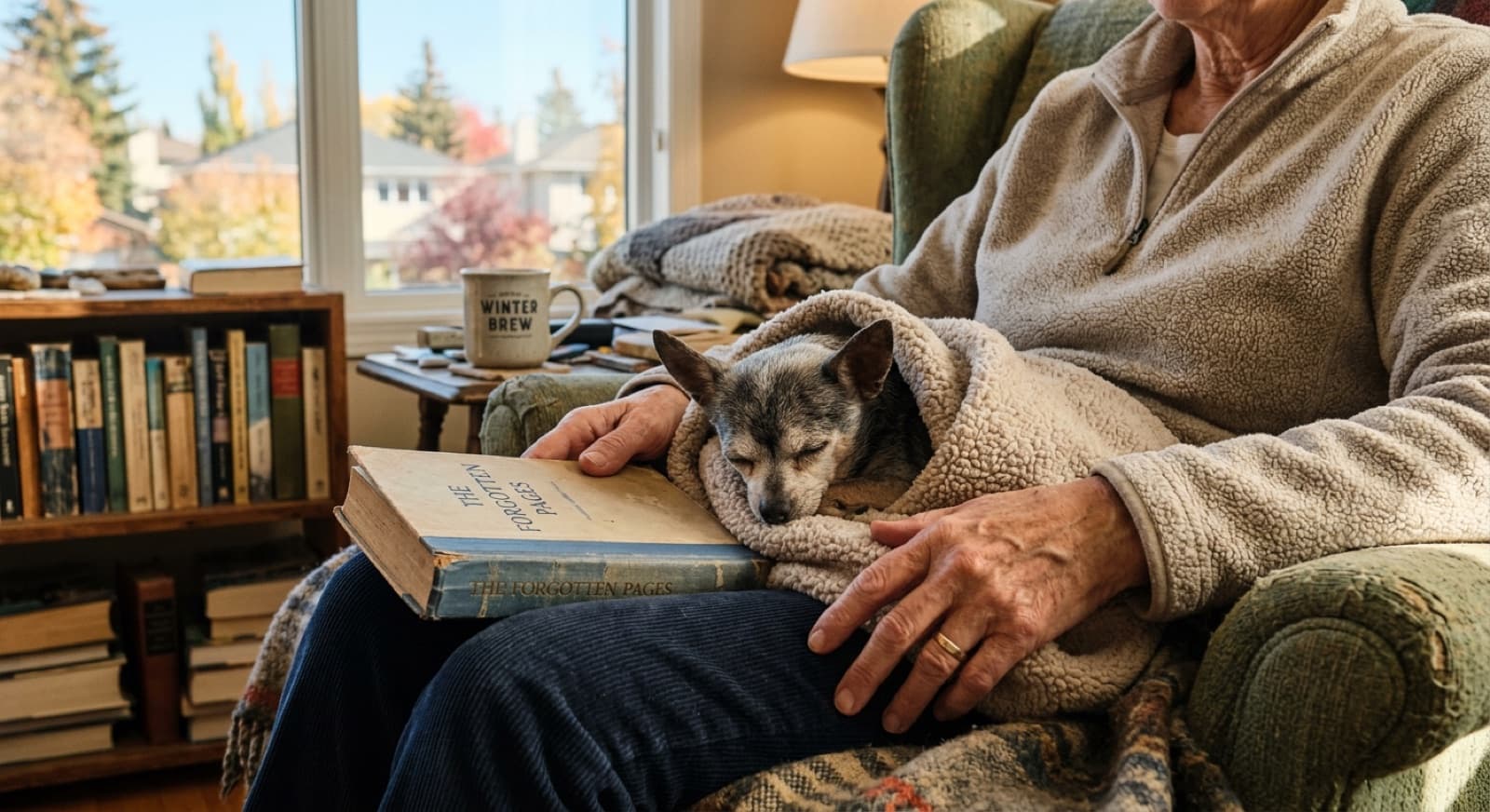
Senior Chihuahuas sleep 14 to 18 hours a day. They want one or two short walks, a warm lap, regular meals, and quiet company. Their energy needs are modest. Their entertainment needs are modest. They fit apartment life, condo life, and homes where the humans are also winding down. Calgary seniors in independent living and working-from-home adopters are the best matches.
A dog who knew love before
Most senior Chis came from homes where they were the centre of someone’s world. They were carried, fed special foods, slept in the bed, and were spoken to constantly. They know what love looks like. They recognize it fast when they find it again. The bonding curve in senior Chi adoption is often days, not weeks.
Calgary Compassion Pricing for Senior Chihuahuas
Most Calgary rescues use reduced adoption fees for senior dogs. The structure varies by rescue but the pattern is consistent.
Typical Calgary senior Chihuahua adoption fees
- Calgary Humane Society: Senior dogs over 7 years discounted, often $135 to $250.
- AARCS: Senior small dogs typically $200 to $350. Foster reports detailed.
- BARCS Rescue: Seniors $150 to $300, sometimes lower with adopter financial constraints.
- Pawsitive Match: Senior small dogs $200 to $400.
- Furball Force: Small-breed specialist, frequent senior Chis at $150 to $300.
- Pause4Change: Variable, often case-by-case for seniors.
Some rescues waive fees entirely for dogs over 12 or for adopters who can demonstrate they are a perfect match. This is not common but it happens, especially for fospice placements.
Compassion pricing reflects the rescue’s priority: find this dog a home fast. It does not reflect the dog’s value. Many senior Chihuahuas arrive with $500 to $1,500 of recent vet care already done (dental cleaning, bloodwork, cardiac evaluation, parasite screening), which is included in the adoption fee. Run the numbers and senior adoption often beats puppy adoption on cost.
Medical Reality: What to Plan For
Senior Chihuahuas come with medical realities that any honest rescue will tell you about upfront. None of them are sudden surprises. All of them are manageable. Budget for them, ask about them, and you will not be blindsided.
1. Dental disease (near-universal)
Chihuahuas are the most dentally-prone dog breed. By age 10, most have moderate to severe periodontal disease. Expect a professional cleaning under anesthesia every 6 to 12 months. Calgary cleanings run $600 to $1,500 depending on extractions needed. Some seniors arrive with most teeth already extracted, which sounds dramatic but is actually a comfortable mouth state for the dog. Toothless Chis eat soft food happily and live full lives.
2. Heart disease and cardiac medication
Mitral valve disease is common in senior Chihuahuas. Many arrive already on pimobendan or other cardiac medication. Cost runs $30 to $80 a month. Cardiac echocardiograms in Calgary at Western Veterinary Specialist Centre run $400 to $700 every 6 to 12 months for monitoring. Most cardiac Chis live comfortably for years on medication. The diagnosis is not a countdown clock.
3. Patellar luxation history
Many senior Chis have a history of patellar luxation (slipping kneecaps). Some arrive with prior surgery already done. Others manage with joint supplements and avoiding stairs and jumps. Ask the rescue specifically about knee history and gait. A wobbly back leg in a senior Chi is usually patellar luxation, not a sign of greater illness.
4. Cognitive decline (canine dementia)
Roughly 1 in 3 dogs over 13 show some signs of cognitive dysfunction. Symptoms include night pacing, disorientation, getting stuck in corners, changes in sleep cycles, and reduced interest in familiar activities. Manageable with dietary supplements (S-Adenosyl-Methionine, omega 3s), medication (selegiline), and consistent routine. Ask the rescue if they have observed any signs.
5. Arthritis
Most seniors over 10 have some level of arthritis. Joint supplements (glucosamine, chondroitin, green-lipped mussel), monthly Librela injections, or daily NSAIDs keep most dogs comfortable. Ramps to the couch and bed, soft beds, and avoiding stairs all help. Calgary winters are hard on arthritic joints, so plan for a heated indoor space and a warm coat outside.
6. Routine bloodwork
Senior Chihuahuas should get full bloodwork twice a year, around $200 to $400 total. Early detection of kidney disease, liver issues, or diabetes makes a huge difference. The rescue usually has recent results in the foster file, so you start with a baseline.
Annual Cost: What Senior Chi Care Really Runs
Calgary annual budget for a senior Chihuahua
- Dental cleaning (every 6 to 12 months): $600 to $1,500
- Routine bloodwork (twice a year): $200 to $400
- Cardiac medication if needed: $360 to $960 per year
- Joint supplements and pain medication: $120 to $400 per year
- Food (small bag of senior or prescription): $400 to $700 per year
- Grooming (every 6 to 8 weeks): $200 to $400 per year
- Vaccines and parasite prevention: $150 to $300 per year
- Emergency buffer: $300 to $800 per year saved
- Total typical range: $1,500 to $3,500 per year
Pet insurance is harder for seniors. Most Canadian insurers refuse new policies after age 8 to 10. Trupanion is the most generous, willing to enrol older dogs but excluding pre-existing conditions. Read the fine print on heart disease, dental disease, and chronic pain coverage. For most senior Chi adopters, a dedicated savings account beats trying to insure pre-existing conditions out of an older dog.
Some Calgary rescues offer post-adoption medical support for senior dogs, especially for conditions the dog arrived with. Ask specifically. Furball Force and a few others sometimes cover ongoing care for the original diagnosed conditions.
Where to Find Senior Chihuahuas in Calgary
Senior Chis appear in Calgary rescue intake weekly. The challenge is not finding them. It is timing your application before someone else does.
Calgary Humane Society
Largest intake of owner-surrender seniors in Calgary. Senior small dogs appear weekly. CHS often has multiple Chihuahuas listed at once. Adoption fees discounted for seniors. Detailed temperament assessments at the shelter.
AARCS (Alberta Animal Rescue Crew Society)
Foster-based rescue with detailed behaviour notes. Senior small dogs frequently in foster care. AARCS foster reports are among the most thorough in Calgary and include kid history, cat history, and energy assessment.
BARCS Rescue
Regular intake of senior Chihuahuas from Alberta-wide transports. Foster-based with strong medical screening before listing. BARCS often takes harder placements other rescues turn away.
Pawsitive Match Rescue
Foster-based rescue with regular senior intake. Detailed bios written by fosters who lived with the dog for weeks. Often pulls seniors from Northern Alberta and rural intake.
Furball Force
Small-breed specialist rescue, almost always has 2 to 5 senior Chihuahuas listed. Deep expertise in small-dog medical and behavioural quirks. Often handles fospice cases.
Pause4Change
Smaller rescue with periodic senior Chi intake. Variable adoption fees. Strong owner-counselling support post-adoption.
Hospice Fostering and Fospice
Some seniors arrive in Calgary rescues with terminal diagnoses. Advanced congestive heart failure, untreatable cancer, late-stage cognitive decline, or progressive kidney disease. These dogs cannot be adopted in the traditional sense because their remaining time is measured in months, sometimes weeks.
The answer is hospice fostering, or fospice. The rescue covers all medical costs, including end-of-life euthanasia. The foster family provides the home, the comfort, the daily care, and the love for whatever time remains. The dog never officially leaves the rescue, so the foster family carries the emotional weight but not the financial weight.
Fospice is the most emotionally heavy form of fostering. It is also the most meaningful. You give a dog who would otherwise die in a kennel a peaceful final chapter in a real home. For many fospice foster families, doing it once means doing it again, and again.
Calgary rescues offering fospice for senior Chihuahuas include Furball Force, Pause4Change, and occasionally AARCS for specific cases. Ask the rescue specifically about hospice placement if you are open to it. The dogs they place this way are often the dogs nobody else asks about.
End-of-Life Realities in Calgary
Senior adoption means signing up for the end-of-life chapter at some point. Two to ten years from now, you will face decisions about quality of life, palliative care, and euthanasia. Knowing what is available in Calgary helps you plan.
In-home euthanasia is available in Calgary through several mobile veterinary services. The dog passes peacefully in her own home, on her own bed, with her own people. No car ride, no clinic, no fluorescent lights. The cost runs $400 to $700 depending on service. Calgary Mobile Veterinarian, Calgary House Call Vet, and several other housecall veterinarians offer this service with same-week or same-day availability.
Quality of life scales (the HHHHHMM scale: Hurt, Hunger, Hydration, Hygiene, Happiness, Mobility, More good days than bad) help take the decision out of pure emotion. Your regular vet can walk you through it when the time approaches.
Most senior adopters say the end-of-life chapter, however hard, was worth the years that came before it. Knowing you gave a small dog a soft, loved retirement is a powerful counterweight to the grief of saying goodbye.
Why Senior Chihuahua Adopters Call It the Most Rewarding
Talk to people who have adopted senior small dogs and a pattern emerges. They use phrases like “the most rewarding pet experience of my life” and “I will never go back to puppies.” Five reasons keep coming up.
1. The gratitude is visible
Senior dogs who lost a beloved person and ended up in rescue recognize a soft home fast. The way they settle, sigh, and lean into you in the first week feels like being thanked. It is not projection. It is real bonding from a dog who knows what love is.
2. No puppy chaos
No 3 AM potty trips. No chewed shoes. No socialization rush. No nipping. The senior Chi is already past all of that. You skip 18 months of work and start at the relationship part directly.
3. The temperament is honest
What the foster home describes is what you get. Puppy adoption is partly a roll of the dice on adult temperament. Senior adoption is a known quantity. You can match the dog’s real personality to your real life.
4. The time is meaningful
A 12 year old Chi who lives to 17 gives you 5 years. Those 5 years are dense. There is no “we will get to that walk eventually” mindset. Every walk matters. Every nap on the couch counts. Senior adopters describe a kind of present-moment relationship that puppy parents rarely access.
5. The story matters
Adopting a senior who lost her original person and giving her a soft retirement is a real story. Adopters describe it as the most clearly meaningful thing they have done as pet owners. The dog gets a home. You get the satisfaction of doing something that mattered to a living creature.
10 Questions to Ask the Rescue Before You Adopt
A good rescue will answer all of these without hesitation. If the answer to any of them is “we don’t know,” ask why and how to find out.
1. What is the full medical history?
Senior dogs come with paperwork. Ask to see it. Prior surgeries, ongoing conditions, medication history, vaccination dates.
2. When was the last dental cleaning and what is the dental score now?
Most senior Chis need annual cleanings. Knowing the current state helps you budget the next one.
3. What medications is the dog currently on?
Cardiac meds, joint supplements, NSAIDs, cognitive medications. Know the monthly cost before you adopt.
4. When was the last full bloodwork and what were the results?
Baseline kidney, liver, and thyroid function. A senior Chi without recent bloodwork is a flag, not a dealbreaker.
5. What does the dog eat and what foods does she refuse?
Senior Chis often have firm food preferences after a decade in one home. Match what works.
6. Where does the dog sleep, and is she crate-trained or bed-trained?
Most senior Chis sleep with their person. Some prefer a crate or bed. Match her routine, do not force a new one.
7. Is she reliably house-trained, and does she need a pee pad backup overnight?
Most senior Chis are house-trained but kidney aging can mean overnight needs.
8. How does the foster home describe energy level and daily routine?
Number of walks, length of walks, nap habits, food schedule. Match her existing routine for the first month.
9. What does she do when left alone?
Some senior Chis settle calmly. Some develop separation anxiety after losing their original person. Know which yours is.
10. Has the dog shown signs of cognitive decline, and if so, what?
Night pacing, disorientation, getting stuck in corners, changes in sleep cycles. Treatable but useful to know upfront.
Ready to give a senior Chihuahua a soft landing?
Live listings from 13+ Calgary rescues, refreshed regularly. Senior Chis show up weekly. Foster reports include medical history, temperament notes, kid and cat compatibility, and routine information.
See Available Senior Dogs →Frequently Asked Questions
How many years does a 10 or 12 year old rescue Chihuahua likely have left?
A lot more than most people assume. Chihuahuas live 12 to 20 years, with many reaching 16 to 18 in good health. A 10 year old rescue Chi often has 6 to 10 years ahead. A 12 year old often has 4 to 8 years. A 14 year old often has 2 to 6 years. This is not a short-term commitment. You are bringing home a settled, known-temperament dog who will be your companion for a meaningful stretch of years.
Why are there so many senior Chihuahuas in Calgary rescues?
Three patterns drive almost all surrenders. The original owner passed away and family could not or would not keep the dog. The owner moved to assisted living or long-term care where pets are not allowed. Late-onset family allergies or a major life change ended the original home. None of these are the dog’s fault. Most senior Chis arrive grieving, confused, and looking for a soft landing.
How much does it cost to adopt a senior Chihuahua in Calgary?
Compassion pricing runs $135 to $300 typical. Some rescues waive fees entirely for dogs over 12, especially through Calgary Humane senior programs and Furball Force fospice placements. Compare to puppy or young adult Chi adoption fees of $400 to $700. The fee usually includes recent vet workup worth $500 to $1,500.
What medical conditions should I expect?
Five common ones. Dental disease (cleanings every 6 to 12 months at $600 to $1,500). Heart murmurs and mitral valve disease (often medicated, $30 to $80 a month). Patellar luxation history. Cognitive decline in some dogs over 13. Arthritis (manageable with supplements and pain medication). None are sudden surprises if you read foster notes carefully.
What does annual senior Chi care cost in Calgary?
Budget $1,500 to $3,500 a year. The biggest line items are dental cleanings, cardiac medication if needed, joint care, and routine bloodwork. Pet insurance for seniors is restrictive. Trupanion is the most generous in Calgary but still excludes pre-existing conditions. A dedicated savings account often beats insurance for senior adoptions.
What is fospice and is it right for me?
Fospice is foster-to-permanent care for a terminal senior dog. The rescue covers medical costs while you provide the home, love, and daily care for the dog’s final months or years. The dog never officially leaves the rescue, so financial weight stays off the foster family. Several Calgary rescues offer fospice for terminal senior Chihuahuas. It is the most emotionally heavy form of fostering and also the most meaningful.
Where do I find senior Chihuahuas in Calgary?
Six rescues regularly take in senior Chis. Calgary Humane Society, AARCS, BARCS, Pawsitive Match, Furball Force, and Pause4Change. Furball Force is the small-breed specialist and almost always has 2 to 5 senior Chihuahuas listed. New listings appear in the LocalPetFinder senior dogs category regularly as scrapers update.
What about in-home euthanasia when the time comes?
In-home euthanasia is available across Calgary through Calgary Mobile Veterinarian, Calgary House Call Vet, and several other housecall services. The dog passes peacefully at home, on her own bed, with her own people. Cost runs $400 to $700. Most services offer same-week and sometimes same-day availability. Quality of life scales like HHHHHMM help take the decision out of pure emotion when the time approaches.
More Chihuahua guides
Chihuahua Adoption Calgary →
Where to find rescue Chihuahuas in Calgary, real costs, the truth about Chi temperament, and what to expect from intake to home.
Is a Chihuahua Right for You? →
Honest 12-question self-assessment for prospective Chihuahua owners, plus 10 truths the breed clubs do not lead with.
Chihuahua Health Issues →
Dental disease, patellar luxation, cardiac care, hydrocephalus, and the breed-specific health profile every adopter should know.
Chihuahua Winter Survival →
Coats, booties, indoor potty options, hypothermia signs, and surviving Calgary winters with a tiny short-coated dog.
New dog? Start with these care guides
Everything a new adopter needs to set up a safe, happy home.