The short answer
The Chinese Shar-Pei carries real, breed-specific health concerns you must understand before adopting. The big ones are entropion (eyelids rolling inward, often needing surgery), Familial Shar-Pei Fever and its risk of organ-damaging amyloidosis, and chronic skin-fold and ear infections driven by the folds and narrow ear canals. Add thyroid and joint issues. This is general information, not veterinary advice: the whole game with this breed is proactive, routine care and a vet who knows Shar-Peis. Build a health plan, keep up the skin and ear maintenance, and price pet insurance while your dog is young.
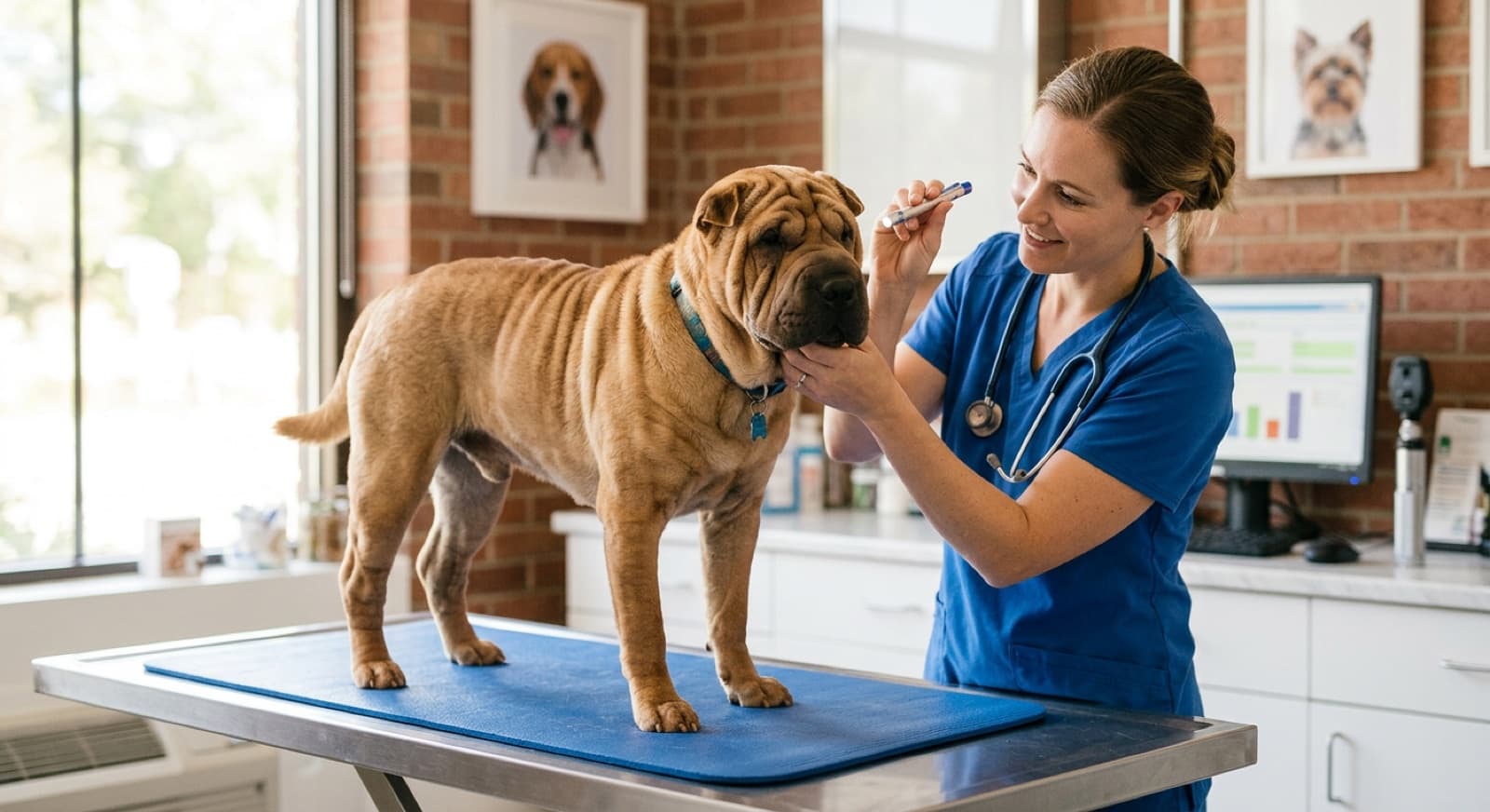
There is no gentle way to say it: the Shar-Pei is one of the more health-challenged breeds, and much of it traces directly to the wrinkles and the ancient genetics behind them. The good news is that the major concerns are well understood, and an informed, proactive owner can manage them and give a Shar-Pei a good life. This guide walks through each with authoritative sources, then covers the preventive care that matters most in Calgary.
Entropion: the eyes and the folds
The Shar-Pei's signature health problem is entropion. The heavy facial folds and eyelid conformation cause the eyelids to roll inward, so lashes and hair rub against the cornea. It is painful and, untreated, can damage the eye and threaten vision, which is why it often needs surgical correction, sometimes a temporary eyelid tacking in a puppy and a definitive surgery once the dog matures. Squinting, tearing, redness, or pawing at the eyes are warning signs. This is a veterinary matter start to finish, never something to manage or medicate at home.
Because entropion is so common and so consequential in the breed, it is one of the first things to ask a rescue about when adopting an adult Shar-Pei: has the dog been assessed or had corrective surgery? A dog whose eyes have already been properly managed is a real advantage. Reputable breeders and vets track eye conformation, with screening registered through databases like the Orthopedic Foundation for Animals (OFA).
Familial Shar-Pei Fever and amyloidosis
This is the serious one to understand. Familial Shar-Pei Fever (FSF) is an inherited condition largely unique to the breed. According to the Merck Veterinary Manual, it is an autoinflammatory syndrome marked by recurring bouts of fever and swollen, painful hocks, and it carries a real risk of amyloidosis, in which abnormal protein deposits build up and can damage the kidneys or liver over time.
Because of the amyloidosis risk, vets commonly recommend routine screening of the urine for protein loss in Shar-Peis, so kidney involvement can be caught early. If your Shar-Pei has unexplained fevers or suddenly swollen, tender hocks, treat it as an urgent veterinary visit, not something to wait out. FSF and amyloidosis are managed by veterinarians with medication and monitoring; the specifics are entirely a vet decision, never a home remedy. Knowing the condition exists, and screening for it, is the owner's most important job.
Skin, ears, and other concerns
The folds that define the breed trap moisture and debris, making skin-fold dermatitis and infections common, and some Shar-Peis also have allergies. The ears have unusually narrow canals that predispose the breed to chronic ear infections. Diligent routine cleaning and drying is the frontline defence, and it is a real daily commitment; our Shar-Pei skin and wrinkle care guide walks through the routine. Any red, smelly, or irritated fold or ear is a reason to see your vet, since infections need veterinary treatment.
The breed can also carry hypothyroidism (easily checked with bloodwork), and joint issues including patellar luxation and hip dysplasia. The American Kennel Club is candid that this is a fascinating but challenging breed, and the health side is much of what makes it so. None of this is a reason to avoid the breed if you go in prepared; it is a reason to go in with your eyes open and a good vet on your side.
Preventive care and insurance in Calgary
With this breed, prevention is everything. Keep up diligent skin-fold and ear care, act fast on any eye trouble, stay on top of vet visits including the urine-protein screening the breed needs, and keep your Shar-Pei lean to protect its joints. A vet experienced with Shar-Peis is worth seeking out, because familiarity with entropion and FSF makes a real difference.
Price pet insurance while your dog is young and healthy, before anything becomes pre-existing, and read what each Canadian insurer excludes, since this is a breed where the health costs are both likely and significant. For the daily care routine that prevents so many of these problems, see our skin and wrinkle care guide, and for the adoption picture, our Shar-Pei adoption guide.
Considering a Shar-Pei?
Adopting an adult through a rescue that has done a vet workup means much of the health history, entropion and skin included, is already known. That is a real advantage in a health-heavy breed. See who is available across Calgary rescues.
See Calgary Shar-Peis →Frequently Asked Questions
What health problems are Chinese Shar-Peis prone to?↓
What is entropion in a Shar-Pei?↓
What is Familial Shar-Pei Fever?↓
Do Shar-Peis have a lot of skin and ear problems?↓
How can I keep my Shar-Pei healthy in Calgary?↓
Continue reading
Temperament, cost, and who the breed suits.
Cleaning folds, ear care, and preventing infections.
Live listings across Calgary rescues.
Caring for a short-coated breed through the cold.
New dog? Start with these care guides
Everything a new adopter needs to set up a safe, happy home.