The short answer
Cocker Spaniel ear infections are common, recurring, and largely driven by anatomy plus allergies. They are not emergencies on their own, but the signs below need a vet visit, not a wait-and-see. Recognize these on sight:
- Head shaking, ear scratching, head tilt to one side
- A yeasty, sour, or just plain bad smell from the ear
- Brown, yellow, or bloody discharge on the inner flap
- Redness, swelling, heat inside or around the ear
- Pain when the ear is touched, flinching away from petting
- Severe pain, sudden vestibular signs, facial droop, balance loss: same-day or 24-hour ER
Do not flush, medicate, or treat at home. Cocker ears are too fragile and too easy to make worse. Book a vet visit, ask about the food-allergy conversation, and build a weekly prevention routine with your Calgary vet. For chronic cases that no longer respond to medical management, the conversation moves to a board-certified surgeon and the TECA-BO option.
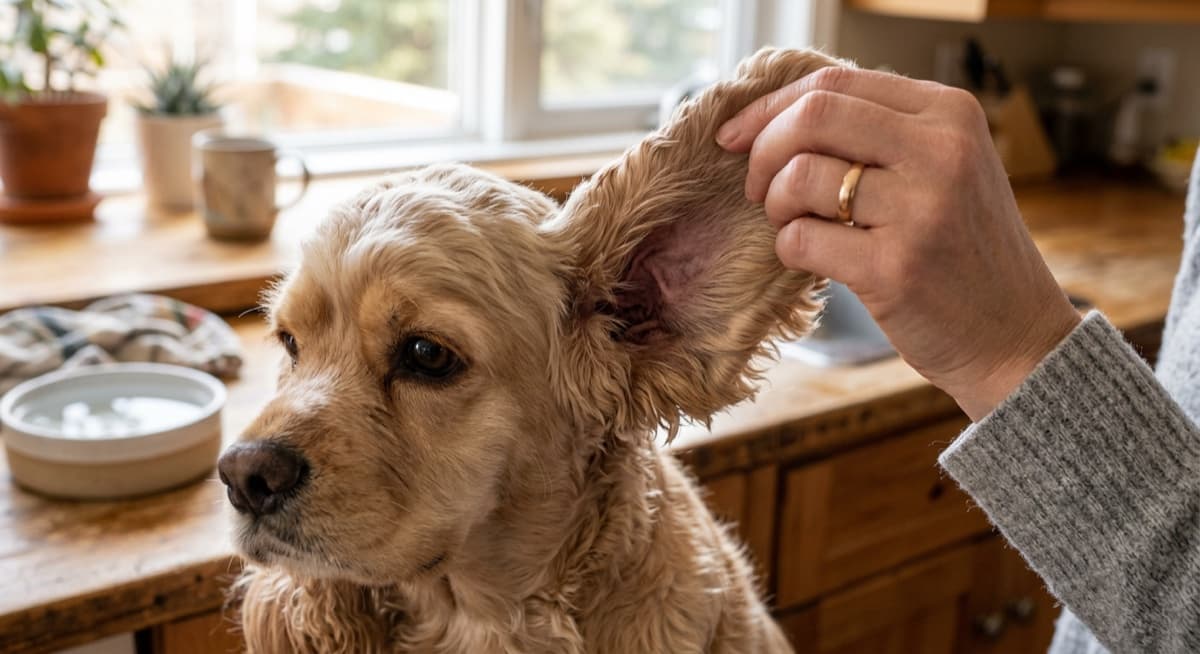
Cocker Spaniels are affectionate, biddable, family-friendly dogs with one of the most recognizable silhouettes in the canine world. They are also the breed that veterinary dermatologists see week after week for the same problem: another ear infection. The American Kennel Club and the American Spaniel Club both name chronic ear disease as the single most common health concern in the breed. For Calgary households, this is the health topic that shapes the cost, the routine, and sometimes the surgical conversation. The article below is the recognition and prevention guide. Every treatment decision belongs to your vet.
Why Cocker Spaniel ears get chronic infections
The breed-defining ear shape is the starting point. A Cocker's ear flap is long, heavy, and feathered with thick coat. It hangs flat over the opening of the ear canal, sealing it off from airflow. Warm air gets trapped underneath, moisture from baths or rain stays in, and the inside of the canal becomes a damp, warm pocket sitting against the side of the dog's head. That is exactly the environment yeast and bacteria need to multiply.
The canal itself is part of the problem. Cocker ear canals are relatively narrow and run a long path down into the head, with a sharp turn before reaching the eardrum. The lining is rich in glands that secrete oil and wax. Add hair growing inside the canal (common in the breed) and the channel that should drain freely becomes a tunnel that traps debris.
On top of the anatomy, Cockers have an elevated rate of allergies, both food-related sensitivities and environmental allergies (atopy). Allergic inflammation shows up first on the skin, and the skin lining the ear canal is some of the most reactive on the body. When that lining is inflamed, the local skin chemistry shifts, mucus production rises, and the yeast and bacteria that normally live there in small numbers bloom into a full infection. Vets often describe it as a perfect-storm anatomy: structure that traps moisture plus skin that is primed to overreact.
The takeaway for Calgary owners is not despair. It is realism. A Cocker is not a low-maintenance ear dog. Building a weekly check into the household routine, working with the vet on allergies early, and recognizing the first symptoms before they snowball is the difference between a manageable chronic condition and a dog whose ears run the household.
The food-allergy connection: chicken, environmental triggers, and the elimination diet
Talk to enough Cocker owners on Reddit or in a Calgary off-leash park and a pattern emerges: a chronic-ear dog goes on a different protein for a few months and the flares calm down. Chicken is the protein most commonly identified as a problem ingredient across the dog population, and it shows up repeatedly in Cocker conversations. That said, chicken is not the only culprit, and not every chronic-ear Cocker has a food allergy at all. Some have purely environmental allergies (pollen, grass, dust mites). Many have a combination. The diagnostic work matters more than the assumption.
The accepted veterinary approach is an elimination diet. The American Veterinary Medical Association and AAHA dermatology guidance describe the same general framework: the dog goes on a strict novel-protein or hydrolyzed-protein diet for roughly eight to twelve weeks. No treats, no table food, no rawhide or flavoured chews, no flavoured medications. After the trial, the original protein is reintroduced in a controlled way to see whether symptoms return. That is what proves or rules out food allergy. Switching kibble on your own from the pet store almost never works because most over-the-counter “limited ingredient” foods still contain trace cross-contaminated proteins and because the trial is not strict enough.
The specifics of the diet (which protein source, which brand, whether it is a prescription veterinary diet or a home-cooked plan) belong with your Calgary vet. Some Cockers do well on a fish-based or kangaroo-based novel protein; others need a hydrolyzed prescription formula. The right answer is dog-specific. What this article gives you is the concept, not the prescription.
Environmental allergies are managed differently again, usually through a combination of bathing schedule, vet-prescribed medication, and sometimes referral to a veterinary dermatologist for allergy testing. Calgary's long winters and spring pollen seasons both play a role; some Cockers flare in fall, others in spring. Tracking the timing of your dog's flares is genuinely useful information to bring to the vet.
Symptoms to recognize on sight
Most Cocker ear infections start small and build over a few days. The earliest signs are behavioural and easy to miss if you are not watching. Read this list to anyone else who shares the household with your dog: partner, kids over twelve, dog walker, regular sitter.
- Head shaking. Repeated, sudden head shakes: not the casual shake after a nap, but a hard whip-back-and-forth that often happens several times in a row. This is the single most common first sign.
- Ear scratching. The dog scratches at one ear (or both) more than usual, sometimes hard enough to leave the inner flap pink or raw. Watch for the dog turning the scratching paw up against the ear opening.
- Rubbing the head along furniture. Couch arms, carpet, your leg. The dog is trying to get pressure on the ear without using a paw.
- Head tilt to one side. The affected ear hangs lower. The tilt may be subtle at first. Compare to a photo of the dog from before anything was wrong.
- A smell from the ear. Healthy ears are essentially odourless. A yeasty, sour, or just plain bad smell from the ear is a positive sign of infection. You will know it when you smell it.
- Discharge on the inner flap. Dark brown, yellow, or sometimes a small amount of blood. Lift the flap and look. A small amount of pale wax is normal; coloured or substantial discharge is not.
- Redness, swelling, heat. The inside of the ear flap looks visibly red. The ear opening may be swollen. The flap can feel warmer than the surrounding fur.
- Pain on touch. The dog flinches when the ear is touched, pulls away from petting on the head, or even cries out. This is a clear escalation and signals a vet visit, not a wait-and-see.
- Loss of appetite, hunched posture, lethargy. Later signs that the dog is in significant pain.
The pattern matters. One mild head shake at the end of a swim at Sandy Beach is nothing. Repeated shaking over three days plus a smell from the ear plus scratching is an infection. Pay attention to combinations and to changes from the dog's normal baseline.
When to schedule a vet visit vs. when to go now
A routine Cocker ear infection is not an emergency room trip. It is a same-week appointment with your regular vet. Most ear flares can be treated effectively in an outpatient visit with cytology, cleaning, and prescribed medication. The cost is much lower if you catch the problem early than if you wait and let it escalate.
That said, certain signs change the urgency. Treat these as same-day or 24-hour emergency vet situations:
- Sudden severe pain. The dog cries when the head is touched, will not let you near the ear, refuses to eat because chewing hurts. Pain that intense is not a typical mild ear infection; it suggests deeper involvement.
- Vestibular signs. Severe head tilt, falling over, walking in circles, rapid involuntary eye movement (called nystagmus), or sudden loss of balance. These suggest the infection has reached the middle or inner ear. Vestibular signs need urgent veterinary assessment.
- Facial nerve paralysis. Drooping on one side of the face, an eyelid that will not close, a lip that hangs lower on one side. Same reasoning as vestibular signs: the inflammation may have moved deeper.
- Sudden discharge of blood or large amounts of fluid. A possible ruptured eardrum. Painful and urgent.
- Lethargy plus fever plus ear pain. The dog seems sick beyond just the ear, with not eating, hiding, and not drinking. Treat as urgent.
Calgary households should have a 24-hour emergency veterinary clinic identified before they need one. Ask your regular vet for a recommendation, or consult the Canadian Veterinary Medical Association directory. Save the address and phone number in your phone. Calgary winters can complicate the trip. A Chinook snowstorm or a -30°C cold snap means a longer drive than you expect, so know the closest clinic and one backup. The five minutes you spend planning before you need it pays off enormously when the ear suddenly looks wrong at 2 a.m.
Calling the clinic on the drive in is helpful when possible. But do not delay leaving the house to find a number; drive first, call from the road.
Prevention: the weekly Cocker ear routine
Prevention is the part of Cocker ear care owners actually control. None of it guarantees a flare-free dog, but a household that follows the basics gets fewer infections, milder ones, and a cheaper year at the vet. The honest framing: this is a long-term routine, not a one-time fix.
The weekly check is the foundation:
- Lift the flap once a week and look inside. What you want to see: pale pink skin, a small amount of light wax, no swelling, no discharge. What you do not want to see: redness, dark or coloured discharge, swelling, or visible irritation. Do this at the same time every week so it becomes habit. Sunday evening, after dinner, before TV is a typical Calgary household rhythm.
- Smell the ear. Healthy ears smell like almost nothing. A yeasty or sour smell is a flag.
- Gently clean with a vet-recommended cleaner roughly once a week to once every two weeks. Frequency depends on the dog. The cleaner and the technique come from your vet at your next visit. This article will not name a specific product. The general directional approach is to fill the ear canal as instructed, massage the base of the ear for a few seconds, then let the dog shake. Wipe the inside of the flap with a soft cloth. Do not push cotton swabs into the canal; they impact debris rather than removing it.
- Dry the ear after baths, swimming, or any wet exposure. Calgary's Bow River, Sandy Beach off-leash area, and Fish Creek Park ponds are all common Cocker swimming spots. Every time the dog gets wet, towel-dry the inside of the flap and the visible part of the canal as soon as you get home. This single habit prevents a significant share of summer infections.
- Hair trimming inside the ear canal. Excess hair growing inside the canal traps debris and reduces airflow. Some Calgary groomers and most vets will pluck or trim ear hair as part of a routine visit. Ask. Do not pluck the hair yourself with tweezers if you are unsure; ask the groomer to demonstrate the first time.
- Address allergies early, not after the third infection. If your Cocker has had two or three flares in a year, the conversation with your vet shifts from “treat this infection” to “what is driving these infections.” That is the elimination-diet conversation, or the environmental-allergy conversation, depending on the pattern.
- Healthy weight and good general nutrition. Weight management is part of overall skin and immune health.
And the one rule worth repeating: do not over-clean. Too-frequent flushing or aggressive cleaning irritates the canal lining and can trigger the very infections you are trying to prevent. The principle is gentle and regular, not deep and frequent. Your vet's prescribed routine beats anything you read online.
What happens at the vet (concept-level)
This section is descriptive, not prescriptive. Treatment decisions, product selection, and medication choices belong to the veterinary team. What follows is what Calgary Cocker owners typically see during an ear-infection visit, so the appointment feels less unfamiliar.
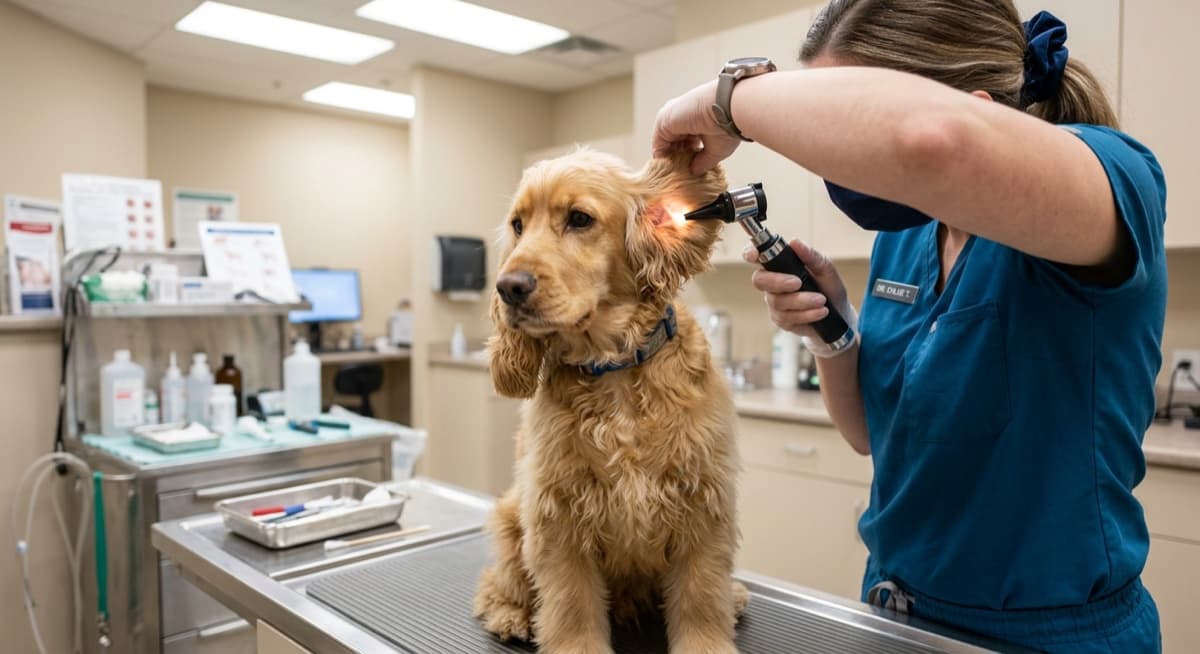
The vet will examine both ears, often using an otoscope to look down the canal toward the eardrum. They may take a small swab of the discharge and look at it under a microscope (cytology) to identify whether the infection is yeast, bacteria, or both, and to check for ear mites. In stubborn or recurring cases, the swab may go for culture and sensitivity testing to identify the specific organisms and which medications will work. The ear may need a thorough flush in clinic, sometimes under mild sedation if the dog is too painful for an awake cleaning.
From there, the vet prescribes medication appropriate to what was found, plus instructions for at-home care during the recovery period. They will also discuss the pattern: is this the first infection, the fifth, the fifteenth? Recurring infections shift the conversation toward underlying causes: food allergy trials, environmental allergy workups, referral to a veterinary dermatologist, or imaging to assess whether the canal is permanently scarred.
This article deliberately does not name specific medications, dosages, or treatment protocols. That is between you and your vet. What an informed owner contributes is early recognition, accurate symptom reporting, and consistent follow-through on the at-home routine.
TECA-BO: the chronic-ear surgery conversation
A small but meaningful subset of Cocker Spaniels reach a point where medical management no longer controls the disease. The ear canal becomes permanently scarred or calcified, infections cycle through almost continuously, the dog lives in chronic pain, and quality of life is genuinely impaired. At that point, the conversation shifts to a salvage surgery called TECA-BO, or total ear canal ablation with bulla osteotomy.
TECA-BO removes the diseased ear canal entirely and cleans out the middle-ear cavity (the bulla). It is a major operation performed by a board-certified veterinary surgeon at a specialty practice, not in a general clinic. The procedure typically affects hearing in the operated ear: the dog can still detect vibration and direction but loses normal conductive hearing on that side. The trade-off is that the constant pain finally ends, the infections stop, and most dogs return to normal energy and personality within weeks of surgery. Many post-TECA-BO Cockers act like a different dog: the one their owners remember from before the chronic disease took over.
The decision to pursue TECA-BO belongs to the owner, the regular vet, and the specialty surgeon together. The factors typically discussed: how many infections per year, whether the canal is visibly scarred or stenotic, whether imaging shows middle-ear involvement, the dog's age and overall health, the household budget. TECA-BO is genuinely expensive (a several-thousand-dollar surgery before related costs), which is one more reason that pet insurance enrolled before any ear disease develops is worth a serious look for Cocker households.
The purpose of this section is not to recommend TECA-BO; most Cockers will never need it. The purpose is to make sure Calgary owners know the option exists so they can have an informed conversation with their vet at the right point in the disease, not after years of failed medical management.
Cost reality and the case for pet insurance
Cocker Spaniel ear care is one of the great underestimated costs in the breed. A single uncomplicated ear infection vet visit is the entry-level cost. A chronic Cocker can rack up several visits a year, cytology and culture work-ups, prescription cleaners and medicated products, an elimination food trial (which is a separate expense again), and possibly a referral to a veterinary dermatologist. End-stage cases that move toward TECA-BO surgery are a several-thousand-dollar specialty procedure. Specific dollar figures vary too much across Calgary clinics to publish here as a single number; consult your vet directly when planning the annual budget.
The honest framing for Cocker households: chronic ears are a recurring cost, not a one-time bill. Budget for it as a category, not a surprise. This is also one of the strongest cases for pet insurance specifically on a Cocker Spaniel. A few caveats matter: many insurers exclude pre-existing conditions, and ear disease counts. If your Cocker has already had even one documented ear infection, some plans may exclude future ear claims entirely or carry waiting periods. The right time to look at insurance is at the time of adoption, before the first vet visit. Discuss the breed-specific exclusion language with the insurer directly. The answer differs by company and by plan tier.
For a broader view of long-term Cocker Spaniel ownership in Calgary (food, vet visits, grooming, daycare, and the chronic-ear budget specifically), talk to your vet at your next visit and ask for a realistic annual cost picture for your dog.
Adopting a Cocker Spaniel in Calgary?
See currently available Cocker Spaniels and Cocker mixes across 15+ Calgary rescues, refreshed regularly. If you are considering the breed, read the chronic-ear reality above first, plan the prevention routine, and ask the insurance question before you bring the dog home, not after the first vet visit.
Browse adoptable dogs in Calgary →Frequently Asked Questions
Why do Cocker Spaniels get so many ear infections?↓
What are the symptoms of a Cocker Spaniel ear infection?↓
How often should I clean my Cocker Spaniel's ears?↓
Are chicken allergies really causing my Cocker's ear infections?↓
What does chronic Cocker ear infection treatment cost?↓
Should I get TECA-BO surgery for my Cocker?↓
Can I prevent ear infections entirely?↓
When is a Cocker ear infection an emergency?↓
Continue reading
Cocker Spaniel adoption Calgary
The full Calgary Cocker Spaniel adoption guide: rescues, cost, temperament, family fit, and the chronic-ear reality summarized.
Cocker Spaniel grooming
Coat care, ear hair trimming, sanitary trims, and the Calgary grooming budget for a long-coated, drop-eared breed.
Browse Calgary Cocker Spaniels
Currently available Cocker Spaniels and Cocker mixes across Calgary rescues, refreshed regularly.
Cocker separation anxiety
Velcro tendencies, separation anxiety, and the Calgary force-free training playbook for a sensitive companion breed.
New dog? Start with these care guides
Everything a new adopter needs to set up a safe, happy home.