The short answer
Dobermans have a single-layer coat with no insulating undercoat, plus very low body fat (around 3 to 5 percent, among the lowest of any breed). Most shiver visibly by 0 to 5°C without protection and face hypothermia or frostbite risk by -20°C without a coat and boots. Calgary winter runs October to April with regular -10 to -25°C stretches and chinook swings. Plan for 5 to 6 months of accommodation, and budget $200 to $500 for a proper coat, boots, paw wax, and a heated bed.
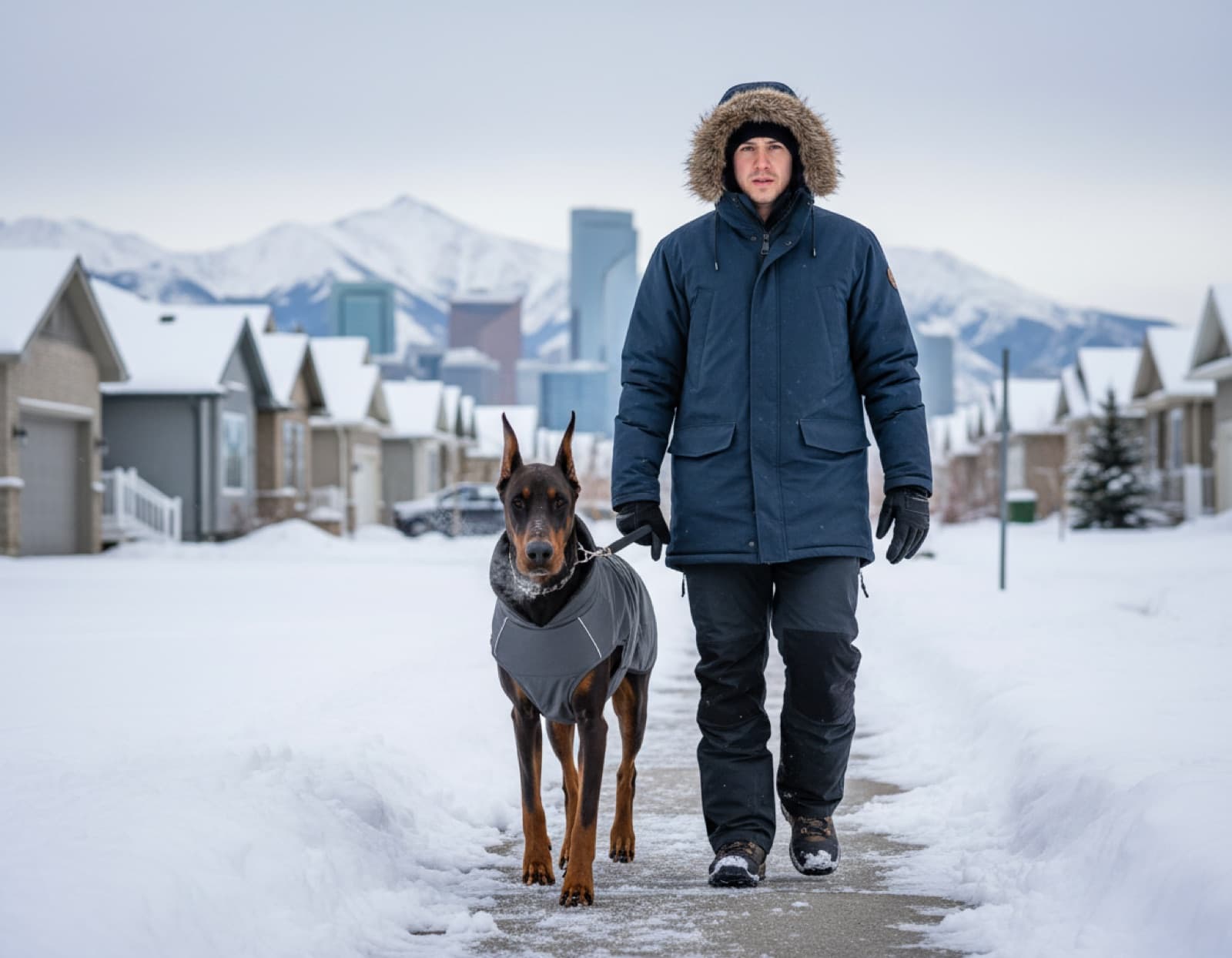
Calgary temperature threshold guide
| Temperature | Protection needed |
|---|---|
| +5°C and above | Generally fine for short walks. Senior/cardiac dogs may want light fleece |
| 0°C to +5°C | Light fleece sweater or thin jacket. Many Dobermans uncomfortable below 5°C |
| -10°C to 0°C | INSULATED COAT essential. Standard 15–30 min walks require coat + sometimes boots |
| -10°C to -20°C | Heavy insulated parka with belly coverage. Limit walks 15–20 min. Boots strongly recommended |
| -20°C to -30°C | Winter coat + boots + face/ear protection if windy. Walks 5–10 min. Mostly indoor exercise |
| Below -30°C | Emergency potty trips only (under 5 min). Real hypothermia and frostbite risk |
Senior and cardiac Dobermans need higher thresholds. Plan for accommodation at +10°C and below.
Individual variation: European-line Dobermans (larger, blockier) tolerate slightly lower temperatures than American show-line dogs, but both still need real winter gear in Calgary. The AVMA cold-weather pet safety guidance and the AKC cold weather guide both flag short-coated, lean breeds as the highest-risk group for hypothermia and frostbite. Dobermans sit squarely in that group.
Best winter coats for Calgary Dobermans
Doberman-specific coat features needed:
- Long body coverage (Doberman bodies are long)
- Belly coverage (very lean dogs need belly insulation)
- Adjustable fit (deep chest + narrow waist)
- Front leg coverage helpful in extreme cold
- Insulation rated for -20°C to -30°C Calgary winter
Recommended brands:
- Hurtta Extreme Warmer: rated to -25°C, full body and belly coverage. $130 to $200. The most common pick among Calgary Doberman owners we work with.
- Voyagers K9 Apparel (Tripawd Coat): custom-sized for Dobermans, excellent belly coverage, made in Canada. $90 to $180. Strong choice for narrow-bodied dogs.
- Chilly Dogs Great White North: Canadian made, designed for prairie winters. Doberman-friendly fit. $130 to $220.
- Ruffwear Powder Hound: quality winter coat, less Doberman-specific fit but adequate. $130 to $170.
- Canada Pooch: moderate insulation, fashion-focused. Fine for mild days, not enough for -25°C+.
What NOT to buy: cheap fashion coats without belly coverage, jackets sized for short-bodied breeds, fleece-only sweaters for sub -10°C, wool coats that absorb moisture.
Layering for extreme cold: combine a fleece base layer with an insulated outer coat for -25°C+ days. It doubles the cost, but Calgary Dobermans benefit during chinook cold-snap cycles.
Boots for narrow Doberman paws
Doberman paws are notoriously narrow + long compared to other large breeds. Many “large dog boots” sized for Lab/Golden don't fit Doberman paws properly.
Recommended options:
- Muttluks Winter Fleece-Lined: Canadian made, multiple sizes including narrow fits. $60 to $120 a set. Calgary pet stores stock these.
- Ruffwear Grip Trex or Polar Trex: well-fitted for Doberman paw shape. $85 to $130 a set.
- Ultra Paws Durable: sized including Doberman-friendly fits, more affordable. $40 to $70 a set.
- Pawz Natural Rubber: disposable rubber boots. $15 to $25 for a pack of 12. Good for narrow paws but durability is limited.
- Hurtta Outback Boots: quality matched to the Hurtta coat range. $80 to $130 a set.
Sizing: measure paw width and length before ordering. Doberman paws are typically narrower than equivalent boots sized for general “large breed” dogs. Sometimes you need one size smaller than a typical large dog.
Training: most Dobermans initially resist boots. Use a gradual introduction: indoor practice with treats, brief outdoor wearing, full normalization over one to two weeks. Some Dobermans never tolerate boots. Fall back to paw wax (Musher's Secret) and careful sidewalk timing.
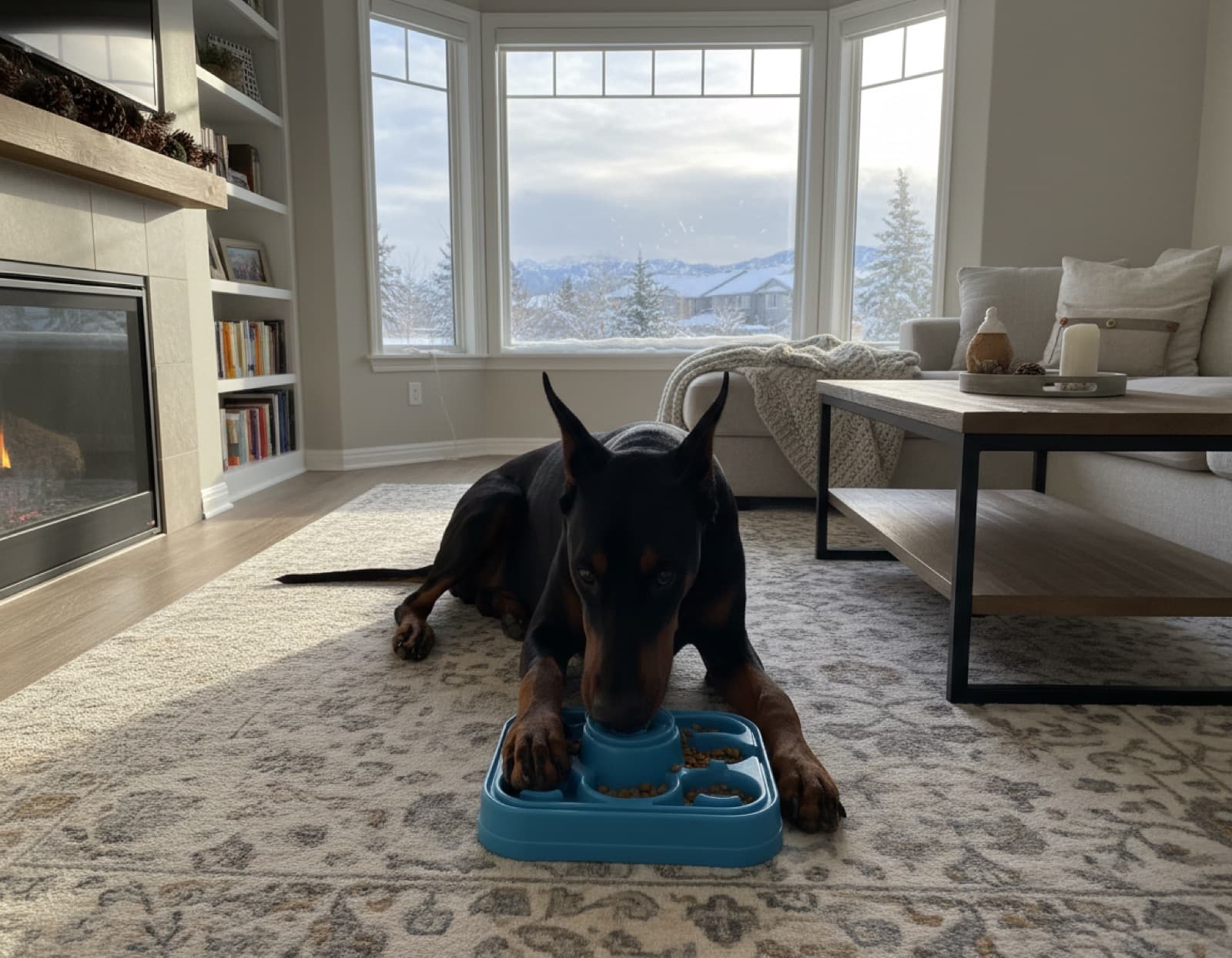
Indoor exercise alternatives
Dobermans need 60 to 90+ minutes of daily exercise and mental work, even in extreme Calgary cold. Indoor exercise can replace outdoor walks during deep cold without an exercise deficit.
- Indoor fetch: long hallways or basement spaces. 20 to 30 minutes of solid exercise.
- Stair work (with caution): avoid for puppies under 18 months or seniors. 10 to 15 minutes for healthy adult Dobermans.
- Tug-of-war: high intensity, builds bond. 10 to 20 minutes of vigorous tug roughly equals a 30 to 45 minute walk.
- Flirt pole: chase outlet. Can be used indoors with space. $40 to $80.
- Food puzzles and snuffle mats: mental enrichment. $20 to $60 each.
- Trick training sessions: 15 to 20 minutes of focused work. Calgary force-free trainers like Raising Canine run winter-friendly programs.
- Indoor dog daycare: Pup City Doggy Daycare, Paws Dog Daycare, and similar Calgary daycares. $30 to $55 a day. Particularly valuable through -25°C+ stretches.
- Dog sports classes: agility, nose work, and rally with Calgary clubs that run indoor facilities through winter. $150 to $300 for an 8-week session.
- Treadmill training: some Calgary Dobermans learn to use treadmills with patient, gradual introduction.
- Brief outdoor play even at -25°C in protective gear.
Calgary dog-friendly indoor locations: Bone & Biscuit, Pet Valu, PetSmart, Home Depot, and Canadian Tire allow dogs. The downtown Plus-15 covered walkway system is a winter-only gem.
Do not skip exercise. Under-exercised Dobermans develop destructive behaviour during a long Calgary winter.
Paw pad protection + salt/de-icer
Calgary winter sidewalks are treated with salt and de-icer chemicals that damage Doberman paw pads. Combined with cold, dry winter air, the result is cracking, bleeding, and infection risk.
Protective products:
- Musher's Secret: wax-based barrier protection. Apply before walks. $15 to $25 a jar (lasts months). Calgary pet stores stock it. Easy to apply.
- Paw Soother (Natural Dog Company): moisturising balm for already-damaged pads. $15 to $25.
- Bag Balm: old-school veterinary balm. Cheap and effective. $10 to $15.
- Shea butter or coconut oil: natural alternatives.
Post-walk protocol:
- Wipe paws with a warm damp cloth to remove salt, de-icer, and ice melt residue.
- Dry thoroughly. Moisture between toes causes irritation and raises frostbite risk.
- Inspect pads for cuts, cracks, redness, and ice balls between toes.
- Apply moisturiser if pads look dry or cracking.
- Check for limping. It is a sign of paw injury.
Cracked paw treatment: clean with antiseptic (chlorhexidine), apply healing balm two to three times daily, rest from extended walks for five to seven days, and book a vet visit if infection signs appear (typically $200 to $400 at a Calgary clinic).
Senior + cardiac Doberman cold sensitivity
Senior Dobermans (8+ years) are typically much more cold-sensitive than young adults. Several factors compound at once.
Why senior and cardiac Dobermans are more cold-sensitive:
- Metabolic slowdown. Less efficient body-heat generation.
- Body fat reduction with age.
- Cardiac compromise. DCM is common in older Dobermans, and reduced cardiac function lowers cold tolerance.
- Arthritis. Cold worsens joint pain.
- Hypothyroidism is common in the breed and reduces cold tolerance.
- Medication effects on thermoregulation.
- Reduced immune resilience.
Senior Doberman winter protocol:
- Lower temperature thresholds (coat at +10°C instead of +5°C).
- Heavier coat insulation.
- Boots are essential. Paw freezing and arthritis pain compound.
- Shorter outdoor periods (5 to 15 minutes instead of 30+).
- Multiple brief trips instead of fewer long ones.
- Heated indoor sleeping area (orthopaedic heated bed).
- Medical monitoring: thyroid, cardiac screening, arthritis pain management. Western Veterinary Specialist & Emergency Centre handles Calgary cardiology referrals.
- Joint supplements (glucosamine, chondroitin, omega-3) are standard for senior Dobermans.
- Gentle indoor exercise plus brief outdoor work.
- Watch for warning signs: increased shivering, reduced appetite, lethargy.
Calgary senior Doberman adoption: rescuing a senior Doberman raises your winter-care commitment substantially. Be honest about capacity, medical reality, and willingness to commit to gear, medications, and comfort. The reward, a meaningful two to four years with a senior Doberman, is worth it for prepared adopters.
Indoor heating + sleeping arrangements
The Calgary indoor environment matters too. Doberman comfort is not just about outdoor walks.
- Indoor temperature: Dobermans are typically comfortable at 18 to 21°C indoors. Below 16°C, most are uncomfortable.
- Avoid drafty entryways, doors, and old single-pane windows as sleeping spots.
- Heated dog bed: orthopaedic heated beds run $80 to $200 (K&H, Furhaven, Riley). Particularly valuable for senior and cardiac Dobermans.
- Heated mat alternatives: ScruffsHeat warming pad, Snugglesafe microwavable disc. $30 to $80.
- Blanket piles. Many Calgary Dobermans sleep cocooned.
- Fireplace proximity. Many Dobermans love fireplace warmth (supervise burn risk).
- Heat-vent positioning: near floor heating vents but not directly on top (overheating risk).
- Living room vs basement: basements are typically colder. Most Dobermans prefer main-floor sleeping.
- Drafty garage or mudroom: not appropriate for Doberman winter sleeping.
- Night blankets. Many Calgary owners cover their Doberman with a comforter or fleece blanket overnight.
Listen to the individual dog. Excessive warm-spot seeking means uncomfortable, so accommodate. Excessive heat avoidance means overheating, so reduce. A runny nose, shivering, or lethargy indoors is not a normal cold response, and a vet evaluation is warranted.
Frequently Asked Questions
When does my Doberman need a coat?
+5°C+ generally fine. 0°C light fleece. -10°C insulated coat ESSENTIAL. -10 to -20°C heavy parka + boots. -20 to -30°C maximum protection + 5–10 min walks. Below -30°C emergency potty only. Senior/cardiac higher thresholds (+10°C and below). Calgary 5–6 months annual accommodation.
Why is my Doberman shivering?
A single-layer coat plus 3 to 5 percent body fat adds up to real cold intolerance. Most Dobermans shiver visibly at 0 to 5°C without protection. By -10°C the shivering is significant, and by -20°C without coat and boots, hypothermia is a real risk. Solutions: upgrade the coat, add boots, shorten walks, do an indoor warm-up, and add slightly more food on cold days. Concerning signs: shivering longer than 30 minutes indoors, weakness, pale gums, or behaviour change. Book a vet evaluation.
Best Calgary winter coats?
Hurtta Extreme Warmer ($130–$200, -25°C rated). Voyagers K9 Apparel ($90–$180, made-in-Canada, Doberman-fit). Chilly Dogs Great White North ($130–$220, Calgary-climate designed). Ruffwear Powder Hound ($130–$170). Doberman-specific features: long body + belly coverage + adjustable fit. Layer fleece + outer coat for -25°C+ days.
Boots for narrow Doberman paws?
Muttluks Winter Fleece-Lined ($60 to $120, Canadian made, narrow fits). Ruffwear Grip Trex or Polar Trex ($85 to $130). Ultra Paws Durable ($40 to $70). Pawz disposable rubber ($15 to $25 for a pack of 12). Hurtta Outback ($80 to $130). Doberman paws are narrower than a typical large dog, so sometimes you need one size smaller. Plan for one to two weeks of gradual training to normalise wearing boots.
Paw pad cracking + salt protection?
Musher's Secret $15–$25 wax-barrier (Calgary pet stores). Paw Soother $15–$25 healing balm. Bag Balm cheap+effective. Post-walk: wipe + dry + inspect + moisturize + check limping. Cracked treatment: chlorhexidine + balm 2–3x daily + rest 5–7 days. Vet $200–$400 if infection signs.
Indoor exercise at -30°C?
Mix indoor fetch, cautious stair work, tug, a flirt pole, food puzzles, and trick training. Add Calgary daycare ($30 to $55 a day), dog sports classes, and treadmill training. Aim for 60 to 90+ minutes of daily exercise and mental work. Do not skip exercise. Under-exercised Dobermans develop destructive behaviour during a long Calgary winter. The downtown Plus-15 and pet-friendly stores extend your options.
Doberman won't potty outside in winter?
Cold paws, shivering, and ice underfoot add up to refusal. Solutions: protective gear, a sheltered or covered potty area, emergency indoor pee pads below -25°C, multiple brief two to three minute trips, high-value treats as a lure, and a walk-first-then-potty pattern. Rescue Dobermans new to Calgary typically need a 30 to 60 day adjustment. A few never fully adjust. Accept it and provide alternatives.
European vs American cold tolerance?
Real but moderate difference. European or FCI Dobermans are larger with slightly more body fat, so they tolerate cold a bit better (roughly 5 to 10°C lower threshold). American or CKC Dobermans are sleeker with less body fat and are more cold-intolerant. Working-line dogs run slightly more tolerant than show-line. Either way, both still need significant Calgary winter accommodation. Watch the individual dog's signals over the line stereotype.
Senior + cardiac Doberman cold?
Much more cold-sensitive. Metabolic slowdown, body fat reduction, cardiac compromise (DCM), arthritis, hypothyroidism, medications, and reduced immune resilience all compound. Plan for lower thresholds, a heavier coat, boots (essential), shorter walks, a heated bed, ongoing medical monitoring, joint supplements, and gentle exercise. Senior Doberman adoption increases winter commitment significantly.
Indoor heating + sleeping?
18–21°C indoor comfort. Avoid drafts (entryways, doors, single-pane windows). Heated bed $80–$200 (K&H, Furhaven, Riley). Heated mat $30–$80 alternatives. Blanket piles + fireplace proximity (supervise) + main floor preferred + night blankets. Excessive warm-seeking = uncomfortable accommodate. Excessive heat-avoidance = overheating reduce. Listen to individual dog.
Calgary winter exercise locations?
Bow River pathway (plowed/sheltered). Centre Street paths. Edworthy/Bowmont riverfront. Calgary off-leash parks (exposed). Pet-friendly stores (Bone & Biscuit, PetSmart, Home Depot). Calgary Plus-15 covered walkway. Parkades during extreme cold. Calgary daycares K9 Sports Connection. Chinook days +5 to +15°C take advantage. Watch chinook ice formation slip risk.
Bottom line: Doberman + Calgary winter?
Right if you have a $200 to $500+ winter gear budget, indoor exercise space, room for $30 to $55 a day Calgary daycare in deep winter, patience for slow potty training, a senior medical budget, and acceptance of 5 to 6 months of annual accommodation. Wrong if you have a tight budget, a limited apartment, an inflexible schedule, a drafty home, or you expect the dog to “tough it out.” The recipe that works in Calgary: hybrid indoor and outdoor exercise, protective gear, a heated bed, and daycare once or twice a week. A Year 1 investment of $300 to $800 makes subsequent winters easy.
Adoptable Dobermans in Calgary
Live listings of Dobermans and Doberman mixes from Calgary-area rescues, refreshed regularly.
Doberman Velcro + Separation Anxiety
The extreme velcro breed reality + WFH-to-office return crisis + Calgary daycare/walker network.
Doberman Cardiac Monitoring
DCM realities, annual Holter and echo screening, Calgary cardiology, pimobendan therapy. Senior and cardiac Dobermans need maximum winter accommodation.
Doberman Adoption Calgary
Where to find Dobermans, Doberman rescue verification, costs, breed perception.
New dog? Start with these care guides
Everything a new adopter needs to set up a safe, happy home.