Short answer: insurance is essentially required for this breed
Great Danes carry four breed-defining medical risks that each can trigger a single-event bill in the thousands: bloat (GDV) surgery, dilated cardiomyopathy management, hip dysplasia repair, and wobbler syndrome diagnosis and treatment. Calgary emergency clinics charge accordingly. The pre-existing condition trap is universal across Canadian insurers, and Danes show subtle early signs (a soft heart murmur, a borderline hip score, an early gait wobble) at the first wellness exam more often than most breeds. Enrol on day 1 of adoption, before the vet visit, and the exam's findings are covered going forward. Wait, and they are excluded for life. This guide is the Calgary plan comparison, the enrolment sequence, the ROI math at a directional level, and the 12-question checklist to ask before signing. For exact premium and coverage figures, consult a licensed Calgary insurance broker because numbers vary by provider, age, and dog.
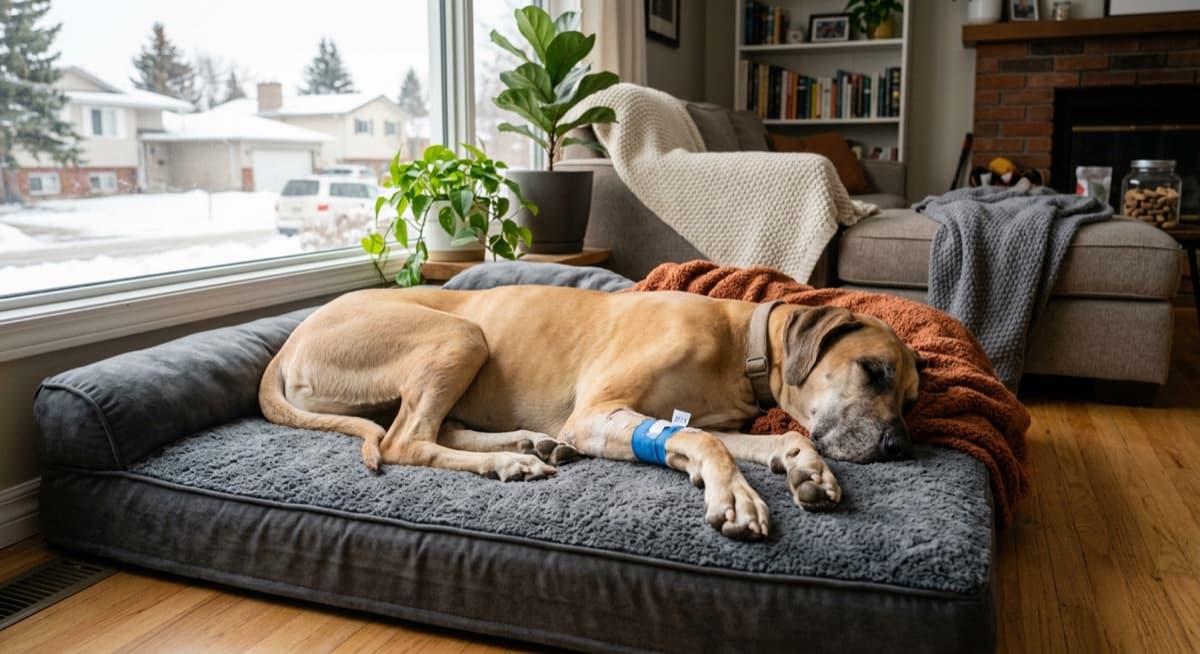
Why Great Danes Need Insurance More Than Most Breeds
Pet insurance is a hedge for most breeds. For Great Danes it leans closer to a guaranteed-return purchase, because the breed's biggest risks are not gradual ones. They arrive as sudden, expensive, time-sensitive emergencies, and any one of them is enough to recover years of premiums.
Bloat (gastric dilatation-volvulus, or GDV) is the textbook case. A Dane can go from normal to life-threatening in hours. The surgical correction in a Calgary emergency clinic is a major operation: imaging, stabilisation, abdominal surgery, gastropexy, hospitalisation, and post-op care. Without insurance, owners regularly face a five-figure bill at 2 a.m. with no time to weigh options. The AKC Great Dane breed profile and most giant-breed rescues list bloat as the defining health emergency for the breed.
Dilated cardiomyopathy (DCM) is the leading cause of death in the breed. DCM is a years-long management problem, not a one-off bill: cardiology referrals, echocardiograms, ECG monitoring, daily medication, follow-up imaging. A capped or hereditary-excluded plan handles this badly. Hip dysplasia is common in giant breeds, with surgical repair available but expensive. Wobbler syndrome (cervical spondylomyelopathy) is a Dane-prone neurological condition that requires advanced imaging, specialist consults, and sometimes surgery.
Stack those four together. Bloat is sudden and surgical. DCM is chronic and pharmaceutical. Hip dysplasia is orthopaedic and surgical. Wobbler is neurological and imaging-heavy. A Great Dane that hits even one of those across its 7 to 10 year lifespan is a normal outcome for the breed, not a worst case. That is the structural argument for insurance: the cost distribution is bimodal. Either the dog is mostly healthy and you spent moderate premium money, or one of the big four hits and the policy pays out a multiple of what you put in. Both branches make sense to insure against in a Calgary winter market where emergency clinic access is essential.
For background on the breed's overall health profile and why Calgary cost planning matters before adoption, see the Great Dane adoption guide. For lifetime budget context (food, vet, training, equipment), see the Great Dane cost of ownership guide.
The Four Breed-Specific High-Cost Conditions
Some breeds need broad coverage. Great Danes need specific coverage. Four conditions matter more than the rest:
1. Bloat (gastric dilatation-volvulus / GDV)
Deep-chested giant breeds carry elevated lifetime bloat risk. Symptoms (unproductive retching, distended abdomen, restlessness, drooling) escalate over hours. Emergency surgery in Calgary is a multi-thousand-dollar single event: imaging, surgical correction of the gastric torsion, prophylactic gastropexy, hospitalisation, post-op monitoring. For the symptom checklist and what to do in the first hour, see our Great Dane bloat / GDV guide. Insurance covers bloat surgery if the policy is active and no prior bloat is on file. Verify the policy has either no annual cap (Trupanion) or a high enough cap to absorb a multi-day hospital stay.
2. Dilated cardiomyopathy (DCM)
The leading cause of death in the breed. DCM is a years-long management commitment: cardiology referral, baseline echocardiogram, ongoing imaging, daily heart medication, and Holter monitoring in some cases. Calgary specialty cardiology is concentrated at a handful of practices and not cheap to access. Verify the policy does not exclude hereditary cardiac conditions and that specialist visits are reimbursed at the same rate as general practice. Annual screening from age 2 to 3 is commonly recommended by giant-breed cardiologists; the AVMA pet owner resources are a good neutral starting point on cardiac care basics.
3. Hip dysplasia and orthopaedic disease
Giant breeds are predisposed. Treatment ranges from medical management (weight, joint support, anti-inflammatories) to surgical repair (FHO, THR) at thousands per procedure. Bilateral cases double the bill. Verify the policy does not blanket-exclude orthopaedic conditions and that the bilateral clause does not exclude the second hip if the first was diagnosed pre-policy. For a Calgary Dane adopted as an adult, this is the most common chronic-care category after cardiac.
4. Wobbler syndrome (cervical spondylomyelopathy)
A Dane-prone neurological condition affecting the cervical spine. Diagnosis requires advanced imaging (MRI commonly), specialist neurology consults, and sometimes surgery. Treatment can be medical or surgical, but both paths involve significant cost. Verify spinal and neurological conditions are not blanket-excluded and that diagnostic imaging is covered. Calgary neurology referrals are limited; insurance that covers specialist referrals is essential.
Calgary Insurer Comparison
Five Canadian-relevant insurers are most commonly referenced by Calgary adopters: Trupanion, Pets Plus Us, Pumpkin, Petsecure, and Embrace. All accept Great Danes subject to age and pre-existing rules. Premiums, caps, reimbursement rates, and exclusions vary; the table below summarises directional positioning, not a current quote. For real numbers tailored to your Dane, work through a licensed Calgary insurance broker.
| Plan | Structure | Reimbursement | Best for a Great Dane |
|---|---|---|---|
| Trupanion | No per-condition cap. Lifetime coverage. | 90% | DCM, wobbler, bilateral hip cases (long-tail conditions) |
| Pets Plus Us | Tiered annual caps. Canadian-owned. | 80% | Owners who prefer a Canadian provider and tier flexibility |
| Pumpkin | Annual cap. 90% reimbursement available. | 80% or 90% | Budget-conscious owners who still want high reimbursement |
| Petsecure | Annual cap. Canadian-owned. Simpler claims. | 80% | Straightforward claim handling, Canadian-owner preference |
| Embrace | Annual cap. Broad coverage. | 70%, 80%, or 90% | Owners comparing across US-headquartered options |
Directional positioning only. Coverage limits, deductibles, reimbursement rates, and waiting periods are quoted at signup and vary by dog and policy year. Consult an insurance broker for current Calgary quotes.
For background on the Canadian pet insurance market, the North American Pet Health Insurance Association (NAPHIA) publishes annual industry reports covering enrolment, average premium, and claim trends across providers.
Coverage Types Explained
Three coverage categories matter most for a Great Dane. Most Calgary owners need at least the first two; the third is optional.
Accident + illness (the core plan)
Covers injuries (lacerations, fractures, foreign-body ingestion) plus illnesses (bloat, DCM, infections, cancer, hip dysplasia, wobbler, dental disease where covered). This is the non-negotiable layer for any Great Dane. Without it, the four breed-defining conditions are fully out-of-pocket.
Prescription medication coverage
DCM is a years-long medication problem. Heart drugs, anti-inflammatories for hips, neurological medications for wobbler all add up. Verify prescription coverage is included or available as an add-on. Some plans include it by default, others price it as a rider. For a giant breed where drug doses are sized to body weight, this layer pays back quickly.
Wellness / preventive add-on (optional)
Covers vaccines, annual exams, dental cleanings, parasite prevention. Useful for first-year Dane budgeting because giant breeds need annual cardiac screening starting around age 2 to 3. Run the math: if the wellness add-on costs $20 to $30 a month and your annual preventive bill is similar, it nets out flat. The value is budgeting predictability, not savings.
The Pre-Existing Condition Trap
The single most common Great Dane insurance mistake is booking the wellness exam before the policy starts. The pre-existing rule is universal across Canadian insurers: any condition noted at a vet visit before your policy begins becomes excluded for life. For a Great Dane this rule bites harder because the breed shows subtle early signs of its four big conditions at the first exam more often than smaller dogs.
A “mild heart murmur, monitor” note can later be cited to exclude DCM coverage. A “borderline hip looseness on palpation” note can exclude hip dysplasia. A “subtle proprioceptive lag in the rear” note can exclude wobbler. Even a previous bloat event from a foster home can exclude future GDV coverage. None of those notes mean the dog has a disease; they mean a vet saw something worth flagging. But the insurer reads them as pre-existing once the policy starts after the exam.
The correct sequence is documented below in the enrolment timeline section. The short version: adopt the Dane, enrol the same day before any vet appointment, wait out the 14 to 30 day illness waiting period, then book the first wellness exam. Anything found at that exam is covered going forward because the policy was already active. This is the same rule that applies to every breed but matters more for Great Danes because the diagnostic findings are common and the conditions are expensive.
For more on the first weeks of Dane ownership (where to start, what to watch for, when to book the vet), the adoption guide walks through the day 1 to month 1 sequence.
When to Enrol: Puppy, Adult, or Senior Dane
Three life-stage scenarios apply to most Calgary adopters.
Best window to enrol
Premiums are at their lowest, and the dog has minimal medical history. Coverage locks in before any breed-defining condition is documented. For Great Dane puppies adopted from a Calgary rescue or transferred from a foster, enrol on adoption day. The first puppy wellness exam should happen after the policy waiting period clears.
Still strongly recommended
Premiums climb with age but the four breed-defining conditions are still mostly ahead. Pre-existing exposure depends on what the previous owner or rescue documented. Ask the rescue for all medical records; anything not on those records that shows up at your first wellness exam will be excluded if exam happens before policy start. Same enrolment-then-exam sequence applies.
Harder but not impossible
Some insurers cap new-policy enrolment age, and the dog is more likely to have documented findings. Premiums are meaningfully higher. The math is still favourable for a Great Dane senior because the breed's short 7 to 10 year lifespan means the senior years are when the big conditions hit. Get quotes from multiple insurers; eligibility varies. For senior Dane medical planning context, an experienced Calgary giant-breed vet is the right consult.
Browse adoptable Great Danes in Calgary
Get insurance quotes BEFORE you bring your new Dane home. Enrol the same day, before any vet visit, to lock in bloat, DCM, hip, and wobbler coverage for life. Inventory across 15+ Calgary rescues updates regularly.
See Available Great Danes →
ROI Math: Lifetime Premium vs Lifetime Medical
For most breeds, insurance is a hedge against tail risk. For Great Danes it is closer to a probability bet that pays out within the dog's lifetime. The math below is directional, not a quote. Specific Calgary premium figures vary by provider, age, deductible, reimbursement rate, and dog. Consult an insurance broker for current numbers.
Lifetime premium
A Great Dane's lifespan is shorter than most breeds at 7 to 10 years. Lifetime premium accumulates over those years and grows with each renewal. Directionally, premiums for giant breeds sit higher than mid-size breeds because insurer actuarial models price in the four breed-defining risks. Senior years push premiums higher again. The total lifetime cost is a real four- to low-five-figure commitment. Consult your insurance broker for current Calgary quotes.
Lifetime medical without insurance
The without-insurance scenario depends entirely on which of the four breed-defining conditions appear during the dog's life. Single-event costs in Calgary, framed directionally because actual prices vary by clinic, severity, and time of presentation:
- Bloat (GDV) emergency surgery, hospitalisation, gastropexy: high-four to five figures, single event
- DCM diagnosis, cardiology workup, lifetime medication, follow-up imaging: four to five figures over the dog's remaining lifespan
- Hip dysplasia surgical repair (one or both hips), rehabilitation: high-four to five figures per hip
- Wobbler syndrome MRI, neurology consult, surgery if indicated: high-four to five figures, single event plus follow-up
- Routine illness, injuries, dental, diagnostics across the dog's lifespan: four figures cumulative
- End-of-life palliative care: four figures
Net result
A healthy Great Dane that escapes all four breed-defining conditions costs the owner more in premium than reimbursement. A typical Dane that hits even one of the four nets positive on insurance by a meaningful multiple, often recovering all lifetime premium in a single major claim. Across the breed population, insurance is the favourable bet because the four conditions are common enough that “one of them hits” is closer to expectation than exception. Calgary owners who self-insure need substantial liquid savings on day one, because a bloat case will not wait for a payday or a HELOC application.
5 Common Exclusions to Watch
Read the policy document, not the marketing page. Five exclusion categories matter most for a Great Dane:
1. Pre-existing conditions
The universal killer. Anything noted at a vet visit, foster medical record, or rescue intake exam before the policy starts becomes excluded for life. For Great Danes this is the largest risk because the breed shows subtle findings at first exams more than most.
2. Hereditary and congenital exclusions
Some lower-tier plans exclude hip dysplasia, DCM, or wobbler as “hereditary” conditions. For a Great Dane those exclusions gut the policy. Ask in writing: “Is hip dysplasia covered? Is DCM covered? Is wobbler covered? Are hereditary conditions excluded?”
3. Bilateral condition clauses
A bilateral clause says if one hip (or eye, or knee) is diagnosed before the policy starts, the other side is automatically excluded as pre-existing too, even if currently healthy. For Great Danes this matters most for hips. Verify the bilateral clause and avoid plans where it is aggressive.
4. Annual cap traps on chronic conditions
A capped annual benefit sounds generous until DCM medication, monitoring, and follow-up imaging eat the cap by month eight. For long-tail chronic conditions, no-cap structures (Trupanion) or high-cap tiers are the safer choice. Read the cap language.
5. Specialist and imaging coverage
Great Danes need cardiology, orthopaedics, and neurology specialists for the four big conditions. Most Calgary specialty referrals are at a small number of clinics. Verify specialist visits, advanced imaging (MRI, CT, echocardiography), and follow-up consults are reimbursed at full plan rates.
12-Question Pre-Signing Checklist
Call the insurer directly. Get answers in writing (email or screenshot). The marketing page is not the policy. For Great Danes, these twelve questions matter more than the headline price.
- Is bloat (GDV) surgery covered, including hospitalisation, imaging, and prophylactic gastropexy?
- Is dilated cardiomyopathy (DCM) covered, including cardiology consults, echocardiograms, and lifetime medication?
- Is hip dysplasia covered, including surgical repair? Does the bilateral clause exclude the second hip if the first is diagnosed pre-policy?
- Is wobbler syndrome (cervical spondylomyelopathy) covered, including MRI and neurology referral?
- Are hereditary or congenital conditions excluded? Specifically ask about hip dysplasia, DCM, and wobbler.
- What is the annual cap, lifetime cap, or per-condition cap? How does it apply to chronic conditions like DCM?
- What is the reimbursement rate (70%, 80%, or 90%)? Is it before or after the deductible?
- What is the deductible structure (annual, per-condition, or per-incident)?
- What is the waiting period for accidents vs illness? Are there extended waiting periods for orthopaedic or cruciate conditions?
- How do you define pre-existing? Does a soft murmur note or borderline hip palpation count?
- Will you accept new policies on senior Great Danes (age 7+)? Some insurers cap new-policy enrolment age.
- Do you offer direct vet pay at any Calgary specialty hospitals, or is everything reimbursement-based?
Save every answer. The policy document is the contract. Marketing claims are not. For exact Calgary quotes and side-by-side comparison, consult a licensed insurance broker.
Frequently Asked Questions
Is pet insurance worth it for a Great Dane?
Yes, more than for most breeds. Four breed-defining conditions (bloat, DCM, hip dysplasia, wobbler) each carry single-event or chronic-management bills that can recover years of premium. The cost distribution is bimodal: either the dog is mostly healthy, or one of the four hits and the policy pays out a multiple. Both outcomes justify insurance.
Which pet insurance is best for Great Danes in Calgary?
All five major Canadian-relevant insurers (Trupanion, Pets Plus Us, Pumpkin, Petsecure, Embrace) accept Great Danes. Trupanion is frequently recommended for giant breeds because of no per-condition cap and lifetime coverage. Pets Plus Us and Petsecure are Canadian-owned. Get quotes from at least three before signing, or work through a licensed broker.
When should I enrol my Great Dane in pet insurance?
Day 1 of adoption, before any vet visit. Adopt the Dane, enrol the same day, wait out the 14 to 30 day illness waiting period, then book the wellness exam. Findings at that exam are covered because the policy was active first. Booking the exam before enrolment is the most common mistake.
Does pet insurance cover bloat surgery?
Yes, all major Canadian plans cover bloat (GDV) surgery if the policy is active past the illness waiting period and no prior bloat episode is documented. Confirm emergency surgery, gastropexy, hospitalisation, imaging, and post-op care are all in scope before signing.
What is the average monthly premium for a Great Dane?
Premiums run higher than mid-size breeds because giant-breed risk is priced in. Real figures vary by provider, age, coverage tier, deductible, and reimbursement percentage. For a current Calgary quote tailored to your Dane, request side-by-side quotes from at least three insurers or work through a licensed broker.
Are pre-existing conditions covered?
No. Universal across Canadian insurers. Any condition documented before the policy starts is excluded for life. For Great Danes, common pre-existing findings include soft heart murmurs, borderline hip looseness, and gait abnormalities at first exam. Enrol before the exam.
How does pet insurance reimbursement work?
Reimbursement-based, not direct pay (with limited exceptions). You pay the vet, submit the claim, the insurer reviews against your policy, and you receive reimbursement by direct deposit or cheque within roughly 7 to 30 days. Reimbursement is 70%, 80%, or 90% of the eligible bill after deductible.
What insurance exclusions should I watch for?
Pre-existing conditions, hereditary or congenital exclusions on lower tiers (avoid plans that exclude hip dysplasia or DCM as hereditary), aggressive bilateral clauses, annual cap traps on chronic conditions like DCM, and specialist or imaging exclusions that block neurology and cardiology referrals.
More Great Dane guides
Great Dane Adoption in Calgary →
The full adoption playbook: where Danes appear, what to budget, lifespan and bloat reality, Calgary climate notes.
Great Dane Bloat / GDV Guide →
Symptom checklist, the first hour, Calgary emergency vet planning, gastropexy decision. The single biggest insurance case for the breed.
True Cost of a Great Dane →
First-year and lifetime budget: food, vet, training, equipment. Where insurance fits in the total Calgary budget.
Adoptable Great Danes in Calgary →
Live listings of Great Danes and Dane mixes from 15+ Calgary rescues. Updated regularly.
New dog? Start with these care guides
Everything a new adopter needs to set up a safe, happy home.