The short answer
Edmonton Beagle adoption is moderate-availability. The Edmonton Humane Society, Zoe's Animal Rescue, AARCS Edmonton fosters, and AHHRB see Beagles and Beagle mixes regularly. Fees run $400 to $700. The adolescent surrender wave peaks between 10 and 24 months, driven by scent escapes, food theft, and baying noise complaints. Mixes (Beagle-Lab, Beagle-Basset, Puggle, Beagle-Shepherd) outnumber purebreds. Plan a fenced yard, long-line living for off-leash time, locked food access, and a detached or townhouse for noise reasons. Apartments are usually wrong for the breed.
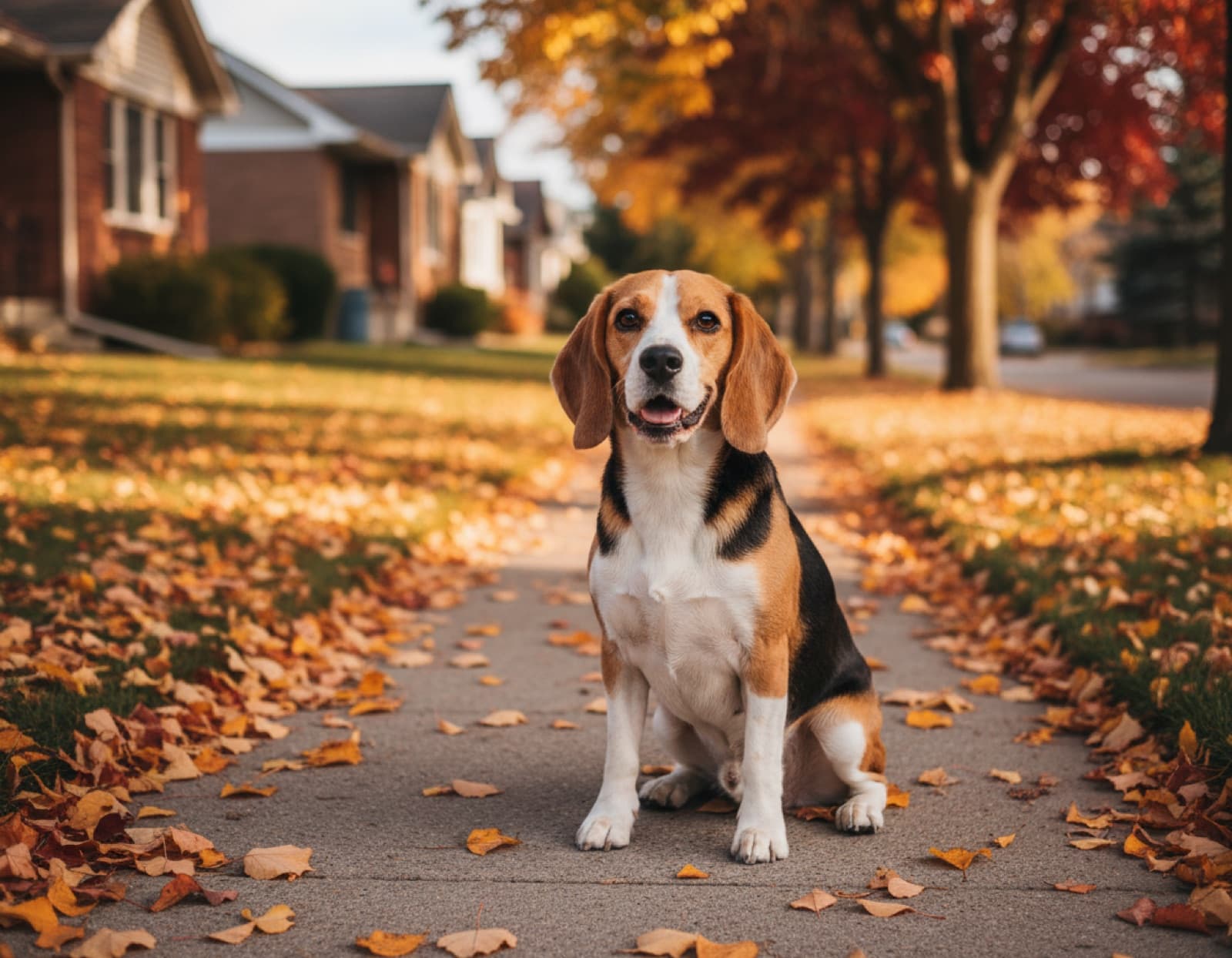
Why Beagles end up in Edmonton rescue: the three-engine surrender model
Edmonton Beagle surrenders follow a predictable pattern. Three behaviour engines drive almost every intake, often stacked together. The surrender wave peaks between 10 and 24 months when adolescence amplifies the hunting heritage and the household reaches its limit.
- Scent drive. Beagles were bred for centuries to track rabbit and small game in packs. The nose runs the brain. A Beagle that catches a scent enters tunnel vision: ignores recall, bolts out of partially-open gates, slips harnesses, digs under fences, and follows the trail across roads. Edmonton scent escapes commonly end at the river valley, the alley behind a row of houses, or in someone else's yard two blocks away. Most Beagle owner-surrenders mention escape behaviour as the trigger.
- Food obsession. Beagles are food-motivated to a degree that outpaces almost every other breed. Countersurfing, garbage raids, stealing kids' snacks, opening cupboards, opening fridges, and resource guarding around dropped food are daily events. The behaviour is breed-defining and never fully trained out; it is managed through environment (locked cupboards, food-secure containers, no food left unattended). Households with young children or open-plan kitchens often reach a breaking point.
- Baying. Beagles do not bark like most breeds. They bay, a long carrying hound voice originally developed to signal the pack across a hunting field. The sound pierces through condo walls and triggers neighbour complaints fast in shared housing. A bored or lonely Beagle bays. A Beagle alone for a workday bays. Edmonton condo board noise complaints are a documented surrender pipeline for the breed.
Adolescence (10 to 24 months) amplifies all three. The puppy that was manageable at 6 months becomes the adolescent that escapes the yard, steals dinner off the counter, and howls when left alone. Owners who did not budget for a hound's management requirements run out of patience. The dog is rarely the problem.
A Beagle in a detached suburban home with a six-foot fence, food-secure counters, structured exercise, and people who plan around the nose is one of the easiest, friendliest dogs to live with. Adopters who can match those conditions get 12 to 15 years of a steady, sociable companion who fits family life better than almost any other small to medium breed.
The hunting-line heritage and what it means in a pet home
Modern Beagles descend from English pack-hunting hounds bred to follow rabbit and hare scent in groups, signal the pack with carrying voice, and stay focused on a trail for hours. The traits that made them successful hunters (scent obsession, food motivation, pack vocalisation, persistence, group sociability) are the same traits that make them difficult in the wrong pet home.
Hunting lines and pet lines are not meaningfully separated in North American Beagle breeding. Almost every Beagle, regardless of breeder source or rescue intake, carries the full working drive. The drive does not weaken in a house dog; it redirects. A Beagle without a rabbit trail finds the next-best scent: a squirrel track in the back yard, dropped food in the alley, a barbecue smell from three houses over, the trail your shoes left when you got home. The nose works at all times. Most Beagles spend their downtime air-scenting from a couch, head up, sniffing.
Practical implications for Edmonton pet homes:
- Recall is unreliable around scent. Off-leash in unfenced space is one rabbit away from a missing dog. Long-line living on river-valley trails is the standard. Recall training works in low-distraction environments and fails the moment a scent appears. This is breed reality, not a training failure.
- Fenced yards need to be Beagle-proof. Six-foot solid fence, dug-in or buried perimeter to prevent under-digging, gate latches the dog cannot nose open, and no gaps. Three-foot picket fences are play equipment to a motivated Beagle.
- Scent enrichment matters more than physical exercise. A Beagle that gets a 45-minute walk and no scent work is still mentally restless. A Beagle that gets a 25-minute walk plus 15 minutes of snuffle mat, scatter feeding, or scent games is satisfied. The nose needs the workout.
- Food motivation makes training easy. Beagles will work hard for high-value treats. The same food drive that creates countersurfing is the lever that teaches recall, sit, down, and stay quickly. Force-free training methods work well with the breed.
- Pack vocalisation is breed-typical. Beagles bay at sirens, other dogs, the doorbell, and sometimes nothing visible. Quiet Beagles exist but are the exception. Plan for the noise profile, not a hopeful exception.
Owners who understand the heritage stop fighting it and start working with it. A Beagle is not a small Labrador or a quieter terrier. The breed is a scent hound first, a pet second, and the home setup has to honour that order.
Edmonton rescues that consistently list Beagles and Beagle mixes
Beagles appear across most Edmonton-area rescues, though never in the volume of higher-intake breeds like Huskies, German Shepherds, or Labradors. Mixes outnumber purebreds in intake records. Inventory rotates fast; set up alerts and check current Edmonton listings before fixating on a single rescue.
- Edmonton Humane Society (EHS): the city's largest shelter and the most consistent source of Beagle intake. EHS sees Beagles primarily through urban owner-surrender tied to escape behaviour, food management failure, or condo noise complaints. The centralised facility lets adopters meet the dog in person, and the EHS behaviour team writes detailed temperament assessments covering scent reactivity, food motivation, kid tolerance, and any flagged housing concerns.
- Zoe's Animal Rescue: long-running Edmonton foster-based rescue. Zoe's takes Beagles through their foster network, often from rural Alberta surrender pipelines or owner life-change situations. Zoe's foster write-ups are among the most thorough in Edmonton, which matters for matching a Beagle's actual energy level and scent reactivity to the right adopter.
- AARCS (Alberta Animal Rescue Crew Society): headquartered in Calgary with Edmonton-area foster homes. AARCS tags each dog with its current foster location, so Edmonton-foster Beagles surface on Edmonton listings. AARCS foster notes explicitly cover kid tolerance, multi-pet compatibility, exercise capacity, and any escape history.
- Alberta Homeward Hound Rescue Bureau (AHHRB): Edmonton-area foster-based rescue. AHHRB lists every dog as Mixed Breed by policy, so Beagles and Beagle-cross dogs are identified by photo and description rather than a breed tag. Always worth checking even when a search for Beagle returns nothing on a breed-tag filter.
- GEARS (Greater Edmonton Animal Rescue Society) and Hope Lives Here Animal Rescue: both Edmonton-area rescues with smaller rotating inventories that occasionally list Beagles or Beagle mixes. Lower frequency than the rescues above but worth following. Beagle-Lab and Beagle-Shepherd crosses appear here more often than purebred Beagles.
- SCARS (Second Chance Animal Rescue Society): northern-Alberta intake skews to working breeds and Northern dogs, so Beagles appear less often than at the other rescues. When they do list, they tend to be Beagle-Hound mixes from rural surrender pipelines. Worth following but not the primary source.
Adopters sometimes ask whether there is a dedicated Beagle rescue based in Alberta. As of writing we cannot verify an Edmonton-based Beagle-specific rescue with current adoptable listings. If you see a Beagle-rescue name on social media, verify it through Canada Revenue Agency charitable registry, a real Alberta address, public-facing vet references, and a current adoptable-dog list before sending money. Most Edmonton Beagle adopters find their dog through the rescues above.
What an Edmonton rescue Beagle actually costs
Edmonton rescue adoption fees for Beagles and Beagle mixes generally land between $400 and $700, with senior Beagles often reduced to $300 to $500. The fee is a partial recovery on medical work the rescue already absorbed, not a sale price. A typical Beagle adoption fee covers:
- Spay or neuter surgery. Standalone at an Edmonton vet clinic, spay or neuter for a small-to-medium breed runs $350 to $600.
- Core vaccinations. DAPP and rabies at minimum. Bordetella often included if the dog has been boarded.
- Microchip implant and registration. Required for licensed dogs under City of Edmonton Animal Care and Control Bylaw 21244.
- Deworming, flea, and tick treatment. Standard intake processing.
- Basic vet workup. Physical exam, bloodwork for older dogs, fecal screen, and any breed-specific assessments the rescue elects to run.
Stacked at retail Edmonton vet pricing, those services cost $900 to $1,800. The rescue fee recovers part of that; donations cover the rest.
Beyond the adoption fee, plan on ongoing Beagle costs of $2,500 to $4,000 per year. Food for a 20 to 30 pound Beagle runs $60 to $90 per month for quality kibble (the right volume matters more than the brand because Beagles gain weight fast on overfeeding). Routine vet care averages $400 to $800 per year. Pet insurance for a young adult Beagle in Edmonton runs $40 to $70 per month and is worth enrolling in the first week before any pre-existing conditions appear in vet records.
One-time setup costs add another $300 to $500 in the first month: a properly fitted harness the dog cannot back out of, a 15 to 30 foot long line for trail walks, a sturdy crate, baby gates for kitchen separation during meal prep, food-secure storage containers (cereal-style with locking lids), and trash-can locks. Compare the adoption math to a Beagle puppy from a breeder at $1,200 to $2,000, which comes with none of the vet work the rescue dog already has and the same management requirements regardless of source.
Common Beagle mixes in Edmonton rescue
Mixed Beagles outnumber purebreds in Edmonton intake records. Each combination shifts the temperament and physical profile in different directions. Foster notes are more reliable than breed-mix labels because most rescue intake records list parentage as a best guess from physical appearance.
- Beagle-Labrador (Beagador, sometimes Boglen): the most common Beagle mix in Edmonton intake. The Lab side adds size (35 to 50 pounds), retriever sociability, and a slightly more biddable temperament. The Beagle side keeps the scent drive and food motivation. Often family-friendly and a good first-time-Beagle home option because the Lab influence softens the worst Beagle traits. Recall is still unreliable around scent, but the dog is usually easier to train and slightly less vocal.
- Beagle-Basset Hound (Bagle): longer body, shorter legs, more stubborn. The Basset side amplifies persistence and adds a deeper bay. These dogs can be slow to train because the stubborn streak compounds across both breeds. Excellent at scent work, often slower-moving (which suits older or less active households), but back issues are a real risk because of the long-spine, short-leg conformation.
- Beagle-Pug (Puggle): popular in the 2000s, still appears in Edmonton rescue from owner-surrender. The Pug side adds brachycephalic risk (breathing problems, heat sensitivity, eye prominence) plus a smaller flat-ish face. Puggles tend to be friendly and social but inherit medical risks the rescue should disclose. Heat planning matters more for Puggles than purebred Beagles, which affects Edmonton summer activity.
- Beagle-Shepherd (German Shepherd or Australian Shepherd cross): larger size (40 to 60 pounds), higher drive, more demanding to train. These mixes need significantly more exercise than purebred Beagles and benefit from working-dog enrichment (scent games, obedience training, structured outlets). Best matched to active households with previous high-drive-dog experience.
- Beagle-Hound (Walker, Treeing, Coonhound, or Foxhound cross): louder voice, longer legs, taller dogs (25 to 35 pounds). The hound combinations amplify the Beagle scent drive and add a deeper bay. Often serious escape risks because the additional hound parent typically carries even stronger scent compulsion. Best matched to experienced hound owners.
- Beagle-Terrier (Beagle-Jack Russell, Beagle-Rat Terrier): smaller (15 to 25 pounds), more wiry, often higher-energy than purebred Beagles. The terrier side adds prey drive, which means small-animal compatibility is questionable. Often great with active households and other dogs but rarely safe with cats or small pets.
For any Beagle mix, the foster will describe the dog's actual size, energy level, scent reactivity, and known behaviour patterns. That information is more reliable than any breed-mix guess. Adult appearance and behaviour tell the story; lineage labels are decoration.
Browse adoptable Edmonton Beagles and Beagle mixes
Current Edmonton listings from EHS, Zoe's, AARCS Edmonton fosters, AHHRB, GEARS, and Hope Lives Here in one place. Beagle inventory rotates fast; set up listing alerts so you catch them the day they appear.
See Edmonton Adoptable Dogs →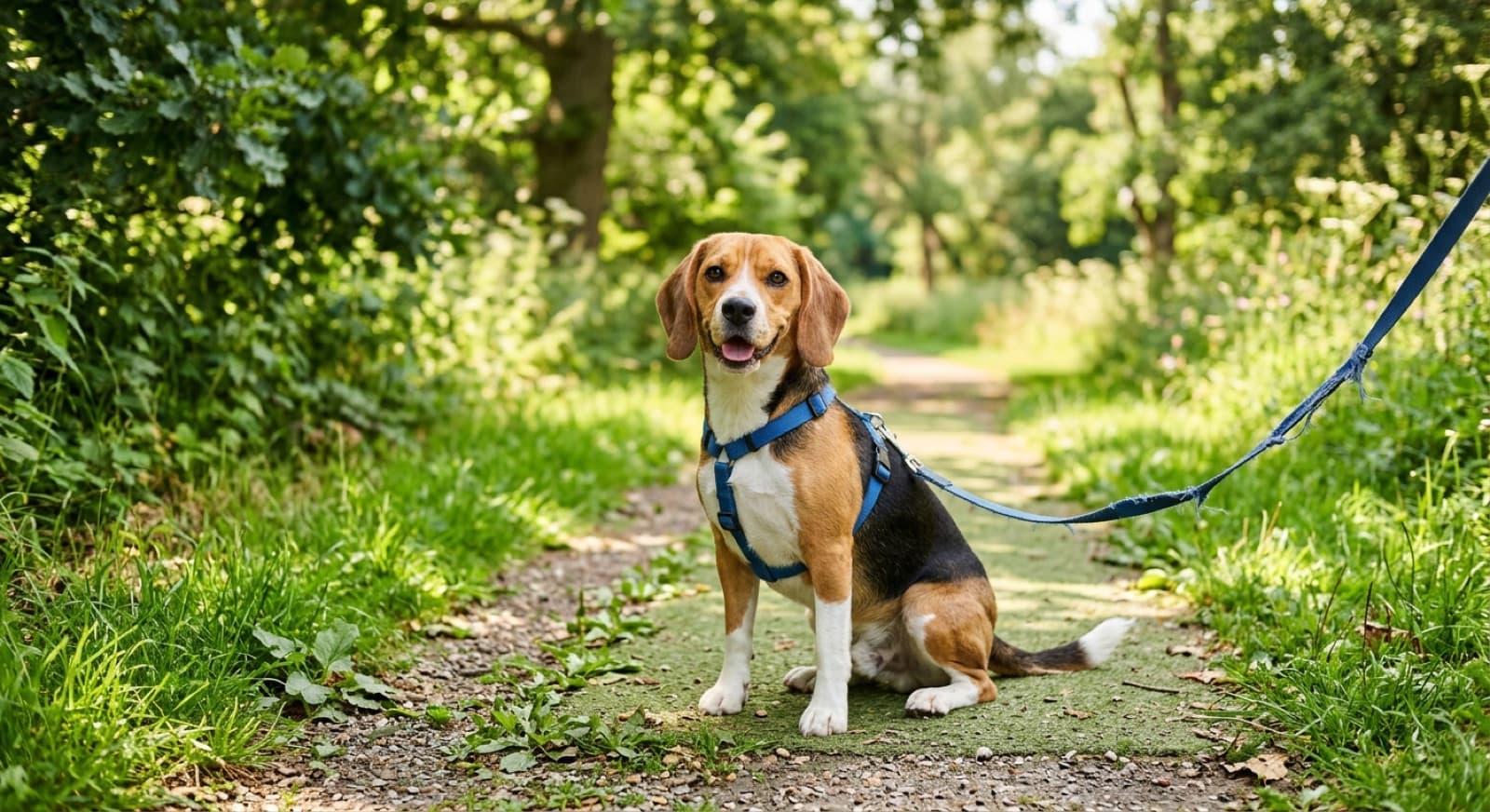
What Edmonton rescues evaluate in a Beagle application
Beagle applications are screened for environment readiness and hound-experience honesty. Edmonton rescues are not worried about whether you love Beagles; everyone does. They are worried about whether the home setup can contain a scent hound and whether you have planned around the food and noise reality. The screening typically covers:
- Fenced yard quality. The rescue will ask for fence height, material, and condition. Six-foot solid fence is the gold standard. Three-foot picket fences will be flagged. Be specific about gate latches, perimeter dig prevention, and any known weak spots.
- Housing type and noise tolerance. Detached houses, townhouses with detached neighbours, and acreage are all preferred. Apartments and shared-wall condos get harder scrutiny. The rescue will ask about your neighbours and whether anyone has complained about previous pets.
- Kid age and household structure. Most Beagles do well with kids above toddler age. Toddler households need a clear plan for food management (locked low cupboards, supervised meal times, no snacks at floor level). The foster will flag any specific dog that needs older-kid households.
- Existing pets. Most Beagles do well with other dogs, especially other hounds. Cat compatibility varies; Beagles raised with cats often do fine, while adult Beagles from rural backgrounds may chase. Small pets (rabbits, guinea pigs, hamsters) are usually not safe with Beagles regardless of background.
- Daily routine and time alone. A Beagle alone for nine hours a day will bay and find creative trouble. The rescue will ask what your typical weekday looks like, whether anyone comes home midday, and what your plan is for separation-anxiety prevention.
- Exercise capacity and weather plan. Most Beagles need 45 to 75 minutes of daily activity plus scent enrichment. The rescue will ask about your typical walking routes and your Edmonton winter plan. River-valley trails work well in milder weather; indoor scent games and short walks cover deep winter.
- Long-line and harness commitment. The rescue will ask whether you understand that recall is unreliable, whether you are willing to use a long line on trails, and whether you have a properly fitted no-pull harness the dog cannot back out of. A specific answer signals breed-aware preparation.
- Food management plan. The rescue will ask how you intend to secure food access. Locked cupboards, sealed containers, no food on counters, and supervised meal times are all valid answers. Open-plan kitchens with toddler snacks at floor level will get flagged.
- Housing approval. If you rent or live in a condo, the rescue will ask for written confirmation that the dog is approved at the dog's adult weight and that there is no noise restriction your Beagle will violate.
Specificity wins applications. “We have a six-foot board fence with a buried perimeter, plan to use a 20-foot long line on Mill Creek trails, work from home four days a week, and have a kitchen with locking cupboards and a baby gate” is much stronger than “we love Beagles and have a fenced yard.” The rescue is trying to determine whether the placement will survive the adolescent surrender wave. A specific plan signals a realistic commitment.
The apartment and condo reality
Most Edmonton apartments and shared-wall condos are wrong for Beagles. The baying is the issue. A Beagle alone for a workday will vocalise in long carrying howls that pierce shared walls and floors. Condo board noise complaints typically arrive within the first month, sometimes the first week. Some rescues will decline apartment applications outright for Beagle adoption; others will approve only with documented separation-anxiety prevention plans and neighbour buy-in.
Honest indicators that an apartment Beagle adoption will fail:
- Shared walls or floors with families, light sleepers, or shift workers who sleep during the day.
- Building has a documented noise-complaint history with previous dog tenants.
- You work full-time onsite with no midday check possible.
- No outdoor space for the dog to relieve scent restlessness between walks.
- Your condo board has a written noise clause you suspect a Beagle will breach.
Indicators that an apartment Beagle could work:
- Detached top-floor unit with no shared ceiling.
- Hybrid work schedule with someone home most of the day.
- Neighbours informed in advance and supportive.
- Commitment to a separation-anxiety prevention plan from day one (gradual alone-time conditioning, food puzzles, sometimes a behaviour consult).
- Backup plan if noise complaints come in (training escalation, dog walker, possible move).
For most apartment Edmonton adopters, a quieter breed is the more honest fit. Small Poodle mixes, Cavalier King Charles Spaniels, French Bulldogs (with their own medical caveats), or older smaller mixed breeds typically tolerate apartment life better. If a Beagle is the only breed you want, planning the housing first matters more than planning the dog. The breed is not the problem; the noise profile and the environment are the mismatch.
How to apply prepared and apply fast
Edmonton Beagle adoptions move at moderate speed. Inventory is steady but never abundant, and most placements go to applicants who applied within hours of the listing going live. The serious applicants have everything ready before a Beagle lists. The typical sequence:
- Set up listing alerts on every Edmonton rescue. Register on EHS, Zoe's, AARCS, AHHRB, GEARS, and Hope Lives Here. Alerts catch listings the day they appear.
- Get your application materials ready in advance. Vet contact ready if you have other pets, landlord or condo board approval in writing if you rent or live in a condo, fence photos and dimensions ready to attach, pet insurance research done, two non-family references with current phone numbers, and a written summary of your weekly schedule, food management plan, and long-line commitment.
- Find a specific dog you want to apply for. Read the entire foster write-up: scent reactivity, energy level, kid tolerance, dog tolerance, known medical history, escape history. Watch any available videos.
- Submit the application same day. Expect 30 to 45 minutes for a thorough Beagle application. Same-day applications are reviewed first.
- Phone screen with the foster or shelter. The conversation that decides most placements. Be honest about your fence, schedule, food management, and apartment situation. The foster has lived with the dog and will tell you what they see.
- Meet-and-greet. At the foster's home, the shelter, or a neutral location. Bring everyone in the household, including kids and other dogs if relevant.
- Reference and home check. Most rescues call two references. Smaller foster-based rescues sometimes do a brief home visit before approval, with special attention to fence quality for Beagles.
- Adoption contract and fee. Standard contracts specify return-to-rescue terms if you cannot keep the dog. Read it before signing.
Realistic timeline from application to dog-in-your-house is one to three weeks for a Beagle placement. Multiple applications on the same dog are normal; if you are not selected, ask the rescue to keep your application on file for similar dogs.
The first 30 days with an Edmonton rescue Beagle
The 3-3-3 decompression principle (three days to start settling, three weeks to learn the routine, three months to fully bond) applies to Beagles. Most Beagles move through the early phases quickly because the breed defaults to social and household-oriented. Practical week-one priorities for an Edmonton rescue Beagle:
- Lock down food access from day one. Move all food to locked cupboards or sealed containers, install trash-can locks, and brief the household on no-food-on-counters rules. The first countersurfing event sets a habit that takes weeks to unwind.
- Use a long line for every off-property walk in the first month. Even if the foster says recall is reliable, the dog does not know the new neighbourhood scents yet. Long-line everything until trust is established.
- Check fence integrity before the first yard release. Walk the perimeter looking for dig spots, gaps, gate latch issues, and weak boards. Many Beagles test the fence within the first 48 hours. Better to find weak spots before the dog does.
- License the dog with the City of Edmonton. Required for any dog over six months under the Animal Care and Control Bylaw 21244. Tags should be visible on the collar from day one. Information is on the City of Edmonton dogs page.
- Microchip registration verification. Confirm the chip is registered to your contact information. Most rescues handle the transfer; verify directly with the chip registry. Beagles are escape risks; chip registration is the recovery lifeline.
- Pet insurance enrolment. Enrol in the first week before any pre-existing conditions appear in vet records. Beagles inherit risk for ear infections, intervertebral disc disease, hypothyroidism, and obesity-related joint issues.
- Establish a daily scent enrichment routine. Snuffle mats, scatter feeding in the yard, hidden treat games, and short scent-tracking exercises. Fifteen minutes of scent work is worth thirty minutes of physical exercise for a Beagle's mental satisfaction.
- Vet check in week one. Establish your relationship with an Edmonton vet and a baseline. Ask about breed-specific risks (ear infections, hypothyroidism, hip dysplasia, intervertebral disc disease, food allergies, weight management).
- Measure food portions carefully. Beagles gain weight fast on overfeeding. Use a kitchen scale or measuring cup, not a guess. Most adult Beagles need 3/4 to 1 cup of quality kibble twice a day depending on activity level and metabolism.
- Crate train from night one. Even Beagles who arrive house-trained benefit from crate routine for the first month. Separation-anxiety prevention often peaks at week two when you return to your normal work schedule.
- Same routes, same routine for the first two weeks. Predictability speeds settling. Save dog parks, new friends, and travel for after week three. New scent environments overwhelm decompressing Beagles.
By week three the routine is established. By month three the bond is solid and the household has adapted to managing food and noise. Use the first 90 days as a non-decision window. Most early concerns resolve with consistency and time. Detailed guidance in the first week rescue dog guide. For breed-specific research backing, see the American Kennel Club Beagle profile on temperament and care requirements.
Frequently asked questions
Where can I adopt a Beagle near me in Edmonton?
Beagles and Beagle mixes show up steadily in Edmonton-area rescue, though never in the volume you see with Huskies, Shepherds, or Labs. The Edmonton Humane Society lists Beagles and Beagle mixes every few weeks, usually from owner-surrender tied to escape behaviour or apartment noise complaints. Zoe's Animal Rescue takes in Beagles through their foster network, often from rural Alberta surrender pipelines. AARCS, headquartered in Calgary, tags Edmonton-foster Beagles so they surface on Edmonton listings. AHHRB lists Beagle-cross dogs under generic Mixed Breed labels, so check photos rather than breed tags. GEARS and Hope Lives Here see them occasionally. Beagle mixes (Beagle-Lab, Beagle-Basset, Puggle, Beagle-Shepherd) outnumber purebred Beagles in Edmonton rescue intake.
Why are Beagles surrendered in Edmonton?
Three stacked behaviour patterns drive almost every Edmonton Beagle surrender. Scent drive: Beagles bolt after rabbit, squirrel, or food scents and ignore recall, escape fenced yards by digging or jumping, and slip out of harnesses. Food obsession: countersurfing, garbage raids, and stealing kids' snacks are daily events, not occasional. Baying: the carrying hound voice that pierces through condo walls and triggers neighbour complaints within weeks. Most surrenders happen between 10 and 24 months when adolescence amplifies all three. The dog is rarely the problem; the housing or owner-readiness usually is. A Beagle in a fenced suburban yard with food-secured counters and people who plan around the nose is a happy, easy companion for 12 to 15 years.
What does an Edmonton Beagle adoption cost?
Edmonton rescue adoption fees for Beagles and Beagle mixes typically run $400 to $700. Adult Beagles in the 1 to 6 year range sit at the top of that range. Senior Beagles (8 years and up) often have reduced fees of $300 to $500. The fee covers spay or neuter surgery, core vaccinations (DAPP and rabies), microchip registration under City of Edmonton Animal Care and Control Bylaw 21244, deworming, flea and tick treatment, and a basic vet workup. Beyond the adoption fee, plan for $60 to $90 per month of quality food (Beagles are food-driven and gain weight fast on the wrong volume), $400 to $800 per year of routine vet care, pet insurance at $40 to $70 per month for a young adult, and a one-time setup spend of $300 to $500 on a secure harness, long line, crate, baby gates, and food-secure storage containers. Annual ongoing cost averages $2,500 to $4,000.
Are Beagles good apartment dogs in Edmonton?
Usually no. The baying is what makes apartments hard. A Beagle alone for a workday will vocalise in long carrying howls that pierce shared walls and floors, and Edmonton condo board noise complaints follow within weeks. The dogs are physically apartment-sized at 20 to 30 pounds, but the noise profile is the issue. Beagles do best in detached houses with secure fenced yards or in townhouses where the household is home most of the day. If you live in an apartment and want to adopt a Beagle anyway, expect to invest in separation-anxiety training, daily structured exercise to reduce boredom vocalisation, and possibly a behaviour consultation in the first month. The realistic test: would your neighbours tolerate one hour of howling if the dog were left alone? If no, the housing is wrong for the breed.
Can Beagles be off-leash in Edmonton?
Rarely safely. A Beagle that catches a scent enters tunnel-vision mode and will follow it across roads, out of off-leash parks, and through fence lines that hold any other breed. Recall training works in low-distraction environments and fails the moment a rabbit, squirrel, or food scent appears. Most experienced Beagle owners in Edmonton use a long line (15 to 30 feet) on river-valley trails and a securely fenced yard at home, and reserve off-leash time for fully fenced dog parks where the perimeter is dog-proof. Even then, some Beagles will dig under or scale four-foot fences when motivated by scent. The honest position: a Beagle off-leash in unfenced space is one rabbit away from a missing dog. Plan for long-line living from day one.
Are Beagles good family dogs?
Yes, with planning. Beagles are tolerant, playful, and pack-oriented, which makes them a classic family hound. They tend to do well with kids of any age above toddler, with other dogs (especially other Beagles), and often with cats they grew up with. The caveats are food management and noise. Beagles will steal food off the table, out of lunch boxes, off counters, and out of toddler hands without hesitation. Households with young children need to lock food away and supervise meal times. The baying can also wake babies and frustrate sleep-deprived parents. For a family with an active outdoor lifestyle, a fenced yard, and the patience to baby-proof food access, a Beagle is one of the most fun, sociable family dogs available. Foster notes cover each specific dog's kid and small-animal compatibility.
What are the most common Beagle mixes in Edmonton rescue?
Mixes outnumber purebreds in Edmonton Beagle intake. The most common combinations: Beagle-Labrador (sometimes called Beagador or Boglen, family-friendly with retriever sociability and Beagle scent drive), Beagle-Basset Hound (extra-stubborn with longer body and shorter legs, called Bagle by some shelters), Beagle-Pug (Puggle, brachycephalic risk from the Pug side plus scent drive), Beagle-Shepherd (higher drive, larger size, more demanding to train), Beagle-Hound mix (any combination of Walker, Coonhound, or Foxhound parentage that adds louder voice and longer leg). Most rescue intake records list mixed Beagles without confirmed parentage; the foster will describe size, energy, and behaviour traits more reliably than any breed-mix label. Adult appearance and behaviour tell you more than a guess at lineage.
How do Beagles handle Edmonton winters?
Reasonably well, with planning. Beagles have a short dense double coat and tolerate cold better than short-coated breeds like Boxers, Vizslas, or Dobermans, but they are not winter dogs. Below -20°C they need a fleece or insulated jacket, paw protection from salt and ice melt on Edmonton sidewalks, and limited time outside. Short legs mean belly-deep snow tires them fast on river-valley trails, and snow can pack into paw fur and cause discomfort. Indoor scent enrichment matters more in winter because a bored Beagle is a loud, destructive Beagle. Snuffle mats, scatter feeding, and short training sessions burn the mental energy a long winter walk cannot. Most Edmonton Beagle owners adapt the routine to 20 to 30 minute walks plus indoor work through January and February.
How long do Beagles wait in Edmonton rescue?
Less time than many breeds. Beagles and Beagle mixes typically place within one to four weeks of listing because they are family-friendly, adaptable, and one of the most-requested small to medium hounds. Puppies and young adults move fastest, usually with multiple applications on day one. Senior Beagles (8 years and up) often wait longer despite being the easiest to live with. Beagles with flagged behavioural concerns (escape history, severe baying, food aggression around resources) wait longest, and these dogs are best matched to experienced hound homes. Most Edmonton Beagle adopters need to set up listing alerts on every rescue and apply same-day; waiting three days usually means the dog is in approval review for someone else.
Should I adopt a Beagle puppy or an adult?
For most Edmonton households, an adult Beagle is the better fit. Puppy Beagles are charming and exhausting; the first 18 months are intense and the surrender wave hits hardest during adolescence. Adopting an adult Beagle (2 to 6 years) means the size is known, the energy level is established, basic training is often in place, and the dog is genuinely a rescue placement rather than a difficult puppy stage. Senior Beagles (8 years and up) settle quickly, fit retiree households well, and come with established household manners. The honest read on Beagle puppies: if you want a puppy specifically because you want to shape every aspect of the dog, prepare for 12 to 18 months of recall failure, countersurfing, and baying that requires structured training to manage. Adult rescue Beagles skip that phase.
Related Edmonton Beagle guides
Edmonton Adoptable Dogs
Current Edmonton-area Beagle, Beagle-mix, and family-friendly dog listings from EHS, Zoe's, AARCS Edmonton fosters, AHHRB, GEARS, and Hope Lives Here.
Beagle Health Issues: What Adopters Should Plan For
The Beagle health issues to plan for: IVDD back disease, chronic ear infections, weight, epilepsy, thyroid, SRMA and eye conditions, and what to ask your vet in month one.
Beagle Scent Drive & Escape Prevention Edmonton
The hunting heritage that makes Beagles escape, fence-proofing for Edmonton yards, long-line training, recall reality, river-valley trail management, and what to do when a Beagle slips out.
Beagle Food Obsession & Counter-Surfing Edmonton
Why Beagle food drive is breed-defining and unfixable, environment management, locked storage, resource guarding prevention, weight control for Edmonton home life, and turning food motivation into a training advantage.
Find your Edmonton rescue Beagle
Browse current Edmonton-area Beagle and Beagle-mix listings. Inventory rotates fast; alerts and same-day applications win.
Browse All Edmonton Dogs →New dog? Start with these care guides
Everything a new adopter needs to set up a safe, happy home.