The short answer
Dachshund adoption in Edmonton runs at moderate volume. IVDD diagnosis is the dominant surrender driver. Healthy adoptable Dachshunds and Doxie mixes appear roughly monthly at Edmonton Humane Society, AARCS Edmonton fosters, Zoe's, and AHHRB. Fees $400 to $700. Adopt with IVDD knowledge and a back-protection commitment (no furniture jumping, ramps everywhere, lean weight, harness not collar) or do not adopt this breed.
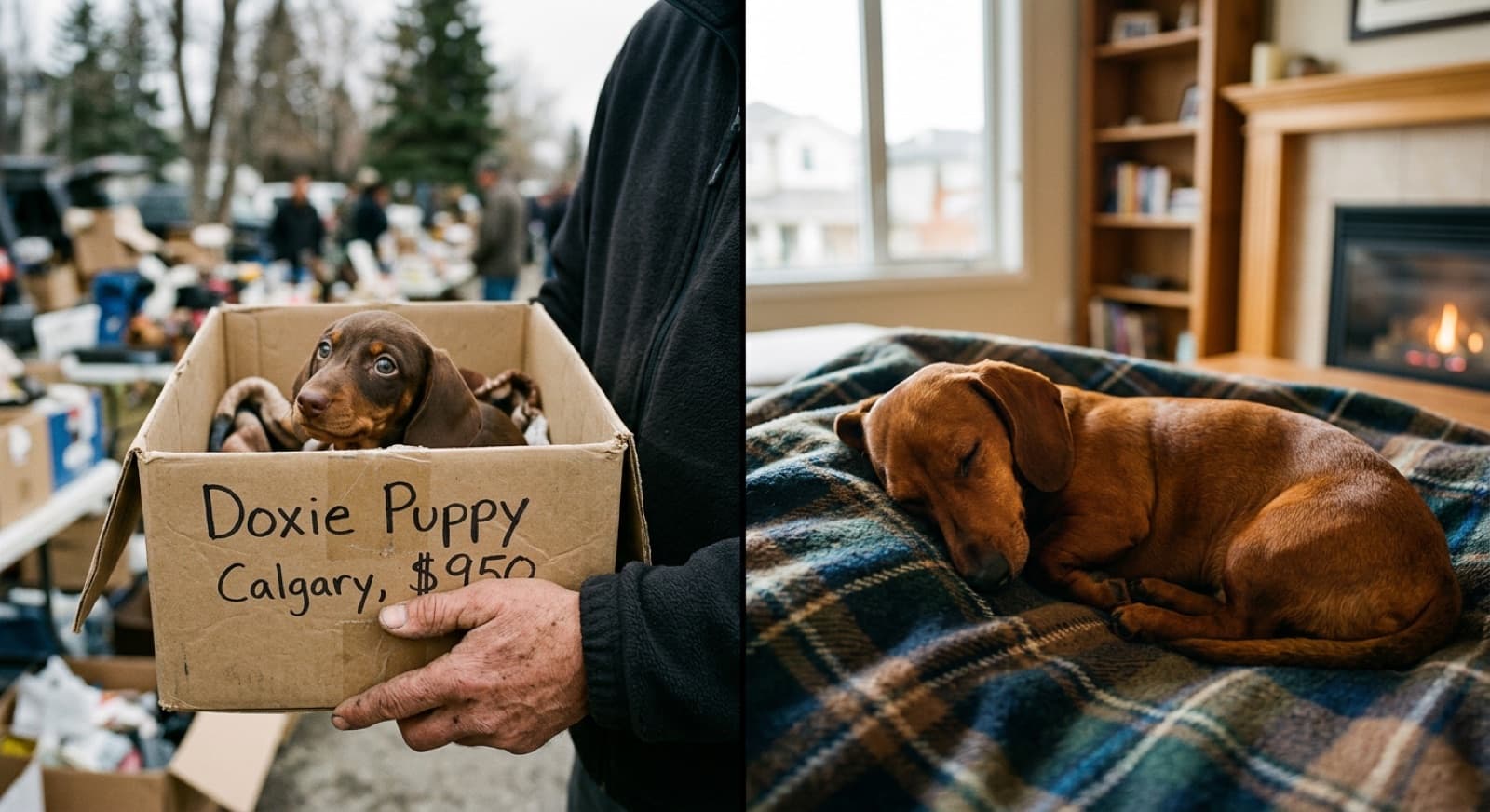
Why Dachshunds surrender to Edmonton rescue
Dachshunds are a moderate-volume breed in Edmonton rescue intake. They are not as rare as Yorkies but not as common as Labradors or Huskies. The intake patterns are remarkably consistent, and understanding them helps an adopter read foster temperament notes and the medical history more accurately. Four patterns dominate.
The most common pattern, by a wide margin, is the IVDD surrender. A family Dachshund jumps off the couch, lands awkwardly, or yelps after a romp in the yard, and within hours is dragging hind legs or fully paralysed in the rear. The emergency vet diagnoses an intervertebral disc episode. The neurology referral quotes $5,000 to $10,000 for hemilaminectomy surgery plus the 6 to 8 weeks of strict crate rest that follow. The family does not have pet insurance, has not budgeted for the cost, and is faced with a brutal choice: surgery they cannot afford, conservative medical management with uncertain outcome, or surrender to a rescue that may be able to fund the surgery. Many surrender. Roughly 25 percent of Dachshunds experience some level of IVDD in their lifetime, according to clinical references published by the American College of Veterinary Surgeons, which means Edmonton rescues see this surrender pattern several times a year across the local network.
The second pattern is the owner death or owner serious-illness surrender. Dachshunds are devoted long-lived companions, and they often outlive elderly owners or face the household dissolution that comes with a major diagnosis. These Dachshunds come into rescue well-adjusted, well-trained, and grieving. They are typically the best-prepared rescue dogs in the system because they were raised properly and lived stable lives. The foster home gets a settled dog who only needs help adjusting to a new person.
The third pattern is the senior downsizing surrender. An older Dachshund owner moves into assisted living or a senior apartment that does not allow pets, and there is no family member who can take the dog. These surrenders look like the owner-death pattern in many ways. The dog is usually well-adjusted, mid-senior to senior age, and ready to slot into a calm new home with a similar rhythm.
The fourth pattern is the adolescent behavioural surrender at 12 to 30 months. A Dachshund raised without consistent training, socialisation, or structure hits adolescence and starts showing alert barking that the neighbours complain about, resource guarding around food or toys, stranger reactivity at the door, or an escalating prey drive on walks. Dachshunds were bred to hunt badgers underground; the working instincts are real, and without channelling they can become household management problems. These dogs are placeable with experienced adopters who understand the breed and are willing to do consistent training. They are not easy first-time dogs.
Edmonton rescues that list Dachshunds and Doxie mixes
Six Edmonton-area rescues see Dachshunds with some regularity. Inventory rotates faster than for Yorkies or Goldens, which means a thoughtful adopter who is ready to apply same-day has a real chance of meeting the right dog within a few months. Set up listing alerts where available and check current Edmonton listings weekly.
- Edmonton Humane Society: the highest-volume Dachshund intake source in the city. EHS sees Dachshunds primarily through owner surrender, including IVDD-related surrenders the rescue often funds surgery for before listing. The centralised facility means you can meet the dog in person before applying. The EHS behaviour team produces detailed temperament assessments, and the medical team flags any back history clearly. Read the medical notes carefully on every EHS Dachshund listing. More information on adoptable dogs and adoption process is on the Edmonton Humane Society website.
- AARCS (Alberta Animal Rescue Crew Society): headquartered in Calgary with Edmonton-area foster homes. AARCS tags each dog with current foster location, so Edmonton-foster Dachshunds surface on Edmonton listings. AARCS foster temperament write-ups are among the most detailed in the province, and they consistently flag any back history, current medication, or activity restrictions. AARCS Dachshund volume is steady, with new listings rotating in regularly.
- Zoe's Animal Rescue: long-running Edmonton foster-based rescue. Doxie volume is moderate, and Zoe's temperament assessments are thorough. The application emphasises fit over speed; for a Dachshund placement, expect the foster home to ask specifically about your back-protection plan, your stairs situation, and your willingness to install ramps.
- Alberta Homeward Hound Rescue Bureau (AHHRB): Edmonton-area foster-based rescue. AHHRB lists every dog as Mixed Breed on paper as a matter of policy, so Dachshunds and Doxie mixes are identified by photo and description rather than a breed tag. Worth checking even if a search for Dachshund returns nothing on the site. Their foster network includes experienced small-dog homes, which matters for a back-fragile breed.
- GEARS (Greater Edmonton Animal Rescue Society) and Hope Lives Here Animal Rescue: both Edmonton-area rescues with smaller rotating inventory that occasionally includes a Dachshund or Doxie mix. Lower frequency than the four rescues above, but worth following.
- SCARS (Second Chance Animal Rescue Society): the largest northern-Alberta intake rescue. SCARS pulls steadily from northern communities; Dachshunds are uncommon in that pipeline but Doxie crosses do appear. Worth watching, especially for Dachshund-Beagle and Dachshund-mix listings.
A national breed-specific Dachshund rescue network operates in Western Canada with chapter coverage that occasionally serves Alberta. Adopters sometimes ask about this path. The application process is more rigorous, the wait can be months, and transport may be involved, but the matching quality is typically excellent. Verify any breed-specific group the same way you would verify any pet transaction: a current adoptable-dog list, a real address or named foster network, public-facing vet references, and a Canada Revenue Agency charitable registry record. Most Edmonton Dachshund adopters find their dog through the six local rescues above.
Size varieties: standard, miniature, and kaninchen
The Canadian Kennel Club recognises two Dachshund sizes (standard and miniature), and a third European size (kaninchen, the rabbit Dachshund) is informally recognised. All three share the same long-back conformation and the same IVDD risk profile, but the adopter fit differs.
- Standard Dachshund. 16 to 32 pounds, originally bred to hunt badgers. Sturdier than minis, slightly less fragile around calm older children, and substantial enough to handle moderate-energy households. Standards still need full back-protection rules; the long spine is the same proportional risk. Most rescue intake skews toward standards because they have been the more popular pet size in Western Canada historically. The Canadian Kennel Club breed standard provides the formal weight ranges.
- Miniature Dachshund. Under 11 pounds, originally bred to hunt rabbits and smaller game. True lap-dog size. Suits apartment dwellers, retirees, and households wanting a tiny devoted companion. More fragile than standards and even more vulnerable to spine injury from drops, falls, or rough handling. Most Edmonton rescues will not place miniatures into homes with children under six.
- Kaninchen (rabbit) Dachshund. Under 8 pounds, the smallest variety, very rare in North American rescue. If you see one listed, the back-protection rules apply with even more vigilance because the proportional spinal stress is even greater. Kaninchen Dachshunds suit experienced toy-breed handlers with calm households.
In practice, most Edmonton rescue Dachshund listings are standard or miniature, with a roughly 60/40 split favouring standards. Mixes range across the size spectrum; foster notes provide actual adult weight, which is more useful than the variety label.
Coat varieties: smooth, long-haired, and wire-haired
Dachshunds come in three coat varieties, each with subtly different temperament tendencies and clearly different grooming demands. The differences trace back to the breed history; long-haired Dachshunds carry some spaniel ancestry from coat-improvement crosses, and wire-haired Dachshunds carry terrier ancestry from terrier crosses introduced to add bite and bristle for working.
- Smooth-coated. The classic short shiny coat. Weekly brushing covers basic care; the coat sheds moderately. Smooth Dachshunds tend toward the classic Dachshund temperament: bold, alert, devoted to their person, slightly stubborn, prone to alert barking. Cold-vulnerable in Edmonton winter; a warm winter coat is essential below -10 C.
- Long-haired. Soft flowing coat that needs daily brushing to prevent mats, especially on the ears, chest, and feathering. Professional groom every six to eight weeks, typically $55 to $90 per visit in Edmonton. Temperament tends slightly calmer and more affectionate than smooths, with the spaniel ancestry showing through. Often the easier coat to keep warm in winter.
- Wire-haired. Bristly textured coat with distinctive eyebrows and beard. Needs hand-stripping every three to four months (or regular clipping, though stripping preserves coat texture). Often the most spirited of the three, with terrier-influenced prey drive and intensity. The wire coat handles cold and brush slightly better than smooth coat, but still needs winter protection.
All three share the same back, the same IVDD risk, and the same need for committed back-protection routines. Pick the coat that fits your household's grooming budget and temperament preference; the breed is fundamentally the same dog underneath. Most Edmonton rescue Dachshunds are smooth or long-haired; wire-haired Dachshunds are less common in local intake.
Common Dachshund mixes in Edmonton rescue
Dachshund crosses are common in Edmonton intake, often more common than purebreds in any given month. The crosses sometimes soften the breed-typical stubbornness, sometimes reduce the back-length and corresponding IVDD risk, and always vary widely in size, coat, and temperament. Foster notes do the real work; the breed label on a first-generation cross is a guess.
- Dorkie (Dachshund-Yorkie). Typically 8 to 14 pounds, often long-bodied with some Yorkie facial features. Coat varies (wiry, silky, or mixed). Temperament tends toy-breed alert with Dachshund stubbornness. Back-protection rules still apply; the long-back DNA usually carries through. Most Dorkies in Edmonton rescue surrender for the same reasons as both parent breeds.
- Chiweenie (Chihuahua-Dachshund). Typically 6 to 12 pounds, variable body length and leg proportion. The most common Dachshund cross in Edmonton rescue intake. Often shorter-backed than a pure Dachshund (which reduces IVDD risk slightly) but still long enough to need ramps and no-jump rules. Temperament combines Chihuahua alertness with Dachshund boldness; can be a lot of dog in a small package.
- Doxiepoo (Dachshund-Poodle). Typically 10 to 25 pounds depending on Poodle parent size, curly to wavy coat that needs daily brushing and regular professional grooming. Often softer-tempered than pure Dachshunds because the Poodle side moderates the stubbornness. Grooming costs add $150 to $220 every six to eight weeks. Coat is low-shed but not hypoallergenic in the way marketing claims.
- Dachshund-Beagle (sometimes called Doxle). Typically 15 to 30 pounds, often Beagle-coloured with longer Dachshund body. Combines scent-hound drive with Dachshund stubbornness; both parents are scent-driven hunters. Strong recall training matters from day one. Often appears in Edmonton rescue through northern and rural intake.
Other Dachshund mixes appear less frequently: Dachshund-Jack Russell crosses, Dachshund-Pug crosses, and Dachshund-Corgi crosses. Each has its own personality. Read the foster temperament notes and ask the foster home directly about energy level, housetraining status, kid tolerance, and back history.
What an Edmonton rescue Dachshund actually costs
Edmonton rescue adoption fees for Dachshunds generally land between $400 and $700, with young adults and puppies at the upper end given the demand. The fee is a partial recovery on costs the rescue has already incurred. A typical Dachshund adoption fee covers:
- Spay or neuter surgery. Standalone, this is $300 to $500 at an Edmonton vet clinic for a small to medium dog.
- Core vaccinations. DAPP and rabies at minimum. Bordetella is often included if the dog has been boarded.
- Microchip implant and registration. Required by City of Edmonton bylaw for licensed dogs.
- Deworming and flea and tick treatment. Standard intake processing.
- Basic vet workup with back assessment. Physical exam, dental check, palpation along the spine, and any imaging the intake vet recommends. Any IVDD history or current spinal sensitivity gets flagged on the foster write-up.
- Dental work, sometimes. Senior Dachshunds often arrive with significant dental disease. The rescue may have completed a dental cleaning or extraction before listing, which alone can be a $500 to $1,000 procedure at retail Edmonton pricing.
Stacked at retail Edmonton vet pricing, those services run $1,000 to $1,800 for a Dachshund intake. The rescue fee is a partial recovery, not a profit. Senior Dachshunds (around eight years and up) often have reduced fees of $200 to $400. IVDD-recovered or IVDD-managed Dachshunds sometimes have reduced fees too, in exchange for an adopter who commits to the ongoing care plan.
Beyond the fee, plan on ongoing Dachshund costs of $1,800 to $3,200 per year for a healthy adult. Food is modest given the size. Grooming varies: smooth coats need only weekly brushing, long-haired coats need daily brushing plus a professional groom every six to eight weeks, and wire coats need hand-stripping every three to four months. Dental care is meaningful; daily tooth brushing at home plus annual professional cleanings prevents thousands in later extractions. Pet insurance for a young healthy Dachshund in Edmonton typically runs $40 to $75 per month and is genuinely worth it; IVDD surgery alone can be $5,000 to $10,000, and enrolling in week one (before any back issue becomes pre-existing) is the highest-value insurance move for this breed.
For comparison, a Dachshund puppy from an Alberta breeder runs $1,800 to $3,500 for pet-quality, with miniatures and rarer colour patterns at the upper end. The breeder puppy comes with none of the vet work the rescue dog already has. The rescue path is significantly cheaper, and Edmonton rescue Dachshunds need homes.
The IVDD reality at adoption
Some Edmonton rescue Dachshunds are IVDD-naive (no episodes on record). Some are IVDD-recovered (had one or more disc episodes, recovered with surgery or conservative management, currently stable). A small number are IVDD-managed (ongoing medication, mobility limitations, or chronic care needs). The rescue will be transparent about which category a specific dog falls into; read the foster medical notes carefully.
For an IVDD-naive Dachshund, prevention is the whole game. The four highest-leverage rules:
- No jumping on or off furniture, ever. Install ramps or pet stairs at every couch, bed, and chair the dog is allowed on. Train the dog to use the ramps from day one. A single bad jump can cause a disc episode.
- Keep the dog lean. Excess weight is the single biggest IVDD risk multiplier. A lean Dachshund silhouette has a visible waist when viewed from above and a tucked belly from the side. If you cannot easily feel ribs, the dog is overweight. Many Edmonton vets are happy to help dial in feeding portions.
- Harness, not collar. Always. A step-in harness distributes pressure across the chest instead of the neck, which protects both the trachea and the cervical spine. Collar pressure on a Dachshund neck is a real injury risk.
- Stairs slowly. Carry the dog up and down stairs when practical, especially with seniors or IVDD-recovered dogs. If the dog uses stairs, supervise and slow them down.
Pet insurance from week one matters more for this breed than for almost any other. Enrol the day you bring the dog home, before any back issue becomes a pre-existing condition. A young healthy Dachshund insurance policy in Edmonton typically runs $40 to $75 per month. The first IVDD episode that ends up at a neurology referral typically costs $5,000 to $10,000 for hemilaminectomy surgery plus the recovery care. Insurance covers most of it; without insurance, the choice becomes surgery (debt) or conservative management (uncertain outcome).
If you are adopting an IVDD-recovered Dachshund, the rescue will hand off a written care plan: current medications, activity restrictions, follow-up vet schedule, and warning signs to watch for. Follow the plan. Some IVDD-recovered Dachshunds live full active lives with strict back protection; some need ongoing physiotherapy or hydrotherapy; some need ramps everywhere and gentle daily exercise only. Match your willingness to commit to the dog's specific care needs.
Edmonton Dachshund adopter readiness check
Before applying, work through this honestly. Most failed Edmonton Dachshund placements come back to one or two of these questions not being answered before the dog moves in.
- Stairs in your home? If yes, will you carry the dog up and down, install gates, or accept the daily IVDD risk that stairs create? A multi-floor home is workable but requires planning.
- Furniture access plan? Will you install ramps at every couch and bed the dog will be on? Will you train the no-jump rule consistently? Or will the dog be a floor-only dog?
- Weight management commitment? Are you willing to weigh food, ignore puppy-dog eyes at the table, and adjust portions if the dog gains weight? Lean is the single biggest IVDD prevention lever.
- Harness from day one? Are you willing to walk every day on a step-in harness, with the collar reserved for tag display only?
- Financial plan for IVDD surgery? Pet insurance from week one is the standard answer. An emergency fund of $8,000 to $10,000 is the backstop. Without one or both, an IVDD episode becomes an impossible choice.
- Calm household rhythm? Dachshunds can manage moderate household energy, but a chaotic household with rough toddlers and high-prey-drive larger dogs creates injury risk. A calm or moderate home is the better fit.
- Edmonton vet identified? Ideally one who knows the breed and is comfortable with cervical and thoracolumbar palpation. Many large Edmonton vet clinics have associate vets with Dachshund experience.
- Prior small-breed or back-fragile-breed experience? Not required, but it strengthens the application. First-time Dachshund adopters are not excluded; they benefit from showing real homework: training class plans, books read, ramp purchases planned.
- Household consensus? Every adult in the household commits to the back-protection rules. Placement fails fastest when one person follows the rules and another lets the dog jump off the couch.
- Realistic about training work? Many Dachshunds come with alert barking patterns, resource guarding, or stranger reactivity. Plan on consistent positive training. Are you prepared for that?
If most of these check out, you are a strong candidate. If a few do not, the rescue may steer you toward a more settled adult dog, recommend you wait until your situation is ready, or suggest a Dachshund mix with a shorter back. Either way, honesty in the application strengthens it.
Browse adoptable Edmonton Dachshunds and Doxie mixes
Current Edmonton listings from EHS, AARCS Edmonton fosters, Zoe's, AHHRB, GEARS, Hope Lives Here, and SCARS in one place. Dachshund inventory rotates monthly; set up alerts and apply same-day when a back-protection-fit dog appears.
See Edmonton Adoptable Dogs →What Edmonton rescues evaluate in a Dachshund application
Dachshund applications are screened differently from working-breed applications. The rescue is focused on back-protection commitment, household safety for a small dog, multi-pet compatibility, and the long-term medical care realism. The screening typically covers:
- Back-protection plan specifics. The rescue will ask about your stairs, your furniture, your ramp plan, and your willingness to enforce the no-jump rule. Vague answers signal an unprepared adopter; specific answers signal a fit.
- Household structure and kid age. Most Edmonton rescues will not place a miniature Dachshund into a home with children under six, and many will not place a standard Dachshund with children under five. Older calm kids who understand small-dog handling are usually fine.
- Existing pets. Dachshunds live happily with other small dogs and with cats they are introduced to gradually. Households with large high-prey-drive dogs face more scrutiny because of the size mismatch and the spine-injury risk from rough play.
- Apartment or condo barking management. Dachshunds can be alert barkers, and shared walls create neighbour complaints. Rescues will ask about your plan for managing barking through training, exercise, and not leaving the dog bored.
- Schedule and time alone. Dachshunds are companion dogs and form strong bonds. A 50-hour-a-week work-from-office schedule with no midday check is a harder fit than a retiree home, a work-from-home household, or a household with multiple adults present at different times.
- Pet insurance plan. The rescue will ask whether you intend to enrol in pet insurance from week one. This is the strongest signal of a prepared IVDD-aware adopter.
- Financial cushion for medical surprises. Beyond insurance, the rescue will ask about your emergency fund. IVDD surgery, dental extractions, and senior care can each be significant costs.
- Prior Dachshund or back-fragile-breed experience. Not required, but strengthens the application. First-time Dachshund adopters who show real homework (training plans, ramp purchases, vet identified) are usually fine.
The screening is not a hurdle; it is the conversation that determines whether this placement lasts. Specificity wins applications. Honest answers about your household's rhythm and your back-protection commitment beat aspirational ones every time.
How to apply for an Edmonton Dachshund adoption
Most Edmonton rescues run their Dachshund adoption process online. Inventory rotates monthly, so same-day applications matter. The typical sequence:
- Set up listing alerts. Before a Dachshund is listed, register for adoption alerts on the rescue websites and watch the Edmonton listings page. Dachshunds with good temperament fits move fast.
- Find a specific dog you want to apply for. Edmonton rescues apply per-dog rather than maintaining general waitlists. Read the entire foster write-up: medical history (especially any back notes), kid tolerance, dog tolerance, cat tolerance, housetraining status, and energy level.
- Complete the online application same day. Expect 30 to 45 minutes for a thorough application. Have your vet's name ready if you have other pets, your landlord's name if you rent, your condo board contact if you live in a condo, and two non-family references. A same-day application puts you in the first review round.
- Phone screen with the foster. If the application clears the first review, the dog's foster home will call you. This conversation decides most applications. Be honest about household rhythm, stairs, furniture access, work schedule, and prior breed experience.
- Meet-and-greet. Either at the foster's home or a neutral location. Dachshunds often warm up faster in a quiet environment than in a busy rescue facility, so a home visit usually shows the better version of the dog.
- Home check, sometimes. Some rescues do a brief home visit to confirm stairs, fencing, and any back-protection prep. Have ramps purchased and installed by this point if you can.
- Reference checks. Most Edmonton rescues call two references, including any prior vet. Give your references a heads-up so they pick up promptly.
- Adoption contract and fee. Most rescues use a standard contract that requires the dog be returned to the rescue if you can no longer keep them, ever. Read it.
Realistic timeline from application to dog-in-your-house is one to three weeks for a Dachshund placement, faster than larger breeds because the rescue is happy to see a back-protection-ready adopter. Prepare your application materials before the listing goes up so you can move same-day.
The first 30 days with an Edmonton rescue Dachshund
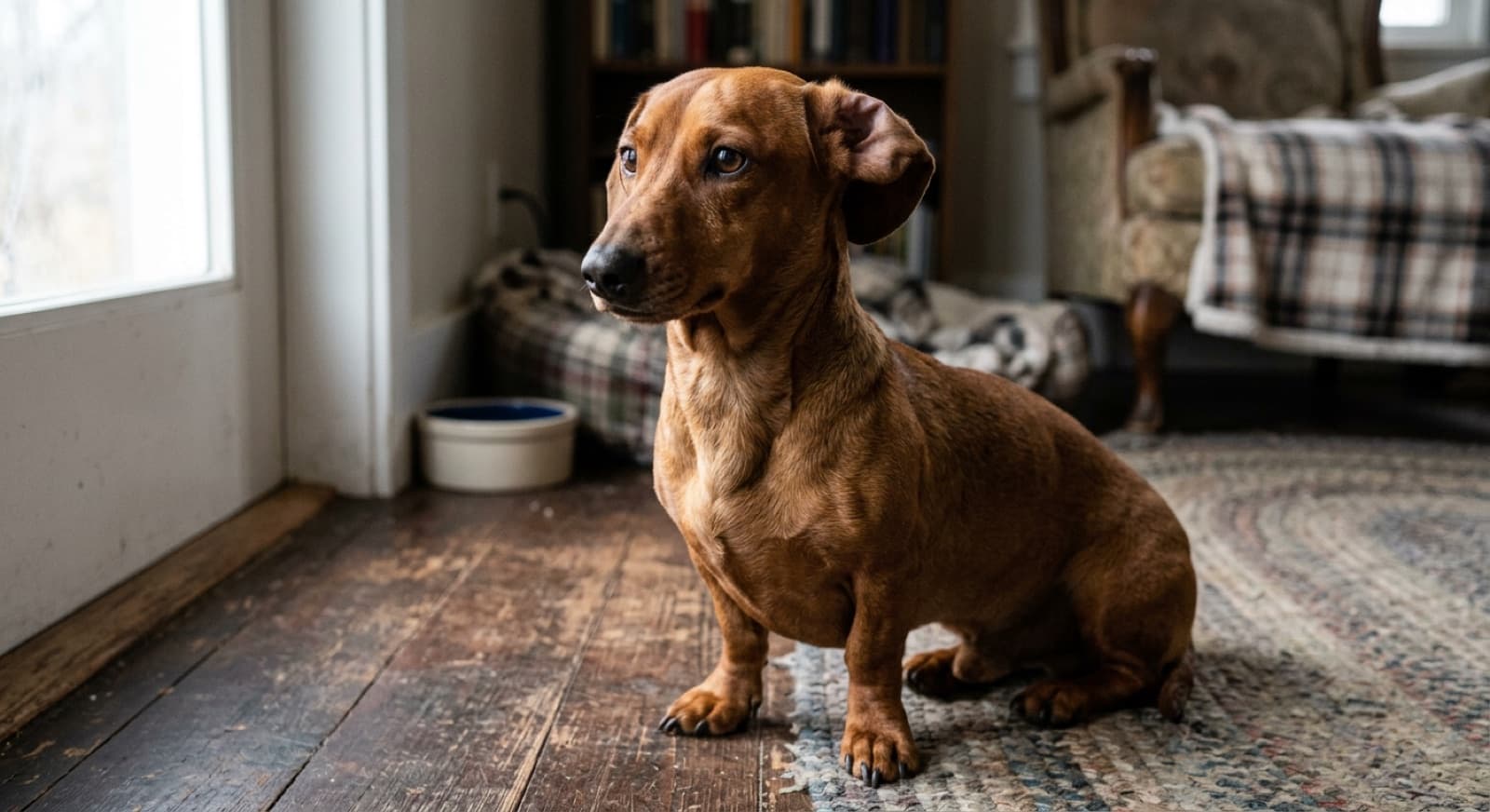
The 3-3-3 decompression principle applies to Dachshunds, but the rhythm is faster than for larger rescue dogs. Toy and small-breed adjustment often compresses to three days, three weeks, and three months. The real personality usually emerges around week three. Practical week-one priorities for an Edmonton rescue Dachshund, with back protection running through every item:
- Install ramps before the dog arrives. Every couch, every bed, every chair the dog will be allowed on gets a ramp or pet stairs. Set the no-jump rule from minute one; corrections in week three are much harder than habits from day one.
- Block under-furniture gaps. A small Dachshund can wedge under a couch and get stuck or worse, twist the spine getting out. Walk the house at Dachshund height before the dog arrives.
- Stay on a harness, not a collar. A step-in harness is the right walking gear from day one, every day, for life. The collar is for tag display only.
- Watch the yard for predator risk. Edmonton has urban coyotes, magpies, and the occasional bird of prey. A miniature Dachshund is prey-sized. Supervised yard time only, especially at dawn and dusk, and never alone outside.
- License the dog with the City of Edmonton. Required for any dog over six months. Tags visible on the harness from day one. Information is on the City of Edmonton dogs page.
- Enrol in pet insurance immediately. Week one. Before any IVDD or other condition becomes pre-existing. This is the highest-value financial decision you make as a Dachshund adopter.
- Establish a feeding plan with weight management built in. Weigh the food, ignore puppy-dog eyes at the table, and weigh the dog every two weeks. A lean Dachshund has visible waist from above and tucked belly from the side. Adjust portions if weight creeps up.
- Start light leashed exercise. Two short walks per day (15 to 20 minutes each) plus calm indoor play. No high-impact play, no rough wrestling with other dogs, no romps on slippery floors. Build slowly as the dog settles.
- Add mental work early. Snuffle mats, puzzle feeders, scent games, basic obedience refreshers. Dachshunds were bred to hunt; scent work is in their DNA and tires them faster than physical exercise.
- Begin grooming routine right away. Smooth coats need weekly brushing. Long-haired coats need daily brushing and a first professional groom in week three or four. Wire coats need brushing and a plan for hand-stripping or clipping.
- Start tooth brushing. Daily, with a dog-safe enzymatic toothpaste. Dachshunds have meaningful dental disease risk, and daily home care prevents thousands in later extraction work.
- Winter routine startup. If you adopt in winter, the cold hits Dachshunds hard. Warm winter coat or sweater for outings below -10 C, short bundled trips below -20 C, booties on salted Edmonton sidewalks, and paw-pad rinses after walks. Cleared paths matter because deep snow forces the back into awkward angles.
By week three, you will start seeing the real dog. Senior Dachshunds often warm up faster than younger ones because they have lived in homes before and recognise the rhythm. Young adults need more structure and patience. By month three, the routine is established and the foster-write-up dog is the dog living in your house. For Dachshunds, this is when the bold, funny, devoted little personality really emerges, and it is genuinely a joy.
Frequently asked questions
Where can I adopt a Dachshund near me in Edmonton?
Dachshunds appear in Edmonton rescue on a roughly monthly basis across the local network. The Edmonton Humane Society sees the most volume, almost always through owner surrender. Zoe's Animal Rescue lists Dachshunds and Doxie mixes through their Edmonton foster network on a regular cadence. AARCS, headquartered in Calgary, tags Edmonton-foster dogs and Dachshunds surface there. AHHRB, GEARS, Hope Lives Here, and SCARS see the breed less often but worth following. Check current Edmonton listings, set up alerts, and apply same-day when a Dachshund or Doxie mix appears with a good temperament match.
Why do Dachshunds surrender to Edmonton rescue?
Four patterns dominate. The biggest is an IVDD (intervertebral disc disease) diagnosis where the family cannot afford the $5,000 to $10,000 surgery or the long crate-rest recovery. The second is owner death or serious illness, which produces some of the best-adjusted rescue Dachshunds. The third is senior downsizing into assisted living. The fourth is adolescent reactivity at 12 to 30 months when a Dachshund raised without consistent training starts showing alert barking, resource guarding, or stranger reactivity the owner cannot manage. IVDD surrenders dominate.
How much does it cost to adopt a Dachshund in Edmonton?
Edmonton rescue adoption fees for Dachshunds typically run $400 to $700. The fee covers spay or neuter, core vaccinations (DAPP and rabies), microchip, deworming, flea and tick treatment, and a basic vet workup including a back assessment. Senior Dachshunds (around eight years and up) often have reduced fees of $200 to $400. IVDD-recovered or IVDD-managed Dachshunds sometimes have reduced fees in exchange for an adopter who commits to the ongoing care. Compare to an Alberta breeder Dachshund at $1,800 to $3,500 pet-quality. The rescue path is cheaper and the medical work is already done.
What is IVDD and why does it matter for every Dachshund?
Intervertebral disc disease is a spinal condition Dachshunds are highly prone to because their long back and short legs put unusual stress on the spinal discs. Roughly 25 percent of Dachshunds will experience an IVDD episode in their lifetime. A serious episode can cause paralysis and requires emergency neurosurgery (often $5,000 to $10,000) followed by 6 to 8 weeks of strict crate rest. Prevention is the whole game: no jumping on or off furniture, ramps for any height, no stairs taken at speed, keep the dog lean (this is the single biggest lever), harness not collar, and avoid rough play that twists the spine. Pet insurance from week one is genuinely essential for this breed.
Standard, miniature, or kaninchen Dachshund: which suits which adopter?
Standard Dachshunds weigh 16 to 32 pounds and suit households wanting a small but substantial companion. They are sturdier than minis and slightly less fragile around children. Miniature Dachshunds weigh under 11 pounds and suit apartment dwellers, retirees, and households wanting a true lap dog. They are more fragile and need careful handling. Kaninchen (rabbit) Dachshunds weigh under 8 pounds and are very rare in North American rescue; if you see one listed, the back-protection rules apply with even more vigilance because the spine is proportionally even more delicate. Most Edmonton rescue Dachshunds are standard or miniature.
Smooth, long-haired, or wire-haired: what is the temperament and care difference?
Smooth-coated Dachshunds have a short shiny coat that needs only weekly brushing. Temperament tends toward the classic bold, alert, slightly stubborn Dachshund profile. Long-haired Dachshunds carry some spaniel in the breed history and tend to be slightly calmer and more affectionate. The coat needs daily brushing and a professional groom every six to eight weeks. Wire-haired Dachshunds carry terrier in the breed history and tend to be the most spirited and prey-driven of the three. The wire coat needs hand-stripping every three to four months or regular clipping. All three share the same back, the same IVDD risk, and the same need for a committed adopter.
Are Dachshund mixes common in Edmonton rescue?
Yes. Dorkie (Dachshund-Yorkie), Chiweenie (Chihuahua-Dachshund), Doxiepoo (Dachshund-Poodle), and Dachshund-Beagle crosses appear regularly. The mixes often soften the breed-typical stubbornness and sometimes reduce the IVDD risk (depending on back length), but the long-back DNA usually still requires the same back-protection rules. Foster temperament write-ups describe the actual dog in front of you. First-generation crosses vary widely in size, coat, and temperament; the breed label on the listing is a best guess. Read the foster notes carefully.
Are Dachshunds good with kids?
Better with calm older kids (seven and up) who know how to handle a small dog gently. Most Edmonton rescues will not place a Dachshund into a home with children under five because rough handling, dropping, or letting the dog jump from furniture creates real spine-injury risk. Dachshunds can also be territorial and snap defensively when startled or cornered. Households with calm older kids who understand the no-jump and gentle-handling rules are usually fine. Foster notes on the specific dog matter most.
Do Dachshunds handle Edmonton winters?
They need help. Short legs put the belly in the snow within two strides, and smooth-coated and many long-haired Dachshunds have only a thin coat with no insulating undercoat. Wire-haired Dachshunds handle cold slightly better but still need protection. Plan on a warm winter coat or sweater for outings below -10 C, very short bundled trips below -20 C, booties for salted Edmonton sidewalks, paw-pad rinses after walks, and indoor play to cover the rest of the daily exercise. Cleared paths matter; deep snow forces the back into awkward angles.
What about a free Dachshund on Kijiji Edmonton?
Treat free or low-fee Dachshund listings with caution. Common patterns are owners bypassing formal rescue surrender (no behavioural disclosure, no vet history, possibly an undisclosed IVDD episode in the past), backyard breeders using free as a hook before the price reveals at pickup, and flippers collecting free toy-breed and small-breed dogs to resell. A legitimate owner-rehoming with a modest fee can be fine, but verification matters: ask for vet records (especially any back history), see the dog in its current home, and ask blunt questions about prior injury, surgery, or recurring back issues. If the answer is rushed or vague, walk away. The Edmonton rescue path costs about the same and the dog comes with a known medical history.
Should I adopt an IVDD-recovered Dachshund?
For the right adopter, yes, and these dogs deserve homes. An IVDD-recovered Dachshund has been through one or more disc episodes and may have residual weakness, occasional medication needs, or a higher risk of future episodes. The rescue will be very transparent about what happened, what the current vet plan is, and what the ongoing care requires. Some IVDD-recovered Dachshunds live full active lives with strict back protection. Some need ramps everywhere and ongoing physiotherapy. Match your willingness to commit to the dog's specific needs. Adoption fees for these dogs are often reduced because the rescue wants the right adopter, not the fastest one.
Related Edmonton Dachshund guides
Edmonton Adoptable Dogs
Current Edmonton-area Dachshund, Dorkie, Chiweenie, Doxiepoo, and Doxle listings from EHS, AARCS Edmonton fosters, Zoe's, AHHRB, GEARS, Hope Lives Here, and SCARS.
Dachshund Health Issues: IVDD, Weight, Teeth
Dachshund health issues to plan for: IVDD back disease and what to do in an emergency, weight, dental disease, heart valve disease and epilepsy.
Dachshund IVDD Prevention Edmonton
Ramp installation, no-jump training, lean-weight protocols, harness fit, warning signs of an episode, and what to do in the first hour if a disc event happens at home.
Dachshund Winter Care Edmonton
Single-coat Dachshunds in Edmonton winter: warm coats and sweaters, booties for salted sidewalks, indoor exercise programming, cold-weather thresholds, and the belly-in-snow short-leg reality.
Find your Edmonton rescue Dachshund
Browse current Edmonton-area Dachshund and Doxie-mix listings. Inventory rotates monthly, so set up alerts and apply same-day when the right back-protection-fit dog appears.
Browse All Edmonton Dogs →New dog? Start with these care guides
Everything a new adopter needs to set up a safe, happy home.