The short answer
English Bulldogs are rare-to-moderate in Edmonton rescue. The pipeline is urban owner surrender plus breeder retirement, not northern transfer. Edmonton Humane Society sees them most. Zoe's, AARCS Edmonton fosters, and AHHRB see lower volume. Fees $400 to $800 purebred, $300 to $600 mixes. Plan 4 to 8 months of patient watching. Extreme medical reality: BOAS $3,000 to $5,000, hip dysplasia $5,000 to $8,000, skin-fold infections $200 to $500 per flare. Daily skin-fold care non-optional. Summer heat intolerance heavier than Frenchies. Pet insurance week one mandatory.
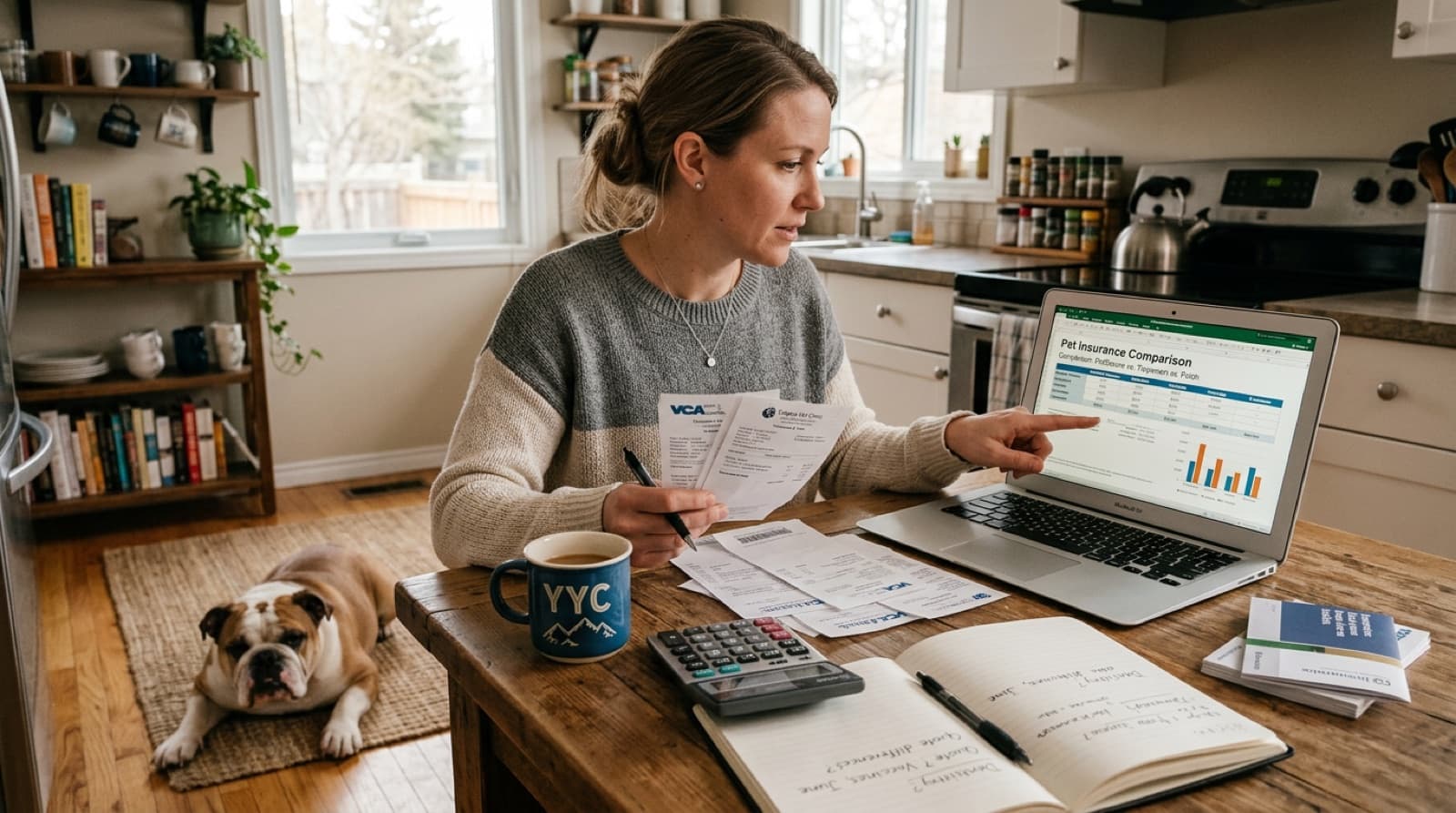
Why English Bulldogs surrender in Edmonton
English Bulldog intake in Edmonton runs through four distinct surrender patterns. Knowing which pattern produced a specific dog helps an adopter read the foster notes accurately and plan the medical handoff.
- Extreme medical bills. The dominant pattern. An owner buys a Bulldog puppy at $3,500 to $5,000 from a breeder or backyard source, the dog reaches 2 to 4 years old, and a BOAS soft-palate surgery, a hip dysplasia diagnosis, or chronic skin-fold dermatitis surfaces a $5,000 to $10,000 vet bill within a year. The owner either cannot pay or realises the next decade will look the same. The dog comes to EHS or Zoe's, often with vet records showing the most expensive condition already identified but not yet treated.
- Allergy diagnosis in the household. Bulldogs shed, drool, and produce dander. When a child or adult in the household develops moderate-to-severe dog allergies, families try humidifiers, air filters, and bathing routines first. When those fail and a respiratory specialist recommends removal, the Bulldog reaches rescue. These dogs are usually well-trained, well-loved, and arrive with full vet records.
- Owner death or hospitalisation. English Bulldogs are popular with older adults (small enough to live indoors, low exercise needs, calm temperament). When the owner dies, enters long-term care, or faces a major health crisis, the dog reaches rescue. These surrenders often skew senior (7 to 10 years old), arrive with complete medical records, and are some of the most quietly heartbreaking placements. AHHRB and Zoe's see this pattern in moderate numbers.
- Breeder retirement. A distinctive Bulldog pattern. Show-line and reputable production breeders retire dams and studs at 5 to 8 years old when the dog finishes its breeding career. Some breeders find pet homes directly; some surrender to rescue. Retired breeder Bulldogs often arrive with thorough vet histories, established temperaments, and (in females) a history of multiple C-sections. They are some of the most rewarding rescue Bulldogs because the dog is past the highest-risk medical years and the foster home has a complete history to share.
The pipeline that brings Huskies, Shepherds, and Pit Bull-types into northern Alberta rescue does not bring English Bulldogs. Stray pickups are extremely rare for this breed because the dogs are valuable and indoor-living. First Nations community transfers rarely include Bulldogs. The dogs reach Edmonton rescue almost entirely through urban surrender. That makes inventory intermittent and the adopter pool concentrated.
English Bulldog vs French Bulldog: the more-extreme version
Adopters who looked at French Bulldogs first often consider English Bulldogs as the “bigger” version. The differences run deeper than size. The English Bulldog is the more-extreme version of the brachycephalic build in nearly every category that matters for adoption planning.
- Size. French Bulldogs are 16 to 28 pounds. English Bulldogs are 50 to 55 pounds, with a much wider chest and a heavier, lower-slung build. The size step-up changes every part of ownership: condo weight caps that allow Frenchies usually rule out English Bulldogs, a $5,000 hip surgery is more likely on the larger body, and lifting a 55 lb dog into a vehicle when it cannot walk is a real consideration.
- Breathing severity. Both breeds are brachycephalic. The English Bulldog typically has a more compressed airway, an even shorter muzzle, and a wider soft palate relative to airway diameter. Audible breathing at rest is common in English Bulldogs and less common in French Bulldogs. BOAS surgery rates are higher in English Bulldogs, and the recovery is more difficult because of the body mass and the surgical access challenges.
- Skin folds. Both breeds have facial skin folds; the English Bulldog has deeper folds, a more pronounced nose-rope, and a tail-pocket fold (a deep crease around the screw-tail base) that French Bulldogs do not have. Daily fold cleaning is non-optional in English Bulldogs; the tail pocket alone produces more chronic infections than any other single skin site.
- Hip and elbow dysplasia. English Bulldogs have one of the highest documented hip dysplasia rates of any Canadian Kennel Club breed. The wide chest, heavy front-end, and narrow rear-end load the hips abnormally from puppyhood. Frenchies share some risk but less dramatically. Plan for orthopaedic monitoring from adolescence onwards.
- Heat tolerance. Both breeds overheat. The English Bulldog overheats faster because of the larger body mass and less-efficient panting. A Frenchie may push through a 25 C walk; an English Bulldog may not. Summer outings get shorter and earlier.
- Temperament. Both breeds are calm, family-bonded companions. English Bulldogs are slightly more placid and slightly less playful than French Bulldogs in adulthood. They are excellent with calm older children, less suited to households with toddlers because of the breathing-disturbance risk from rough play and the risk of being stepped on or fallen against.
- Lifespan. English Bulldog median lifespan is around 8 to 10 years. French Bulldog median lifespan is around 10 to 12 years. The shorter Bulldog lifespan reflects the heavier medical load.
Adopters drawn to English Bulldogs after looking at Frenchies should plan for a higher-cost, shorter-lived, more medically intensive companion. The temperament reward is real; the preparation must be honest.
Edmonton rescues that occasionally list English Bulldogs
Six Edmonton-area rescues carry English Bulldogs or Bulldog mixes from time to time. Inventory is intermittent for this breed, so set up listing alerts where you can and check current Edmonton listings before fixating on a single rescue.
- Edmonton Humane Society (EHS): the city's largest shelter and the most visible source of Bulldog intake. EHS sees English Bulldogs through urban owner surrenders (vet-cost overwhelm and life-change), occasional breeder retirements, and very rare strays. The centralised facility means you can meet the dog in person before applying, and the EHS behaviour team produces detailed temperament assessments that explicitly cover breathing capacity, exercise tolerance, and child interaction. EHS posts vet records when available; ask for them on the application. See current EHS guidance at edmontonhumanesociety.com.
- Zoe's Animal Rescue: long-running Edmonton foster-based rescue. Lower-volume Bulldog intake than EHS but a real source, especially for owner-death and senior surrenders. Zoe's foster temperament write-ups are among the most thorough in Edmonton, which matters for a breed where breathing, exercise capacity, and household fit all need careful matching. The application emphasises long-term fit over speed.
- AARCS (Alberta Animal Rescue Crew Society): headquartered in Calgary with Edmonton-area foster homes. AARCS tags each dog with its current foster location, so Edmonton-foster Bulldogs surface on Edmonton listings. AARCS foster notes explicitly cover kid tolerance, multi-pet compatibility, and known medical conditions, all of which matter for a Bulldog placement. AARCS sees Bulldogs across the province at low-but-steady volume.
- Alberta Homeward Hound Rescue Bureau (AHHRB): Edmonton-area foster-based rescue. AHHRB lists every dog as Mixed Breed on paper, so English Bulldogs and Bulldog-cross dogs there are identified by photo and description rather than a breed tag. Worth checking even if a search for English Bulldog returns nothing. AHHRB sees Bulldogs from senior-owner surrenders periodically.
- GEARS (Greater Edmonton Animal Rescue Society) and Hope Lives Here Animal Rescue: both Edmonton-area rescues with smaller, rotating dog inventory that occasionally includes a Bulldog or Bulldog-cross. Lower frequency than the four rescues above, but worth following if you are willing to wait for the right dog.
- SCARS (Second Chance Animal Rescue Society): sees English Bulldogs very rarely because northern Alberta intake is overwhelmingly working-breed and large-mix. When a Bulldog does appear at SCARS, it is almost always through an unusual surrender path. Worth a glance at listings but do not expect regular Bulldog inventory.
Realistic inventory is 1 to 3 English Bulldogs (or Bulldog mixes) across Edmonton-area rescues in any given month. Same-day applications win because the calm-companion adopter pool is steady and applications stack within days of a listing.
National and provincial breed-specific rescue paths
English Bulldog adopters sometimes ask whether a breed-specific rescue serves Alberta. As of writing we cannot verify a current Alberta-based English Bulldog-specific rescue with active adoptable listings and confirmed Canada Revenue Agency charitable registration. Adopters have two reasonable paths beyond the general Edmonton rescues:
- Bulldog Club of America rescue network and Canadian sister organisations. The Bulldog Club of America operates a national rescue network in the United States and channels some surrender dogs across the Canadian border. Canadian sister organisations operate informally. The Canadian Kennel Club (ckc.ca) lists recognised breed clubs that sometimes channel surrender dogs. These networks are not centralised and not transparent; verification of any specific group with a CRA charitable registry check, real address, and current adoptable listings is essential before sending an application or a deposit.
- Show-line breeder retirement direct. Some Canadian English Bulldog breeders place retired breeding dogs into pet homes directly without going through rescue. The dogs are usually 5 to 8 years old, fully vetted, established personalities, and well-socialised. Adoption fees from breeders for retired dogs typically run $500 to $1,500. The risk in this path is verification: ensure you are dealing with a reputable breeder (CKC-registered, health-tested, transparent about the dog's reproductive history), not a backyard breeder offloading a dog with hidden problems. Ask for full vet records, including all C-section history for females, and a written description of why the dog is being placed.
For most Edmonton adopters, the path that actually works is patient watching at the six general Edmonton-area rescues plus listing alerts. The 4 to 8 month timeline is real but the result is a dog with a verified history, baseline vet workup completed, and a foster home that has lived with the dog and can describe it honestly.
The breeder-retirement adoption pipeline
One pipeline that is more distinctive in English Bulldogs than in most breeds is breeder retirement. Show-line and reputable production breeders retire dams and studs from breeding at 5 to 8 years old, when the dog finishes its breeding career. The breeder either places the dog into a pet home directly, hands it to a rescue, or keeps it as a pet themselves. Edmonton rescue intake periodically receives these retired breeder Bulldogs, and adopters should know what to expect.
- The dog is past the highest-risk medical years. Most BOAS surgery, if it was going to be needed, has been done. Hip dysplasia, if present, has either stabilised or progressed to a manageable plateau. The medical picture is much clearer than for a 2-year-old Bulldog from owner-surrender.
- Vet records are usually complete. Reputable breeders maintain thorough records: vaccination history, dental work, screening tests (hip and elbow grading through the Orthopedic Foundation for Animals or PennHIP), eye exams, and any surgical work. Ask the rescue for the full record.
- For females: C-section history matters. A typical breeding female English Bulldog has had 2 to 5 C-sections in her career. The reproductive surgical history affects her current health, recovery from any future anaesthesia, and possible scar tissue considerations. The vet records will show it.
- Temperament is established. A 6-year-old retired dam knows exactly who she is. The foster home will describe a settled personality without the adolescent volatility of a younger rescue Bulldog.
- Adoption fees may be reduced. Retired breeder Bulldogs often have fees of $200 to $500 because the rescue or breeder is prioritising placement of an older dog. Senior reductions stack.
- Lifespan expectation is shorter. A 7-year-old English Bulldog has a median 1 to 3 remaining years. Adopters who go in clear-eyed about this love a settled, devoted companion through their senior years. Adopters who expected 10 more years often grieve harder when the time comes.
Retired breeder Bulldogs are some of the most rewarding rescue placements in this breed. The medical picture is honest, the temperament is settled, and the dog has earned a quiet retirement home. The right adopter is a calm household with realistic expectations about lifespan and a willingness to commit to consistent skin-fold and dental care.
Common English Bulldog mixes in Edmonton rescue
Edmonton rescue lists more Bulldog mixes than purebreds in most months. The breed label on a cross is a guess; the foster temperament and breathing write-up is the real read. Common Edmonton Bulldog-mix patterns:
- Beabull (Bulldog-Beagle): the most common English Bulldog mix in Edmonton rescue. Usually 30 to 50 pounds. The Beagle side brings a slightly longer muzzle (better breathing), higher energy, and a strong nose-led drive. The Bulldog side brings the calm family temperament, skin folds (often less pronounced), and a hip-load profile that is lighter than purebred Bulldogs. Beabulls are often easier to keep cool in summer than purebreds. Foster notes will describe exercise tolerance honestly.
- Olde English Bulldogge: a modern hybrid breed created in the 1970s by crossing English Bulldogs with American Bulldogs, Bullmastiffs, and American Pit Bull Terriers to produce a healthier, more athletic, longer-muzzled dog. Olde English Bulldogges are 50 to 80 pounds, breathe much better than show-line English Bulldogs, exercise normally, and handle Edmonton summers more comfortably. They are NOT the same breed as the show-line English Bulldog, and adopters should not assume the same care profile. The foster home is the truth; ask what the dog actually weighs and how it breathes at rest.
- Bulldog-Boxer cross (Bulloxer): the Boxer side brings the longer muzzle, athletic body, and high energy; the Bulldog side brings the calm bias and skin folds. Often 50 to 70 pounds. Better breathing than purebreds and more exercise capacity. Edmonton rescue lists Bulloxers periodically. Skin-fold care still required (the facial folds usually carry through).
- Bulldog-Pit cross: shows up in rescue as a 50 to 70 pound dog with mixed bully features. The Pit side brings a more open airway and stronger build; the Bulldog side brings the flat-face features and family temperament. These dogs may face Edmonton housing restrictions even when the dog itself is fine, because condo boards sometimes screen by appearance.
- Bulldog-Mastiff cross: a heavier cross, often 70 to 100 pounds. The Mastiff side brings size, calm bias, and joint-load risk; the Bulldog side brings the brachycephalic features (often partial) and skin folds. Heat tolerance is poor. Plan for serious medical capacity.
- Bulldog-Mixed Breed of unknown: common in northern intake dogs where the parentage is genuinely unknown but the Bulldog head and body are obvious. Foster temperament notes matter much more than the label.
The general rule for English Bulldog mixes is that breathing matters more than breed label. Watch the dog at rest. Listen for audible breathing without exercise. Ask the foster home directly about how the dog handles a 15-minute walk in moderate weather. A Bulldog mix that the foster describes as comfortable on a short walk and quiet at rest is a much safer adoption than one whose breathing is laboured before exercise even starts.
The extreme medical bills reality
The single most important truth about English Bulldog adoption is that the medical reality is extreme. Adopters who underestimate this are the ones who surrender Bulldogs back to rescue. The realistic medical-cost categories an Edmonton English Bulldog owner should plan for:
- BOAS surgical correction. $3,000 to $5,000 for nares widening, soft-palate trim, and laryngeal saccule removal at an Edmonton specialty surgery practice. Not every Bulldog needs it; many do.
- Hip dysplasia treatment. Conservative management with physio and joint supplements runs $80 to $200 monthly. Surgical correction (femoral head ostectomy or total hip replacement) runs $5,000 to $8,000 per hip. Bilateral disease is common.
- Skin-fold dermatitis flares. $200 to $500 per veterinary visit, culture, and prescription treatment. With daily home care, most owners see 1 to 3 flares per year. Without daily care, the rate is much higher.
- Cherry eye and corneal ulcer surgery. $800 to $2,000 per eye. English Bulldogs are prone to both. Cherry eye (prolapsed third-eyelid gland) usually requires surgical replacement; corneal ulcers from facial-fold abrasion or dry eye require ongoing medication or surgery.
- Dental cleaning under anaesthesia. $700 to $1,500 per cleaning. Brachycephalic anaesthesia protocols add cost. Most Bulldogs need cleaning every 1 to 2 years.
- Heatstroke emergency. $2,000 to $5,000 for emergency ICU care if heatstroke occurs. Prevention is the only reliable strategy; rescue mortality from heatstroke is real in this breed.
- Hemivertebrae or intervertebral disc disease. $5,000 to $10,000 for surgical decompression if the dog develops symptomatic spinal disease. Not every Bulldog faces this but the screw-tail conformation increases risk.
Across a 10-year Bulldog lifespan, total veterinary spending realistically runs $25,000 to $60,000 depending on which conditions develop. The most-prepared owners carry pet insurance from week one, maintain a $5,000 to $10,000 emergency vet savings buffer, and treat regular wellness exams as the early-warning system for the next major condition.
Pet insurance for a young English Bulldog in Edmonton runs $90 to $160 per month. The premium reflects the breed's claim history. Several Canadian providers offer Bulldog-eligible policies; compare BOAS coverage specifically because some policies exclude brachycephalic-related conditions or require breed-specific riders. Enrol in the first week before any pre-existing conditions appear in vet records. For most adopters, pet insurance pays out positive over a Bulldog lifespan.
The adopter readiness check
Before applying for an Edmonton English Bulldog, run through this readiness check honestly. Adopters who can answer yes to at least 8 of these 10 questions usually succeed long-term. Adopters who answer no to 3 or more should consider waiting, looking at an easier brachycephalic breed, or choosing a different breed entirely.
- Do you have a $5,000 to $10,000 emergency vet savings buffer in place today? Not aspirational. Today.
- Are you ready to enrol pet insurance in week one with confirmed brachycephalic coverage?
- Can you commit to twice-daily skin-fold cleaning for the dog's entire lifespan? Including the tail pocket.
- Do you have a household plan for Edmonton summers above plus-25 C? Early-morning walks only, indoor cool space, no exercise in heat, no parked cars.
- Do you have a household plan for Edmonton winters below minus-15 C? Warm coat, paw protection, short outings, indoor exercise on the coldest days.
- Is your home structurally Bulldog-appropriate? Limited stairs, accessible doorways, ground-floor sleeping if possible, no required jumping into vehicles.
- Have you confirmed in writing that your housing allows a 50 to 55 pound dog? Condo boards and landlords. Get it in writing.
- Is your household structure Bulldog-appropriate? No toddlers, calm-energy children, no household members with severe dog allergies, time at home most days.
- Are you comfortable with a 8 to 10 year median lifespan? The shorter lifespan than most breeds is part of the deal.
- Have you watched a video of a Bulldog at rest and understood the breathing pattern as normal-for-the-breed? If it sounds alarming to you, it will sound alarming every night for 10 years.
Browse adoptable Edmonton English Bulldogs and Bulldog mixes
Current Edmonton listings from EHS, Zoe's, AARCS Edmonton fosters, AHHRB, GEARS, and Hope Lives Here in one place. Bulldog inventory rotates slowly; set up listing alerts to catch them when they appear.
See Edmonton Adoptable Dogs →What Edmonton rescues evaluate in a Bulldog application
Bulldog applications are screened differently from working-breed applications. Edmonton rescues are not worried about exercise capacity or yard size; they are worried about medical-cost capacity, climate setup, household structure, and informed expectations. The screening typically covers eight criteria:
- Vet-cost capacity. The single most important question. The rescue will ask whether you have pet insurance lined up, whether you have a $5,000 to $10,000 savings buffer, and whether you understand that BOAS, hip dysplasia, skin, and eye conditions are realistic possibilities. Vague answers do not match a Bulldog's actual risk profile.
- Climate management. The rescue will ask about your plan for summer above plus-25 C and winter below minus-15 C. A claim that the dog will be fine because Bulldogs are tough does not pass.
- Skin-fold and dental care commitment. Daily fold cleaning and regular dental care are non-optional. The rescue will ask whether you are realistic about the maintenance.
- Housing approval. If you live in a condo or rent, the rescue will ask for written confirmation from your board or landlord that a 50 to 55 pound dog is approved.
- Household structure. Most Edmonton rescues place Bulldogs into homes with calm older kids or adults; households with toddlers face more scrutiny because of breathing-disturbance risk and the dog being injured by rough play or falling kids.
- Existing pets. Bulldogs generally do well with other calm dogs and cats they are introduced to gradually. The rescue will ask about your other dogs' ages, sizes, and temperaments. Households with large or high-energy dogs face more scrutiny.
- Water safety awareness. The rescue will ask whether you understand Bulldogs cannot swim and what your plan is around open water and bathtubs. This sounds basic; it is the difference between a long life and a tragedy.
- Heatstroke awareness. The rescue will ask what you would do if the dog showed early heatstroke signs (excessive panting, drooling, lethargy, vomiting). Specific answers (call vet immediately, cool water on paws and belly, never ice water) signal preparation.
Specificity wins applications. “We have a $7,000 vet emergency fund, pet insurance lined up with brachycephalic coverage, central air conditioning, and a daily skin-fold routine already planned” is much stronger than “We love Bulldogs and will take good care of the dog.” The rescue is trying to determine whether the placement will last through a $5,000 vet bill and a hot Edmonton July. The specific answer signals the realistic plan.
The application and meet-and-greet sequence
Edmonton Bulldog adoptions follow a standard sequence. The eight steps:
- Set up listing alerts. Register for adoption alerts on EHS, Zoe's, AHHRB, AARCS, GEARS, and Hope Lives Here. Bulldogs are listed at unpredictable intervals; alerts catch listings the day they appear.
- Find a specific dog you want to apply for. Edmonton rescues apply per-dog, not on a general waitlist. Read the entire foster write-up: breathing pattern, exercise tolerance, kid tolerance, dog tolerance, known medical history, and any flagged conditions.
- Submit the application same day. Expect 45 to 60 minutes for a thorough Bulldog application. Have your vet's name ready if you have other pets, your landlord or condo board approval in writing if you rent or live in a condo, pet insurance research done with a specific Canadian provider in mind, and two non-family references with current phone numbers.
- Phone screen with the foster. If the application clears the first review, the dog's foster home will call you. This is the conversation that decides most placements. Be honest about household rhythm, work schedule, vet-cost capacity, and climate management plan.
- Meet-and-greet. Either at the foster's home or a neutral location. Bring everyone in the household, including kids and other dogs if relevant. Watch the dog breathe at rest, ask the foster to show you a short walk, and ask any remaining questions about medical history and care routines.
- Reference checks. Most Edmonton rescues call two references, including any prior vet if you have other pets. Give your references a heads-up so they pick up.
- Home visit, sometimes. Smaller foster-based rescues like Zoe's and AHHRB sometimes do a brief home check before approval. The visit is not a white-glove inspection; the rescue wants to see that the basic environment is safe and that the household matches what the application said.
- Adoption contract and fee. Most rescues use a standard adoption contract specifying the dog must be returned to the rescue if you cannot keep them, ever. Bulldog contracts often include specific anti-resale and anti-breeding clauses given the breed's commercial profile.
Realistic timeline from application to dog-in-your-house is 1 to 3 weeks for a Bulldog placement when a dog is available, sometimes faster when the foster home is ready to move the dog. The longer wait is the 4 to 8 month period of patient watching before a suitable dog appears.
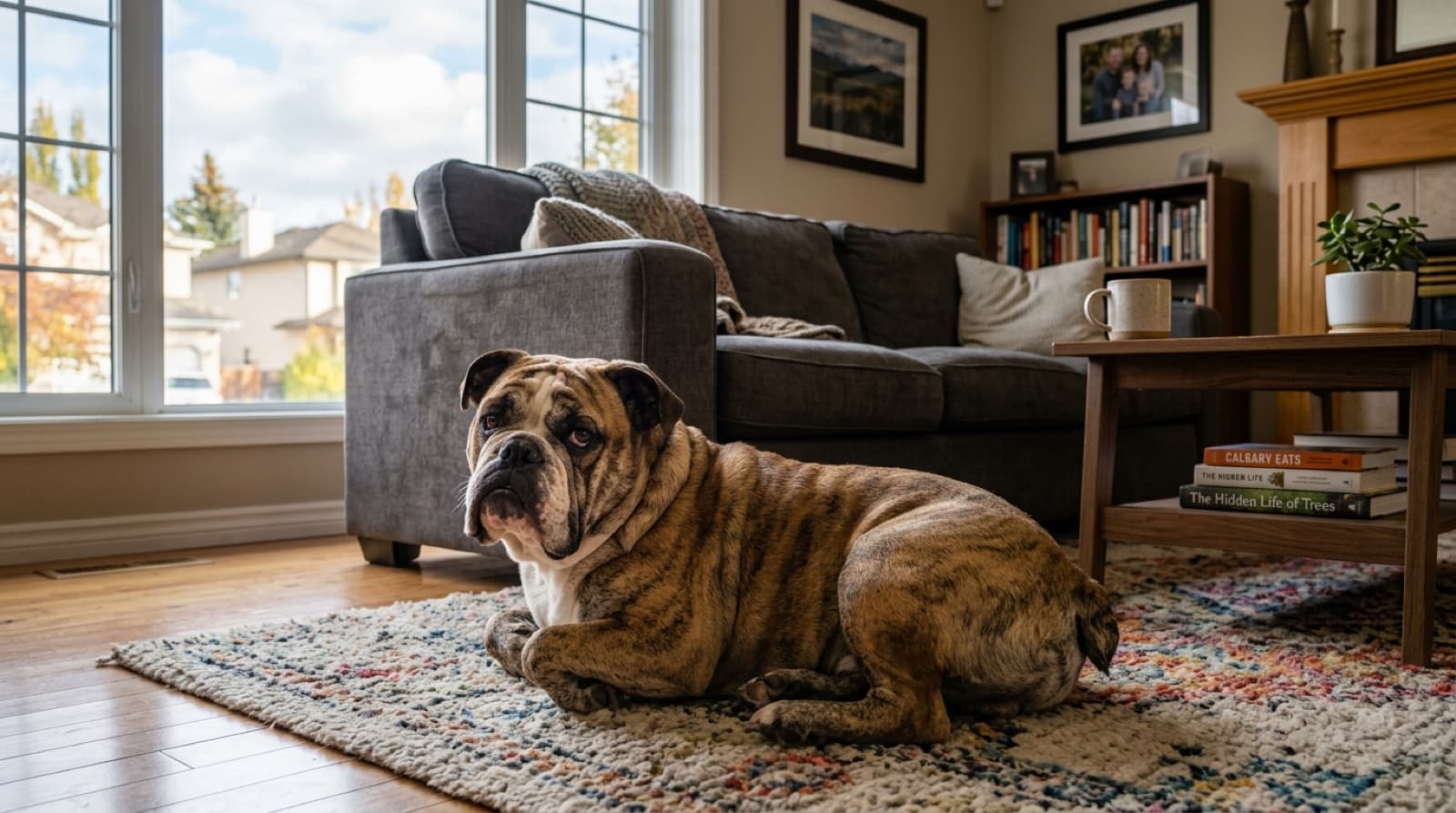
The first 30 days with an Edmonton rescue English Bulldog
The 3-3-3 decompression principle (three days to start settling, three weeks to learn the routine, three months to fully bond) applies to Bulldogs as it does to other rescue dogs. Bulldogs usually move through the early phases quickly because the breed defaults to placid and household-oriented. Twelve practical week-one priorities for an Edmonton rescue Bulldog:
- Establish a brachycephalic-aware exercise routine immediately. Short walks at moderate pace, two to three times daily of 15 to 20 minutes each, with pace and duration adjusted for temperature. No high-impact running, no extended fetch sessions. A healthy Bulldog should breathe normally within 5 to 10 minutes of stopping.
- Set up summer heat management. Indoor air conditioning or a cool basement space. Walks only in early morning or late evening above plus-20 C. Carry water on every walk. Watch for heavy panting, drooling, or stumbling; these are heatstroke early signs.
- Set up winter cold management. A warm winter coat for outings below minus-10 C. Paw protection on salted sidewalks. Short outings (10 to 15 minutes) below minus-15 C. Indoor exercise on extreme cold days.
- Start daily skin-fold care. The foster home can show you the routine. Facial folds, nose-rope, tail pocket, and vulval folds (in females) get wiped morning and evening with a damp cloth or vet-approved cleaner, then dried thoroughly. Five minutes covers most dogs.
- License the dog with the City of Edmonton. Required for any dog over six months under the Animal Care and Control Bylaw. Tags should be visible on the collar from day one. Information is on the City of Edmonton dogs page.
- Microchip registration verification. Confirm the chip is registered to your contact information, not the rescue or a previous owner. Most rescues handle the transfer, but verify directly with the chip registry.
- Pet insurance enrolment. Enrol in the first week if possible, before any pre-existing conditions appear in vet records. Compare BOAS coverage specifically because some policies exclude brachycephalic-related conditions. The Bulldog risk profile makes coverage genuinely worth the monthly cost.
- Baseline BOAS evaluation. Schedule a vet visit in week one. Ask the vet specifically about the dog's breathing pattern at rest, nares (nostril) width, and exercise recovery time. Document a short video of the dog at rest as a baseline for future comparison.
- Baseline hip and elbow evaluation. Ask the vet about palpation findings and whether radiographs are warranted given the dog's age and any observed gait abnormalities. Early identification gives the most treatment options.
- Water safety setup. Block access to bathtubs unless supervised, never leave the dog unattended near pools, and plan summer outings away from open water. The North Saskatchewan River banks at Hawrelak, Mill Creek, and Terwillegar are popular but contain real drop-offs; Bulldogs cannot swim out.
- Dental check. Ask the vet to assess dental health and recommend a cleaning timeline. Brachycephalic anaesthesia protocols add cost, so plan early.
- Establish a quiet, cool sleeping space. A ground-floor location with limited stair access, a cool surface (tile or a cooling mat), and clear airflow. Bulldogs sleep heavily; the right sleeping setup is part of long-term health.
By week three the routine is established and you will see the real dog. By month three the bond is solid and the household has adapted to the breed-specific care. Most Edmonton Bulldog adoptions that fail do so in the first 90 days, usually because the new owner underestimated the medical reality or the climate management. If you make it past the first 90 days with consistent care and realistic expectations, the next 7 to 9 years are usually the devoted, calm, household-shadow companion the breed is famous for.
Frequently asked questions
Where can I adopt an English Bulldog near me in Edmonton?
English Bulldogs are rare in Edmonton rescue but they do appear. The Edmonton Humane Society sees them most often, usually through urban owner surrenders tied to vet-cost overwhelm, allergy diagnosis, or owner death. AARCS, headquartered in Calgary, tags Edmonton-foster dogs and surfaces them on Edmonton listings; English Bulldogs show up there occasionally. Zoe's Animal Rescue carries lower-volume small-and-medium-breed intake and lists Bulldogs when they appear. Alberta Homeward Hound Rescue Bureau (AHHRB) lists every dog as Mixed Breed on paper, so Bulldog and Bulldog-cross dogs there are identified by photo, not breed tag. SCARS, GEARS, and Hope Lives Here see Bulldogs less often because northern Alberta intake skews to working breeds. Realistic timeline is 4 to 8 months of patient watching for an Edmonton English Bulldog placement.
How much does an English Bulldog adoption cost in Edmonton?
Edmonton rescue adoption fees for purebred English Bulldogs typically run $400 to $800, sometimes higher for puppies or young adults under two. Bulldog mixes generally run $300 to $600. The fee covers spay or neuter, core vaccinations (DAPP and rabies), microchip implant and registration, deworming, flea and tick treatment, and a baseline workup that nearly always includes a breathing capacity evaluation, skin-fold inspection, and hip and elbow palpation. Senior English Bulldogs over eight years often have reduced fees of $200 to $400 to prioritise placement. Compare to an Alberta breeder English Bulldog at $3,000 to $5,000 or more, with no medical work included. Bulldog breeder pricing reflects the C-section reality of the breed (around 95 percent of English Bulldog litters are born by C-section due to head-to-pelvis ratio).
Are English Bulldogs more medical than French Bulldogs?
Yes, in most categories. The English Bulldog is the more-extreme version of the brachycephalic build, with a heavier 50 to 55 lb body, a wider chest, deeper facial skin folds, and more pronounced hip dysplasia risk than the French Bulldog. BOAS soft-palate and nares surgery is common in both breeds, but the English Bulldog stack also includes higher hip and elbow dysplasia rates, more chronic skin-fold dermatitis from the deeper folds (tail-pocket included), and greater heat intolerance because of the larger body mass. Many adopters who looked at Frenchies first and chose an English Bulldog underestimate the size and medical-cost step-up; the right preparation is a savings buffer of $5,000 to $10,000 for a single surgical event plus pet insurance from week one.
Can English Bulldogs handle Edmonton summers?
Poorly. The flat-faced build and heavy 50-plus pound body make thermoregulation worse than for French Bulldogs or Pugs. Edmonton summers above plus-25 C are genuinely dangerous: most English Bulldogs cannot pant efficiently enough to cool a body that size, and heatstroke is a real emergency that can kill within minutes. Practical rules: walk only in the early morning or late evening on summer days, limit outings to 15 to 20 minutes in moderate weather, carry water on every walk, never push exercise in heat, never leave a Bulldog in a parked car for any reason, and provide indoor air conditioning during summer heatwaves. English Bulldogs also cannot swim; the body shape is wrong for it and they sink. Never leave one unsupervised near open water including the North Saskatchewan River, area lakes, or backyard pools.
What is the C-section reality in English Bulldog breeding?
Around 95 percent of English Bulldog litters in Canada are born by planned C-section because the breed's head-to-pelvis ratio makes natural whelping dangerous for both dam and puppies. Breeders pass the surgical cost (around $1,500 to $3,500 per C-section in Alberta) into puppy pricing, which is part of why breeder Bulldogs run $3,000 to $5,000. For adopters, the C-section reality matters because it means most surrender-source Bulldogs in Edmonton rescue come from breeder retirement (retired dams and studs entering rescue at 5 to 8 years old) or from owners who underestimated the breed's ongoing medical load. A retired breeder Bulldog often arrives with a thorough vet history and is one of the most rewarding rescue placements in this breed.
What is the difference between English Bulldog and Olde English Bulldogge?
Different breeds with different health profiles. The English Bulldog is the traditional short, stocky, brachycephalic breed recognised by the Canadian Kennel Club and shown in conformation. The Olde English Bulldogge is a modern hybrid breed created in the United States in the 1970s by crossing English Bulldogs with American Bulldogs, Bullmastiffs, and American Pit Bull Terriers to produce a healthier, more athletic, longer-muzzled dog with reduced BOAS risk. Olde English Bulldogges are 50 to 80 lb, breathe better, exercise normally, and tolerate Edmonton summers more comfortably. They are NOT the same as the show-line English Bulldog and they do not share the same health profile. Edmonton rescue intake often confuses the two, especially in foster notes; look at the muzzle length and ask the rescue what the dog actually weighs and how it breathes at rest.
Do English Bulldogs need daily skin-fold care?
Yes, every Bulldog and twice daily for many. The deep facial folds, the nose-rope fold, the tail-pocket fold, and any vulval folds in females are warm, moist, and bacteria-friendly. Without daily cleaning, infections (skin-fold dermatitis or pyoderma) develop within days, present as red, smelly, oozing skin, and require veterinary treatment ($200 to $500 per flare for a vet visit, culture, and prescription medication). The routine is straightforward: wipe each fold with a damp cloth or a vet-approved fold cleaner, dry thoroughly, and apply a barrier cream if your vet recommends one. The tail pocket (a deep fold around the screw-tail base) is the most neglected fold and the most-common chronic infection site. Five minutes morning and evening covers most Bulldogs. Read the American College of Veterinary Dermatologists guidance at acvd.org for the underlying skin-fold dermatitis mechanism.
What is the BOAS surgery cost in Edmonton?
A full Brachycephalic Obstructive Airway Syndrome (BOAS) surgical correction in Edmonton runs $3,000 to $5,000 at retail specialty pricing. The procedure typically includes nares (nostril) widening, soft-palate trim, and sometimes laryngeal saccule removal or hypoplastic trachea evaluation. It is done at a board-certified veterinary surgery specialty practice. Some English Bulldogs need it; some get by without. The triggers for surgery are audible breathing at rest, exercise intolerance even in cool weather, cyanosis (blue gums) during mild exertion, and sleep apnoea-like patterns. The American College of Veterinary Surgeons describes the diagnostic and surgical pathway at acvs.org. If the rescue has already completed BOAS work before listing, the adoption fee may be higher but the medical risk is much lower; ask the foster home directly about surgical history.
Are there breed-specific English Bulldog rescues in Alberta?
We cannot verify a current Alberta-based English Bulldog-specific rescue with active adoptable listings and confirmed charitable registration as of writing. The Bulldog Club of America operates a national rescue network with Canadian sister organisations, and breed-focused fancier clubs sometimes channel surrender dogs into informal placement networks. If you see a Bulldog-rescue name on social media, verify it the same way you would verify any pet transaction: a Canada Revenue Agency charitable registry check, a real address or named foster network, public-facing vet references, and a current adoptable-dog list. Most Edmonton English Bulldog adopters find their dog through the six general Edmonton-area rescues (EHS, Zoe's, AARCS Edmonton fosters, AHHRB, GEARS, Hope Lives Here) and through patient, alert-driven watching.
How long does an Edmonton English Bulldog adoption take?
Realistic timeline is 4 to 8 months of patient watching for an Edmonton English Bulldog placement. Inventory is genuinely intermittent for this breed, with one to three Bulldogs appearing across Edmonton-area rescues in any given month. The dogs that do appear move fast when they arrive (often within 1 to 4 weeks of listing) because the calm-companion adopter pool is steady. Bulldog mixes appear more often than purebreds and are typically wonderful dogs with most of the temperament and somewhat better breathing. Set up listing alerts at EHS, Zoe's, AHHRB, AARCS, GEARS, and Hope Lives Here, and check current Edmonton listings weekly. Same-day applications usually win.
Do English Bulldogs face Edmonton condo and rental restrictions?
Sometimes, and the restrictions are usually about weight or appearance rather than breed. Edmonton condo boards often cap dog weight at 25 or 30 pounds; adult English Bulldogs at 50 to 55 pounds typically exceed this. Some boards screen by appearance and lump Bulldogs in with restricted bully breeds, which is wrong but happens. Rental landlords sometimes apply blanket no-large-dog policies. Get any building approval in writing before the adoption is finalised. Edmonton rescues will ask for landlord or condo board confirmation as part of the application, and the rescue will not finalise the placement without it.
Related Edmonton English Bulldog guides
Edmonton Adoptable Dogs
Current Edmonton-area English Bulldog, Bulldog-mix, and companion-breed listings from EHS, Zoe's, AARCS Edmonton fosters, AHHRB, GEARS, and Hope Lives Here.
English Bulldog Health Issues: Breathing, Skin
English Bulldog health issues to plan for: breathing and heat, skin fold infections, cherry eye, hip dysplasia, allergies, heart defects and mast cell tumours.
English Bulldog Summer Heat Edmonton
Edmonton summer Bulldog care: heatstroke prevention, exercise timing, indoor cool setup, parked-car warnings, and emergency response if heatstroke begins.
English Bulldog Skin Fold Care
How to care for an English Bulldog’s skin folds: why fold infections are the breed’s top risk, a simple cleaning routine, the tail pocket, and when to see a vet.
Find your Edmonton rescue English Bulldog
Browse current Edmonton-area English Bulldog and Bulldog-mix listings. Inventory is intermittent for this breed; alerts and same-day applications win.
Browse All Edmonton Dogs →New dog? Start with these care guides
Everything a new adopter needs to set up a safe, happy home.