The short answer
Rottweilers reach Edmonton rescue at moderate volume. Edmonton Humane Society sees the most consistent intake; AARCS Edmonton fosters, AHHRB, Zoe's, and SCARS list Rotties less often. Fees $400 to $700. Plan 3 to 6 months. Most Edmonton rescue Rotties are American-line or mixed-line. Confirm condo, landlord, and insurance approval BEFORE applying; enrol pet insurance in week one given the breed's bone-cancer load; budget for force-free training through the 12 to 30 month adolescent window.
Why Rottweilers surrender to Edmonton rescue
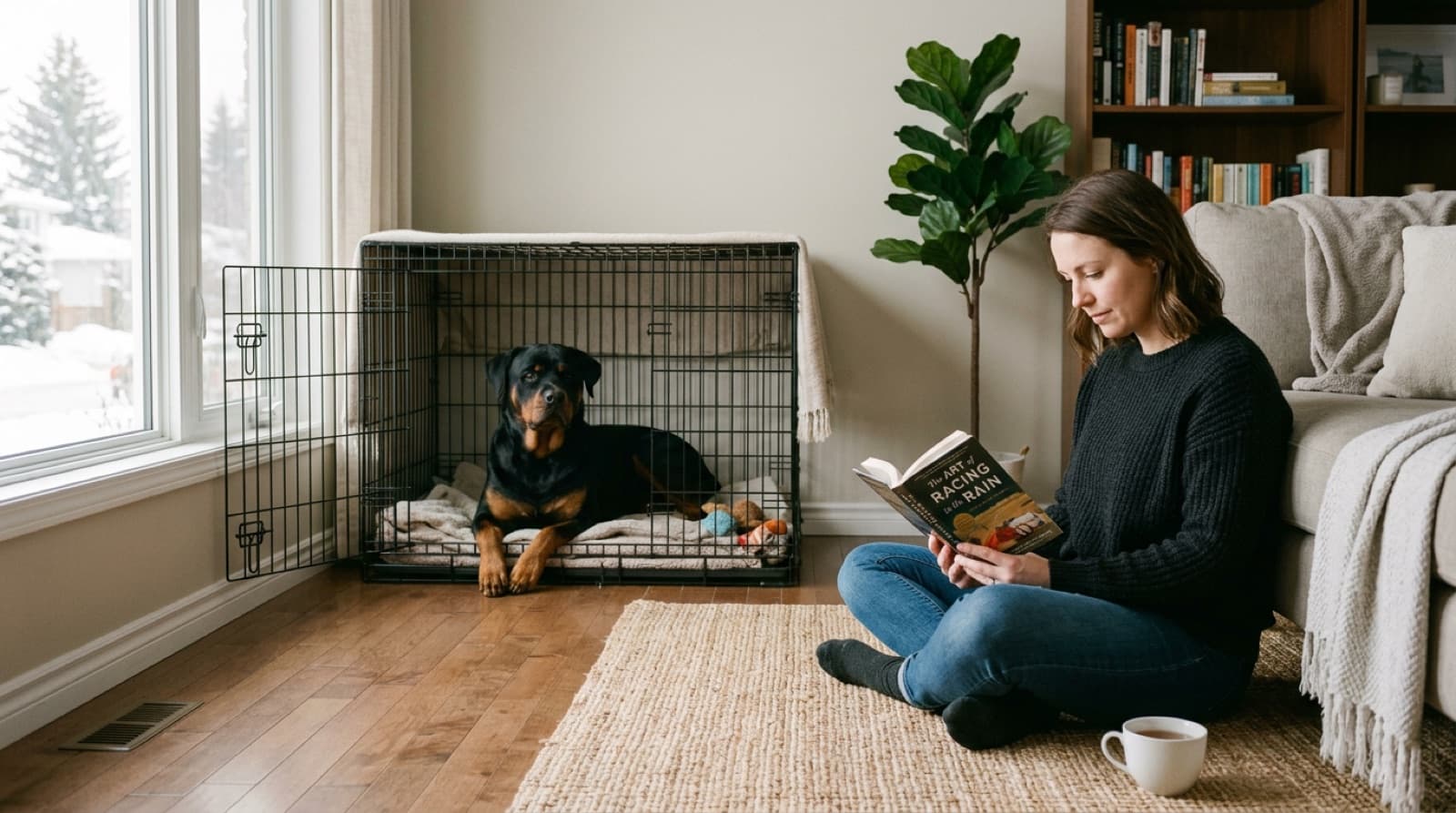
Rottweilers are a moderate-volume Edmonton rescue breed. They are not as common as Labradors, Huskies, or Shepherds, and not as rare as Dobermans. Five surrender patterns dominate, and reading any rescue Rottie write-up against this list helps an adopter understand the dog in front of them.
The most common pattern is the housing-change surrender. A family moves into a new condo whose board maintains a restricted-breed list, a rental lease ends and the new landlord refuses the breed, or a job change forces a relocation to a city with stricter rules. The dog itself is usually well-adjusted, well-trained, and stable. The surrender has nothing to do with the dog and everything to do with where the family can live. These Rotties move through rescue quickly when they reach an adopter whose housing already clears the breed.
The second pattern is the insurance-refusal surrender. The current carrier excludes the breed at renewal, the owner discovers the dog-bite liability gap, and the cost of switching carriers (or paying out of pocket on a six-figure claim risk) drives the surrender. This pattern is more common than most adopters realise, and it is one of the strongest arguments for confirming your own coverage before you adopt.
The third pattern is owner illness, owner death, or family change. Divorce, a new baby, a move out of province, or a senior moving into assisted living all account for steady Rottie surrenders. These dogs are typically well-adjusted because they were raised in stable homes. The foster home gets a settled adult who only needs help grieving and adjusting to a new routine.
The fourth pattern is the adolescent reactivity surrender, usually at 12 to 30 months. A Rottweiler raised without consistent structure, early socialisation, and force-free training hits the working-breed adolescent phase and starts showing leash reactivity, resource guarding, barrier frustration, or over-arousal in public. The dog is not broken; the dog is a teenage guardian breed whose early development missed important pieces. These dogs are placeable into the right experienced home but they are not easy dogs in the first six months.
The fifth pattern is the medical surrender. Rottweilers carry one of the highest documented bone-cancer rates in dogs, plus elevated subaortic stenosis, hip dysplasia, and gastric dilatation-volvulus risk. A young adult Rottie diagnosed with osteosarcoma at five or six years old facing $8,000 to $15,000 in treatment costs without pet insurance can financially break a household. The fifth pattern produces the hardest surrender conversations and the most well-documented medical histories in foster care.
Edmonton rescues that occasionally list Rottweilers
Rottie volume varies week to week. The realistic search strategy is to monitor every Edmonton-area rescue that lists the breed plus the national specialty networks, and apply same-day when the right dog appears.
- Edmonton Humane Society: the highest-volume Edmonton intake source and the most likely place to see a Rottweiler or Rottweiler mix in any given month. EHS sees the breed through owner surrender, transfer, and stray intake. The centralised facility lets you meet the dog in person before applying, and the EHS behaviour team produces thorough temperament assessments. EHS does not rush Rottie placements; the screening is more careful than for many other breeds by design.
- AARCS (Alberta Animal Rescue Crew Society): headquartered in Calgary, with Edmonton-area foster homes. AARCS tags each dog with its current foster location, so Edmonton-foster Rotties surface on Edmonton listings. AARCS foster write-ups are among the most detailed in the province and are explicit about kid tolerance, cat compatibility, and multi-dog household fit.
- Alberta Homeward Hound Rescue Bureau (AHHRB): Edmonton-area foster-based rescue intaking from northern Alberta. AHHRB lists every dog as Mixed Breed on paper as a matter of policy, so Rottie-types are identified by photo and foster description. Worth checking even if a breed search returns nothing, because Rottie crosses appear in their listings under generic labels.
- Zoe's Animal Rescue: long-running Edmonton foster-based rescue with rotating intake. Rottweiler volume is moderate, and Zoe's temperament assessments are thorough. The application emphasises fit, prior breed experience, and the housing-insurance verification.
- SCARS (Second Chance Animal Rescue Society): the largest northern-Alberta intake rescue. SCARS pulls steadily from northern communities; Rottweilers appear regularly in cross-breed form and occasionally as purebreds. Worth a weekly listing check.
- GEARS and Hope Lives Here: smaller Edmonton foster-based rescues with limited but real Rottweiler intake. Worth following for inventory updates alongside the larger rescues.
Beyond the local list, some breed-specific networks coordinate transport, foster placement, and adoption across provinces, though a currently-active dedicated Canadian Rottweiler rescue is hard to verify. The Rottweiler Club of Canada, the national parent club, is not itself a rescue but cross-posts Rotties needing rehoming and can connect adopters with retired show or sport dogs and ethical breeder rehomes whose original placements did not work out. The application process is more rigorous than at a general-intake shelter, and the wait can be months, but the matching quality is typically excellent.
The Canadian Kennel Club publishes breed-club listings that include the Rottweiler Club of Canada, which occasionally surfaces rehome referrals for adult dogs from ethical breeders. Worth being on the list as a parallel channel alongside the local rescue applications. Verify any specialty rescue the same way you would verify any pet transaction: published address or named foster network, current adoptable list, public-facing vet references, and a Canada Revenue Agency charitable registry record where applicable.
German Rottweiler vs American Rottweiler: what an adopter needs to know
The line distinction matters more in breeder conversations than in rescue ones, but adopters often ask about it because the breed has a strong online identity built around the German-line dog. Most Edmonton rescue Rottweilers are American-line, American-mix, or generic Rottie crosses; pure German (ADRK-standard) Rottweilers are uncommon in Alberta rescue because the people who import German dogs are typically experienced handlers with a working purpose, and those dogs rarely surrender.
The German Rottweiler is bred to the ADRK (Allgemeiner Deutscher Rottweiler Klub) standard. The dog is heavier and blockier (typically 85 to 130 lb), shorter in leg, broader and squarer in head, deeper in muzzle, and selected for working temperament, nerve strength, and protection-sport drive. Breeding decisions in Germany require formal temperament testing and conformation evaluation; ADRK breeding restrictions are stricter than CKC or AKC requirements. The result is a dog with more uniform working-line drive and a stronger guardian temperament.
The American Rottweiler is bred to the AKC standard (and the CKC standard which closely mirrors it). The dog is taller and leaner (typically 80 to 115 lb), with more angular lines, a longer leg, a narrower head, and a wider temperament range. Some American-line Rottweilers retain strong working drive; many are bred toward the show ring and family-companion role with softer temperaments and lower drive. The American line produces more variety, which is exactly what most pet adopters need.
The practical takeaway for an Edmonton adopter is that the line label matters less than the foster description of the dog in front of you. Most rescue Rottweilers are not paperwork dogs; they came in as strays, owner surrenders, or northern-community transfers, and the line ancestry is unknown. The foster temperament write-up describes the actual dog: how the dog handles strangers at the door, how the dog walks on leash, how the dog responds to other dogs, how the dog plays, how the dog settles in the house, what kind of exercise the dog wants. That description is more useful than any line label. Ask the foster directly about drive, nerve, recovery from stress, and prior training.
For mixed-line and unknown-line rescue Rotties, assume the dog suits an experienced or honest first-time large-breed home with consistent structure, force-free training, and a real exercise plan. The wide variation within the breed means many rescue Rotties are perfectly suited to motivated family-companion homes; the variation also means some are not, and the foster notes are the read.
Common Rottweiler mixes in Edmonton rescue
Rottweiler crosses are at least as common as purebreds in Edmonton rescue. Four patterns appear most often, and each shifts the temperament profile in predictable directions.
- Rottweiler and Pit Bull cross (Pitweiler). The most frequent Edmonton mix. Two muscular, intense, loyal breeds combined. The result is typically a 60 to 95 lb dog with high prey drive, strong people-bond, and significant athletic capacity. Often dog-selective. Suits experienced handlers with daily exercise routines and force-free training engagement from week one.
- Rottweiler and Labrador cross (Rottador). A friendly mid-sized to large dog at 70 to 100 lb. The Lab influence softens the guardian temperament and adds easygoing sociability with strangers and other dogs. Often a strong first-time large-breed candidate when temperament tests confirm the easier disposition. Energy level is high; Lab brain plus Rottie body means a working dog that needs a job.
- Rottweiler and Shepherd cross. Two working breeds combined. Typically 75 to 110 lb. High drive, high intelligence, strong people-bond, and a real need for daily structured work. Suits experienced handlers with prior working-breed experience. Mental work matters as much as physical exercise.
- Rottweiler and Mastiff cross. The largest of the common Rottie crosses, often 100 to 150 lb. Calmer temperament than a purebred Rottie or a Pitweiler, but the size demands strict housing planning (especially condo and apartment) and a financial buffer for orthopaedic surgery and end-of-life care. Often gentle giants when temperament tests confirm low arousal.
The breed label on any rescue cross is foster best-guess. Two dogs labelled Rott-Pit can look and behave very differently. Read the temperament write-up carefully, ask the foster about the specific dog, and match the dog you are reading about, not the breed concept.
What an Edmonton rescue Rottweiler actually costs
Edmonton rescue adoption fees for Rottweilers generally land between $400 and $700. The fee is a partial recovery on costs the rescue has already incurred, not a sale price. A typical Rottweiler adoption fee covers:
- Spay or neuter surgery. Standalone, this is $500 to $800 at an Edmonton vet clinic for a large-breed dog.
- Core vaccinations. DAPP and rabies at minimum. Bordetella is often included if the dog has been boarded.
- Microchip implant and registration. Required by City of Edmonton bylaw for licensed dogs.
- Deworming and flea and tick treatment. Standard intake processing.
- Cardiac auscultation and orthopaedic palpation. Given the breed's subaortic stenosis risk and hip dysplasia load, most rescues include a baseline cardiac listen and a hip-and-elbow physical check. Full diagnostic workups (echocardiogram, radiographs) add $400 to $900 if the initial check flags concern.
- Basic vet workup. Physical exam, dental check, assessment of any chronic conditions, and a behaviour assessment from the foster home.
Stacked at retail Edmonton vet pricing, those services cost $1,300 to $2,000 for a large-breed rescue intake, not including the full cardiac or orthopaedic workups. The rescue fee is a partial recovery. Senior Rotties (around six years and up, given the breed's 8 to 10 year median lifespan) often have reduced fees of $250 to $450 because the rescue prioritises placement and senior large-breed dogs are harder to home.
Beyond the fee, plan for ongoing Rottweiler costs of $3,200 to $5,500 per year for a healthy adult. Food costs more than for a medium dog (Rotties eat 4 to 6 cups of quality kibble daily). A proper orthopaedic bed matters from day one given the breed's joint load. Pet insurance for a young healthy Rottweiler in Edmonton typically runs $75 to $130 per month, and the lifetime claim math from a single osteosarcoma event recovers the entire premium history. Enrol in week one before any condition becomes pre-existing.
For comparison, a Rottweiler puppy from an ethical Alberta breeder runs $2,000 to $4,000 for pet-quality with health-tested parents (hip, elbow, cardiac, and eye clearances; ideally JLPP genetic clearance as well). The breeder puppy comes with health-tested ancestry and a known pedigree, but with none of the spay or neuter work, vaccinations, or microchip the rescue dog already has. The cost gap to the rescue path is real, and the local rescue dogs need homes. For working or sport prospects, an ethical breeder is the right path; for family-companion homes, rescue is usually the better one.
The bone-cancer and cardiac financial reality
Rottweilers carry one of the highest documented osteosarcoma (bone cancer) rates of any breed. The cancer typically presents as a limp that does not resolve, most often on a front limb at the distal radius or proximal humerus, in middle-aged or senior dogs. Standard-of-care treatment is limb amputation plus carboplatin chemotherapy. The total cost at an Edmonton specialty practice runs $8,000 to $15,000, sometimes more with complications. The American College of Veterinary Surgeons publishes a public-facing osteosarcoma reference that explains the diagnostic and treatment workflow. Median survival with treatment is 12 to 18 months versus 1 to 2 months without; quality of life on three legs is typically excellent.
Subaortic stenosis (a congenital heart defect causing narrowing below the aortic valve) is the breed-prevalent cardiac concern. Severe cases require an Edmonton veterinary cardiologist consultation and lifelong beta-blocker management. Mild cases live normal lives with monitoring. The breed also carries elevated dilated cardiomyopathy risk in adulthood. A cardiac baseline echocardiogram at adoption ($500 to $900 in Edmonton) sets the lifetime monitoring trajectory.
Hip and elbow dysplasia are common. Total hip replacement runs $7,000 to $10,000 per hip; femoral head ostectomy is a less expensive alternative at $3,000 to $5,000. Elbow arthroscopy runs $2,500 to $5,000. Gastric dilatation-volvulus (bloat) is a surgical emergency at $4,000 to $8,000; prophylactic gastropexy at neuter time runs $1,500 to $3,000 and is worth discussing with your Edmonton vet given the breed's deep-chested conformation.
The practical takeaway is that pet insurance enrolled in week one is essentially mandatory for an Edmonton Rottweiler adoption. Premiums run $75 to $130 per month for a young healthy dog; lifetime claims from a single bone-cancer event, a hip replacement, or a bloat surgery recover the entire premium history. See the linked Rottweiler Health Issues and Osteosarcoma and Bone Cancer guides for the full medical breakdown.
The 8 to 10 year lifespan reality
Rottweilers live 8 to 10 years on average. That is shorter than the Doberman at 10 to 13 years and dramatically shorter than smaller breeds at 14 to 16 years. The shorter lifespan is driven by the bone-cancer load, cardiac disease load, and the size-related strain on joints and organs that affects most giant and large-guardian breeds.
The financial planning reality is that a Rottweiler adopted at three years old is statistically expected to be a senior dog by year six and to reach end-of-life by year seven or eight. Pet insurance through the entire span, an emergency fund for senior care, and a relationship with an Edmonton vet you trust matter more than for breeds with longer lifespans. Senior Rotties often need joint supplements, ramps for vehicle entry, orthopaedic bedding, and more frequent vet visits in the last two years.
The emotional planning reality is harder. Eight to ten years is enough time to build a deep relationship and not enough time to feel finished. Rottie families who have lost a dog at seven or eight describe the loss as significant and earlier than expected. Knowing the timeline at adoption helps with the grief at end-of-life, and choosing a younger dog (one to three years) maximises the time you have. None of this is a reason not to adopt; it is a reason to adopt with eyes open.
Edmonton Rottweiler adopter readiness check
Before applying, work through this honestly. Most failed Edmonton Rottweiler placements come back to one or two of these questions not being answered before the dog moves in.
- Housing approval in writing? Condo bylaws confirmed and breed-specific written approval from the board, or a landlord pet addendum that specifically names the breed, or a fully owned home. Verbal approval is not enough.
- Insurance carrier confirmed? Call your broker, ask the breed question, get the confirmation in writing. If your carrier flags the breed, shop quotes; several major Canadian carriers do not flag Rottweilers at all.
- Prior large-breed experience? Not strictly required, but the application strengthens when you have lived with a Shepherd, Mastiff, working-line Lab, Doberman, or another Rottie before. First-time large-breed owners are not excluded, but the application benefits from real preparation: training-class commitments, breed reading, and references from a force-free trainer who knows guardian breeds.
- Financial cushion for medical surprises? Osteosarcoma treatment, hip replacement, or bloat surgery can each run $4,000 to $15,000. Pet insurance from week one substantially de-risks this. An emergency fund of $5,000 to $10,000 is the backstop. Adopting a Rottie without either is not realistic.
- Time at home? Rotties are people-bonded and do badly left alone for 10-hour stretches. Working-from-home situations are preferred. Full-time-out households need daycare or dog-walker plans that the rescue will ask about.
- Daily exercise capacity? 60 to 90 minutes of structured daily activity plus mental work. Specific answers: duration, route, what happens on -30 C days, what the daily mental work looks like. Vague answers do not pass screening.
- Edmonton vet identified, ideally one comfortable with large-breed cardiac and orthopaedic work? Rotties benefit from a vet willing to refer to a cardiologist or surgeon promptly and who knows the breed's bone-cancer presentation. Many large Edmonton vet clinics have associate vets with guardian-breed experience.
- Force-free trainer relationship planned? Even an experienced owner benefits from a class with a new rescue Rottie. The Certification Council for Professional Dog Trainers publishes a credentialed-trainer directory you can filter to Edmonton.
- Household consensus? Every adult in the household commits to the dog. Guardian-breed adoptions fail fastest when one person wanted the dog and the rest of the household did not.
- Realistic about reactivity work? Many adolescent rescue Rotties come with some leash reactivity, guarding behaviour, or barrier frustration. Plan on six months of consistent training to work through it.
- Realistic about the 8 to 10 year lifespan? A dog adopted at three is statistically a senior at six. Planning for senior care and end-of-life from the start helps the relationship.
If most of these check out, you are a strong candidate. If a few do not, the rescue may steer you toward a more settled adult dog or recommend you wait until your situation is ready. Either way, honesty in the application strengthens it.
Browse adoptable Edmonton Rottweilers and Rottie mixes
Current Edmonton listings from EHS, AARCS Edmonton-foster dogs, AHHRB, Zoe's, SCARS, GEARS, and Hope Lives Here in one place. Rottie intake is moderate; foster temperament notes matter more than the breed label.
See Edmonton Adoptable Dogs →What Edmonton rescues evaluate for Rottweiler placement
Edmonton Rottweiler applications are screened more carefully than for many other breeds. The reasons are practical: the rescue has seen placements fall apart at move-in when housing was not confirmed, at six months when adolescent reactivity arrived and the adopter had no trainer relationship, at one year when a medical diagnosis stressed the household, and at the end-of-life when the family was not financially or emotionally ready. The thorough screening protects both the dog and the adopter.
The eight criteria most Edmonton rescues weigh for Rottie placement:
- Housing verification. Written condo-board approval or written landlord pet addendum that specifically names the breed. Verbal approval is not enough.
- Insurance confirmation. The application or foster phone screen will ask which carrier covers your home and whether you have confirmed breed coverage in writing.
- Prior large-breed or guardian-breed experience. Not required, but valued. First-time owners are not excluded if the prep work is real and references support the application.
- Schedule. How many hours the dog will be alone on a typical day. Working-from-home situations are preferred; daycare or dog-walker plans for full-time-out households can be acceptable.
- Exercise plan. Specific duration, route, and what happens in deep winter. Most rescues want 60 to 90 minutes of daily activity plus mental work.
- Existing pets compatibility. Documented introduction with any existing dog (some rescue Rotties are dog-selective or same-sex-selective), clear answer on cat compatibility if applicable.
- Kid age and household structure. Most rescues will place Rotties into households with kids over six or seven depending on the individual dog. Households with toddlers see more scrutiny because of the breed's size and the supervision needed.
- Financial readiness for medical care. Pet insurance commitment from week one is the strongest signal. The application or phone screen will ask about emergency funds and how you would handle a $10,000 medical bill.
Specificity wins applications. If your yard is small but you have a strong daily exercise plan at Mill Creek Ravine or Terwillegar Park, say so. If you have never owned a Rottweiler but have been reading rescue temperament write-ups for six months and have already booked a consultation with a force-free trainer, say so. The rescues are not looking for a perfect adopter; they are looking for an honest adopter whose situation matches the dog in front of them.
How to apply for an Edmonton Rottweiler adoption
Most Edmonton rescues run their Rottweiler adoption process online. The typical sequence:
- Find a specific dog you want to apply for. Edmonton rescues apply per-dog rather than maintaining a general waitlist. Browse current Edmonton listings and identify a specific Rottweiler or Rottweiler mix whose foster notes match your home situation. Read the entire write-up, including the parts about kid tolerance, dog tolerance, and energy.
- Confirm housing and insurance BEFORE applying. Call your condo board or landlord; get the breed-specific written approval in hand. Call your insurance broker and confirm coverage in writing. Save the emails. This is the single step that delays most Rottie adoptions when skipped.
- Complete the online application. Expect 30 to 60 minutes for a thorough Rottie application. Have your housing approval ready to attach, insurance confirmation, your vet's name if you have other pets, and two non-family references.
- Phone screen with the foster. If the application clears the first review, the dog's foster home will call you. This conversation decides most applications. Be honest about prior breed experience, exercise capacity, schedule, and any concerns. Foster homes are looking for honesty, not perfection.
- Home check or virtual home tour. Edmonton rescues frequently do in-person home checks for Rottie placements. They look at the yard, fence height, gate latches, and general living space. For renters, they may want to see the written addendum.
- Meet-and-greet. Either at the foster's home, a neutral location, or the rescue facility. If you have other dogs, this is when the dog-dog introduction happens on neutral ground.
- Reference checks. Most Edmonton rescues call two references, including any prior vet if you have other pets. Give your references a heads-up so they pick up.
- Adoption contract and fee. Standard contracts specify the dog must be returned to the rescue if you can no longer keep them. Rottie contracts sometimes include additional clauses about not rehoming the dog independently and not allowing breeding.
Realistic timeline from application to dog-in-your-house is 2 to 4 weeks for a Rottie placement. The realistic timeline from starting your search to bringing a dog home is 3 to 6 months because of moderate local intake and the additional verification work.
The first 30 days with an Edmonton rescue Rottweiler
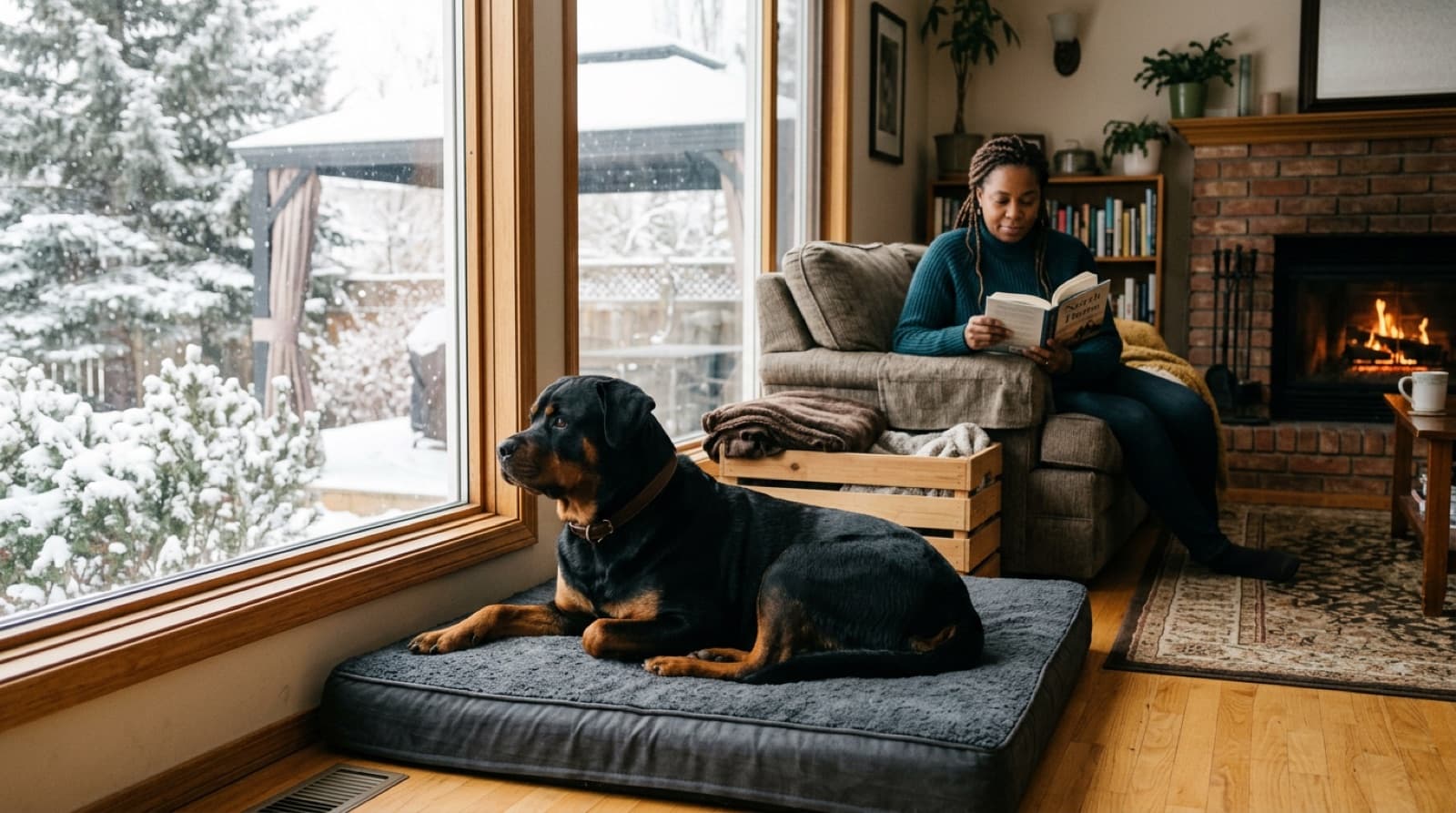
The 3-3-3 decompression principle applies to every rescue dog. With Rottweilers the first three days are about survival mode and safety. The first three weeks are about routine and adjustment. The first three months are about real personality emerging and adolescent or adult management hitting its stride. Plan around it rather than against it.
Shelter-stressed Rotties often present quieter than the dog they actually are. A dog that seemed shut-down on day three is frequently more confident and more opinionated by week three. This is normal. The same pattern works in reverse for energy levels; the day-three calm dog may be a more demanding athlete by month two as the dog settles into the home.
Practical week-one priorities for an Edmonton rescue Rottweiler:
- Yard check first. Walk the fence line looking for gaps, loose boards, dig points, and gate-latch weaknesses. Rotties are powerful and determined when motivated. Six-foot minimum fence height is strongly preferred. Fix anything questionable before the dog goes out unsupervised.
- Stay on leash everywhere outside the yard. Recall is not yet established. Use a six-foot leash for transit and a 10 to 15 metre long-line for any open-space exploration. River-valley trails work for long-line walks; off-leash zones are not yet appropriate.
- License the dog with the City of Edmonton. Required for any dog over six months under Bylaw 21244. Tags should be visible on the collar from day one. Information is on the City of Edmonton dogs page.
- Book a cardiac and orthopaedic baseline. Within the first 30 days, have your Edmonton vet listen to the dog's heart, palpate hips and elbows, and pull a baseline. If anything sounds or feels off, request a referral. Early cardiac and orthopaedic diagnosis substantially changes the management trajectory for subaortic stenosis, hip dysplasia, and elbow dysplasia.
- Enrol pet insurance in week one. Any condition that appears after enrolment is covered; anything diagnosed before enrolment is pre-existing. Rotties benefit enormously from early enrolment given the breed's cancer, cardiac, orthopaedic, and bloat risk.
- Establish structure. Twice-daily meals at consistent times (raised feeders are not recommended given current bloat research; floor-level feeding is fine), predictable walk windows, and clear house rules. Working-breed dogs settle into structure faster than most.
- Start light exercise. Long leashed walks rather than off-leash sessions for the first two weeks. The dog needs to learn the neighbourhood, the routes, and your handling style. Forty-five to 60 minutes per day is the starting point; build from there.
- Add mental work early. A Rottweiler that gets only physical exercise is still under-stimulated. Puzzle feeders, basic obedience refreshers, chew enrichment, scent games, and structured training sessions burn brain energy in ways physical exercise cannot.
- Enrol in a force-free class. Within the first month. Even an experienced owner benefits from a class with a new working-breed dog. Use the CCPDT trainer directory filtered to Edmonton.
- Winter routine startup. Rotties have a short double coat and handle moderate cold better than Dobermans, but the breed still appreciates a coat in deep cold and wind chill. Booties on heavily salted sidewalks, shorter outings below -25 C, and indoor enrichment to make up the difference. The Edmonton Humane Society publishes a winter pet safety reference worth reading.
- Hold off on the dog park. Not for the first two to four weeks, and longer if the foster notes flag any dog-tolerance variability. The stimulation and dog density are too much for a still-decompressing rescue Rottie. Many Rotties never enjoy dog parks; one-on-one play with vetted dog friends works better lifelong.
- Be ready for public reactions. A Rottweiler on leash draws strong reactions. Some of that attention is admiration; some is wariness, fear, or rude questions. Your composure protects your dog. A calm dog walking calmly does more public-relations work for the breed than any argument will.
By week three, the real dog starts emerging. By month three, structure and exercise have done most of their work, and the foster-write-up dog is the dog living in your house. For Rotties, this is when the loyal, lean-against-your-knee, watchful-and-calm personality really emerges, and the work of the first 30 days pays off.
Frequently asked questions
Where can I adopt a Rottweiler near me in Edmonton?
Rottweilers and Rottweiler crosses reach Edmonton rescue at moderate volume, more often than Dobermans and less often than Pit Bull-types. The Edmonton Humane Society is the most consistent source through owner surrender, transfer, and stray intake. AARCS, headquartered in Calgary, tags Edmonton-foster dogs and surfaces them on Edmonton listings; Rottie intake is real but not weekly. Alberta Homeward Hound Rescue Bureau (AHHRB) lists every dog as Mixed Breed on policy, so Rottie-types are identified by photo and foster description. Zoe's Animal Rescue, SCARS, GEARS, and Hope Lives Here list Rotties and Rottie crosses less frequently. The Rottweiler Club of Canada, the national breed club, is not a rescue itself but cross-posts Rotties needing rehoming and can be a useful parallel path. Plan a 3 to 6 month search timeline.
Are Rottweilers legal in Edmonton?
Yes. Alberta has no breed-specific legislation, and the City of Edmonton Animal Care and Control Bylaw 21244 treats Rottweilers the same as every other breed. The friction is private. Some Edmonton condo boards list Rottweilers on internal restricted-breed schedules, often alongside Pit Bulls and Dobermans. Some rental landlords do the same. A meaningful share of home-insurance carriers either flag the breed, surcharge the policy, or exclude dog-bite liability. The legal picture is clear. The housing and insurance picture takes most of the preparation work.
How much does it cost to adopt a Rottweiler in Edmonton?
Edmonton rescue adoption fees for Rottweilers typically run $400 to $700. The fee covers spay or neuter, core vaccinations, microchip, deworming, parasite treatment, and a basic vet workup. Many rescues add a cardiac auscultation and an orthopaedic palpation given the breed's subaortic stenosis risk and hip dysplasia load. Senior Rotties (around six years and up, given the shorter 8 to 10 year lifespan) often have reduced fees of $250 to $450. Compare to a Rottweiler puppy from an ethical Alberta breeder at $2,000 to $4,000 for pet-quality with health-tested parents. Plan another $500 to $700 in the first month for an Edmonton vet baseline that includes cardiac and orthopaedic screening.
German Rottweiler or American Rottweiler: which do Edmonton rescues see?
Most Edmonton rescue Rottweilers are American-line or mixed-line dogs; pure German (ADRK-standard) Rottweilers are uncommon in Alberta rescue because the people who import German Rotties are typically experienced handlers with a working purpose, and those dogs rarely surrender. The German Rottweiler is heavier and blockier (85 to 130 lb), shorter in leg, broader in head, and bred toward the ADRK standard with a working and protection focus. The American Rottweiler is taller and leaner (80 to 115 lb), bred toward the AKC standard for show and family-companion lines, with more variation in working drive. The practical difference for an adopter is that an American-line or American-mix dog tends to suit a family-companion home better, while a German-line or working-line dog needs an experienced handler with daily structured work. Foster temperament write-ups describe the actual dog in plain language; that description is more useful than the line label.
Why do Rottweilers surrender to Edmonton rescue?
Five patterns dominate. Housing change is the most common, especially condo or rental moves where the new building maintains a restricted-breed list. Insurance refusal forces some surrenders when the current carrier excludes the breed or a renewal cycle introduces a new exclusion. Owner illness, owner death, or family changes (divorce, baby, move out of province) account for a meaningful share. Adolescent reactivity at 12 to 30 months surrenders when a Rottie raised without consistent structure starts showing leash reactivity, guarding behaviour, or barrier frustration. Medical-bill surrender hits at a higher rate than for most breeds because Rottweilers carry one of the highest documented bone-cancer rates in dogs, and a young adult diagnosis with osteosarcoma can financially overwhelm a household without insurance. The first two patterns are most common; the fifth produces the hardest decisions.
Are Rottweiler mixes common in Edmonton rescue?
Mixes are at least as common as purebreds in Edmonton rescue. The most frequent patterns are Rottweiler and Pit Bull cross (sometimes called Pitweiler), Rottweiler and Labrador cross (sometimes called Rottador), Rottweiler and Shepherd cross, and Rottweiler and Mastiff cross. Each pattern softens or sharpens different parts of the Rottweiler temperament. The breed label on any rescue cross is foster best-guess. The foster temperament write-up is the real signal. Read it carefully and ask the foster directly about drive, recovery from stress, guarding behaviour, and dog-dog tolerance before applying.
Will home insurance in Edmonton cover a Rottweiler?
Some Alberta carriers cover Rottweilers without issue. Others decline coverage, surcharge the policy, or exclude dog-bite liability when the breed is on their internal restricted list. The Rottweiler appears more often on insurance restricted-breed lists than the Doberman because of bite-claim data, even though responsible Rottweilers are no more dangerous than other large guardian breeds. Call your broker before adopting, ask the breed question directly, and confirm in writing. Pet-bite liability claims can run into six figures, which is exactly what home insurance is supposed to cover, so an exclusion is a real exposure. If your current carrier flags the breed, shop quotes; several Canadian carriers do not flag Rottweilers at all.
How long does Edmonton Rottweiler adoption take?
Realistically 3 to 6 months from starting the search to bringing a dog home. Rottweiler volume in Edmonton rescue is steadier than Doberman volume but the housing-and-insurance verification adds time to each placement. Once you find a specific dog you want to apply for, expect 2 to 4 weeks for the application, foster phone screen, home check, meet-and-greet, and reference checks. Senior Rotties and Rotties with managed medical conditions sometimes list for longer; young adult Rotties with clean histories often place fast once they appear.
Are Rottweilers good with kids and other pets?
Well-raised Rottweilers are typically affectionate and protective with their family and tolerant of respectful children. The size and strength of the breed mean supervision is non-negotiable, especially with kids under six. Dog-to-dog tolerance varies sharply by individual; some are great with other dogs, some are dog-selective (especially same-sex), and some are best as the only dog. Cat compatibility also varies. Edmonton rescues document each of these in foster notes. Read them carefully and ask the foster about the specific dog before applying.
What about the Rottweiler bone-cancer reality?
Rottweilers carry one of the highest documented osteosarcoma rates of any breed. The cancer typically appears in middle-aged or senior dogs as a limp that does not resolve, most often on a front limb. Standard treatment is limb amputation plus carboplatin chemotherapy at $8,000 to $15,000, with median survival 12 to 18 months versus 1 to 2 months without treatment. This is the single most important financial reality for an Edmonton Rottweiler adopter. Enrol pet insurance in week one before any condition becomes pre-existing. A young healthy Rottweiler in Edmonton typically costs $75 to $130 per month to insure, and the lifetime claim math from a single bone-cancer event recovers the entire premium history. See the linked health and osteosarcoma guides for the full breakdown.
What if I see a free Rottweiler on Kijiji Edmonton?
Treat free-Rottweiler listings with caution. Common Edmonton patterns are owners bypassing formal rescue surrender (no behavioural disclosure, no vet history), backyard breeders using free as a hook before the price reveals at pickup, and flippers collecting free dogs to resell. A legitimate owner-rehoming with a modest fee can be fine, but verification matters. Ask for vet records, see the dog in its current home, and ask blunt questions about why the dog is being rehomed and whether any bite history exists. If the answer is rushed or vague, walk. The Canadian Anti-Fraud Centre tracks pet scams in Canada and Rottweilers are one of the more commonly listed breeds in scam patterns.
Related Edmonton Rottweiler guides
Edmonton Adoptable Dogs
Current Edmonton-area Rottweiler, Rottweiler-mix, and working-breed listings from EHS, AARCS Edmonton fosters, AHHRB, Zoe's, SCARS, GEARS, and Hope Lives Here.
Rottweiler Health Issues: Bone Cancer, Heart, Hips
Rottweiler health issues to plan for: bone cancer, subaortic stenosis, hip and elbow dysplasia, bloat, JLPP and eye disease, and what to ask your vet in month one.
Edmonton Housing & Insurance for Rottweilers
Condo restricted-breed lists, written landlord addenda, insurance carriers that do and do not flag the breed, and how to clear the paperwork before applying.
Rottweiler Osteosarcoma & Bone Cancer Edmonton
The breed's elevated bone-cancer rate, presentation signs, Edmonton specialty oncology referral options, treatment cost ranges, and the pet-insurance math that makes this manageable.
Find your Edmonton rescue Rottweiler
Browse current Edmonton-area Rottweiler and Rottie-mix listings. Foster temperament notes help you find the right match for your household, housing situation, and prior experience.
Browse All Edmonton Dogs →New dog? Start with these care guides
Everything a new adopter needs to set up a safe, happy home.