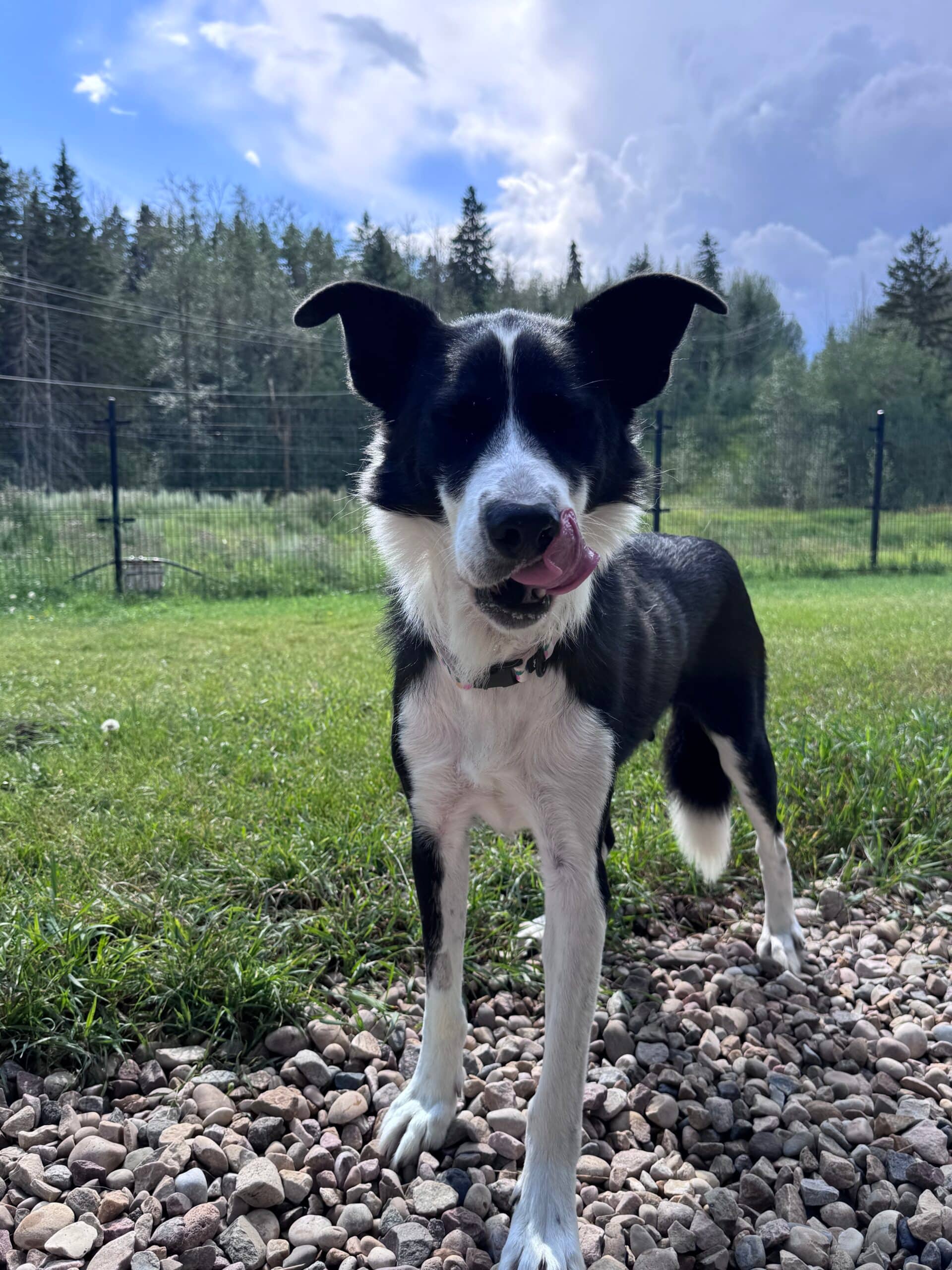
Get notified when a Border Collie is listed
We will email you the moment a Border Collie becomes available in Red Deer, from a rescue or an owner rehoming.
About Border Collies in Red Deer
Adopting a Border Collie in Alberta
Border Collies are listed in Alberta rescue more often than most people expect. Calgary Humane Society, Edmonton Humane Society, AARCS, SCARS, and most of the smaller rescues we work with usually have one or two on the floor at any given time. Volume picks up around late spring, when farm-bred working pups from the previous summer hit adolescence and the household that wanted a smart family dog meets a herding adolescent that needs more than they can give.
This page pulls every adoptable Border Collie from the launched Alberta shelters into one searchable place, refreshed regularly. The province-wide view matters more for this breed than most. Many rural intake BCs come through SCARS and AARCS transfer programs, and the right match is often in a foster home outside your home city. Foster homes routinely arrange meets at the foster home regardless of where you live.
Why Border Collies cycle through Alberta rescue
Most BC surrenders we see come from one of two situations. The first is the assumption that a smart dog is an easy dog. Adopters bring home a Border Collie because they wanted an intelligent, trainable family dog, and the dog delivers on intelligence the wrong way. A BC without daily mental work invents jobs: chasing shadows, herding the kids, eating the couch, fence-running with the neighbour's dog. By six to twelve months the household is exhausted, and the dog goes back.
The second is the working-line mismatch. A meaningful share of Alberta BCs come from rural breeders selling actual herding-line pups to suburban homes. The pups need sheep, not a backyard, and the household has neither. These dogs arrive in rescue with sharp instincts and no outlet, which is why fosters spend weeks evaluating before placement. The dog is rarely the problem. The mismatch is.
Mental work matters more than physical exercise
Most adopters arrive thinking a Border Collie needs an hour of walks a day. The walks are necessary but not sufficient. A BC that does an hour of off-leash running and then spends the rest of the day in the house with no problem-solving will still find its own work, and the work it finds is usually destructive. Mental work is the bigger fit signal for the breed. Daily training drills, scent games, food puzzles, agility, and herding lessons if you have access to them. Without that, the dog is bored, and a bored Border Collie is not a quiet dog.
Group obedience classes with a force-free Calgary or Edmonton trainer work well as a structured weekly outlet. Foster homes will tell you which dogs have done basic obedience before placement and which are starting from scratch. Most Alberta rescues will not place a BC into a home where nobody plans to do training. They have placed too many BCs already and seen them come back.
Health concerns worth asking the foster about
Border Collies are generally healthy by mid-size standards, but there are conditions fosters should know about and answer plainly. Hip dysplasia comes up. Collie eye anomaly (CEA) is breed-specific and tested for by responsible breeders, but less likely to be tested in rural intake BCs. Progressive retinal atrophy (PRA) shows up later in life. Multidrug resistance gene mutation (MDR1) affects some BCs and matters for certain veterinary drugs. Epilepsy shows up in some lines. A foster who has lived with the dog for weeks knows whether the dog moves smoothly, sees comfortably in low light, and behaves normally. Ask them directly, and tell your vet the dog is a Border Collie or BC mix before any anesthesia.
What Border Collies are actually like to live with
The first meeting at the rescue is usually all focus and intensity. The harder parts of the breed only show up at home over the first few weeks, and they are why so many end up in rescue:
- Need daily mental work, not just exercise. Without it the dog invents jobs you do not want it to do.
- Herding instinct on small moving things. Children, cats, cyclists, joggers. Many BCs will try to herd them.
- Reactivity around other dogs is common, especially in adolescent BCs at the dog park.
- Compulsive behaviours when under-stimulated. Light chasing, shadow chasing, fence running, spinning. Some are fixable, some become chronic.
- Suspicious of strangers in many lines. This is not a Lab. New people, delivery drivers, and visitors take time.
- Cold-tolerant. The double coat handles Alberta winter well, and most BCs love working in snow.
- Bond hard to one or two people. Will follow that person from room to room and become anxious when separated.
- Sensitive. Heavy-handed corrections shut a BC down fast. Force-free training is the right approach.
What the fee usually covers
Border Collie adoption fees at Alberta rescues sit in the same range as other medium rescue dogs in the province. The fee covers the medical work the rescue already paid for: spay or neuter, core vaccinations, microchip, deworming, and a vet check before placement. Confirm the exact number on the dog's own listing, because it varies with age and any special medical care.
How to actually search
Use the filters above to narrow by energy level (Border Collies are high, usually very high), size (medium), compatibility (especially around cats, small dogs, and children, because of herding instinct), and shelter. If a dog fits, apply the same day. Foster homes are usually willing to set up a video call before you drive across the province for an in-person meet. BCs are matched carefully, because the wrong placement is harder to undo than for most breeds.
Border Collie Adoption FAQ — Red Deer
Tap a question to expand
How many Border Collies are available for adoption in Red Deer?▼
Are there different types of Border Collie, and does it matter in Alberta?▼
Where can I find Border Collie adoption near me in Alberta?▼
Why are there so many Border Collies in Alberta rescue?▼
Do Border Collies really need that much exercise, or is the reputation overblown?▼
Are Border Collies a good fit for Alberta winters?▼
Are Border Collies good with kids and cats?▼
How much does it cost to adopt a Border Collie in Alberta?▼
Can I adopt a Border Collie from Edmonton or Red Deer if I live in Calgary?▼
Is LocalPetFinder a Border Collie rescue?▼
Are these Border Collies for sale in Red Deer?▼
Where can I buy a Border Collie in Red Deer, and should I?▼
Are there free Border Collies in Red Deer, or border collies under $500?▼
Are there Border Collie puppies in Red Deer, or only adults?▼
Where can I find a Border Collie near me in Red Deer?▼
Need to rehome a Border Collie?
If you can no longer keep your Border Collie, you can list them for free on LocalPetFinder. Your dog stays in your home until you find the right family, you screen who applies, and there is no surrender fee. Not sure yet? Our guide to surrendering a dog in Canada walks through every option first.
List your dog for free →Browse More Breeds
Looking beyond Red Deer?
Alberta rescues transport between cities and several operate province-wide, so it is worth checking Border Collies elsewhere in the province before you give up on a match in Red Deer.