The short answer
The nose runs the Beagle. Bred to follow a scent independently, they are not unintelligent, just wired to choose the trail over your instructions. The most important safety fact: recall is never fully reliable off-leash, because a scent overrides everything, so keep a Beagle leashed in unfenced areas and secure the yard properly (they dig, climb, and squeeze out). Train with the breed’s superpower, food motivation, in short, upbeat sessions. Manage the baying with exercise, enrichment, and a quiet cue rather than expecting silence. And satisfy the nose daily, especially with indoor scent games through a Red Deer winter.
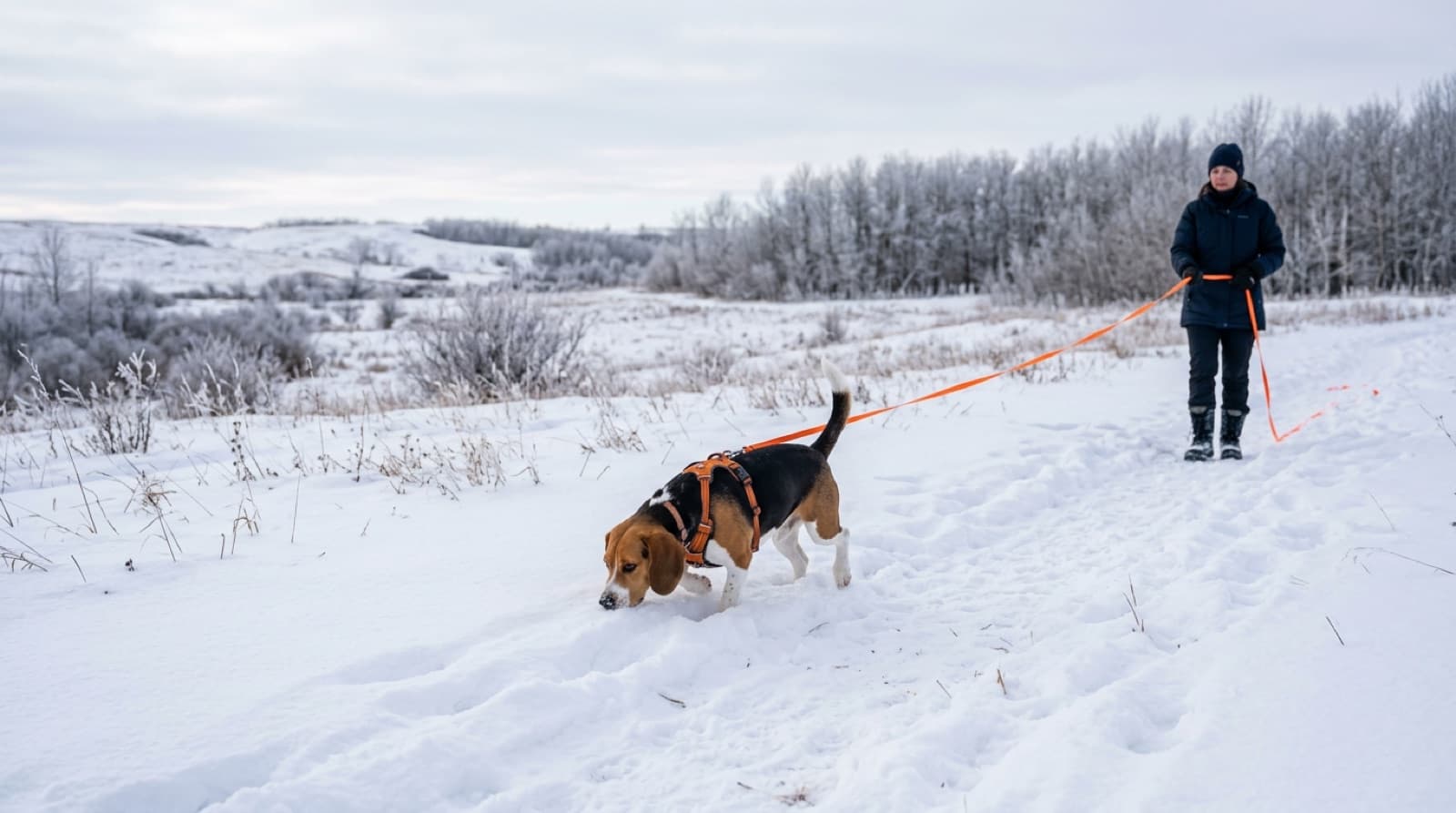
Why recall is unreliable, and what to do about it
This is the safety fact that matters most. A Beagle was bred to lock onto a scent and follow it for hours without human direction, so when the nose engages, a practised recall often fails, not from disobedience, but because the trail is more compelling than anything you can offer. Train a solid recall with high-value rewards, and it will work in low-distraction settings, but never fully trust a Beagle off-leash in an unfenced area. A Beagle on a scent can travel a long way fast. Treat recall as a useful safety layer, and rely on a leash and a secure fence as the actual containment.
The secure yard, food-motivated training, and the voice
Secure the yard. Beagles dig under, climb, and squeeze through gaps to follow a scent. Check the fence line, dig-proof it, make sure gates latch, and supervise, because a physical barrier is what actually keeps a Beagle home.
Train with food. The breed’s food obsession is your best tool. Use high-value treats, keep sessions short and upbeat, reward heavily, and be patient with a dog that learns on its own timeline. Adjust expectations to the breed rather than fighting it.
Manage the baying. Vocalising is built into the pack hound, so aim for reduction, not silence. A well-exercised, mentally satisfied Beagle that is not left alone for long stretches bays far less. Teach a quiet cue, do not reward the noise with attention, and address separation howling with gradual alone-time work.
Ask your Red Deer vet or the rescue you adopt from for a current positive-methods trainer, ideally one with hound experience. The American Kennel Club breed profile covers the Beagle’s scent-hound heritage.
Satisfying the nose through a Central Alberta winter
A Beagle’s exercise is as much mental as physical, which is good news for a Red Deer winter. Even when it is too cold for a long walk, you can tire a Beagle indoors: scatter-feed meals for a scent hunt, hide treats around the house, run nose-work games, and use puzzle feeders. Get sniffy outdoor walks in during the milder part of the day with a coat for a lean or small Beagle and booties on salted paths, kept shorter in deep cold. A Beagle that gets to use its nose every day stays far calmer and quieter than one simply cooped up, and wiping salt off the paws after each walk keeps the pads healthy.
Ready for a Beagle of your own?
Browse adoptable Beagles from Central Alberta rescues. Ask the foster about the individual dog’s vocal level and prey drive.
See Available Beagles →Frequently Asked Questions
Are Beagles hard to train?
Beagles are not unintelligent, they are independent and nose-driven, which is a different thing. Bred to follow a scent for hours without human direction, they are wired to make their own decisions and to find a smell more rewarding than almost anything you can offer, so a Beagle will often choose the scent trail over your instructions. The good news is that Beagles are extremely food-motivated, which is the key that unlocks training: use high-value treats, keep sessions short, fun, and consistent, and reward heavily. Patience matters, because a Beagle learns on its own timeline and gets bored quickly. Trained with food and consistency rather than force, a Beagle can learn plenty, just do not expect Border Collie obedience.
Can you train a Beagle to have reliable recall?
Honestly, only up to a point, and this is the most important safety fact about the breed. When a Beagle catches an interesting scent, the nose overrides everything, including a recall you have practised a hundred times, because following that trail is what the breed was built to do. You can and should train a solid recall with high-value rewards, and it will work in low-distraction settings, but you should never fully trust a Beagle off-leash in an unfenced area, no matter how good the recall looks at home. A Beagle locked onto a scent can vanish and keep going for a long way. Treat recall as a useful safety layer, not a substitute for a leash or a fence.
Why does my Beagle keep escaping, and how do I stop it?
Beagles are determined escape artists because the nose pulls them toward every interesting smell beyond the boundary, and they will dig under, climb, or squeeze through gaps to follow it. Stopping it is about management more than training. Secure the yard properly: check for gaps, dig-proof the fence line, make sure gates latch, and supervise, because a Beagle left alone in a yard will eventually find a way out. On walks, use a well-fitted harness and a secure leash, and never rely on an open gate or an off-leash trail to hold a Beagle. Providing enough exercise and scent enrichment reduces the drive to escape, but a physical barrier is what actually keeps a Beagle home.
How do I stop my Beagle from baying and howling?
First, understand that vocalising is deeply built into the breed, a Beagle’s bay is a pack-hound feature, not a fault, so the realistic goal is management and reduction, not silence. Beagles bay when excited, bored, lonely, or on a scent, so the biggest lever is meeting their needs: a well-exercised, mentally stimulated Beagle that is not left alone for long stretches vocalises far less. Do not accidentally reward the noise with attention, teach and reward a quiet cue, and address separation-related howling with gradual alone-time training. If you live in close housing, be honest with yourself that a Beagle is a vocal breed, because the voice is one of the top reasons they end up in rescue.
How much exercise and mental stimulation does a Beagle need?
A Beagle needs a solid hour or more of activity a day, and crucially, it needs to use its nose. Physical exercise alone does not satisfy a scent hound; the mental work of sniffing, searching, and problem-solving is what tires a Beagle and keeps it out of trouble. Long sniffy walks where the dog is allowed to investigate, scent games and nose work, food puzzles, and hiding treats around the house all burn real mental energy. A bored, under-exercised Beagle bays, escapes, counter-surfs, and destroys things. In a Red Deer winter, when long outdoor walks are limited, indoor scent games and puzzle feeders become essential to keep a Beagle satisfied and quiet.
How do I keep a Beagle exercised through a Red Deer winter?
Lean hard on the nose indoors, because a Beagle’s exercise is as much mental as physical. Scatter-feed meals for a scent hunt, hide treats around the house for the dog to find, run nose-work games, and use puzzle feeders, all of which tire a Beagle even when it is too cold for a long walk. Get outdoor sniffy walks in during the milder parts of the day with a coat for a lean or small Beagle and booties on salted paths, keeping them shorter in deep cold. The key is that a Beagle that gets to use its nose every day, indoors or out, stays far calmer and quieter than one that is simply cooped up. Wipe salt off the paws after every walk.
Are Beagles good with kids and other dogs?
Generally yes, and it is one of the breed’s best qualities. Beagles are pack animals by history and temperament, which makes them typically friendly, sociable, and tolerant with children and other dogs, and many thrive in a busy family or a multi-dog home. They are sturdy enough to handle the chaos of kids and rarely aggressive. The usual supervision rules apply with young children, and the food obsession means teaching kids not to feed the dog table scraps that pile on weight. With other dogs, a Beagle’s sociability is usually an asset, though the same scent drive that makes recall hard applies on group walks. Overall, sociability is a Beagle strength, not a worry.
Where can I train a Beagle in Red Deer?
Look for a trainer or class using positive, reward-based methods, which suit a food-motivated, independent breed far better than punishment, and ask specifically whether they have experience with hounds or scent-driven dogs, since the approach differs from working a biddable breed. Group classes are useful for basic manners and for practising focus around distraction, which is exactly where Beagles struggle. Ask your Red Deer vet or the rescue you adopt from for a current recommendation on a force-free trainer, as programs change over time. Beyond classes, the most valuable training is daily: short food-rewarded sessions, scent enrichment, and consistent management of the yard and leash. Adjust your expectations to the breed, and a Beagle is a rewarding, cheerful dog to train.
Related Guides
New dog? Start with these care guides
Everything a new adopter needs to set up a safe, happy home.